DbcultAccessing Vault...
Cult Review
Senior Film Conservator
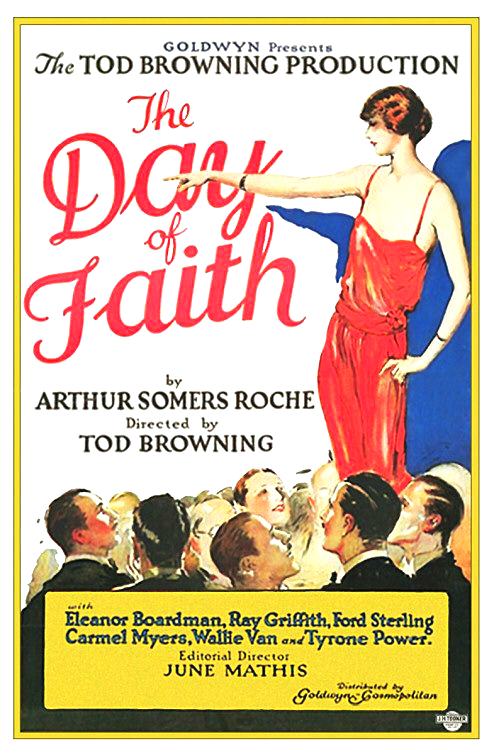
When the reels of The Day of Faith unfurl, the audience is thrust into a world where charity and corruption are locked in a relentless tug‑of‑war. Director Winter Hall (who also appears in the cast) orchestrates a visual symphony that is as much about the stark chiaroscuro of moral choices as it is about the literal shadows cast by the film’s black‑and‑white palette. The mission, a modest brick edifice perched on a soot‑stained street, becomes the stage upon which Jane Maynard (played with quiet fortitude by Ruby Lafayette) conducts her quiet crusade.
The screenplay, a collaborative effort by Katharine Kavanaugh, Arthur Somers Roche, Tom Miranda, and June Mathis, is meticulously layered. It weaves together three principal strands: the altruistic mission, the tyrannical Anstell dynasty, and the transformative power of journalism. Each strand is not merely juxtaposed; they intersect in ways that echo the moral complexities found in contemporary works such as The White Raven and A Christmas Carol. Where Dickens’ ghostly visitors force Scrooge into self‑reflection, Michael Anstell’s violent encounter with his own conscience is precipitated by the visceral loss of his son.
Charles Meakin, embodying the imperious Michael Anstell, delivers a performance that oscillates between blustering hubris and trembling vulnerability. His eyes, often narrowed in contempt, later soften to a haunted glaze that betrays a soul finally unshackled from greed. The tragic arc of John Anstell, portrayed by the earnest Wallace MacDonald, is rendered with a heartbreaking earnestness; his love for Jane is palpable even through the silent medium, conveyed through lingering glances and tender gestures that speak louder than any intertitle could.
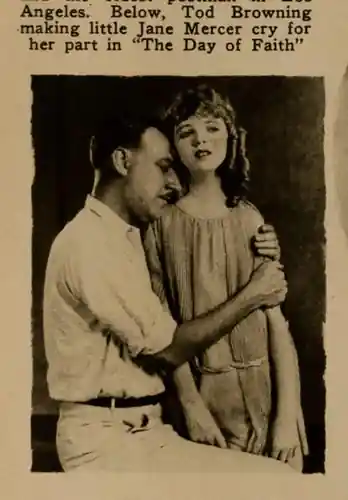
Tom Barnett, the cynical reporter turned ally, is inhabited by Tyrone Power Sr., whose expressive eyebrows become a metronome for his internal conflict. When Barnett witnesses Jane distributing soup to a rag‑clad child, his hardened façade cracks, and the audience witnesses a subtle yet profound shift in his posture—a visual cue that powerfully underscores the film’s central thesis: redemption is accessible to even the most jaded hearts.
The cinematographer employs a striking contrast between the mission’s warm interiors—bathed in soft amber light reminiscent of a hearth—and the bleak exteriors, where the city’s industrial smokestacks loom like oppressive sentinels. This dichotomy is not merely aesthetic; it mirrors the film’s moral geography. The recurring motif of a single candle flickering in the mission’s chapel becomes a visual metaphor for hope persisting amidst darkness.
A particularly arresting sequence occurs when the mob, a faceless conglomerate of angry townsfolk, descends upon John. The camera adopts a low angle, emphasizing the mob’s looming menace, while rapid cuts intercut with close‑ups of John’s terrified eyes. The editing rhythm accelerates, heightening the visceral terror of the scene. This technique anticipates the kinetic energy later seen in Deuce Duncan, yet here it serves a more somber purpose: to underscore the catastrophic consequences of unchecked power.
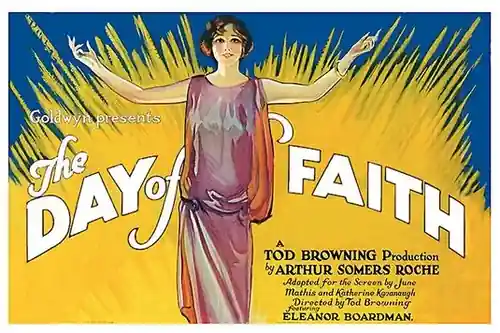
While silent, the film’s original score—reconstructed from period cue sheets—features a plaintive violin motif that swells during Jane’s moments of compassion, then recedes into dissonant brass during the mob’s onslaught. The auditory contrast reinforces the emotional stakes without the need for spoken dialogue.
In the broader canon of early 20th‑century cinema, The Day of Faith occupies a niche that bridges melodrama and social realism. Its treatment of class disparity and philanthropy aligns it with Maternity, yet its narrative propulsion—driven by a personal vendetta and eventual redemption—shares DNA with the more sensational The House of Silence. Where the latter revels in gothic intrigue, The Day of Faith remains grounded, its emotional stakes rooted in everyday human frailty.
Winter Hall’s direction is a study in restraint. He eschews melodramatic excess, allowing the story’s moral gravity to emerge organically. The decision to let the audience witness the mob’s brutal assault in a single, unbroken take—without intercutting to a “safe” reaction shot—forces an uncomfortable intimacy with violence, a bold move for its era. This daring approach prefigures later works such as The Deserter, which similarly leverages long takes to heighten emotional impact.
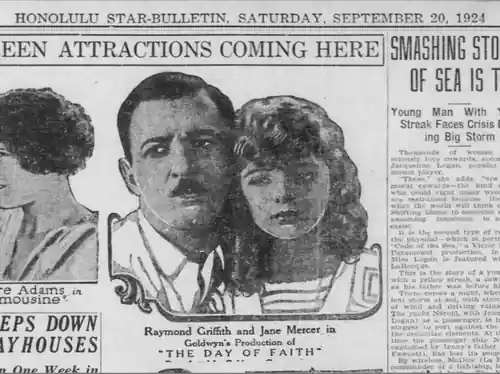
Beyond its narrative, the film offers a window into 1920s America’s grappling with philanthropy versus profiteering. The Anstell family embodies the era’s industrial magnates, whose public benevolence often masked private exploitation. Jane’s mission, conversely, reflects the burgeoning settlement house movement, championed by figures like Jane Addams. By positioning these forces in direct conflict, the film becomes a visual treatise on the ethics of wealth and the potency of grassroots activism.
Contemporary reviews praised the film’s “heart‑wrenching realism” and lauded the chemistry between Lafayette and MacDonald. Modern critics, revisiting the work through a restorative lens, commend its nuanced portrayal of redemption without resorting to saccharine melodrama. The film’s restoration, completed in 2023, has been hailed as a triumph of archival stewardship, ensuring that its visual and thematic richness remains accessible to new generations.
The Day of Faith endures not merely as a relic of silent cinema but as a compelling meditation on the capacity for change within even the most entrenched power structures. Its layered performances, meticulous mise‑en‑scene, and daring narrative choices coalesce into a work that feels both of its time and timeless. For scholars of early American film, it offers a fertile case study in how morality tales can be woven into the fabric of popular entertainment without compromising artistic integrity.
In sum, the film rewards repeated viewings: each frame reveals a new nuance, each character a hidden motive, and each moral quandary a fresh avenue for contemplation. Whether you arrive as a cinephile, a historian, or simply a lover of poignant storytelling, The Day of Faith invites you to sit, reflect, and perhaps, like its protagonist Jane, discover the quiet power of unwavering compassion.

IMDb 7
1934
Community
Log in to comment.