DbcultAccessing Vault...
6.3/10
Senior Film Conservator
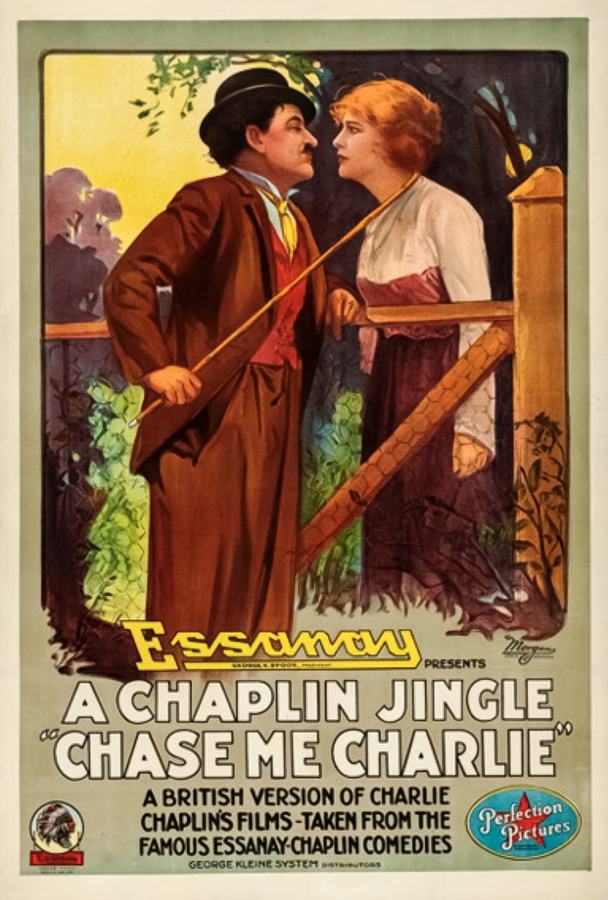
A definitive 6.3/10 rating for a film that redefined the boundaries of cult cinema. Chase Me Charlie remains a cornerstone of transgressive art.
In the annals of cinematic history, few figures loom as large or cast as long a shadow as Charles Chaplin. His indelible creation, the Little Tramp, transcended mere character to become a global icon, a symbol of resilience, pathos, and the enduring human spirit. While his later feature films often receive the lion's share of critical adulation, it is in his prolific, often frenetic, short film output that the Tramp truly took shape, evolving from a raw, improvisational force into the nuanced, emotionally resonant figure we know today. 'Chase Me Charlie,' an anthology film released in 1918, serves as an invaluable time capsule, a curated journey through Chaplin's pivotal Essanay period, offering a condensed yet profoundly insightful glimpse into the genesis of his genius. It's not merely a collection of clips; it's a testament to a nascent artistry, a rapid-fire succession of comedic and dramatic experiments that collectively forged the blueprint for modern screen comedy.
This compilation, crafted by Langford Reed from Chaplin’s original Essanay productions, presents a fascinating mosaic, drawing excerpts from 'The Tramp' (1915), 'Shanghaied' (1915), 'In the Park' (1915), and 'The Bank' (1915). Each segment, though brief, pulsates with Chaplin’s unique blend of physical comedy, social commentary, and burgeoning sentimentality. The film, therefore, functions as a critical Rosetta Stone for understanding the development of a comedic language that would revolutionize filmmaking. It invites us to witness the very moment slapstick began its profound transformation, graduating from mere pratfalls to a sophisticated vehicle for character and emotion. As a critic, approaching 'Chase Me Charlie' is akin to examining an artist's sketchbooks—raw, immediate, and brimming with the energy of creation, revealing the foundational strokes that would later be finessed into masterpieces.
The Essanay period, though relatively short, was intensely productive for Chaplin. Having already achieved notoriety at Keystone, his move to Essanay in 1915 granted him unprecedented creative control, a freedom he seized with both hands. It was here that the Tramp, initially a character of pure mischief and opportunism, began to acquire the layers of pathos and vulnerability that would define him. 'Chase Me Charlie' beautifully encapsulates this transitional phase. We see the familiar bowler hat, the cane, the baggy trousers, and the shuffling gait, but beneath the surface, a more complex individual is emerging. This anthology, therefore, functions as a masterclass in character development, demonstrating how Chaplin, alongside his frequent co-star Edna Purviance and supporting players like Leo White and Ben Turpin, refined an archetype that would resonate across cultures and generations.
The very structure of 'Chase Me Charlie'—a compilation—necessitates a nuanced appreciation. It’s not a single narrative arc but rather a series of vignettes, each a miniature world unto itself, yet collectively contributing to a larger portrait of the Tramp. This approach allows viewers to discern the recurring themes and evolving techniques that Chaplin was exploring. From the bucolic settings of 'The Tramp' to the bustling urbanity of 'The Bank,' the film showcases his versatility, his ability to adapt his comedic sensibilities to diverse environments while maintaining the core essence of his character. It’s a testament to the fact that even in these early, shorter forms, Chaplin was laying the groundwork for a cinematic language that prioritized character-driven humor and emotional depth over mere spectacle. This commitment to character, even in the relatively simple narratives of early silent film, set him apart from many contemporaries, whose works, while often entertaining, sometimes lacked the profound humanism that Chaplin was already cultivating. This distinction is particularly evident when comparing his work to films that focused more on plot mechanics or dramatic tension, such as The Blue Envelope Mystery or The Lash of Power, where character often served the story rather than defining it.
The segment from 'The Tramp' is arguably the most pivotal, offering what many consider the definitive early portrayal of the Little Tramp. Here, he is still a vagrant, but one capable of genuine heroism. We see him intervene when bandits attack a young woman, played by the ever-charming Edna Purviance, who was a constant muse and foil for Chaplin during this period. His clumsy yet courageous defense, replete with his signature physical gags, leads to an unlikely invitation to work on her family's farm. It’s in this pastoral setting that Chaplin masterfully blends slapstick with a burgeoning sense of sentimentality. The humor arises from the Tramp's ineptitude as a farmhand, his attempts to milk a cow or plow a field resulting in predictable, yet exquisitely choreographed, chaos. Yet, beneath the laughter, a poignant narrative unfolds. The Tramp falls in love with the farmer's daughter, a love that is, tragically, unrequited. The film doesn't shy away from this emotional depth, culminating in one of Chaplin’s most iconic and enduring images: the Tramp, rejected but unbowed, shrugging his shoulders and shuffling off down a long, winding road, his back to the camera. It’s a moment that encapsulates the character’s resilient optimism in the face of adversity, a potent blend of comedy and pathos that would become his hallmark. This segment, even in its truncated form within 'Chase Me Charlie,' speaks volumes about Chaplin’s evolving understanding of his character, moving beyond mere funny business to explore the complexities of human emotion.
From the tranquil countryside, 'Chase Me Charlie' transports us to the high seas with excerpts from 'Shanghaied.' This segment showcases Chaplin's unparalleled physical comedy in a new, more confined environment. The Tramp, through a series of misunderstandings and mishaps, finds himself shanghaied onto a ship, forced into duty as a deckhand. The humor here is broad and boisterous, relying heavily on the visual gags inherent in a rocking ship, a clumsy crew, and the Tramp’s characteristic attempts to shirk work while inadvertently causing more trouble. Chaplin’s agility is on full display as he navigates the slippery decks, tangles with ropes, and engages in frantic chases with the ship’s captain and crew. The setting allows for a different kind of comedic rhythm, one dictated by the unpredictable movements of the vessel and the close quarters of the maritime life. It’s a pure spectacle of physical dexterity, a testament to Chaplin’s background in vaudeville and his mastery of mime. The scene where he attempts to serve dinner amidst a storm, with plates and food flying, is a masterclass in choreographed chaos. While perhaps less emotionally resonant than 'The Tramp,' 'Shanghaied' is a vital demonstration of Chaplin’s range, proving his ability to generate laughter from sheer kinetic energy and ingenious staging, a trait that makes his early work perpetually engaging, much like the dynamic narratives found in other early films focused on action or adventure, such as A vörös Sámson.
'In the Park' offers a return to a more familiar urban setting, a public park populated by a cross-section of society. This segment highlights the Tramp’s role as a catalyst for chaos, a disruptive force that inadvertently exposes the hypocrisies and absurdities of polite society. The humor here is often derived from mistaken identities, petty squabbles, and the Tramp’s uncanny ability to turn minor incidents into full-blown farces. He might trip over a bench, steal a hot dog, or inadvertently cause a romantic spat, but in each instance, his presence escalates the situation to hilarious extremes. Edna Purviance again appears, often as an object of the Tramp's fleeting affections or as an unwitting participant in his schemes. The beauty of 'In the Park' lies in its keen observation of human nature and social dynamics. Chaplin, even in these early shorts, was already a master of visual storytelling that transcended language barriers, using simple settings and universal human traits to create comedy. The park, as a microcosm of society, becomes a stage for his anarchic charm, where the rules of decorum are perpetually bent and broken. It’s a delightful reminder of the Tramp’s inherent anti-establishmentarian streak, his refusal to conform to societal norms, a characteristic that endeared him to millions and offered a playful critique of societal expectations, a contrast to the more conventional portrayals of community and order often seen in films like The Small Town Guy.
Perhaps the most emotionally resonant segment in 'Chase Me Charlie' comes from 'The Bank.' Here, the Tramp is cast as a janitor, a lowly figure in the grand, imposing setting of a financial institution. This film is crucial for its portrayal of Chaplin's character in a more subdued, almost melancholic light. While there are still moments of slapstick—his clumsy attempts to clean, his interactions with the demanding staff—the core of the narrative revolves around his unrequited love for the bank’s stenographer, once again played by Edna Purviance. He daydreams of rescuing her from robbers, a heroic fantasy that allows him to transcend his humble station and be recognized for his bravery and affection. This dream sequence is a poignant exploration of hope and aspiration, a glimpse into the Tramp’s inner world of longing. The abrupt return to reality, where he is merely a janitor, dismissed and overlooked, is delivered with a touching sensitivity that elevates the film beyond mere comedy. 'The Bank' is a significant marker in Chaplin's development, showcasing his growing confidence in integrating genuine pathos into his comedic framework. It demonstrates his belief that laughter and tears are two sides of the same coin, and that the most effective comedy often springs from a place of human vulnerability and longing. This segment, more than any other in the anthology, foreshadows the emotional depth and social commentary that would define his later, more ambitious works, offering a profound counterpoint to films that prioritized dramatic action over character introspection, such as The Glory of Yolanda or The Honor of Mary Blake.
What 'Chase Me Charlie' ultimately reveals is the sheer artistic dexterity of Charles Chaplin, not just as a performer but as a nascent auteur. He wrote and directed these shorts, imbuing them with his distinctive vision. His ability to convey complex emotions through mime alone, without the aid of spoken dialogue, remains unparalleled. The expressive power of his eyes, the subtle tilt of his head, the precise timing of a physical gag—these elements combine to create a language that is universally understood. Edna Purviance, as his frequent leading lady, provided a crucial anchor, often embodying the idealized femininity that the Tramp yearned for, and her understated performances beautifully complemented Chaplin’s more flamboyant theatrics. Leo White and Ben Turpin, among others, were essential supporting players, providing excellent foils and adding to the chaotic energy that defined many of these early comedies.
The influence of these Essanay shorts, as presented in 'Chase Me Charlie,' cannot be overstated. They were instrumental in solidifying Chaplin's global popularity and in shaping the very grammar of screen comedy. His innovative use of character-driven humor, his seamless blend of laughter and tears, and his keen eye for social observation set a new standard for filmmaking. While other filmmakers of the era were also exploring the burgeoning medium, Chaplin's unique synthesis of vaudeville tradition with cinematic innovation created something truly revolutionary. His approach to storytelling, which often placed the struggles of the marginalized front and center, resonated deeply with audiences, particularly during a period of immense social change and upheaval. This focus on the common man's experience, often imbued with a gentle critique of societal structures, distinguished his work from more purely escapist fare, offering a more nuanced engagement with the audience, a depth that few contemporaries could match. The way he could extract both laughter and profound sympathy from the same scenario was a hallmark of his genius.
Viewing 'Chase Me Charlie' today is not merely an exercise in nostalgia; it is an essential cultural experience. It offers a direct conduit to the foundational moments of one of cinema's most important careers. The film, despite its compilation nature, possesses a surprising coherence, unified by the magnetic presence of Chaplin and the evolving narrative of his iconic character. It demonstrates how, even in fragments, true genius shines through. The humor remains fresh, the pathos still resonates, and the sheer inventiveness of Chaplin’s performance continues to captivate. It serves as a powerful reminder that the essence of great storytelling lies not just in grand narratives, but in the meticulous craftsmanship and profound human understanding evident in every subtle gesture, every perfectly timed pratfall, and every fleeting expression. For any aspiring filmmaker, comedian, or simply an enthusiast of timeless art, 'Chase Me Charlie' is an indispensable viewing, a vibrant testament to the enduring power of silent cinema and the unparalleled legacy of its greatest star.
The collection’s power lies in its ability to condense Chaplin’s prolific Essanay year into a digestible, yet impactful, viewing experience. Each snippet, carefully selected, emphasizes a different facet of the Tramp’s personality and Chaplin’s directorial approach. From the simple, almost pastoral innocence of 'The Tramp' to the more complex emotional landscape of 'The Bank,' the anthology illustrates a rapid maturation. It underscores how quickly Chaplin was learning the language of film, pushing boundaries not just in terms of comedic timing but also in narrative construction and character depth. It’s a compelling argument for the significance of this formative period, proving that even in shorter formats, Chaplin was crafting works of enduring artistic merit. His ability to connect with audiences on such a fundamental level, transcending language and cultural barriers, is precisely why these films, and 'Chase Me Charlie' as their representative, continue to be celebrated nearly a century later. They are not just historical artifacts; they are vibrant, living examples of cinematic artistry at its most pure and profound.
The technical aspects of these early films, while rudimentary by modern standards, are also noteworthy. The clear direction, the effective use of intertitles, and the relatively sophisticated camera work for the era all contribute to their lasting appeal. Chaplin, as both writer and director, meticulously orchestrated every scene, ensuring that each gag landed with precision and each emotional beat resonated. This level of control and artistry was unusual for the time, especially in the fast-paced world of short film production. His dedication to his craft, even in these early stages, set him apart. The compilation serves as an excellent educational tool, demonstrating the rapid evolution of cinematic language in the 1910s. It shows how narrative structures, character arcs, and visual storytelling techniques were being explored and refined, often through trial and error, by pioneering artists like Chaplin. The raw energy and inventiveness on display are palpable, offering a stark contrast to the often more formulaic productions of the time, such as some of the melodramas or historical pieces. The way he seamlessly transitions from slapstick to a moment of quiet despair, often within the same scene, illustrates a mastery of tone that few could emulate.
Ultimately, 'Chase Me Charlie' is more than a historical curiosity; it is a vibrant, living document of a cinematic legend in the making. It captures the essence of Chaplin’s early genius, showcasing the rapid development of his iconic character and his unparalleled ability to blend humor with profound humanity. It reminds us why the Little Tramp continues to be one of the most beloved figures in film history, a testament to the enduring power of laughter, resilience, and the universal language of emotion. This anthology is a vital piece of cinematic heritage, offering a rich, multifaceted view of an artist who forever changed the face of film. It is a journey into the heart of silent comedy, revealing the depth and innovation that lay beneath the surface of seemingly simple gags and charming narratives. Its continued relevance speaks volumes about Chaplin's timeless appeal and his indelible mark on the art form.
IMDb 4.8
1929
Community
Log in to comment.