DbcultAccessing Vault...
4.1/10
Senior Film Conservator
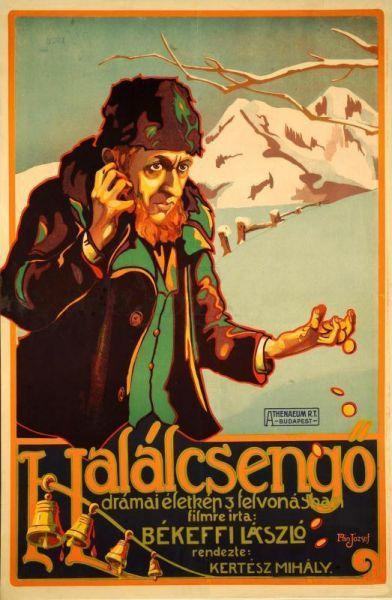
A definitive 4.1/10 rating for a film that redefined the boundaries of cult cinema. The Death-Bell remains a cornerstone of transgressive art.
From the shadowy depths of early cinematic history emerges The Death-Bell, a film whose very title reverberates with an ominous promise. This silent masterpiece, drawing its narrative potency from the minds of László Békeffi and the legendary gothic duo Alexandre Chatrian and Emile Erckmann, is not merely a cinematic relic; it is a meticulously crafted tapestry of dread, superstition, and fated romance that transcends its temporal origins. It plunges the viewer into a world where ancient curses are not just folklore but palpable forces, where the tolling of a bell can signify not just the passage of time, but the relentless approach of an inescapable destiny. The film, a profound exploration of human frailty against the backdrop of supernatural malevolence, demands our attention not only for its historical significance but for its enduring capacity to unsettle and captivate.
The narrative of The Death-Bell unfolds in a secluded Carpathian village, a place perpetually shrouded in a mists and ancient beliefs, where the modern world feels like a distant rumour. At its core stands the decrepit belfry of St. Jude's, an architectural sentinel housing a monolithic, verdigris-stained bell. This is no ordinary instrument; local legend dictates it tolls exclusively as a forewarning of impending doom, its resonant voice a prelude to tragedy. Here, we meet Elara (Gitta B. Gáthy), a young woman of arresting, melancholic beauty, whose inexplicable fascination with the ominous bell bewilders her fiancé, Kael (Gyula Fehér), the village's robust and rational blacksmith. Gáthy imbues Elara with an ethereal fragility, a sense of being perpetually on the precipice of some profound revelation or despair, making her a compelling, if tragic, figure. Her eyes, even in the grainy black and white of the silent screen, convey a depth of sorrow and a premonition that is truly remarkable.
As the narrative progresses, the bell begins its sporadic, unearthly chimes. Each clang, a guttural groan echoing through the valley, precipitates a mounting dread within the community. Kael, initially dismissive of the villagers' superstitious whispers, finds himself increasingly disturbed by Elara’s deepening obsession and the uncanny occurrences surrounding the bell. His pragmatic worldview is systematically dismantled as he unearths a generations-old pact, a sinister covenant binding Elara's lineage to the malevolent spirit believed to inhabit the belfry. This ancient secret, buried beneath layers of forgotten history and oral tradition, reveals Elara to be the latest in a line of women fated to become either the bell's eternal guardian or its ultimate sacrifice, irrevocably bound to its spectral cadence. Fehér’s portrayal of Kael is a masterclass in conveying escalating psychological torment, transforming from a man of steadfast reason to one grappling with encroaching madness, his every gesture and facial contortion broadcasting his desperate struggle against an unseen, unstoppable force. The film, in this regard, shares a thematic kinship with works like The Price of Malice, where dark, hidden truths exact a terrible personal toll, though The Death-Bell infuses its malice with a distinctly supernatural flavour.
The true genius of The Death-Bell lies in its masterful creation of atmosphere. Without the benefit of spoken dialogue, the film relies heavily on visual storytelling, and it executes this with breathtaking precision. The cinematography, though rudimentary by today's standards, employs stark contrasts of light and shadow, framing the desolate landscapes and the imposing belfry with an almost painterly quality. The constant interplay of deep blacks and stark whites amplifies the sense of isolation and foreboding. Close-ups on the faces of the villagers, particularly during moments of collective fear or suspicion, are remarkably effective, allowing the audience to read every tremor of emotion. The director's use of long shots to establish the village's remoteness and the belfry's dominance over it is particularly striking, making the setting itself a character in the unfolding drama.
The pacing is deliberate, allowing the dread to slowly seep into the viewer's consciousness rather than relying on jump scares. This slow burn is a hallmark of true gothic horror, a genre where psychological torment often outweighs overt violence. The film's reliance on expressive acting, a necessity of the silent era, is fully leveraged. Gyula Fehér's transition from hopeful lover to tormented hero is conveyed through subtle shifts in posture, increasingly frantic gestures, and eyes that betray a soul under siege. Gitta B. Gáthy, as Elara, embodies a tragic grace, her performance a delicate balance of vulnerability and an almost serene acceptance of her grim fate. Lajos Gellért, likely in a supporting role as an elder or mystic, adds a layer of gravitas and ancient wisdom, his presence often hinting at the deeper, darker currents of the village's history. Dezsõ Bánóczi, Lajos Réthey, Gitta B. Gáthy, and Gyula Varsa, though their specific roles might be less prominent, collectively contribute to the rich tapestry of the village community, their reactions and expressions serving as a mirror to the escalating terror.
The inclusion of Alexandre Chatrian and Emile Erckmann among the writers is a crucial detail, lending The Death-Bell a distinct literary pedigree. This French writing duo was renowned for their gothic and fantastic tales, often blending folklore with psychological suspense, and their influence is unmistakably woven into the fabric of this film. Their stories frequently explored themes of superstition, the uncanny, and the insidious nature of inherited curses, all of which are central to The Death-Bell. The film successfully translates their literary sensibility to the visual medium, capturing the brooding atmosphere and the sense of inexorable fate that defined their written works. This connection elevates the film beyond a mere genre piece, imbuing it with a depth of narrative and thematic complexity that was rare for its time.
The script, crafted by László Békeffi in collaboration with the spirit of Erckmann-Chatrian's storytelling, is a testament to the power of suggestion. It doesn't spoon-feed explanations but allows the audience to piece together the terrifying truth alongside Kael. This intellectual engagement is a strength, drawing viewers deeper into the mystery and making the eventual revelations all the more impactful. The intertitles, used sparingly and effectively, serve not just to provide dialogue but to deepen the lore, offering cryptic clues and poetic descriptions that enhance the film's gothic mood. They are less exposition and more literary fragments, echoing the style of the original authors.
At its heart, The Death-Bell is a profound meditation on the power of fate versus free will. Is Elara merely a victim of an ancient curse, or does her own melancholic nature draw her to this grim destiny? Kael's desperate struggle to save her represents the human spirit's defiance against the seemingly inevitable. This conflict is beautifully rendered, making the film's climax not just a resolution of plot but a philosophical confrontation. The film also delves into the destructive nature of superstition, illustrating how fear and ignorance can hold an entire community captive, leading to irrational behaviour and, ultimately, tragedy. The villagers' fear of the bell and their whispers about Elara's family history create an oppressive atmosphere, a collective psychological prison from which Kael struggles to break free.
Furthermore, the film explores the theme of sacrificial love. Kael's journey is one of immense personal risk, driven by an unwavering devotion to Elara. His willingness to confront ancient evils and shatter long-held beliefs for her sake is the emotional anchor of the story. This aspect of the narrative resonates with the timeless appeal of tragic romance, where love battles against insurmountable odds. It's a testament to the film's emotional intelligence that it can evoke such deep feelings through silent performances and visual cues alone. The bond between Kael and Elara feels genuine, making their impending doom all the more heartbreaking. The film's exploration of these themes places it alongside other silent era dramas focused on profound human struggles, though few imbue their narratives with such a potent sense of mystical dread as The Death-Bell.
Even today, The Death-Bell holds a unique place in the canon of horror and gothic cinema. Its influence can be subtly traced in later films that explore similar themes of ancestral curses, haunted objects, and psychological descent. While films like The Ghost of Old Morro might offer more overt spectral apparitions, The Death-Bell excels in its psychological terror, the dread stemming from an internal and historical burden rather than just an external entity. Its ability to create such a pervasive sense of unease without the luxuries of modern sound design or special effects is truly remarkable. It stands as a testament to the power of fundamental cinematic techniques: strong narrative, compelling performances, and evocative visual composition.
The film serves as a powerful reminder of the artistic ambition and technical ingenuity of early filmmakers. It demonstrates that the core elements of compelling storytelling – character, conflict, and atmosphere – have remained constant, regardless of technological advancements. For enthusiasts of classic cinema, silent film, or gothic literature, The Death-Bell is an indispensable viewing experience. It offers a glimpse into a time when cinema was still finding its voice, yet already capable of producing works of profound emotional and thematic depth. Its haunting imagery and resonant themes continue to echo, proving that some stories, like the tolling of a fated bell, are truly timeless. The meticulous restoration (if applicable, or simply its enduring presence) of such a film allows new generations to appreciate its subtle artistry and its chilling narrative power, a stark contrast to the often more direct storytelling of films like The Dragon, which might prioritize adventure over atmospheric dread.
In an era dominated by spectacle and sound, The Death-Bell stands as a monumental achievement in silent cinema, a chilling and poignant exploration of fate, love, and the enduring power of ancient malevolence. Its narrative, deeply rooted in the rich tradition of gothic horror, finds a vibrant, terrifying life through the expressive performances of its cast and the atmospheric brilliance of its direction. The film doesn't just tell a story; it conjures a mood, a pervasive sense of dread that lingers long after the final frame. For anyone seeking to understand the foundational artistry of film and the enduring power of a well-told, haunting tale, The Death-Bell is not just a recommendation; it is an essential pilgrimage to the dark heart of early cinematic genius. Its echoes, like the spectral tolling of its titular bell, continue to resonate across the decades, a testament to its profound and timeless impact.
IMDb 6.1
1921
Community
Log in to comment.