DbcultAccessing Vault...
Cult Review
Senior Film Conservator
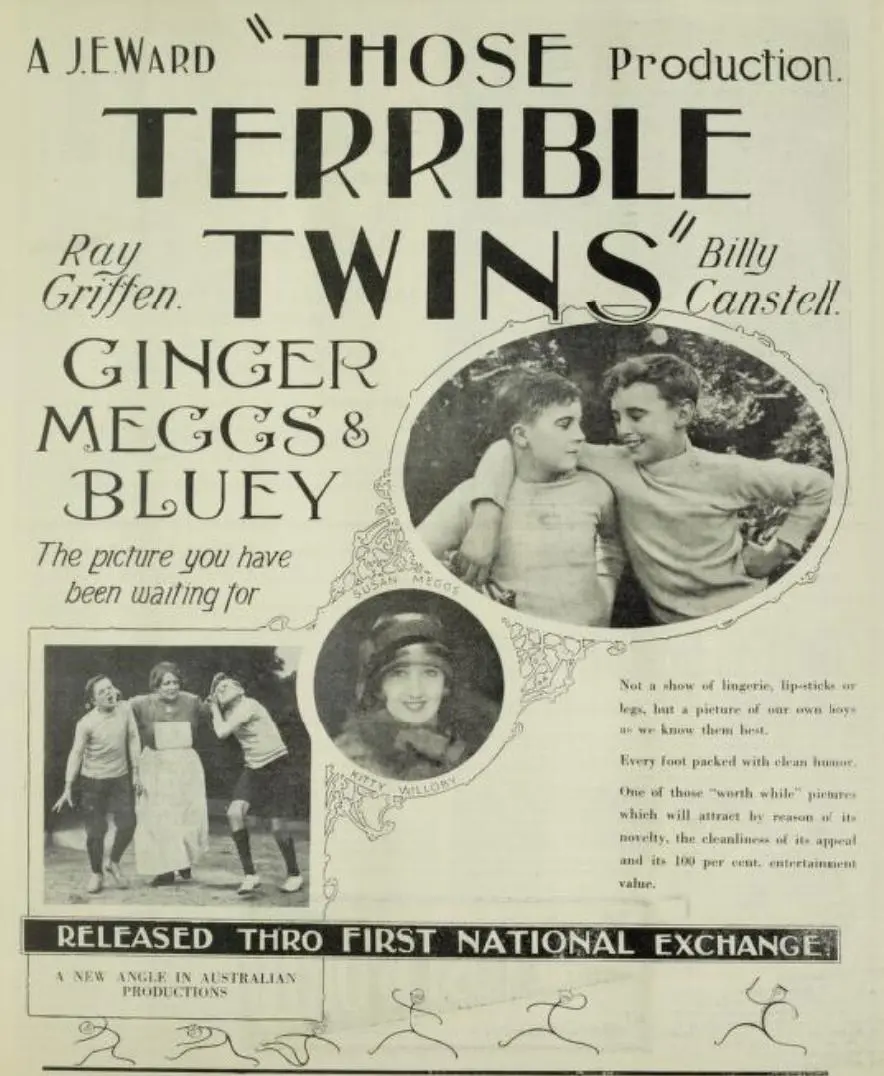
Is this film worth watching today? Short answer: No, unless you are a dedicated film historian or an obsessive fan of Australian cultural heritage. This film is for those who enjoy excavating the roots of national identity through media, but it is definitely not for anyone who requires a coherent plot or modern production values.
The film exists as a fascinating, albeit clunky, time capsule of a young nation finding its voice. It lacks the polish of contemporary American silents like The Ghost of Rosy Taylor, yet it possesses a raw, localized energy that is hard to ignore. It is a rough draft of Australian cinema.
1) This film works because it captures the authentic 'larrikin' spirit of 1910s Australia with a grit that later, more polished adaptations often smoothed over.
2) This film fails because its structure is essentially a series of disconnected skits that lack any real narrative momentum or emotional stakes.
3) You should watch it if you want to see the literal genesis of a character that would dominate Australian newspapers for the next century.
Ginger Meggs is more than just a character; he is a prototype. In 1919, when Billy Canstell stepped into the role, the 'larrikin' archetype was still being codified in the Australian consciousness. The film reflects this perfectly. It is loud, messy, and unashamedly local. Unlike the more refined comedies coming out of Europe at the time, such as Sången om den eldröda blomman, this production feels like it was made in a backyard. That is its greatest strength and its most crippling weakness.
The acting is broad—extremely broad. Canstell plays Ginger with a frantic energy that borders on the exhausting. Every shrug, every wink, and every punch is telegraphed to the back row of the theater. It is physical comedy in its most primitive form. While it lacks the grace of a Buster Keaton, there is a certain charm in its lack of pretension. It is honest in its desire to simply make a crowd of 1919 theater-goers laugh at a boy getting his ears boxed.
One of the most striking aspects of the film is its total disregard for what we now consider standard pacing. The scenes don't so much flow into one another as they collide. One moment we are in a classroom watching Ginger doodle on a slate; the next, we are in a field watching a chaotic boxing match with Tiger Kelly. There is no 'B' plot. There is barely an 'A' plot. It is a highlight reel of a comic strip.
This fragmentation makes the film feel much longer than its actual runtime. Without a driving conflict—other than Ginger's general desire to cause trouble—the viewer’s interest begins to wane after the third or fourth repetitive chase sequence. Compared to the storytelling found in The Frame-Up, which utilized a much tighter dramatic arc, Ginger Meggs feels like a series of anecdotes told by a drunk uncle. It is colorful, but it doesn't always make sense.
Those Terrible Twins Ginger Meggs and Bluey is worth watching only if you are interested in the evolution of comic strip adaptations. It serves as a stark contrast to the more sophisticated child-led comedies of the era, such as Puppy Love. If you are looking for genuine laughs or a moving story, you will be disappointed. If you are looking for a historical document, it is essential viewing.
The cinematography is functional at best. The camera remains static for the majority of the film, acting as a silent observer to the chaos unfolding in front of it. There is very little of the experimental lighting seen in films like Her Silent Sacrifice. Instead, the filmmakers rely on the natural harshness of the Australian sun, which gives the film a bleached, gritty look that actually suits the subject matter.
The set design is non-existent, utilizing real locations that provide a wonderful glimpse into the architecture and streetscapes of the era. Seeing the unpaved roads and the period-appropriate storefronts provides a layer of interest that the script fails to provide. It is a documentary of a place, disguised as a comedy about a boy.
Pros:
Cons:
It is important to remember that this film was released in a world still reeling from the Great War. The desire for light, local entertainment was at an all-time high. While we might look at it now and see a flickering, disjointed mess, the audiences of the time saw themselves. They saw their children, their streets, and their specific brand of humor. In that sense, the film was a massive success, even if it doesn't hold up to modern scrutiny.
When compared to more dramatic works like The Prodigal Son or the social critiques of Lady Windermere's Fan, Ginger Meggs feels lightweight. But that was the point. It wasn't trying to be art; it was trying to be a Sunday morning in motion. It succeeds in that limited goal. But it’s flawed. Deeply flawed.
Those Terrible Twins Ginger Meggs and Bluey is a cinematic fossil. It is fascinating to look at, but it no longer has a heartbeat. If you view it as a piece of archaeology, it is a goldmine of information regarding early Australian performance styles and set locations. However, as a piece of entertainment, it has long since expired. It is a rough, unpolished attempt to turn a national icon into a movie star, and while it paved the way for future adaptations, it remains a difficult watch for anyone not armed with a history degree. Watch it for the context, not the content.
Community
Log in to comment.