DbcultAccessing Vault...
Cult Review
Senior Film Conservator
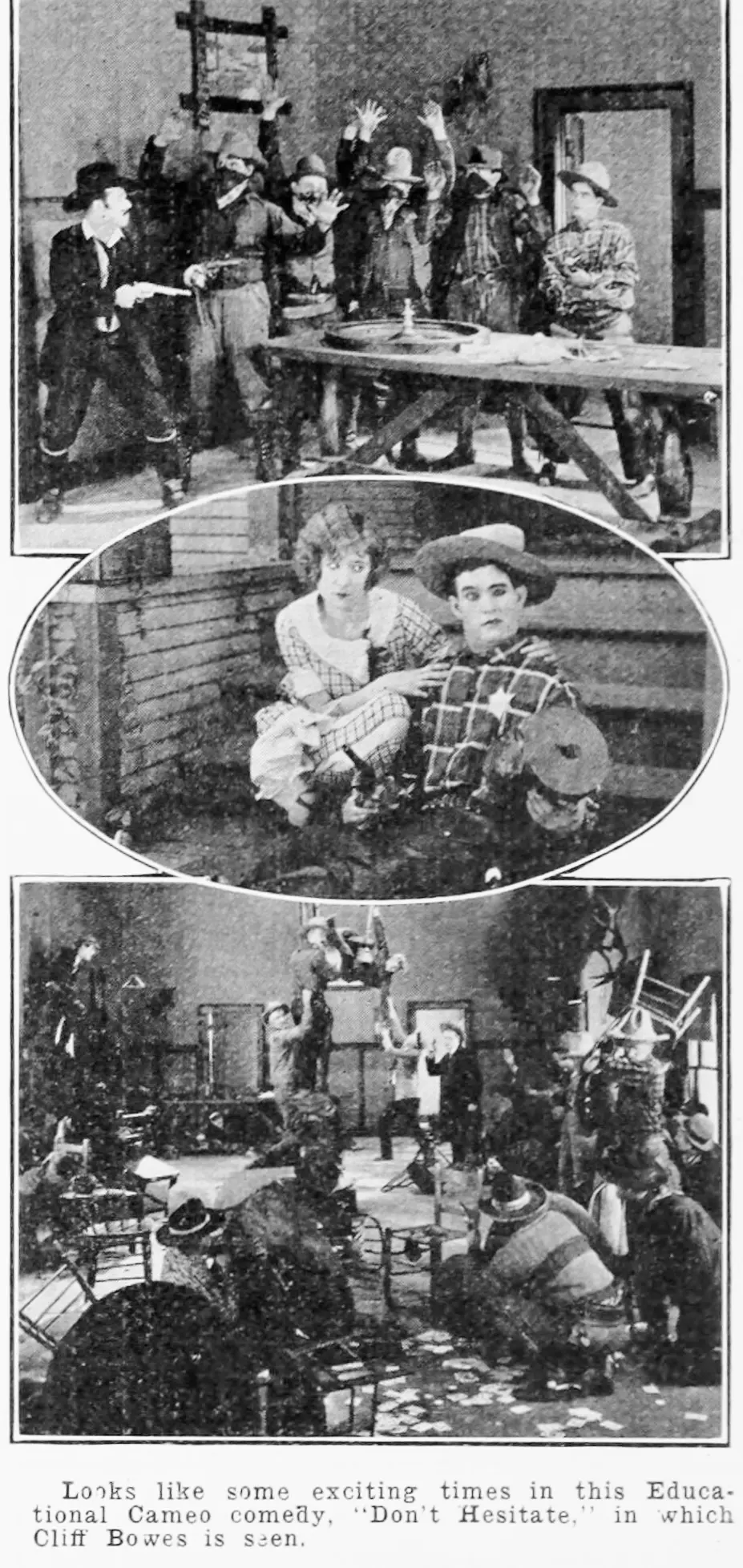
Ah, the silent era! A time when narratives, unburdened by dialogue, had to speak volumes through expression, gesture, and the sheer ingenuity of their plots. And what a plot we have with Don't Hesitate, a delightful 1919 offering that, despite its age, still manages to poke fun at the very foundations of law, order, and the human need for drama. It’s a film that asks us to consider: what happens when a town becomes too clean? What becomes of the lawman when there's no lawlessness left to tame? This isn't just a simple Western; it's a sly, comedic commentary on the inherent paradoxes of societal progress and the sometimes-fragile ego of those tasked with upholding peace.
Our story introduces us to a new Sheriff, portrayed with a charming blend of earnestness and burgeoning desperation by Earl Montgomery. Montgomery, a familiar face in early cinematic comedies, brings a nuanced vulnerability to a character who is, at his core, a man out of his depth not by incompetence, but by an excess of success. He arrives in a frontier town, expecting the usual wild and woolly chaos that defined so many of its counterparts – the kind of place where a lawman could truly earn his spurs. Instead, he finds a community so impeccably well-behaved, so devoid of vice and villainy, that it borders on the utopian. The saloons are quiet, the streets are swept, and the only shots fired are probably celebratory. It’s a vision of frontier life that stands in stark contrast to the gritty realism often depicted, say, in something like The Sea Wolf, where the harsh realities of human nature are laid bare. Here, the struggle is internal, a crisis of purpose.
The initial scenes, though likely brief in a silent short, would have brilliantly established this central dilemma. Imagine Montgomery’s Sheriff, pacing his pristine office, polishing an already gleaming badge, perhaps even trying to stir up a minor fracas just to have something to do. The irony is palpable: he's so effective, or rather, the town is so effective at self-governance, that he's rendered himself obsolete. This predicament isn't merely a comedic setup; it's a poignant observation on human nature. Do we, as individuals and societies, sometimes inadvertently create the very problems we then dedicate ourselves to solving? Is there a subtle, almost unconscious desire for conflict, for the narrative of struggle, even when peace is within our grasp?
Driven by this existential angst – and let’s be honest, probably a touch of professional boredom – our Sheriff conceives a truly audacious plan. He decides to stage a holdup. Not a real one, of course, but a meticulously choreographed charade, scheduled for four o'clock in the afternoon. It's a stroke of comedic genius, a desperate attempt to manufacture the very drama that his job description demands. This isn't just about job security; it’s about validating his role, proving his necessity to a town that seems to have forgotten why it even needed a Sheriff in the first place. The sheer hubris, the sheer theatricality of it all, is what makes this premise so enduringly funny. It’s a human flaw writ large on the silent screen: the need to feel important, even if it means fabricating the circumstances for that importance.
But here’s where the plot, like a well-oiled locomotive, takes an unexpected detour into full-blown farce. The Sheriff’s grand theatrical design is, unbeknownst to him, overheard by a genuine gang of desperadoes. These are not actors, not stand-ins for a mock-up; these are the real deal, the kind of scoundrels who would typically be making a Sheriff’s life miserable. Cliff Bowes and Virginia Vance, likely playing members of this opportunistic crew, would have brought a delightful villainy to their roles, embodying the very chaos the Sheriff was trying to conjure. The film doesn't delve into their motivations beyond simple greed, but their presence instantly elevates the stakes from a comedic misunderstanding to a genuine crisis.
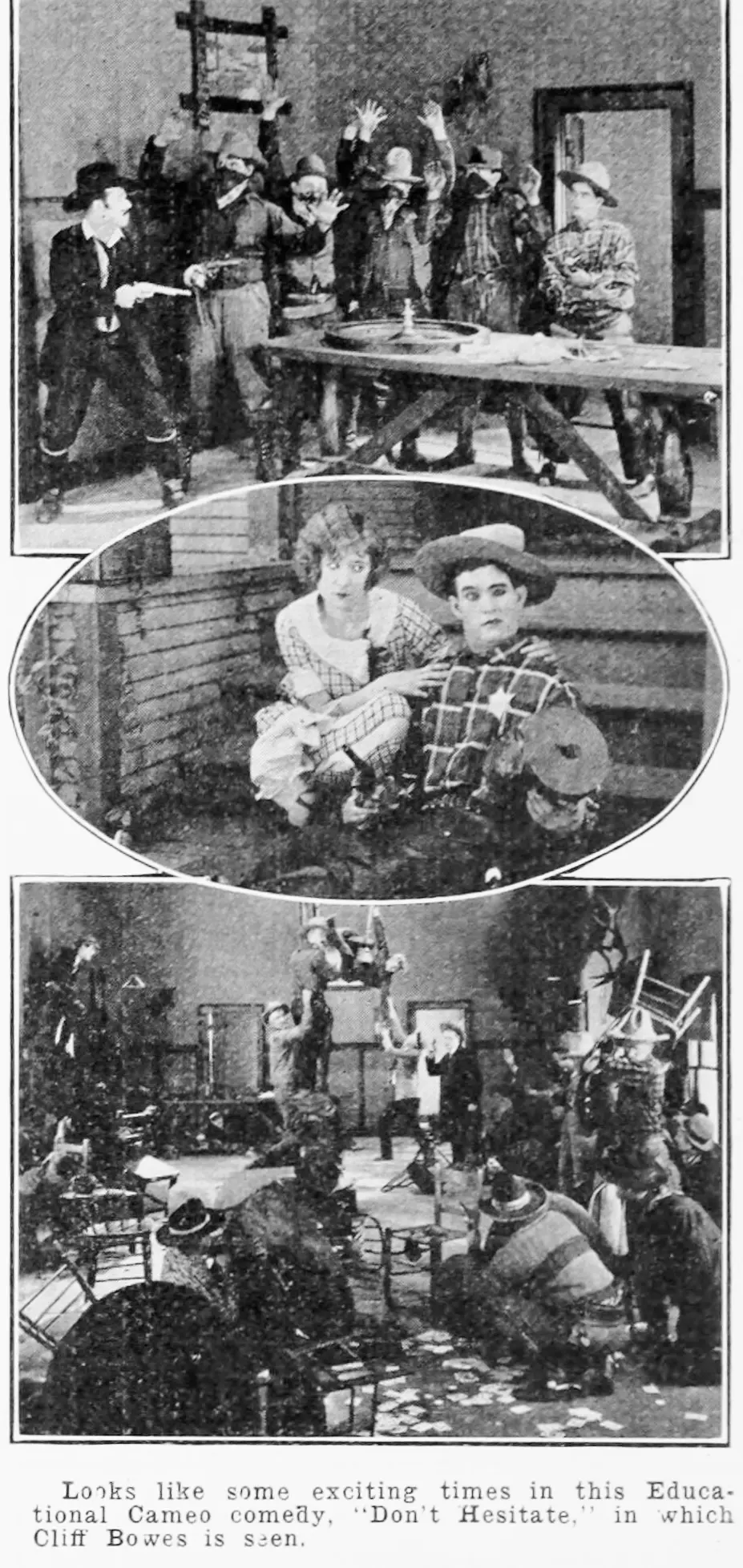
The true hold-up men, with an almost cynical appreciation for the Sheriff’s amateur dramatics, decide to substitute their own bona fide robbery for his planned fake one. This is the heart of the film's comedic brilliance: the subversion of expectation, the collision of intended fiction with undeniable reality. The Sheriff, expecting to orchestrate a controlled, predictable event, suddenly finds himself embroiled in an authentic, dangerous situation. The very scenario he painstakingly constructed to regain his professional footing becomes the instrument of his professional humiliation. It’s a classic case of dramatic irony, played out with the broad physical comedy and exaggerated expressions characteristic of the era.
Earl Montgomery's performance would have been pivotal here. As the Sheriff, his transition from self-assured orchestrator to bewildered victim would have required impeccable comedic timing and physical agility. Silent film acting, often maligned for its perceived over-the-top nature, was in fact a highly refined art form, demanding actors to convey complex emotions and narrative beats without uttering a single word. Montgomery, known for his work in dozens of shorts, would have expertly navigated the Sheriff's escalating panic, his facial expressions and body language speaking volumes about his embarrassment and terror. One can almost picture his jaw dropping, his eyes widening in disbelief as the fake holdup morphs into a frantic, genuine one.
The supporting cast, including Bowes and Vance, would have played crucial foils. Their portrayal of the 'real' bandits would have needed to be menacing enough to pose a genuine threat, yet perhaps with a touch of roguish charm to keep the tone light. The dynamic between the flustered Sheriff and the coolly professional criminals would have been a source of constant amusement, highlighting the stark contrast between his amateurish attempts at drama and their seasoned expertise in actual crime. This kind of mistaken identity and escalating chaos is a staple of early cinema, seen in various forms across genres, from the intricate plots of Under Suspicion to the more overtly slapstick Dodging a Million, though Don't Hesitate injects a uniquely Western flavour into the mix.
The film's ultimate resolution, though not explicitly detailed in the plot summary, would undoubtedly see the Sheriff extricating himself from his self-made mess, probably in a most undignified fashion. The enduring appeal of Don't Hesitate lies not just in its clever premise, but in its timeless satirical bite. It gently pokes fun at authority figures, at the human tendency to seek validation through manufactured circumstances, and at the unpredictable nature of fate. The idea of a town so orderly it needs to invent crime is a brilliant inversion of the typical Western narrative, where law and order are hard-won battles against an untamed wilderness. Here, the wilderness is within, a psychological landscape of boredom and the desperate need for purpose.
This film, like many of its contemporaries, served as pure entertainment, a momentary escape into a world of exaggerated scenarios and clear-cut comedic outcomes. Yet, beneath the surface of the slapstick and the visual gags, there's a subtle commentary on the societal contract. What is the role of law enforcement when there's no crime? Does society inadvertently create its own antagonists, or at least the conditions for them, out of a sheer inability to cope with perfect peace? This film suggests that perhaps, sometimes, the greatest threat to a peaceful existence isn't external villainy, but internal malaise.
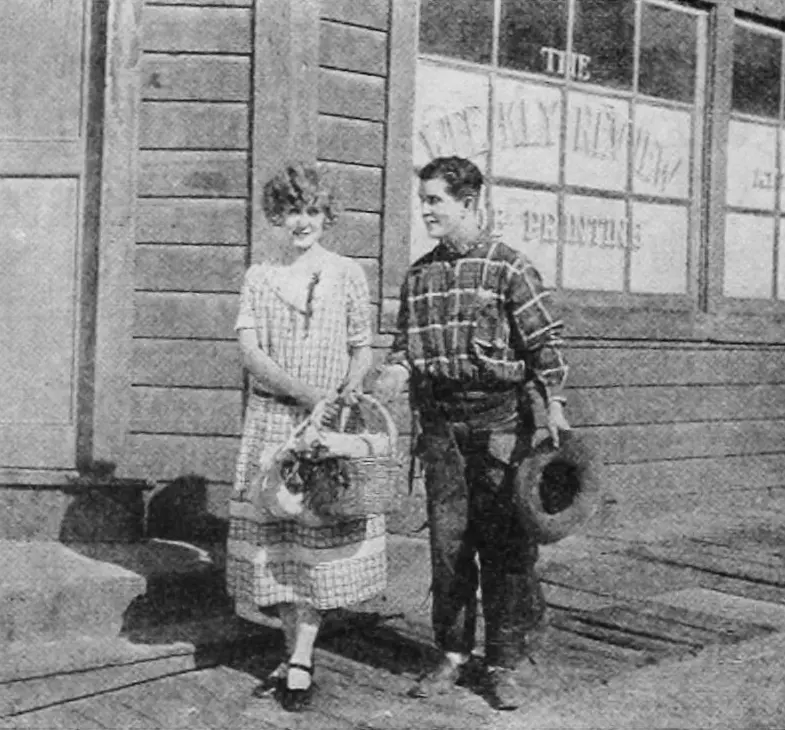
Released in 1919, Don't Hesitate sits comfortably within a vibrant period of cinematic experimentation. Filmmakers were constantly pushing boundaries, refining techniques, and discovering the vast potential of the nascent medium. While grand historical epics like The Queen of Sheba or social dramas like The Old Nest were captivating audiences with their scale and gravitas, shorts like Don't Hesitate were perfecting the art of concise storytelling and character-driven comedy. These films often relied on universal themes and situations to transcend the lack of spoken dialogue, making them accessible to diverse audiences across various linguistic backgrounds.
The use of physical comedy, a hallmark of this era, would have been paramount. The Sheriff’s initial attempts to appear busy, his conspiratorial whispers, the exaggerated reactions of the townspeople to the 'fake' holdup, and the genuine terror when the real bandits appear – all these moments would have been choreographed with precision, relying on expressive facial movements and pantomime. The pacing of such a film would have been brisk, driving the narrative forward with visual gags and escalating tension, culminating in the Sheriff’s 'embarrassing predicament.'
Ultimately, Don't Hesitate serves as a charming, if pointed, reminder that life, much like a well-crafted film, often throws curveballs when we least expect them. The Sheriff’s carefully constructed illusion of control shatters under the weight of genuine chaos, forcing him to confront the unpredictable nature of reality. It’s a lesson in humility, delivered with a generous dose of laughter. The film’s title itself, 'Don't Hesitate,' takes on an ironic resonance. The Sheriff hesitates to accept his redundancy, hesitates to live in a world without conflict, and in doing so, creates a situation where genuine hesitation could prove fatal. This film, for all its lightheartedness, subtly critiques the human desire to manipulate circumstances, and the often-comical consequences when those manipulations backfire spectacularly.
While we may not have extensive historical documentation on the critical reception of every silent short, the enduring appeal of such a clever premise suggests that Don't Hesitate would have been a crowd-pleaser. It taps into universal themes of mistaken identity, the folly of hubris, and the simple pleasure of watching someone get their comeuppance, all wrapped in the charming aesthetic of the silent Western. It stands as a testament to the ingenuity of early filmmakers and actors like Earl Montgomery, Cliff Bowes, and Virginia Vance, who, without the benefit of spoken dialogue, managed to craft narratives that continue to resonate and amuse over a century later. It’s a film that, despite its simplicity, offers a surprisingly rich vein of social commentary, proving that sometimes, the most profound observations can be delivered with a wink and a smile.
In an era where films like Mr. Opp explored societal ambition or The Stimulating Mrs. Barton delved into domestic complexities, Don't Hesitate chose a path of playful subversion. It didn't aim for grand statements but rather a sharp, witty observation on the human condition, packaged in the familiar tropes of the Western. And in doing so, it secured its place as a minor but memorable gem in the vast, glittering tapestry of silent cinema. So, if you ever find yourself in a town too quiet, or a job too easy, perhaps take a lesson from our unfortunate Sheriff: sometimes, it’s best not to complicate a good thing. And definitely, don't hesitate to enjoy a film that still manages to deliver genuine laughs and thoughtful introspection, all without uttering a single word.
IMDb —
1927
Community
Log in to comment.