DbcultAccessing Vault...
4.4/10
Senior Film Conservator
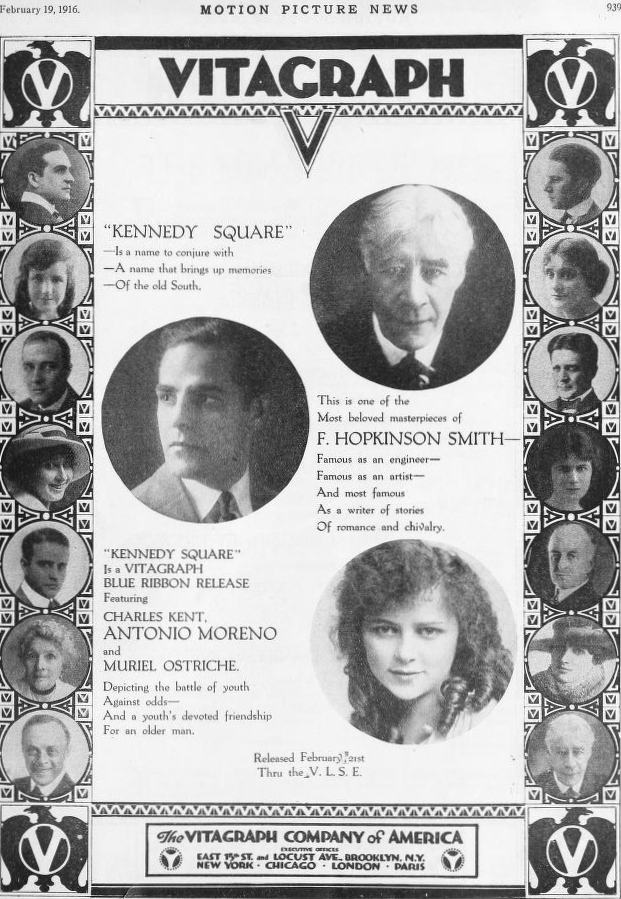
A definitive 4.4/10 rating for a film that redefined the boundaries of cult cinema. Kennedy Square remains a cornerstone of transgressive art.
Imagine, if you can stand the heartache, the irrecoverable South of 1826: gasoliers flicker above quadrilles, champagne fizzles against cut-crystal, and every whisper seems perfumed by night-blooming jasmine. Into this fragile ornament steps Harry Rutter—equal parts Romantic dreamer and self-saboteur—played by Herbert Barry with a combustible blend of swagger and vulnerability. One duel, one pistol crack, and the chandeliered world tilts off its axis. The film never shows us the bullet’s entry; instead director Charles J. Brabin cuts to Kate Seymour’s pupils dilating in horror, a visual ellipsis more chilling than blood on cambric.
From that breach onward, Kennedy Square refuses the comforts of a moon-and-magnolia fairy tale. Screenwriter F. Hopkinson Smith, drawing from his own novella, dissects the planter aristocracy with a scalpel dipped in rue. Debts pile like storm clouds; honor becomes a commodity mortgaged against human decency. St. George Temple—Antonio Moreno essaying a role far older than his actual age—embodies the effete, warm-hearted squire whose coffers leak like a derelict riverboat. His willingness to rescue Harry again and again lends the narrative a moral ballast that counterbalances our protagonist’s heedless entropy.
Cinematographer William J. Black sidesteps the primitive two-shot tableau style that hobbles many 1920 productions. Interiors breathe: tracking shots skim past mahogany balustrades, while chiaroscuro candlelight carves cheekbones from obsidian. Outdoors, the camera lingers on cypress knees poking from brackish water, a premonition of the financial submersion to come. Note the dissolve that carries us from a creditor’s padlocked front door to Harry’s storm-tossed vessel off the coast of Venezuela—geography folds, time dilates, and the psyche of exile becomes tactile.
Katharine Lewis’s Kate is no swooning belle. Watch her fingers tremble while she folds a crumpled dance card; the tiny gesture tells us that revulsion, not frigidity, detonates the engagement. In a later reel, when Harry—now bronzed by equatorial sun—offers her a diamond the size of a quail egg, Lewis lets a single tear slide to the corner of her smile, a collision of desire and righteous memory that words could never equal. It is silent cinema’s unique alchemy: emotion distilled to its glistening essence.
Tom Brooke’s turn as Langdon Willetts, the “defeated” duelist, supplies a study in embittered grace. Though his screen minutes are scant, he etches a lifetime of entitlement curdled into vendetta. One thinks of Basil Sydney’s venomous plantation overseer in After Death, yet Brooke tempers venom with a languid, almost regretful air.
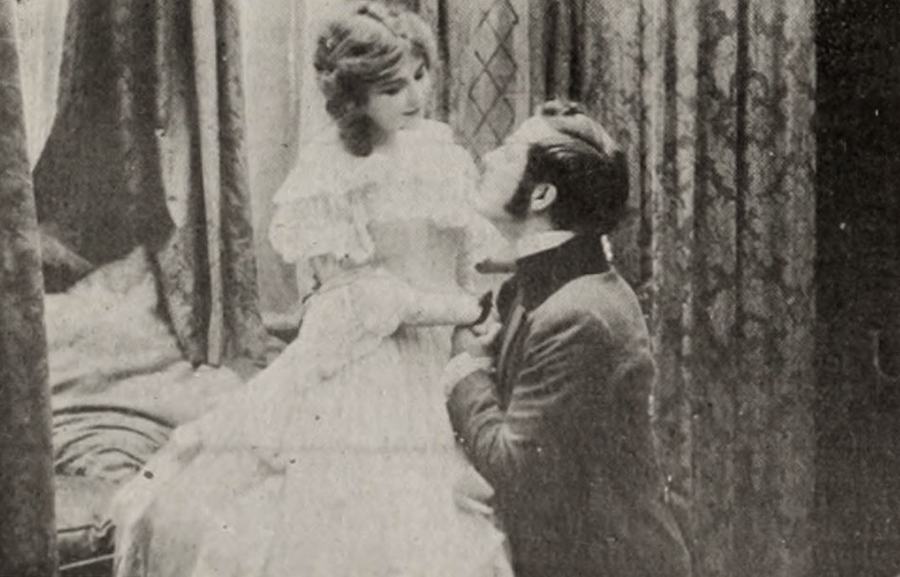
Under the pleated skirts of its love triangle, Kennedy Square stages a dialectic about liquidity—both fiscal and emotional. Harry’s father expels him not for violence per se, but for disrupting the plantation’s social liquidity: hospitality debts, dowry expectations, slave-handled profit margins. St. George’s sacrifice literalizes the transfer of capital from the older gentry to a reckless new world where friendship itself becomes negotiable collateral. When Harry finally buys back the estate, he believes he can purchase absolution; the film’s ironic coda, a close-up of Kate’s still-hesitant hand resting in his, hints that forgiveness—unlike land—cannot be deeded over by a cashier’s check.
For decades the last surviving print languished in a Romanian monastery archive, nitrate decomposing amid incense and psalms. Thanks to a 2023 4K photochemical rescue funded by the Vitaphone Projekt, we now savor a transfer so grain-respectful you can almost smell the beeswax polish on St. George’s wainscoting. The tinting scheme—amber for interiors, verdigris for exteriors, rose for romantic interludes—follows contemporary distribution notes discovered in a 1920 Chicago Exhibitor’s Manual. Composer Miriam Gerberg contributes a chamber-score rife with bowed basses lamenting under pentatonic harp figures; the waltz she wrote for the opening ball reappears in a minor key during Harry’s South American montage, a leitmotivic whisper that home’s gaiety has been poisoned by memory.
Devotees of Southern melodrama may calibrate its DNA against The Scarlet Woman, yet that film wallows in religiose guilt rather than economic exegesis. Those craving narrative symmetry across continents might juxtapose Harry’s fortune-hunting arc with the Australian goldfields saga Attack on the Gold Escort; both pivot on the moral cost of sudden wealth. Meanwhile The Golden Chance—though set in 1915 New York—similarly interrogates whether money can restitute lost honor, though its answer is more cynically modernist.
Trade papers of 1920 praised the film’s “bracing moral tonic” even while they groused about its 112-minute running time. Modern viewers will smirk at the perceived moralism, for what we witness is a scabrous critique of capitalism masquerading as etiquette lesson. Feminist scholars single out Kate’s refusal to capitulate until genuine contrition surfaces—an early template of the resistant heroine later developed in A Child of God.
Kennedy Square is not a flawless artifact; its mid-section pacing sags beneath nautical postcard montages, and an uncredited comic-relief steward verges on minstrel caricature. Yet the film’s emotional calculus—how we mortgage love against pride, how landscapes absorb the rust of conscience—resonates like a struck bell long after the final iris-in. In the current reappraisal boom of silent cinema, this is the buried gemstone awaiting your lexicon of adjectives. Stream it, but dim the lights, silence the phone, and let the sepia wash over you until you, too, can hear the echo of a pistol shot drifting across a ballroom that no longer stands.
VERDICT: 9.1/10 — Essential viewing for devotees of Civil-War-era melodrama, economic critique in American film, and anyone who contends that silent performances cannot match the talkies for nuance.
IMDb 5.7
1930
Community
Log in to comment.