DbcultAccessing Vault...
5.3/10
Senior Film Conservator
A definitive 5.3/10 rating for a film that redefined the boundaries of cult cinema. The Desert Bride remains a cornerstone of transgressive art.
The Desert Bride is a tough sell today, honestly. If you're into those early sound-era melodramas with some truly bizarre pacing and acting choices, maybe. People who enjoy picking apart the strange energy of films from this specific transitional period might get a kick out of it. But if you're looking for a coherent story, strong performances, or anything resembling modern filmmaking sensibilities, you're probably going to be pretty miserable. It's a curiosity, at best, for the very specific niche.
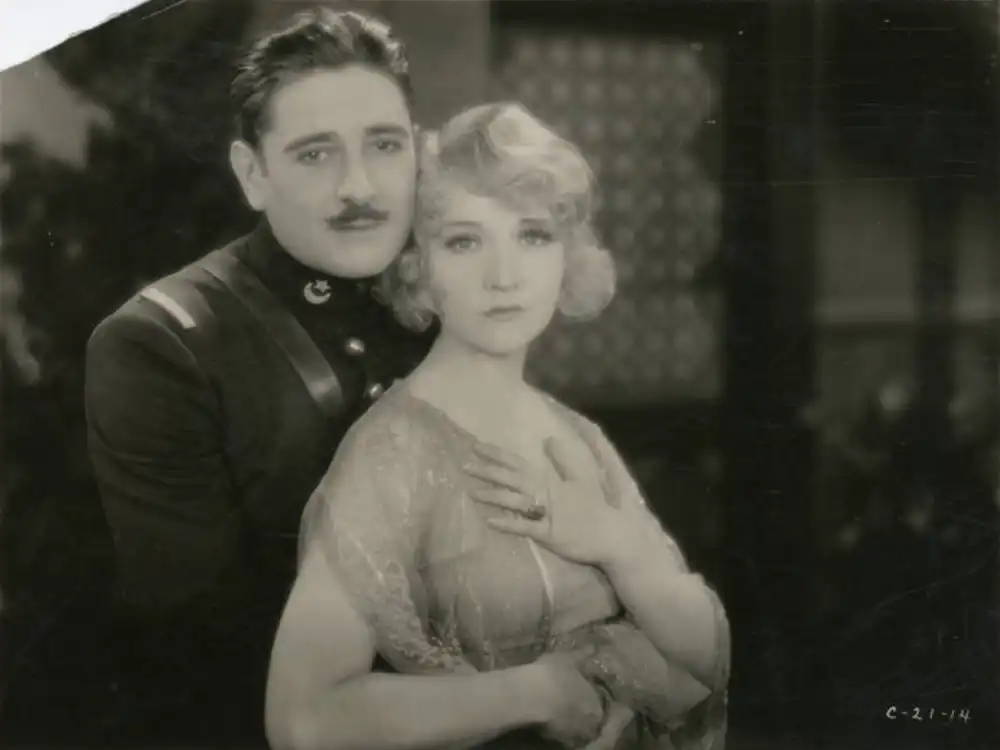
The premise is simple enough: French officer Captain Pierre (Allan Forrest) and his fiancée, Eve (Betty Compson), get nabbed by Arab Nationalists in North Africa. Their leader, Sheik Ali (Otto Matieson), is not exactly a gracious host. What follows is their captivity, some torture, and the eventual, inevitable rescue. It's a framework that could hold a lot of tension, but the movie often struggles to find its footing.
The pacing is a real sticking point. Scenes often feel stretched out past their natural breaking point. There's a particular sequence where Eve is being questioned, and the camera just sits there, watching her face for what feels like an eternity. It's meant to convey her inner turmoil, I think, but after a while, you start checking your watch. It transforms from dramatic tension into something bordering on awkward silence, like a bad first date where nobody knows what to say next.
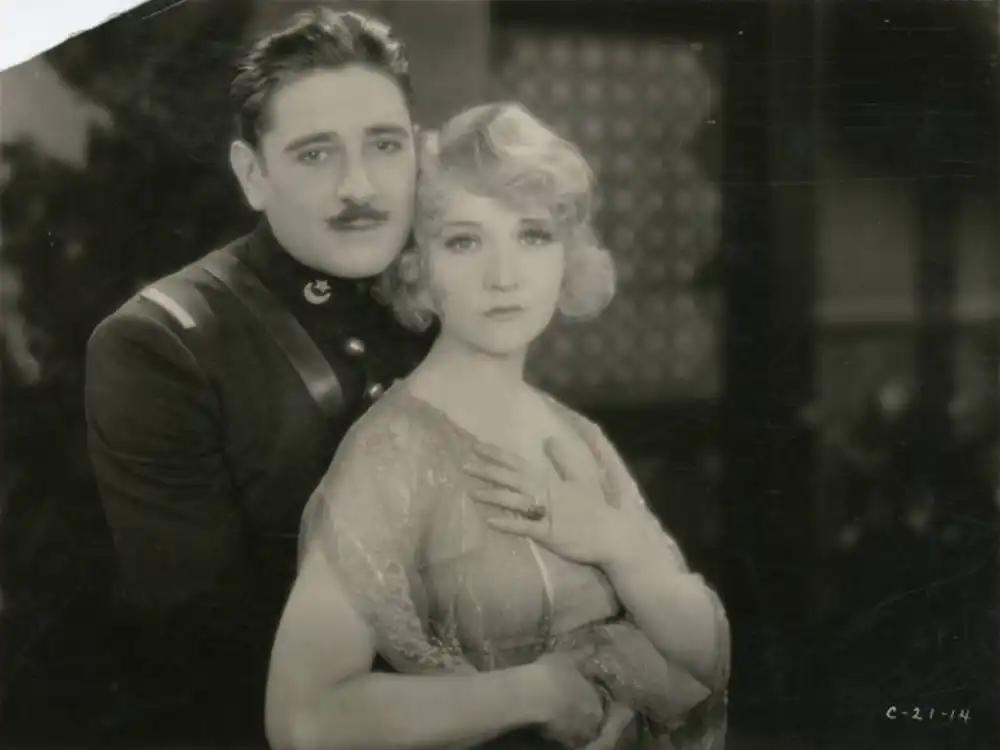
Then there's the dialogue. Oh, the dialogue. It's very much of its time, delivered with a kind of theatrical stiffness that early talkies were infamous for. Every line feels pronounced, like the actors are worried the microphone won't pick them up. Betty Compson tries her best to imbue Eve with some spirit, but even her defiance feels a little too perfectly articulated, a little too rehearsed for someone in immediate peril. Allan Forrest as Pierre is, well, he's there. He gets tortured, he looks worried. He’s a bit of a blank slate, honestly.
But the real oddball here is Roscoe Karns as Lieutenant Bob. He’s the comic relief, apparently, and he seems to be in an entirely different movie. While Pierre and Eve are facing grim fates, Bob is cracking wise, flirting with guards, and generally acting like he's on a holiday. There's a scene where he's locked up, clearly in a bad situation, and he's still making lighthearted quips. It’s hard to tell if this is supposed to be incredibly brave, or just incredibly misplaced. It just creates this wild tonal shift that keeps pulling you out of any supposed drama.
The visual elements don't always help. The 'desert' often looks suspiciously like a soundstage, with painted backdrops that feel a little too flat. The crowd scenes are particularly strange; they feel sparse, like they couldn't quite afford enough extras, or perhaps the ones they had weren't entirely sure what they were supposed to be doing. There’s a moment during a skirmish where a background extra just kind of… shuffles off screen, rather than engaging. It's a tiny thing, but it catches your eye.
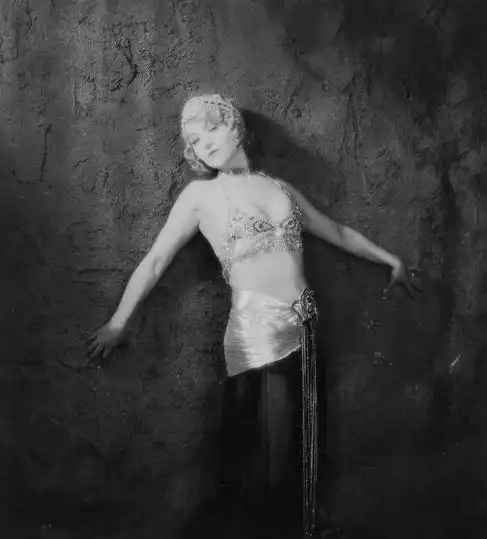
And the costumes for the 'Arab Nationalists'? Very much Hollywood's idea of the exotic, not necessarily grounded in any reality. Eve, too, despite her ordeal, manages to keep her outfits remarkably pristine, which always makes you wonder about the logistics of captivity in the desert. No dust, no tears, just perfect Hollywood distress.
The film’s biggest struggle is its inability to decide what it wants to be. Is it a harrowing tale of survival? A romantic drama? A light adventure? It tries to be all of them at once, and ends up being none of them convincingly. One minute, Pierre is being subjected to some implied torment, the next, Bob is delivering a punchline. The whiplash is real.
When the rescue finally comes, it feels incredibly abrupt. After all the drawn-out scenes of captivity and waiting, the French troops just appear, a quick skirmish, and then everyone is safe. The sense of triumph feels unearned, almost like the filmmakers just wanted to get it over with. The final embrace between Pierre and Eve is meant to be this grand, emotional release, but it just looks like two actors hitting their marks, probably thinking about lunch.
So, is it worth watching? For most, probably not. But if you’re fascinated by the awkward, experimental phase of early sound cinema, and you don’t mind a lot of unintentional comedy, there are certainly things to observe here. It’s a messy, uneven film, but sometimes the most revealing cinema isn't the most polished. It's a window into what moviemaking looked like when everyone was still figuring out the rules, and sometimes, breaking them by accident. Like The Show, it’s a glimpse into the mechanics, the struggle, of a changing medium.
IMDb 5.4
1936
Community
Log in to comment.