DbcultAccessing Vault...
Cult Review
Senior Film Conservator
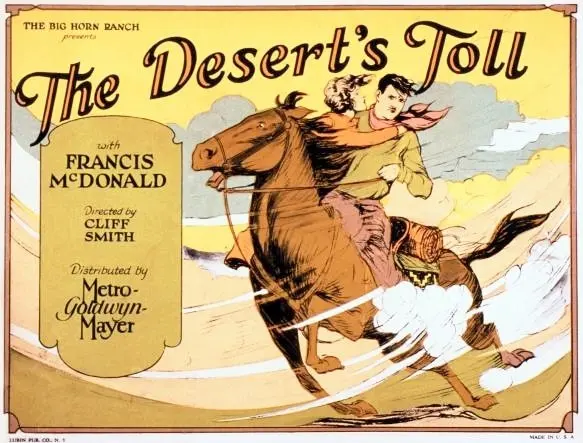
Short answer: Yes, but only if you are a dedicated archivist or a fan of the 'Poverty Row' aesthetic. If you are looking for the sweeping grandeur of a John Ford epic, you will be disappointed by the cramped, dusty reality of this production. This film is for the cinematic historian who finds beauty in technical limitations; it is not for the modern viewer who requires high-octane pacing or pristine restoration.
1) This film works because it captures a genuine sense of isolation and environmental hostility that larger, studio-bound films often missed.
2) This film fails because the narrative relies on tired melodrama that even in 1926 felt like a relic of a previous decade.
3) You should watch it if you want to see a rare, albeit brief, performance by Anna May Wong in a western setting, or if you enjoy seeing how low-budget filmmakers maximized natural locations.
There is something inherently honest about a film that cannot afford to hide its flaws behind expensive sets. The Desert's Toll is a prime example of the 'Poverty Row' tradition—films made on the cheap, intended for quick distribution in rural markets. Unlike the polished dramas of the time, such as Josselyn's Wife, this movie feels like it was shot in the very dirt it depicts. The sun-bleached frames and the visible sweat on Francis McDonald's brow aren't just acting choices; they are the result of a production that couldn't afford the luxury of climate-controlled soundstages.
The direction by Clifford Smith is functional, almost utilitarian. He doesn't waste time with artistic flourishes. He focuses on the movement of bodies through space. When Frank Darwin and Muriel Cooper navigate the rocky outcrops, the camera stays wide, emphasizing their smallness against the landscape. It is a stark contrast to the more theatrical approach seen in The Firing Line, where the environment is secondary to the drawing-room intrigue. Here, the environment is the boss. It dictates the pace, which, admittedly, can be as slow as a mule train.
Francis McDonald leads the film with a performance that is surprisingly restrained for the silent era. He avoids the wild gesticulations often found in low-budget silents like His New Papa. Instead, he uses his eyes to convey a sense of weary desperation. He looks like a man who has spent too much time looking at the horizon and not enough time in civilization. It’s a performance that grounds the film’s more outlandish plot points.
Then there is Anna May Wong. Her presence in a western is a fascinating anomaly for the time. Though her role is limited, her screen presence is undeniable. She brings a level of sophistication and mystery that briefly elevates the film out of its B-movie roots. One has to wonder what she could have done with a script as nuanced as Tiger Rose. In The Desert's Toll, she is a highlight in a sea of character actors who mostly serve as human obstacles for the protagonists.
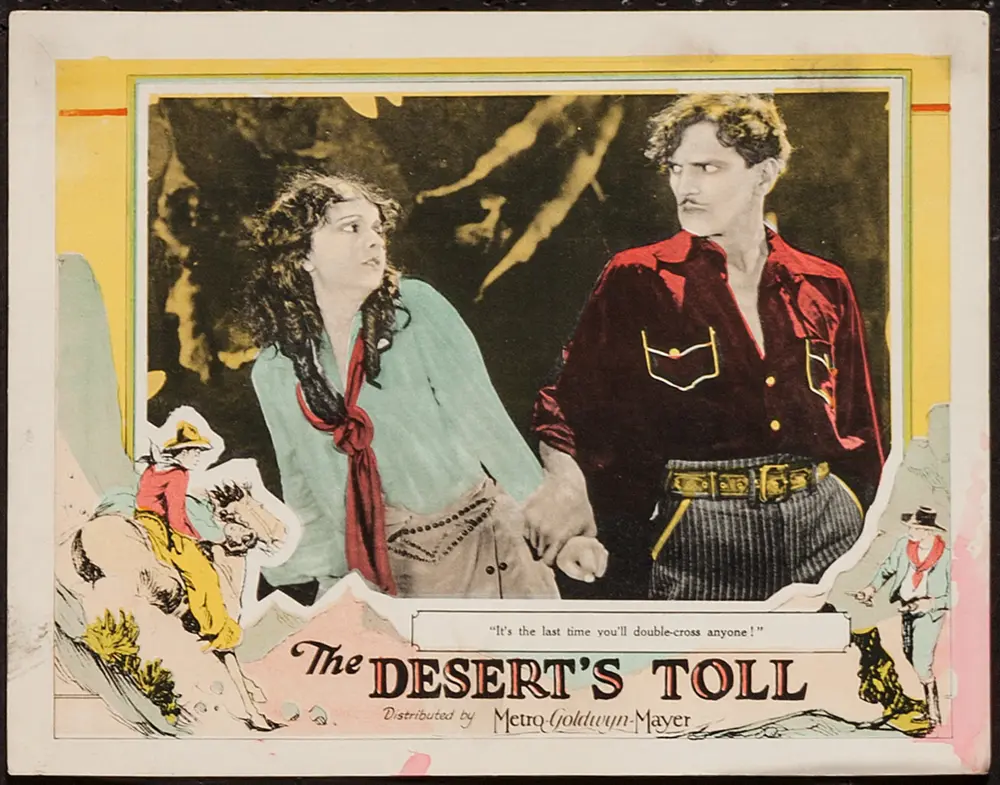
The Desert's Toll doesn't ask for your admiration; it demands your endurance, much like the desert itself.
Chief John Big Tree also makes an appearance, bringing his usual stoic dignity to the screen. It is easy to dismiss these roles as archetypes, but Big Tree had a way of commanding the frame that few of his contemporaries could match. When he is on screen, the film feels more substantial, more connected to the history of the genre than when it is focusing on the somewhat flimsy romance between Darwin and Cooper.
The cinematography in The Desert's Toll is a double-edged sword. On one hand, the natural lighting provides a realism that is often missing from high-budget silents. The way the shadows fall across the canyon walls in the final act is genuinely striking. It reminded me of the starkness found in Les gaz mortels, where the visual style is dictated by the harshness of the subject matter. On the other hand, the film suffers from the technical inconsistencies common in low-budget 1920s cinema. Some scenes are overexposed, others are so murky that the action becomes difficult to follow.
The pacing is where the film truly struggles. At times, it feels as though the editor was trying to stretch a twenty-minute short into a feature-length film. There are long sequences of characters simply walking or riding horses that don't add much to the tension. Compared to the energetic comedy of Monkeying Around or the structured narrative of Gridiron Glory, The Desert's Toll feels sluggish. It works. But it’s flawed. The sand gets everywhere, including the plot.
If you are asking if this film provides a modern entertainment experience, the answer is no. However, if you are asking if it provides a valuable window into the history of the Western genre, the answer is a resounding yes. It represents the 'meat and potatoes' of the silent era. It shows what audiences in small-town America were watching while the elite in New York were attending premieres for films like Wonderful London: London's Free Shows.
The film is a testament to the durability of the Western myth. Even with a shoestring budget and a predictable script, the core elements—gold, greed, and the wide-open sky—remain compelling. It captures a specific moment in time before the genre became overly codified and self-conscious. It is raw, unrefined, and occasionally boring, but it is never dishonest about what it is.
Pros:
Cons:
The Desert's Toll is a fascinating relic. It doesn't have the emotional weight of The Ragamuffin or the historical scale of Ostap Bandura, but it has a rugged charm all its own. It is a film that was born out of necessity and crafted with limited tools, yet it manages to tell a coherent, if simple, story about human nature under pressure. It is a minor work, certainly, but one that deserves its small corner in the history of the American Western. Watch it for the history, stay for the dust, and leave with a newfound appreciation for the gloss of modern cinema. It’s a tough watch, but for the right person, it’s a rewarding one.
IMDb —
1917
Community
Log in to comment.