DbcultAccessing Vault...
Cult Review
Senior Film Conservator
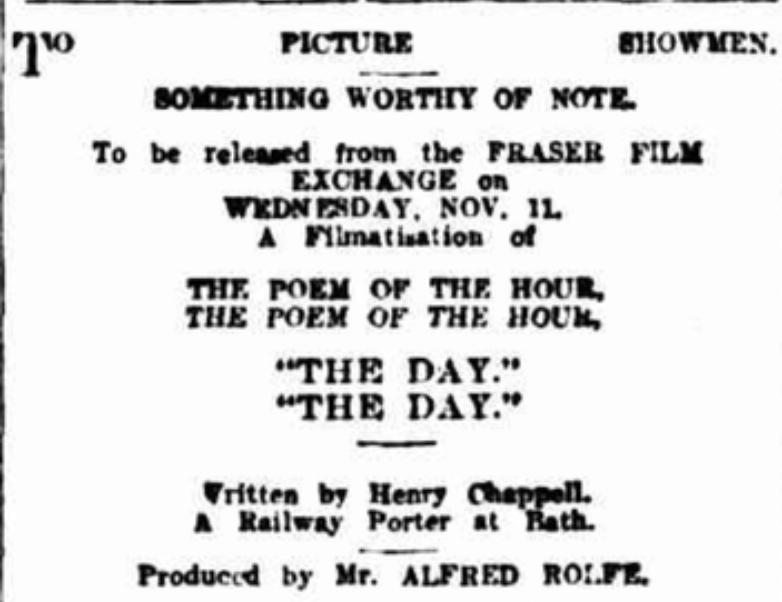
Celluloid ghosts seldom howl this loud. When the opening iris-in reveals a dirt road dissolving into heat-warped air, you already smell the cordite that hasn’t yet been lit; that’s how far ahead The Day lives in your head. Alfred Rolfe, doubling as director and star, orchestrates a ballet of imperial entropy: every dolly-in feels like a trespass, every cut like a slammed gate. The film’s eleven reels—long considered lost until a nitrate bouquet surfaced in a Hobbesian shed outside Canberra—pulse with a modernity that makes Griffith look sentimental and DeMille downright prudish.
Cinematographer Walter Barnett treats light as both witness and accomplice. Dawn scenes flare ochre, bleaching the soldiers’ faces until they resemble taxidermy trophies; noon conjures a scalpel glare that picks out the tremor in Rowan’s lower lip; twilight arrives syrupy and bruised, smearing guilt across every surface like cheap jam. The camera tilts up at a mission wall where lizards cling, their throats throbbing in sync with the distant drums—nature’s own metronome of doom. Meanwhile, intertitles written by poet Johnson Weir detonate in terse couplets: "Orders are bones—clean, white, impossible to swallow." Such compression rivals the haiku cruelty found later in Traffic in Souls.
Rolfe’s Rowan carries the thousand-yard stare before the term was invented; his pupils seem to recoil from the very world they record. Watch the way he fingers the sealed envelope—thumbnail grazing wax like a pianist testing a forbidden key—every micro-gesture foreshadows the moral rupture. Opposite him, Lily Somerset as Sister Mercy exudes a stoic eroticism; her veil functions less as holy garb than as guerrilla camouflage, framing cheekbones sharp enough to slice imperial assumptions. In the mess-hall sequence, she serves tea while whispering troop movements to the enemy—an act so casually treasonous it feels like breathing.
Child actor Arthur Poole embodies the film’s moral fuse: his sketchbook drawings mutate from naïve stick figures to increasingly spidery annotations of bullet trajectories. When a shell finally obliterates his chalk horizon, the cut lands like a guillotine on innocence itself. Compare this to the manipulative moppets of A Long, Long Way to Tipperary and you realize how far ahead Rolfe was in refusing sentimental pablum.
Weir and Chappell’s script reads like correspondence between Conrad and Sophocles, smuggled through a time-warp. Dialogue bristles with antithesis: "We came to civilize; we remain because civility is profitable." Characters speak in tautologies that reveal more than confession: "This land is ours because it is ours." Such linguistic cul-de-sacs prefigure the propaganda nightmares of The Reign of Terror, yet without the safety-net of historical distance.
Though released in 1914, The Day anticipates the sonic power of absence. Barnett lets ambient noise—cicadas, clanking bridles, distant surf—bleed through the visual track so convincingly you swear you hear them. During the final massacre, the screen goes stark white for eight agonizing seconds, forcing the audience to listen to an imaginary fusillade. This avant-garde gambit predates the cathartic silence of The Bells by a full decade.
Where Pierre of the Plains romanticizes the frontier and Attack on the Gold Escort fetishizes valor, The Day deglamorizes conquest by exposing its supply-chain logistics. Pay attention to the quartermaster scenes: barrels of rum branded with the same insignia as the bullets—intoxication and extermination shipped together, buy-one-get-one-free. A ledger entry flashes: "200 gallons rum, 4000 rounds .303, 1 conscience (missing)." The arithmetic of empire has rarely looked this banal.
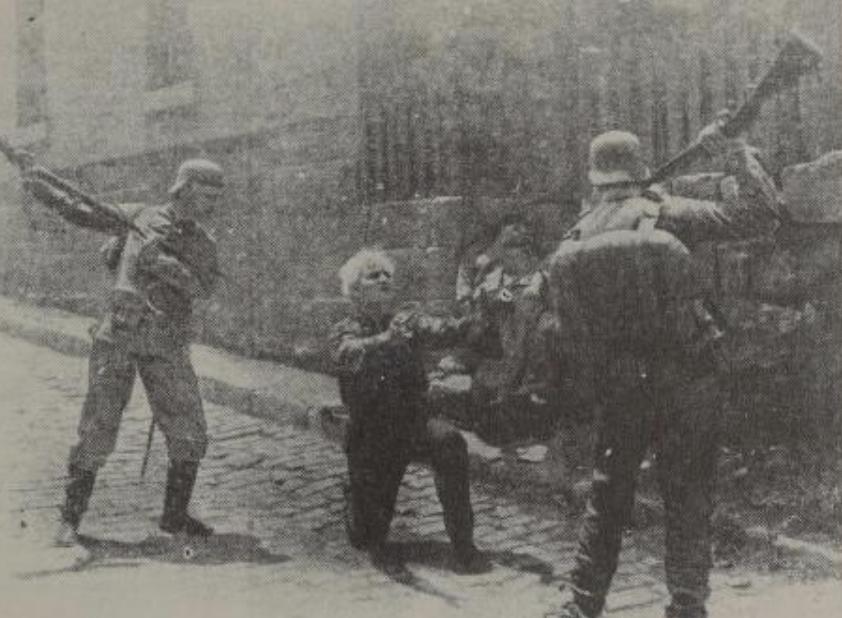
Rolfe refuses to drape women in the usual tropes of purity or treachery. Sister Mercy’s betrayal stems not from lust but from a ledger of humanitarian debt: she aids the insurgents because the colonial hospital refused her morphine for dying villagers. Her final walk through the burning infirmary—veil aflame like a comet—renders her a paradoxical saint of annihilation. Contrast this with the decorative hostages populating My Official Wife and you taste the difference between proto-feminist complexity and cardboard chivalry.
Editors of the era typically spliced scenes with polite fades; Rolfe instead employs staccato jump-cuts that prefigure Soviet montage. A close-up of Rowan’s ticking pocket watch smash-cuts to a wide shot of the village square where time is measured in corpses. The temporal dislocation infects the viewer: you feel minutes evaporate while hours crawl. This manipulation of perceived duration would later become a signature of The Road to the Dawn, yet here it feels raw, almost involuntary.
The local priest, Father Healy, blesses artillery shells before they’re hoisted into howitzers—an absurdist ritual that travesties the sacraments. In one harrowing insert, communion wafers slide down the ammo-feed like copper-jacketed hosts. The image is so blasphemous it circles back to a kind of savage grace, indicting any faith that sanctifies slaughter. The sequence reverberates through later religious satires but never with this visceral sting.
Premiering days after Britain declared war on Germany, The Day was denounced as "defeatist bacillus" by the same tabloids that praised The Last Volunteer. Cinemas in Manchester demanded cuts; Adelaide banned it outright. Within a year, the negative was rumored melted for its silver nitrate to fund war bonds. Thus the film vanished into phantom lore, referenced only in whispers among archivists who swore they could still smell gunpowder on the sprockets.
2019: a rusted biscuit tin labeled "kerosene" in a Tasmanian shed yielded nine reels. Restoration chemists at the NFSA battled vinegar syndrome, frame-by-frame, coaxing emulsion back from crystalline death. The reclaimed print premiered at Il Cinema Ritrovato to a standing ovation that lasted—fittingly—an entire day. Critics wept not merely for the art but for the mirror it hoists to our perpetual present: forever wars, outsourced atrocities, algorithmic jingoism.
Stream The Day beside Legion of Honor and watch how honor mutates into horror when logistics trump ethics. Pair it with Shadows of the Moulin Rouge to see colonial decadence at its most self-cannibalizing. Or program a triple bill with The Lost Chord and Diligencekusken fra San-Hilo to trace how early cinema grappled with spiritual bankruptcy across continents.
Great art doesn’t age; it waits like a landmine. The Day detonates under your assumptions about early cinema, about war, about the very grammar of moral seeing. It proves that in 1914, while others were still honing the syntax of narrative, Rolfe and company already rewrote the language of outrage. Seek it, study it, survive it—because the alternative is to remain comfortably blind in the glare of an endless noon.
IMDb 6.8
1935
Community
Log in to comment.