DbcultAccessing Vault...
6.1/10
Senior Film Conservator
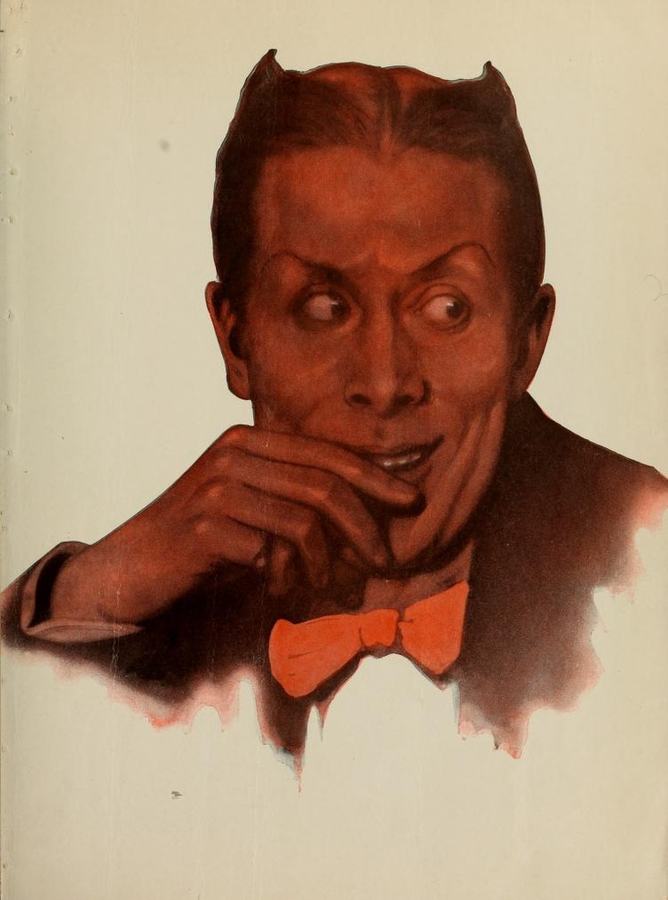
A definitive 6.1/10 rating for a film that redefined the boundaries of cult cinema. The Devil remains a cornerstone of transgressive art.
A cathedral of shadows
There is a moment, roughly seventeen minutes in, when the camera forgets its characters and simply stares at a stairwell: iron ribs, gas-jet trembling, a single glove abandoned like shed skin. Edmund Goulding lets the shot linger until the silence grows fangs. You realize the staircase is not architecture but jurisprudence—every step a verdict, every banister a moral ledger. By the time Lucy Cotton glides upward, veil trailing like a comet’s tail, the space has already indicted her. It is the first hint that The Devil will not content itself with persons; it means to arraign the very air they exhale.
Fredric March, rail-thin and eyes blasted wide, begins as a quill-pusher whose greatest sin is eating the office glue. One dusk he is summoned to a private salon wallpapered in share certificates. George Arliss, voice a silken rasp, offers him a new job description: “Professional Tempter, salary open, eternity optional.” The clerk laughs—until he notices the ink on the contract is still wet and smells of sulfur and café mit schlag. From here the film becomes an instruction manual for manufacturing myth: a borrowed overcoat turns into a sorcerer’s robe, a mislaced signature becomes a curse, and every debtor is recast as a soul in peril. March’s performance is a feat of negative charisma; he expands into diabolical largeness by shrinking into self-disgust.
Margot’s heretical eyes

Lucy Cotton plays a war-widow who enters wearing mourning the color of candle smoke. She intends to expose the city’s new “devil,” yet every revelation fastens another shackle to her own wrist. Cotton’s acting style here is all inhalation; she seems to breathe the set design into herself until even her collarbones look testimonial. Watch the way she fingers a pawn-shop locket—at first it is evidence, then a bribe, finally a noose. The film’s radical gambit is to make virtue look more corrosive than vice; Margot’s rectitude scratches varnish off the world quicker than any satanic nail.
Vienna as grand guignol stock exchange
Goulding and Molnár transform the city into a bourse where souls are shortsold and futures are traded on yesterday’s repentances. Streetcars clatter like rosaries; café tables balance on checkered tiles that resemble oversized ledgers. In one bravura sequence, a courtroom is redressed overnight into a ballroom: witness benches become banquettes, the judge’s podium mutates into a champagne tower. The message is unspoken yet deafening—jurisprudence and festivity share the same skeleton; swap the lighting and the set list, you swap reality’s verdict.
Intertitles sharp enough to shave
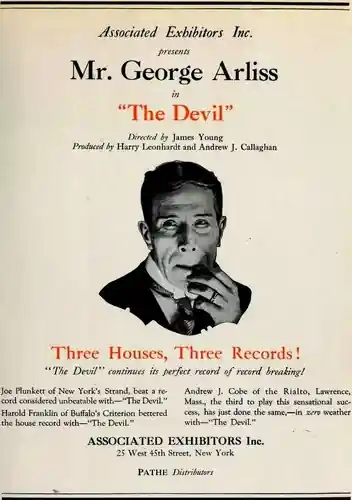
Oliver Herford’s cards arrive like switchblades: “He sold his soul and asked for a receipt,” “The devil is only a banker who never calls a loan,” “Angels are debtors with better publicists.” Each epigram is etched in high-contrast lettering that mimics newspaper headlines, reminding viewers that truth is typeset by whoever buys the ink.
Satan’s middle managers
Roland Bottomley and Edmund Lowe portray a duo of besuited go-betweens who could slip into any modern open-plan office. Their job is to brand evil, to A/B test temptation, to produce quarterly reports on backsliding. When they hand Margot a business card that simply reads “After-Hours,” the film anticipates every late-night doom-scroll we now perform a century later.
The soundtrack that isn’t there
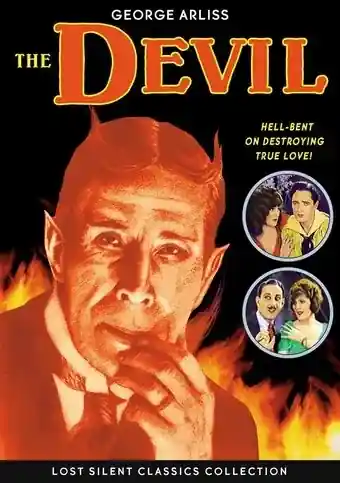
Most prints circulate sans score, and the void is ferocious. You hear the sprockets, the faint wheeze of the carbon arc, your own pulse. Each absence is a phantom overture, teaching you to provide your own moral soundtrack—only to discover you keep choosing waltzes in a minor key.
Where Sleeping Beauty narcotizes its audience with chromatic opulence, The Devil opts for fiscal insomnia. It shares DNA with The Page Mystery in its fondness for documents as plot engines, yet surpasses that whodunit by insisting every clue is a bearer bond. The moral vertigo of The Ordeal of Rosetta finds an urbane cousin here; both films stage female martyrdom, but The Devil refuses the catharsis of sanctity.
Restoration and resurrection
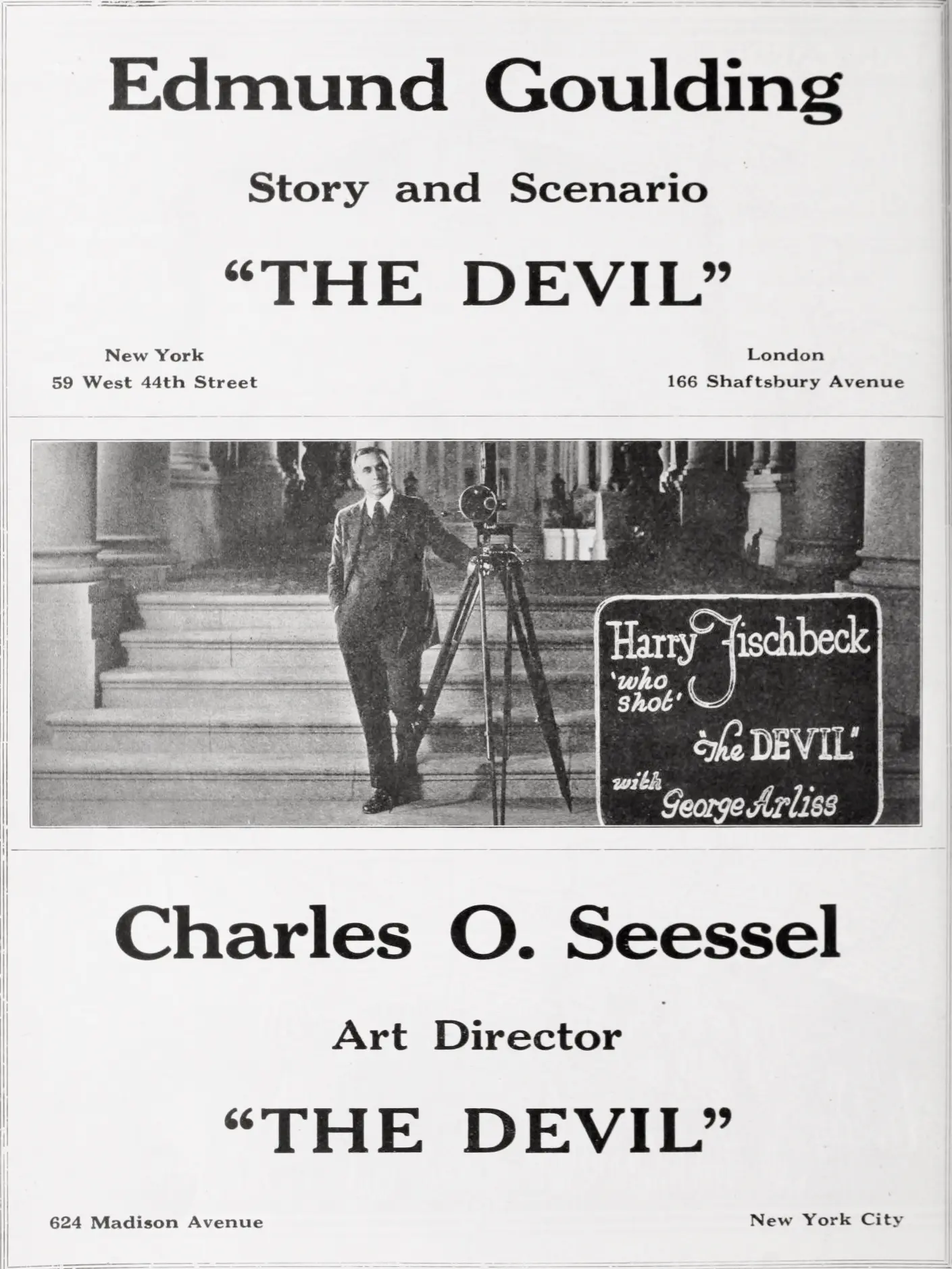
Lost for decades, the 35 mm negative resurfaced in a Slovenian monastery—apparently misfiled under “Ethics Pamphlets.” The 4K scan reveals textures previously smothered: you can now read the watermark on forged banknotes, count the stitches in March’s rented tailcoat, detect a tear forming in the corner of Arliss’s eye that the film never bothers to mention again. The grayscale is colder than modern viewers may expect; whites glare like interrogation lamps, blacks swallow whole faces, leaving only a floating smirk.
Performances calibrated to half-tones
George Arliss’s seducer is never florid; he insinuates, then retreats into courteous boredom, which terrifies more than any rant. Watch how he removes a glove—index finger first, as though disassembling his own hand to prove it isn’t cloven. Florence Arliss (his real-life spouse) cameos as a society matron whose pearls clack like tiny gavels; in under ninety seconds she sketches a lifetime of ethical exhaustion.
Sexuality under the varnish
Pre-code candor flickers everywhere. Sylvia Breamer’s courtesan lounges in a peignoir slit to the thigh; the camera cuts away only to reveal the slit continues in the wallpaper behind her—a visual pun that desire itself is décor. The film’s most erotic scene is a ledger audit: two gloved hands pass a fountain pen back and forth, ink splatters like shared blood, the nib pulses in extreme close-up. No skin, yet censorship boards fainted anyway.
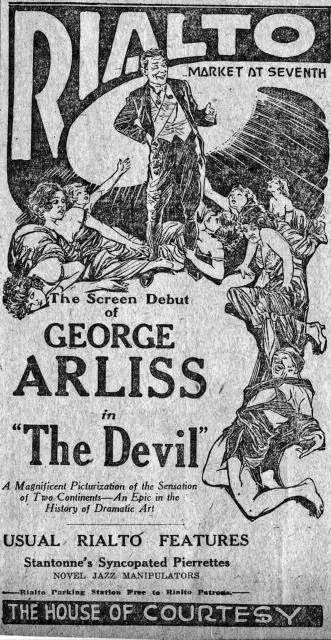
The ending that excommunicates closure
Just when narrative convention demands the exposure of the false devil, the film ends on a freeze-frame: Margot reaching for a doorknob that may lead to salvation, scandal, or thin air. The iris closes not on her face but on the doorknob’s porcelain glint. You exit the cinema clutching a question mark that continues to ferment.
Legacy in the bones of later cinema
Without this template, Thou Shalt Not would lack its corporate demonology, and the expressionist corridors of Footlights and Shadows might feel too safely surreal. Even From Scales to Antlers owes a debt: its trickster protagonist could be March’s clerk after relocation to the American backwoods.
Where to witness the infernal ledger
Stream via Criterion Channel’s “Pre-Code Pandemonium” bundle, or catch occasional 16 mm prints at MoMA where the projector’s clatter doubles as Morse code from 1921. Warner Archive has floated rumors of a Blu-ray with two scores: a neue-wienerisch ensemble and a minimalist drone track. Choose the drone; let the modernity seep into the cracks.
Great films hold mirrors; The Devil holds accounting ledgers. It does not ask whether good defeats evil—it asks which department handles billing. In that query lies a dread more durable than any brimstone. The movie ends, the lights rise, and you realize the exit sign is just another neon contract waiting for your signature.
IMDb —
1912
Community
Log in to comment.