DbcultAccessing Vault...
Cult Review
Senior Film Conservator
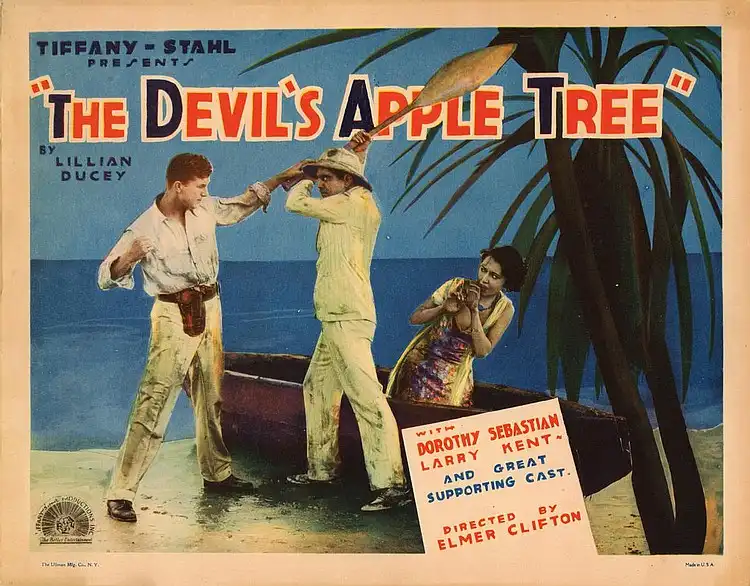
Is The Devil's Apple Tree worth digging up today? Well, if you're a silent film enthusiast or just curious about old-school morality plays, then yes, probably. For anyone expecting fast action or modern subtlety, you'll likely find it a bit... quaint.
This film really leans into its title. Dorothy Sebastian plays our central figure, a young woman who, like so many characters of the era, finds herself at a crossroads. The 'apple' isn't an actual fruit, of course, but something far more abstract and dangerous. Maybe it's money, or a forbidden love, or just a chance at a life she wasn't meant to have. 🍎
There's this one shot, near the beginning, where the light hits Dorothy Sebastian's hair just so. It’s quite beautiful, honestly. But then the scene goes on for a beat too long, and you start to notice the dusty background props more than her inner conflict. It's a small thing, but it kinda pulls you out.
Larry Kent, playing the... tempter, I guess? He has this smile that's almost too much. You know, the kind where you can practically hear the director saying, 'More sinister, darling!' It definitely makes him memorable, if a little over-the-top.
The pacing here is exactly what you’d expect from a film of this vintage. The camera just *stays* on faces. A lot. Sometimes it feels like an eternity. And you can almost feel the movie trying to convince you this moment matters, even when it’s just someone staring out a window.
There’s a scene where the 'apple' is first offered, and the tension is built not through dialogue – because, you know – but through a slow pan across three faces. It’s actually pretty neat, watching the reactions unfold. Very effective visual storytelling for its time.
Ruth Clifford's character, though, sometimes feels a bit underserved. She just kinda *fades* into the background, even when she's in the shot. Like the film doesn't quite know what to do with her after a certain point in the story.
But then, later, a dramatic confrontation happens, and one character throws their hands up in despair. It feels a bit *too* theatrical, even for the era. Like, really, you're *that* upset about a slight? It’s a moment that almost becomes funny if you watch it with modern eyes.
Edward Martindel has this strong presence, even when he's not doing much. He just *stands* there, and you immediately get the vibe of authority or disapproval. It’s all in the posture, I suppose.
The music, what little survives or what's usually played with it in modern screenings, always feels like it's trying to tell you *how* to feel. 'Sad now! Very sad!' or 'Danger is near!' It’s a bit on the nose, but that was the style. 🎶
The film's resolution feels a little rushed after all that slow build-up. Suddenly everything wraps up in a few title cards and a quick fade. You almost wish they'd lingered a bit more on the consequences, or how things really settled for everyone involved. It’s like they ran out of film or something. 🎞️
Thinking about other films of the time, like Miracle of the Wolves, which has its own grand moments. 'Devil's Apple Tree' is a bit smaller, more personal in its scope, but still tries for that same *weight* sometimes. It doesn't quite hit the same epic scale, but it makes an effort.
This movie, it’s not trying to be subtle. It's a morality tale with a capital M. If you're into that kind of direct storytelling, it works well enough. It's a window into how stories were told, and how societal anxieties played out on screen, way back when. Not a masterpiece, but definitely not a waste of time if you have a soft spot for the classics.
IMDb 6.4
1936
Community
Log in to comment.