DbcultAccessing Vault...
Cult Review
Senior Film Conservator
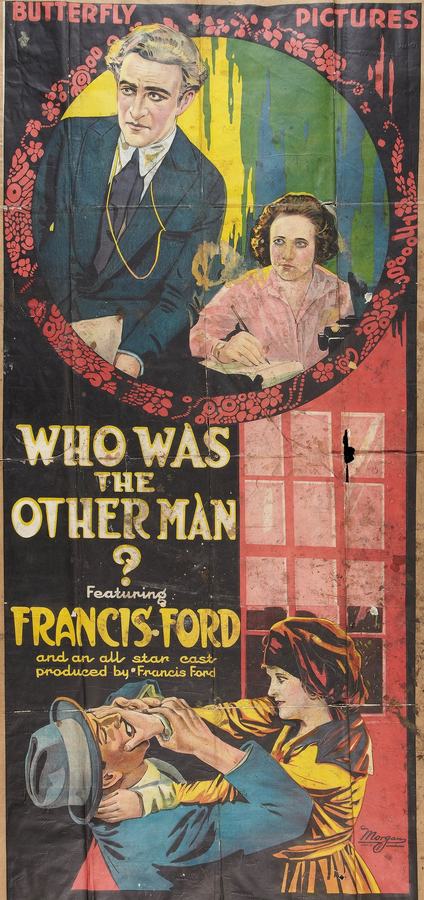
Picture, if you can, the year 1923: jazz is still a scandal, bootleg gin whispers from hip flasks, and the movies have only lately learned to speak without words. Into this crackling silence drops Who Was the Other Man?—a picture so criminally neglected that even archivists misfile its reels. Yet here is a spy yarn that pirouettes on mistaken identity, a doppelgänger motif that Hitchcock would later mint into gold, and a woman whose gaze could launch—or torpedo—a thousand dreadnoughts.
Director Duke Worne, better known for western two-reelers, swaps sagebrush for Art-Deco menace. The film wastes zero title cards on exposition: we open on Ludwig Schumann—played by William T. Horne in slicked hair and continental sneer—checking a pocket watch whose ticking seems loud enough to wake the lobby’s brass cuspidors. Notice how the camera tilts up to catch the vaulted ceiling: an early, audacious nod to German Expressionism, all looming shadows ready to swallow petty mortals. Marion Washburn (Beatrice Van) glides downstairs in a dress the color of uncorked champagne; the camera drinks her in, then pivots to reveal James Walbert (Duke Worne himself), the mirror-image patriot whose grin is all barn-dance innocence. The moment the two men occupy the same frame, the film sizzles with a question modern thrillers still milk: what if your face—your very identity—could be weaponized against you?
The Black Legion, a shadow cartel part anarchist cell, part Wall-Street puppet show, embodies post-WWI anxiety: faceless agitators itching to perforate democracy. Their emblem—an ebony Lorraine cross—appears on letters, cigarette cases, even the lining of Wanda Bartell’s velvet clutch. Production designer Mae Gaston (pulling double duty as the temptress spy) festoons sets with this sigil until it hums like a malevolent mantra. When Walbert, mistaken for Schumann, receives the photograph of Wanda, the negative is scratched so her eyes appear to bleed white—an avant-garde accident that the filmmakers kept because it chills the blood.
Silent acting is often caricatured as semaphore histrionics, but watch how Horne reins in Schumann’s menace: a tic of the jaw, a thumb rubbing the watchcase—micro-gestures that scream inner turmoil louder than any subtitle. Conversely, Worne-as-Walbert strides with open-faced athleticism, yet when he realizes he’s carrying plans that could sink naval fleets, his shoulders square into a silhouette of manifest duty. Beatrice Van gifts Marion a flinty spark; her eyes telegraph both entitlement and embryonic doubt about fiancé Herbert Cornell (Francis Ford), a dandy who clutches state secrets the way other men clutch racetrack tips.
Mae Gaston’s Wanda is the film’s ace in the hole. She slinks aboard the steamer in a cloak of sea-fox fur, but her seduction is cerebral: note the scene where she druggedly misdirects Cornell by discussing Jane Eyre—a book she’s never read—while slipping a mickey into his brandy. The intertitle reads: “A woman’s smile can hide a revolution.” It’s a line that should be emblazoned on every spy thriller syllabus.
Shot largely on the cheap in a disused San Antonio hotel, cinematographer William Parker (also co-writer) turns budget into virtue. For the steamer sequence he back-projects footage of the Mississippi’s brown swirl through porthole frames, conjuring nautical claustrophobia without ever leaving land. When Walbert and Wanda arrive in New York, the skyline is a matte painting slathered in cobalt; yet Parker double-exposes newsreel footage of the Brooklyn Bridge so traffic lights bleed comet-trails across the frame—an effect that anticipates neon noir by two decades.
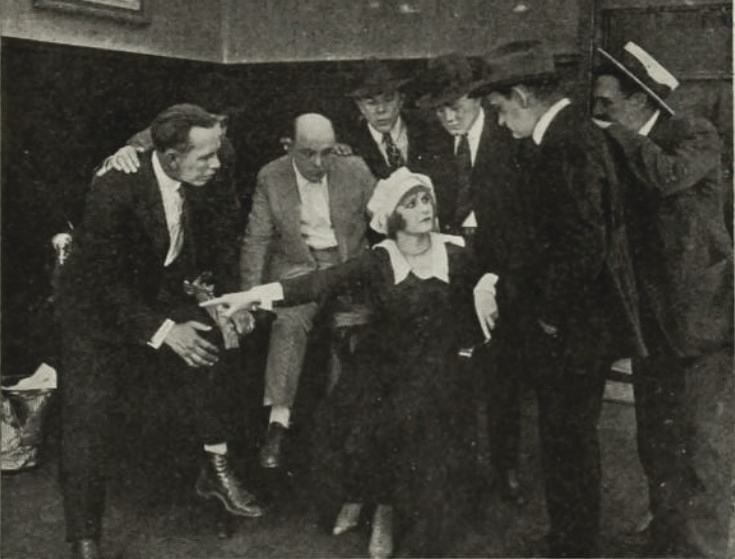
Lighting toggles between buttery lobby opulence and hard-edged chiaroscuro once we descend into the Legion’s cellar HQ. There, a single bulb swings over a round oak table, carving shadows that elongate and shrink the conspirators like accordion silhouettes. It’s here that Walbert attempts his triple-cross, and the film’s moral axis tilts: the hero lies, steals, and endangers innocents, muddying the patriotic varnish.
The screenplay, credited to Jessie Lowe, sneaks proto-feminist barbs beneath its cloak-and-dagger veneer. Marion’s father may be a senator, yet she’s the one decoding ciphered napkins and summoning the cavalry. Wanda, meanwhile, weaponizes femininity as both shield and sword, but the film refuses to castigate her for ambition; when she ultimately aids Walbert, the shift feels earned rather than redemptive. In an era when The Governor’s Lady confined women to tearful parlor scenes, this picture lets them steer the narrative.
Cinephiles will detect whispers of The Explosion of Fort B 2 in the dynamite-laced finale, though here the explosion is metaphoric: secrets detonating reputations. The doppelgänger trope resurfaces in The Oval Diamond, yet without the existential dread Worne achieves. Meanwhile, the drug-trafficking subplot nods to Cocaine Traffic; or, the Drug Terror, but replaces narcotic panic with ideological contagion.
At 68 minutes, the film sprints. Contemporary viewers may find the third-act coincidences—Marion’s instantaneous police mobilization, Schumann’s unexplained escape—contrived. Yet such leaps echo the pulp serials that fed audience appetites between features. The tighter constraint is sociological: every villain bears Anglo-Saxon features, whitewashing the era’s real anarchist demographics. Still, the film’s heart beats in the right place: fascism is home-grown, not imported.
Like many silents, original exhibitors projected it with live accompaniment. Restoration houses often pair it with brass-heavy militaristic scores, but I’d argue for strings and theremin: something to limn the uncanny doubling. When the orchestra nails that swell as Walbert rips open the Legion’s ledger, the image transcends nickelodeon novelty and becomes a hymn to moral vigilance.
Who Was the Other Man? isn’t merely a curio for completists hunting Birth of cinematic tropes. It is a celluloid Rosetta Stone revealing how early filmmakers stitched dread out of thin air, how identity itself could be a battleground long before DNA tests or deep-fakes. Sure, the film has scars—choppy editing, intertitles that over-explain, a finale that arrives like a cavalry of deus ex machina. Yet its bruises feel human, the mark of artisans stretching pennies into poetry.
If you stumble upon a grainy upload or—heaven bless—an archival 35 mm print with a live pianist, seize the chance. Let the sepia seep in, let the Black Legion’s insignia burn onto your retina, and ask yourself the question that lingers like cigar smoke: if a stranger wore your face, would your convictions hold? That, dear viewer, is the abyss this 1923 sleeper dares us to gaze into—and, mirabile dictu, it gazes back unflinching.
IMDb 5.3
1933
Community
Log in to comment.