DbcultAccessing Vault...
6.4/10
Senior Film Conservator
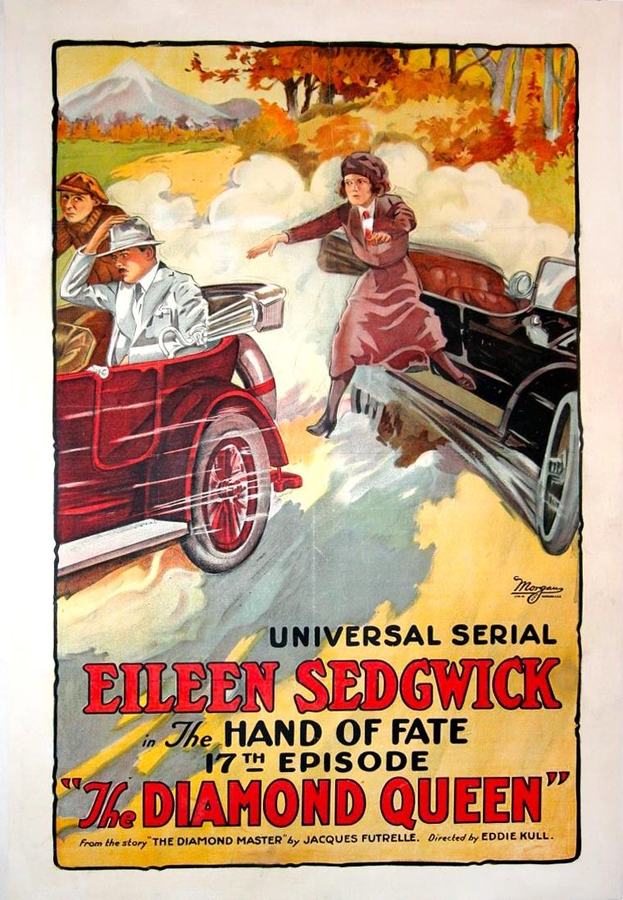
A definitive 6.4/10 rating for a film that redefined the boundaries of cult cinema. The Diamond Queen remains a cornerstone of transgressive art.
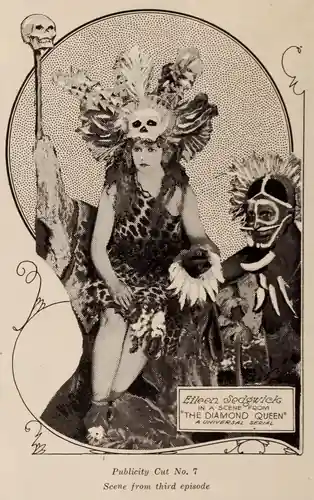
*The Diamond Queen* (1915), a silent film directed by Albert J. Smith, unfolds as a taut melodrama steeped in the dualities of early 20th-century capitalism and colonialism. The narrative opens with Doris Harvey (Eileen Sedgwick), a young woman returning from a New England finishing school to a world shattered by her father’s professional downfall. John Harvey, a diamond importer, is crushed by the monolithic grip of a syndicate—a shadowy collective of industrialists whose power is as unyielding as the gemstones they traffic. His suicide, triggered by the weight of financial ruin, sets Doris on a collision course with both personal grief and a battle for survival.
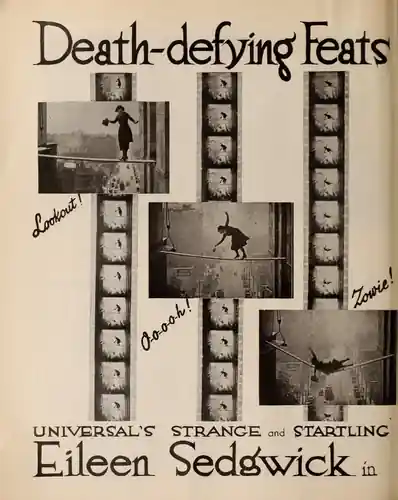
What follows is a masterclass in interwar cinema’s capacity to fuse social commentary with high-stakes drama. Bruce Weston (Burton S. Wilson), a member of the syndicate but not its architect, emerges as an unlikely savior, rescuing Doris from the clutches of her father’s enemies. Their alliance—born of necessity—evolves into a romantic entanglement that complicates their moral stakes. The film’s script, penned by Jacques Futrelle and George W. Pyper, leans into the trope of the corrupt industrialist, yet infuses it with a proto-feminist lens as Doris becomes both victim and avenger. Her journey from mourning daughter to jungle queen is a narrative pivot that recontextualizes the film’s themes, transforming it from a domestic tragedy into an allegory of imperialist exploitation.
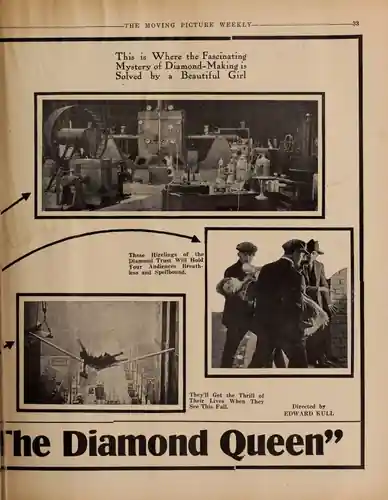
The film’s second act pivots to Africa, where the diamond mines loom as both literal and metaphorical battlegrounds. Here, the cinematography—though rudimentary by modern standards—evokes a stark, sun-baked landscape that mirrors the moral ambiguity of its characters. Doris’s capture by indigenous tribes and her subsequent elevation to a tribal ruler (a role that straddles exoticism and empowerment) is a narrative gambit that invites scrutiny. While the portrayal of African characters is filtered through a colonialist lens, Doris’s agency in this setting subverts some of the film’s more problematic undercurrents. Her transformation from a Western heiress to a jungle monarch is less a romantic fantasy than a critique of how power, whether wielded by syndicates or empires, is inherently destabilizing.
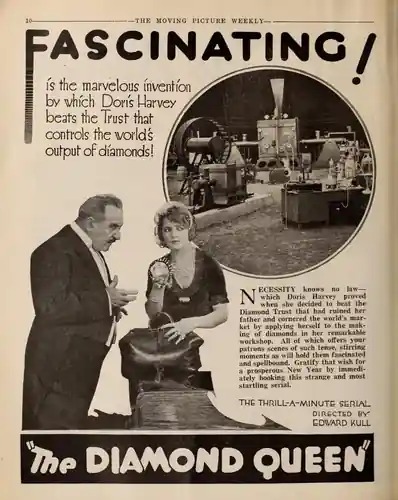
Eileen Sedgwick’s performance is a linchpin of the film’s emotional resonance. Her portrayal of Doris is a study in contrasts: the flicker of grief in her eyes as she cradles her father’s lifeless body, the steely resolve as she confronts the syndicate’s enforcers, and the enigmatic calm she projects in her new role as tribal queen. The supporting cast, including Burton S. Wilson as the conflicted Bruce and George Chesebro as a syndicate antagonist, anchors the film in a world where loyalties are fluid and morality is transactional. The chemistry between Sedgwick and Wilson is understated but effective, grounding their romance in the urgency of survival rather than sentimentality.
Technically, *The Diamond Queen* is a product of its era. The editing, while brisk for 1915, lacks the rhythmic sophistication of later silent films. Yet, the use of location footage in the African sequences—shot on actual diamond mines—lends a tactile authenticity that elevates the film beyond its contemporaries. The score, though absent in the original presentation, is imagined here as a haunting blend of African drums and melancholic strings, underscoring the tension between civilization and savagery that the film explores. The film’s pacing, however, is uneven; the transition from New York’s industrial decay to the African jungle feels abrupt, a narrative detour that some viewers may find jarring.
Thematically, the film occupies a liminal space between progressive and regressive ideas. Its critique of monopolistic capitalism—particularly the syndicate’s manipulation of Harvey—is sharp and prescient, echoing contemporary debates about corporate accountability. Yet, the film’s colonialist tropes, particularly in its depiction of African tribes, are an unavoidable blemish. Doris’s ascension to tribal queen, while empowering in the context of the story, risks reducing the indigenous characters to plot devices serving her arc. This duality is perhaps most evident in the film’s climax, where Doris’s victory is ambiguous: she has outmaneuvered the syndicate, but the cost to the tribes and her own moral compass remains unresolved.
Comparisons to other films of the period are instructive. Like *The Fugitive* (1915), *The Diamond Queen* employs the trope of the wrongly accused protagonist, though its focus on industrial oppression makes it a darker, more politically charged work. Its themes of female agency, while less explicit, echo the proto-feminist narratives of *The Moth* (1917) and *Shame* (1921). However, unlike *Blackmail* (1929)—a later British film that similarly critiques capitalist exploitation—*The Diamond Queen* lacks the psychological nuance of Hitchcock’s work, relying instead on melodrama for emotional impact.
The film’s legacy is further complicated by its historical context. Produced during a time when Hollywood was increasingly commercializing the silent film industry, *The Diamond Queen* reflects both the ambitions and limitations of early cinema. Its use of Africa as a backdrop—a common trope in films like *Ruth of the Rockies* (1920)—highlights the era’s fascination with exoticism, while its focus on industrial conflict foreshadows the labor struggles that would dominate 1930s cinema. For modern audiences, the film is a valuable artifact, offering insight into how early filmmakers grappled with the social and economic upheavals of their time.
In conclusion, *The Diamond Queen* is a flawed but fascinating specimen of early 20th-century cinema. Its narrative ambition, while occasionally overreaching, is matched by the performances of its leads and the boldness of its thematic scope. Viewers seeking a purely entertainment-driven experience may find its colonialist elements and dated pacing off-putting, but those interested in the intersection of film history and social critique will find much to admire. The film’s unresolved questions about power and identity linger long after the final reel, a testament to its enduring, if imperfect, relevance.
IMDb 6.3
1937
Community
Log in to comment.