DbcultAccessing Vault...
Cult Review
Senior Film Conservator
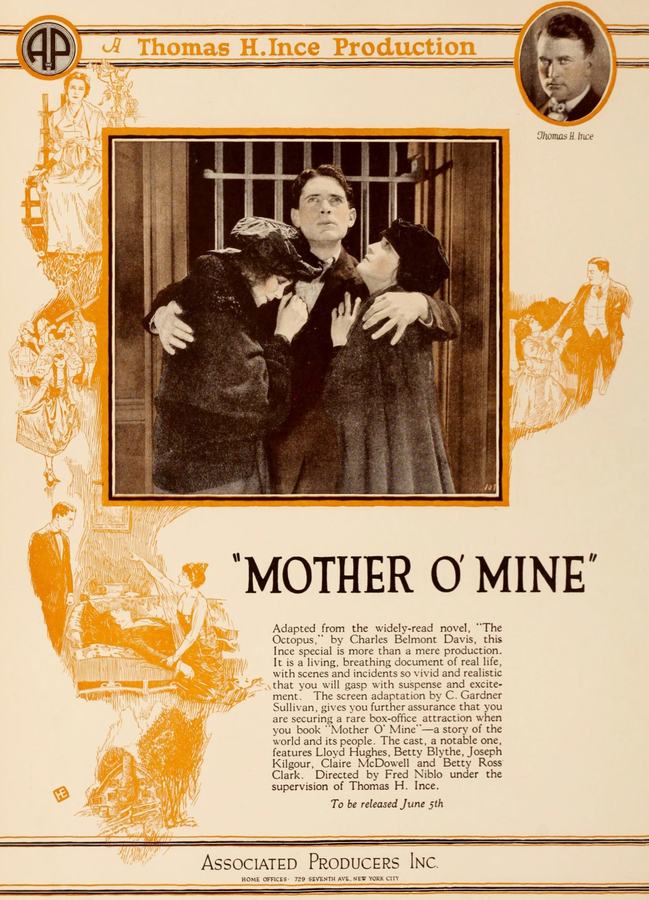
The year 1921 served as a crucible for American silent cinema, a period where the medium transitioned from simplistic moralizing to a more sophisticated exploration of psychological depth and societal friction. Mother o' Mine stands as a towering example of the maternal melodrama, a genre that leveraged the archetypal sanctity of motherhood to critique the predatory nature of early 20th-century capitalism. Unlike the more whimsical explorations of class found in contemporary works like Next Aisle Over, this film plunges into the murky waters of biological legacy and the atavistic failures of the patriarchal figure.
The narrative engine is fueled by a profound dramatic irony. When Robert Sheldon enters the employ of Willard Thatcher, the audience is immediately thrust into a state of anticipatory dread. Joseph Kilgour’s portrayal of Thatcher is a masterclass in the 'financier-villain' archetype—a man whose soul has been entirely hollowed out by the acquisition of capital. He is the antithesis of the pastoral warmth Sheldon leaves behind. This juxtaposition between the rural and the urban is a hallmark of the era, yet here it is rendered with a visceral intensity that elevates it above the standard fare of Anything Once. The city is not merely a setting; it is a predatory organism that consumes the innocent.
Lloyd Hughes, as Bob Sheldon, carries the burden of the 'honest face' with a sincerity that avoids the pitfalls of saccharine sentimentality. His performance necessitates a delicate balance; he must be naive enough to be exploited, yet possess the moral fortitude to denounce his benefactor when the veil is lifted. This internal conflict reaches its zenith during the confrontation with Thatcher. The choreography of their struggle, captured with the era's signature high-contrast lighting, emphasizes the chaotic nature of fate. The accidental death of Thatcher is not presented as a triumph, but as a tragic complication that initiates a descent into the Kafkaesque nightmare of the American legal system.
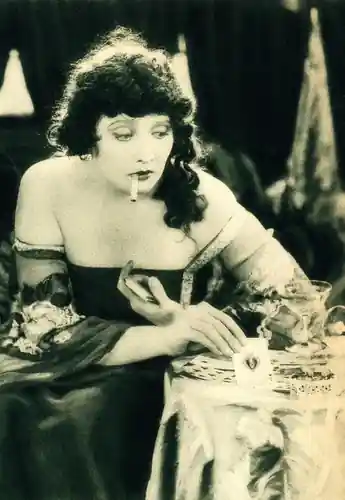
The secondary characters provide the necessary friction to propel the plot toward its harrowing conclusion. Betty Blythe, as Fan Baxter, embodies the 'fallen woman' archetype with a nuanced blend of malice and vulnerability. Her perjury is not merely a plot device; it is a reflection of the precarious social standing of women in the 1920s, where survival often dictated the sacrifice of another's life. In contrast to the lighter romantic entanglements seen in Betty Sets the Pace, the relationships in Mother o' Mine are transactional and fraught with existential stakes. The mistress’s eventual redemption—forced though it may be by the combined pressure of Dolly and Bob’s mother—serves as the film’s moral pivot.
Edith Yorke’s performance as the titular mother is the emotional anchor of the production. In the silent era, the mother was often a static symbol of purity, but here she is an active agent of salvation. Her role transcends the domestic sphere, moving into the realm of the detective and the advocate. This proactive maternalism is a fascinating evolution, perhaps reflecting the changing social landscape post-suffrage. While films like The Fatal Marriage deal with the breakdown of the domestic unit, Mother o' Mine focuses on its indomitable resilience. The mother’s intuition becomes a weapon against the cold, evidentiary logic of the courtroom.
The cinematography during the final act deserves significant scholarly attention. The 'last-minute rescue' is a trope as old as the medium itself, famously pioneered by D.W. Griffith, yet the execution here is particularly effective. The use of a storm as a physical manifestation of the characters' internal turmoil is a brilliant stroke of expressionism. The rain-slicked roads and the flickering lightning provide a rhythmic urgency that mirrors the quickening pulse of the condemned man. It is a sequence that rivals the tension found in high-stakes adventures like The Tiger's Trail, but with a more profound emotional weight.
Beyond the melodrama, the film offers a scathing critique of the fallibility of the justice system. Bob Sheldon is convicted not on the strength of forensic evidence, but on the perceived character of the witnesses and the circumstantial weight of his presence at the scene. The ease with which an innocent man is ushered toward the electric chair is a chilling commentary on the 'red scare' era's anxieties regarding due process. The film suggests that without the intervention of an extraordinary, almost supernatural maternal love, the state is a blind, destructive force. This theme of the individual versus an unfeeling bureaucracy is also explored, albeit in a different context, in Soldiers of Fortune.
Furthermore, the film touches upon the concept of 'inherited sin.' Bob is literally and figuratively paying for the transgressions of his father. Thatcher’s abandonment of the family created the vacuum that Bob eventually filled, leading to the fatal encounter. The film posits that the sins of the progenitor are visited upon the progeny, a theme that resonates with the darker European imports of the time, such as Der Fall Dombronowska...!. However, the American sensibility of Mother o' Mine allows for a breakthrough—a chance to sever the cycle of trauma through truth and sacrifice.
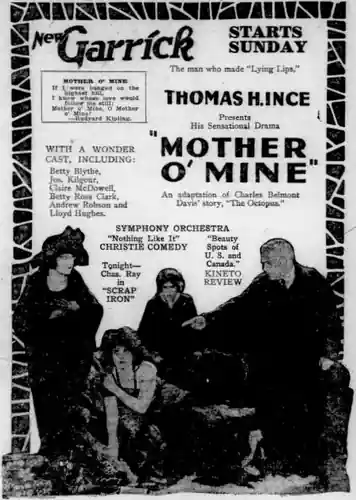
The visual language of the film is remarkably sophisticated for 1921. The use of close-ups to convey the internal monologues of the characters allows the audience to bypass the need for excessive intertitles. We see the flicker of doubt in Fan Baxter’s eyes and the unwavering resolve in the mother’s gaze. The set design, particularly the contrast between the opulent, cold office of Thatcher and the humble, warm cottage of the Sheldons, reinforces the thematic dichotomy of the film. This attention to detail in mise-en-scène is comparable to the atmospheric depth found in The House of Intrigue.
One must also acknowledge the editing, which manages to weave multiple narrative threads—the courtroom drama, the search for the witness, and the impending execution—into a cohesive and propulsive climax. The cross-cutting between the prison and the storm-chase is handled with a kinetic energy that must have been exhilarating for contemporary audiences. It avoids the static, stagey feel that plagued many earlier dramas, such as The Whirl of Life, opting instead for a truly cinematic experience.
When placed alongside other films of the era, Mother o' Mine holds a unique position. It lacks the overt avant-garde experimentation of Swedish cinema like Fyrvaktarens dotter, yet it possesses a raw emotional honesty that many technical marvels lack. It deals with themes of forbidden or complicated love with more maturity than Forbidden Love, focusing on the familial rather than the purely romantic. Even when compared to the high-society dramas like The Amazons, Mother o' Mine feels more grounded, more essential.
The film also shares a certain DNA with the mystery-thrillers of the time, such as Die schwarze Locke or Herregaards-Mysteriet, in its use of a singular, hidden truth to drive the plot. However, its resolution is not found in the cleverness of a detective, but in the moral weight of a mother’s plea. This shift from the intellectual to the emotional is what made the film a success in its day and what makes it a fascinating artifact today. It captures a moment in time when the 'One of the Finest' (One of the Finest) ideals of American life were being challenged by the complexities of the modern world.
Mother o' Mine is more than a mere relic of the silent era; it is a powerful exploration of the bonds that define us and the betrayals that can destroy us. It utilizes the full toolkit of 1920s filmmaking—expressive acting, dynamic editing, and thematic depth—to tell a story that is both specific to its time and universal in its appeal. The film’s insistence on the redemptive power of truth, even in the face of imminent death, provides a cathartic experience that remains potent. While it may adhere to certain melodramatic conventions, it does so with such conviction and technical skill that it transcends them, securing its place as a significant work in the canon of early American cinema. For the modern viewer, it offers a window into a world where the stakes of morality were absolute, and the love of a mother was the ultimate arbiter of fate.

IMDb 6.8
1930
Community
Log in to comment.