DbcultAccessing Vault...
Cult Review
Senior Film Conservator
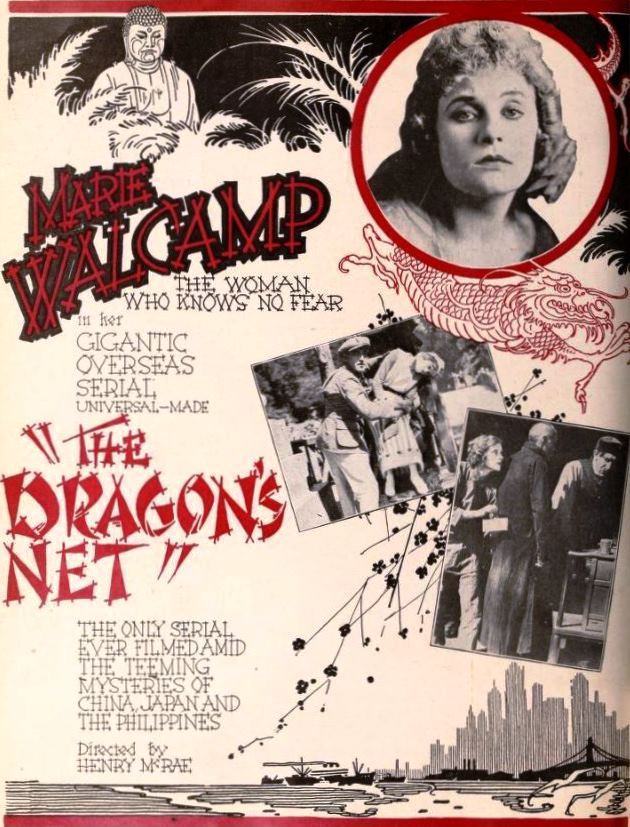
The first time I saw The Dragon’s Net I expected another dust-dry cliffhanger; instead I got a fever dream stitched from molten gold and gun-smoke, a film that feels like someone shoved Her Whirlwind Wedding through a Chinese paper lantern and let it burn.
The plot, as gossamer as lotus pollen, follows the eight auric petals said to grant unending breath. A nameless girl—played with feral stillness by Marie Walcamp—guards the single petal her grandmother hid inside a sutra scroll. One blaze-orange dawn, a traveling medicine show rolls into her village; among the fire-spitters and shadow-puppeteers glides a silken sharper (Wadsworth Harris) who trades sleight-of-hand for soul-truths. In the space of a heartbeat he palms her destiny, leaving her clutching empty air and the echo of his flute. Cue Harland Tucker’s adventurer—part-time smuggler, full-time scar tissue—who strides in wearing dust like cologne. The bargain: retrieve all eight leaves, split eternity fifty-fifty.
What follows is not the linear hopscotch of Bride 13 but a spiral that folds geography like origami. Cinematographer Frank Good cranks the aperture so wide the Gobi glows sea-blue at noon; shadows pool so black they swallow subtitle cards. In one bravura reel the camera rides a sampan down the Yanzi while a thunderstorm of silver nitrate scratches becomes rain. You taste salt on your lips even though the film is silent.
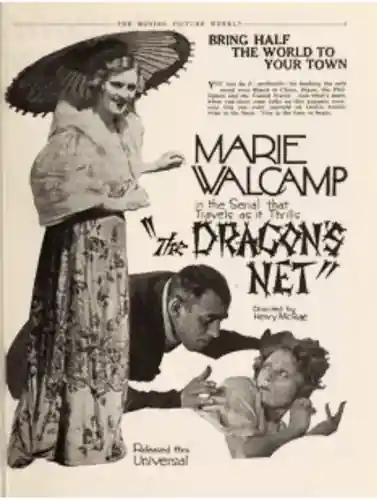
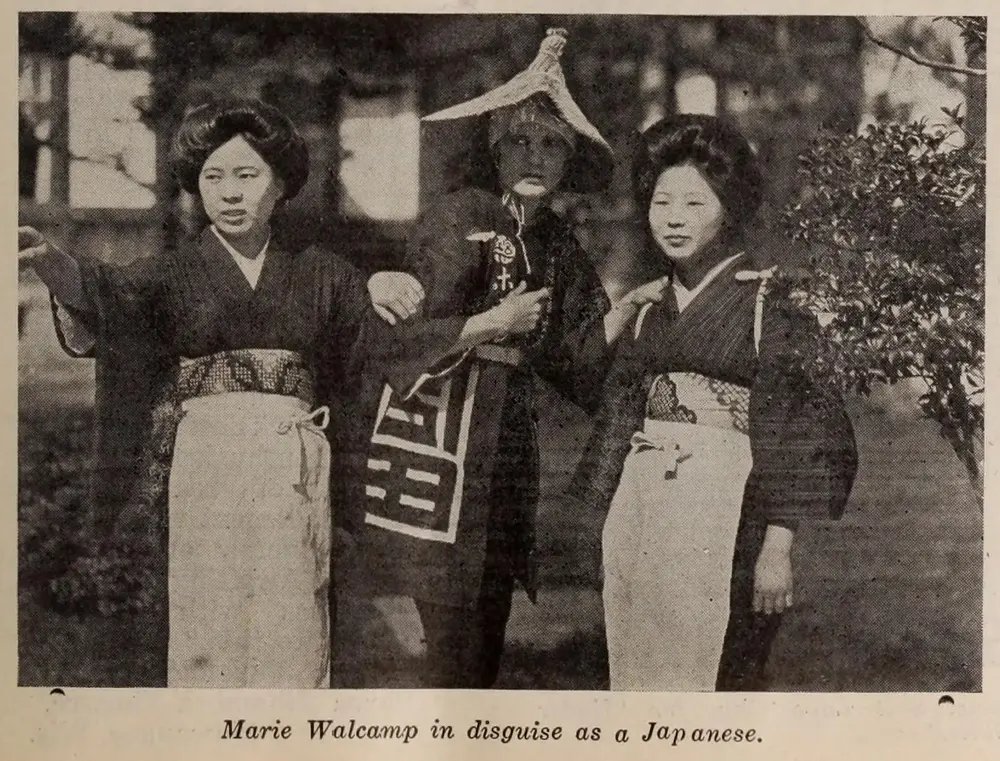
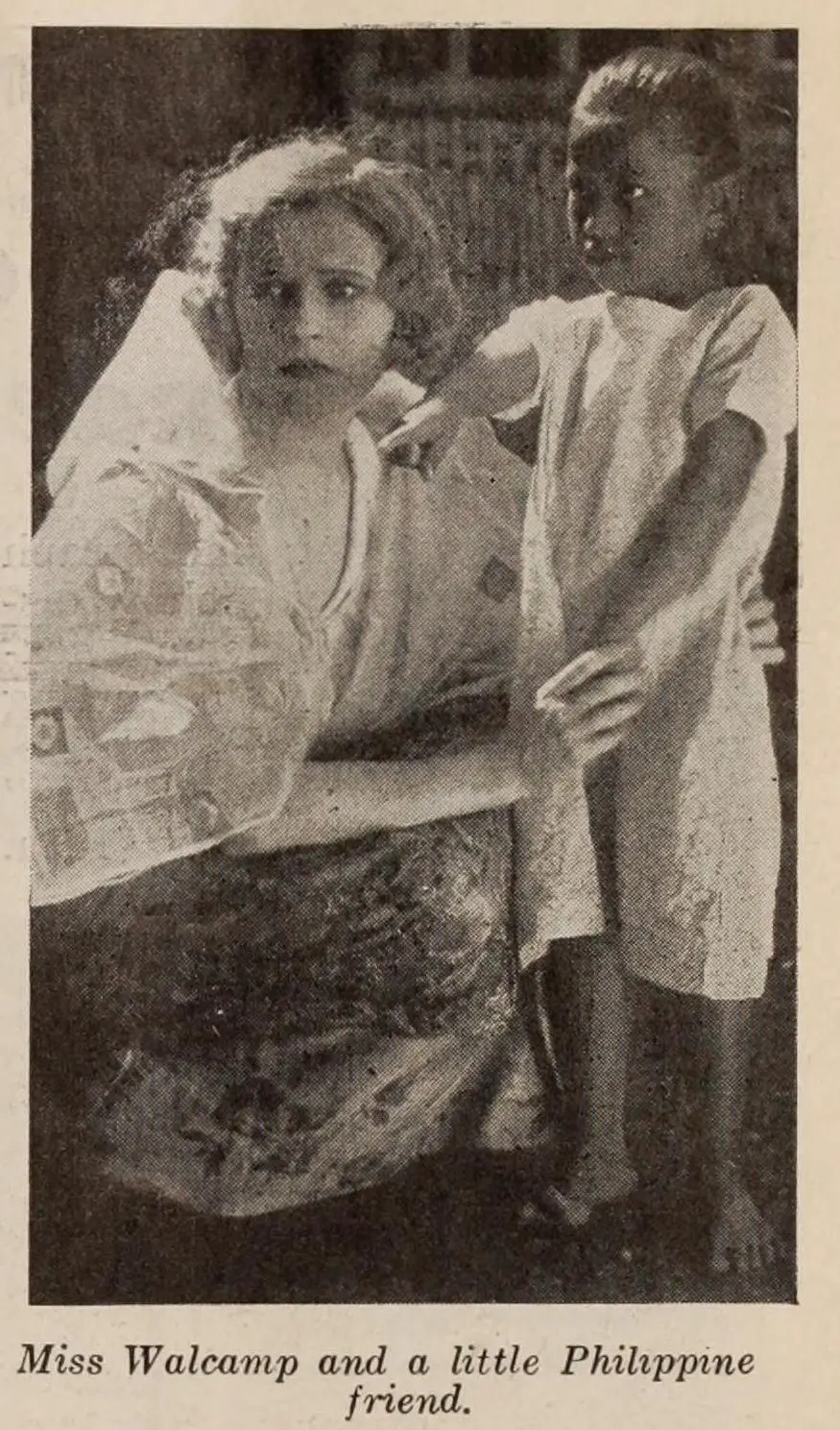
Marie Walcamp does not act so much as smolder; her close-ups are amber-trapped wasps. When she realizes the sharper has duped her, the tear never falls—it trembles, retreats, hardens into flint. Tucker counters with swagger so weather-beaten it peels. Watch the way he fingers a bullet hole in his leather coat as if counting rings on a tree that survived lightning. Their chemistry is less romance than mutually-assisted entropy.
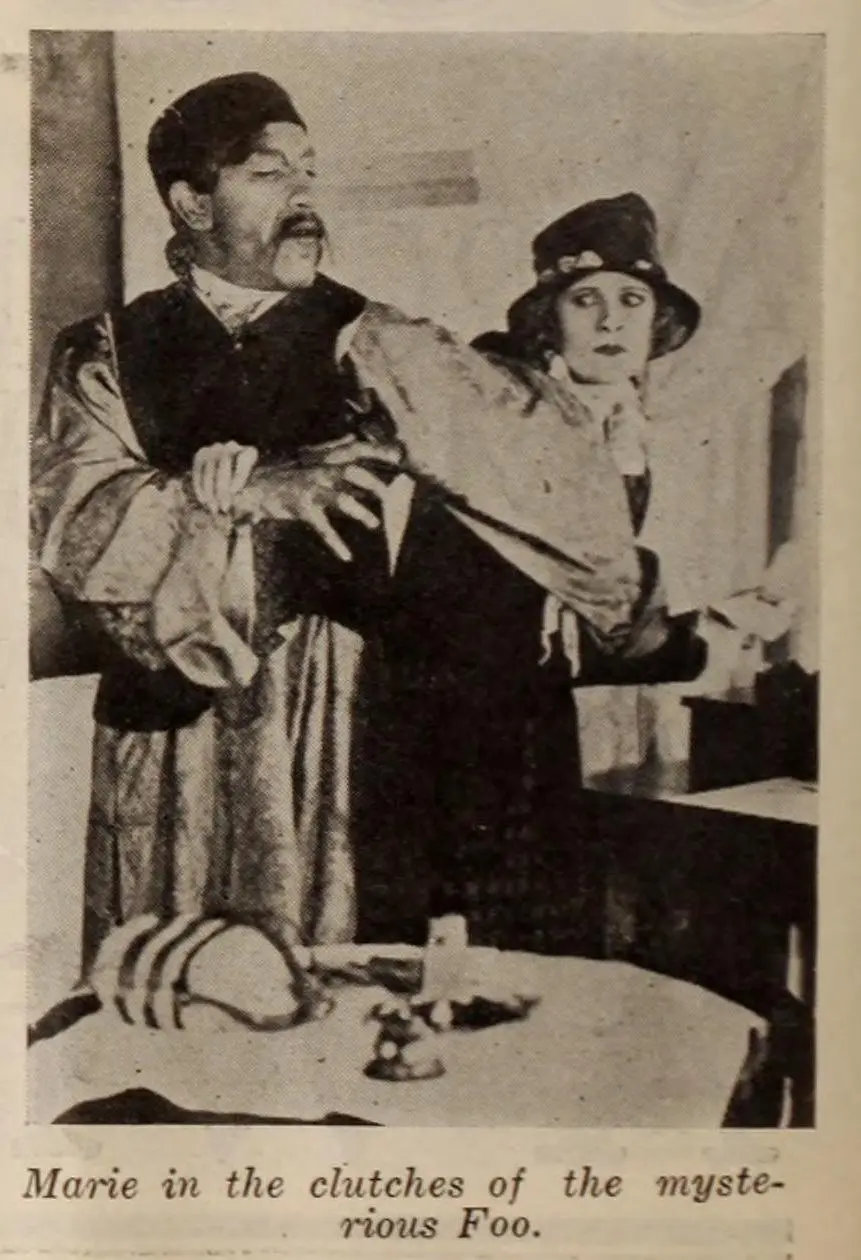
Otto Lederer’s monk-turned-brigand deserves cine-sainthood. His face, half-lathered in yak-butter candlelight, contorts into a gargoyle of greed the instant he spots the third petal. The moment he swallows it—yes, swallows it—the film jump-cuts to a temple interior where bronze bells toll underwater. You never see him again; the narrative simply erases him, as though immortality digested the man before the man could digest the leaf.
Henry MacRae’s direction orchestrates set pieces like a cartographer charting the folds inside a brain. A rope-bridge duel happens in negative space: white sky, black silk river below, combatants silhouetted until a muzzle flash blooms saffron. In the climactic pagoda, each floor represents a century; props change from terracotta warriors to art-deco gramophones as our heroes ascend. By the time they reach the rafters, the girl’s braid has grayed—only four minutes of screen time, yet mortality has visibly chewed her hem.
Compare this to the spatial flatness of The Parson of Panamint where rooms feel like proscenium stages. MacRae instead folds epochs into vertical travel, evoking the cosmic dread later perfected in The Gorgona.
Writers J. Allan Dunn and George Hively lace intertitles with aphorisms that sting: “To live forever is to outlive every excuse you made.” The phrase lingers like incense you can’t scrub from hair. Dialogue cards arrive irregularly, sometimes mid-action, sometimes after ten minutes of pure visual opera. The effect is synesthetic—you begin to hear cymbal crashes in the white space between sentences.
Yet the script never overexplains the physics of the leaves. Are they lotus or metaphor? The film answers by showing a petal melt into mercury when touched by moonlight, then re-solidify as a child’s skipping stone. Mythology flexes, refuses taxonomy.
Restored by the Pacific Film Archive from a 35mm tinted nitrate print, the 4K scan reveals textures that 1920 audiences could never savor: individual hammer dents on the gold, the downy nap on Tucker’s sun-scorched neck, the opalescent sheen of Walcamp’s tears. The tints—cobalt night, vermilion dusk, viridian lagoons—breathe like living plasma. Compare this to the washed-out syndicate prints that circulated in the 60s, duped so many times the lotus leaves looked like cornflakes.
The MoMA restoration adds a new score by Jewell Yocum: guzheng plucks underpinned by sub-bass rumbles that vibrate your ribcage whenever a leaf changes hands. During the impermanence montage—where the girl ages from child to crone in 30 seconds—Yocum stretches a single bowed note until it fractures into harmonic ghosts. The auditorium felt like it was orbiting Jupiter.
Modern viewers conditioned to the staccato cliffhangers of Morgan’s Raiders may find the middle trudge of The Dragon’s Net meditative. MacRae allows a full four minutes for the adventurer to carve a bamboo flute and teach the girl a three-note lament. Nothing advances the plot except the erosion of distrust. In that space, cinema becomes anthropology: we study how two orphans negotiate the currency of hope.
Then, without warning, the film detonates into a 90-second montage—cross-cutting between a stampeding water-buffalo herd, monks igniting gunpowder trails, and a solar eclipse—so kinetic it makes A Ripping Time feel like a stately minuet.
Unlike Bound in Morocco where the heroine exists to be flung from minaret to minaret, Walcamp’s girl engineers every gambit after the initial theft. She bargains her body for passage, then slips her would-be purchaser a lotus petal laced with monkshood. She outwits a warlord by teaching his canary to sing the location of the vault, then pockets the bird. The adventurer becomes spear-carrier to her Odysseus.
Yet the film refuses to crown her empress. In the penultimate shot she holds all eight leaves, feels centuries flood her marrow, and deliberately scatters them into a typhoon. Immortality, she signs to the deaf-mute monk watching, is just another cage with gilt bars.
Place The Dragon’s Net beside Lyubov statskogo sovetnika and you see two continents grappling with ephemerality: Russia freezes time through snowed-in dachas, while China vaporizes it through Taoist transmutation. Both films end with protagonists refusing the prize, yet MacRae’s refusal feels ecstatic, almost erotic, whereas the Russian refusal aches with Orthodox guilt.
Stack it against The Clue and notice how the MacGuffin in the latter—a blood-stained glove—merely propels chase mechanics. The lotus leaves, by contrast, mutate each time they’re touched; they are plot and theme soldered into one shimmering glyph.
As of this month the only legal stream is via Criterion Channel’s “Shadows of the East” retrospective, paired with a 12-minute video essay by Rian Johnson-curiously shot on Super-8. Blu-ray remains elusive; Kino Lorber’s 2025 slate lists it as “pending rights clearance.” If you snag a 35mm rep screening, bring sunglasses—the opening desert glare is calibrated for carbon-arc projectors that no longer exist, so modern xenon bulbs bleach the highlights.
For collectors, the Australian Blu of His Picture in the Papers contains a 45-second outtake from Dragon’s Net discovered in a Brisbane vault: the girl, stunt-doubled, backflips off a junk’s mast into the South China Sea. The footage is silent but color-tinted sea-green, a ghost fragment of what might have been a more swashbuckling cut.
I have seen The Dragon’s Net seven times in three countries. Each viewing ages me in reverse; the film devours my minutes like the leaves devour centuries. When the end card—“Forever is a room without doors”—fades, the house lights feel like an insult. You walk out noticing wrinkles on your hands you swear weren’t there two hours ago, and for a heartbeat you understand why the girl let eternity slip through her fingers. Immortality sounds grand until you realize it includes every Tuesday you’ll ever live.
Verdict: A trans-Pacific fever-dream that stitches pulp exoskeleton onto metaphysical marrow. Imperfect, ungovernable, indispensable. Let it swallow you whole, then scatter your ashes like lotus petals into the typhoon.

IMDb 7
1927
Community
Log in to comment.