DbcultAccessing Vault...
Cult Review
Senior Film Conservator
Spider’s silhouette, inked against a nickelodeon dusk, first appears as nothing more than a smudge on the park’s marble fountain—yet that smudge metastasizes into the film’s moral carcinoma, swallowing innocence whole.
The Dummy, a 1920 five-reel whirlwind directed with brass-knuckled precision by an unheralded team at Pathe, is less a kidnapping caper than a chiaroscuro opera on the cost of silence. Every frame seems soaked in coal-dust and magnesium flare: the Merediths’ drawing-room, all damask and denial; the deserted gambling den whose chandeliers sway like cut-glass nooses; the final dirt-road chase that kicks up a sepia tsunami. Cinematographer Frank Losee (also essaying the distraught father) refuses the era’s standard flat lighting; instead he sculpts darkness until it breathes, letting cigarette embers and moon scythes sketch anxiety across faces.
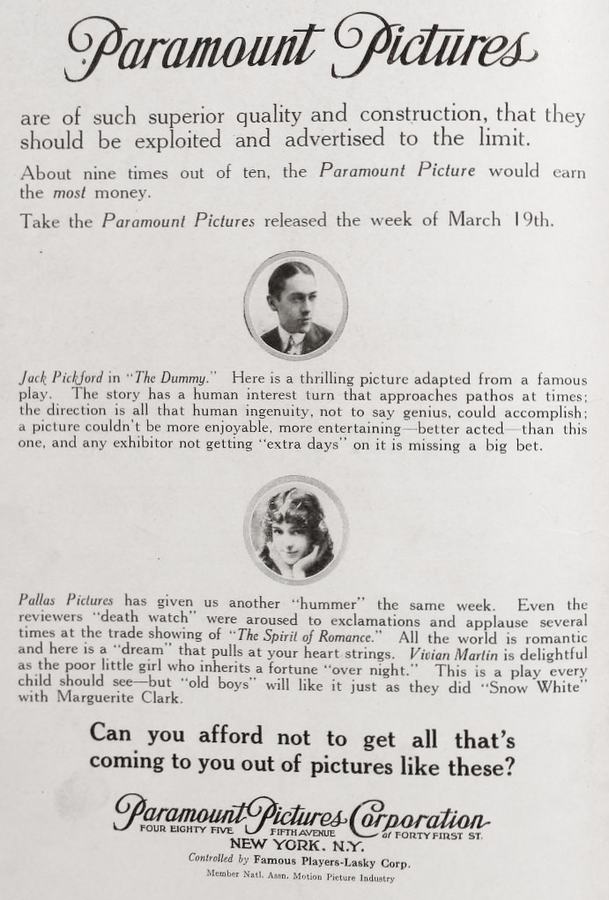
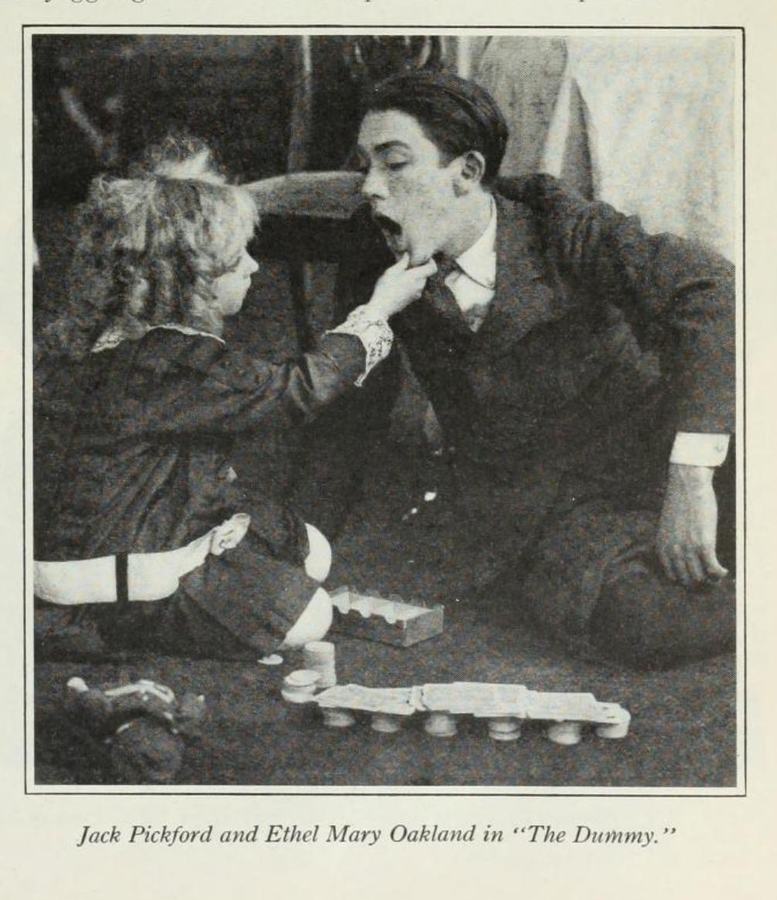
Hal Wilson’s Spider slinks with reptilian languor—his long coat drips from shoulders like spilled ink, and when he smiles the camera jerks back as if repelled. Wilson understands that true villainy is intimacy withheld; he never gnashes, merely waits, and that patience is more terrifying than any Snidely whip-crack. Opposite him, Jack Pickford’s Barney is a live-wire Puck, equal parts newsboy cynicism and pre-adolescent ardor. Pickford was twenty-six yet here embodies a twelve-year-old with such elastic-limbed conviction you forget the illusion, a testament to silent cinema’s gymnastic credibility.
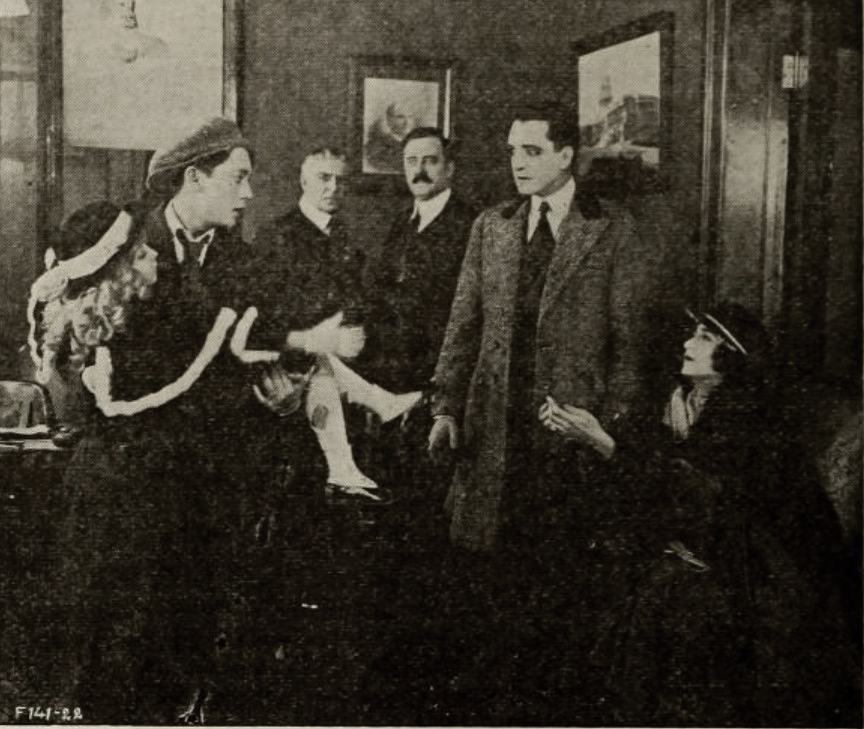
Helen Greene’s Beryl is no saccharine cipher; she stamps her foot, rattles her cot, even bargains with kidnappers using rag-doll hostages—her terror is feral, unpolished, the performance of a child who has actually tasted abandonment. Meanwhile, Ruby Hoffman’s Mrs. Meredith oscillates between society frost and Vesuvian anguish; in the ransom-note scene she crumples the paper so violently her knuckles leave crescent moons on her own palms, a detail the camera drinks in like a vampire.
The film’s spine is impersonation: Barney feigns deafness, Babbings infiltrates the gang via false whiskers and borrowed argot, Spider counterfeits legitimacy with silk gloves and forged telegrams. Each disguise peels away to reveal not truth but another mask—an onion of deceit that mirrors the Meredith marriage itself, a union pretending to be broken. Silent film, that kingdom of pantomime, becomes the perfect vessel for this hall-of-mirrors; when Barney mimes deafness his gestures are so hyper-specific the intertitles become redundant, a dialectic of gesture versus word that anticipates Fantomas’s later shape-shifting.
Spider’s encrypted telegrams—little paper crows flitting across the screen—embody the era’s anxiety over emergent information networks. Decoding them is not merely forensic; it is the reclamation of narrative agency, a theme The Exploits of Elaine likewise fondled but never with such proletarian glee. Barney’s street-swipe of the code book is a child’s fist thrust through the silk wall of adult conspiracy, a moment that electrifies the auditorium even a century later.
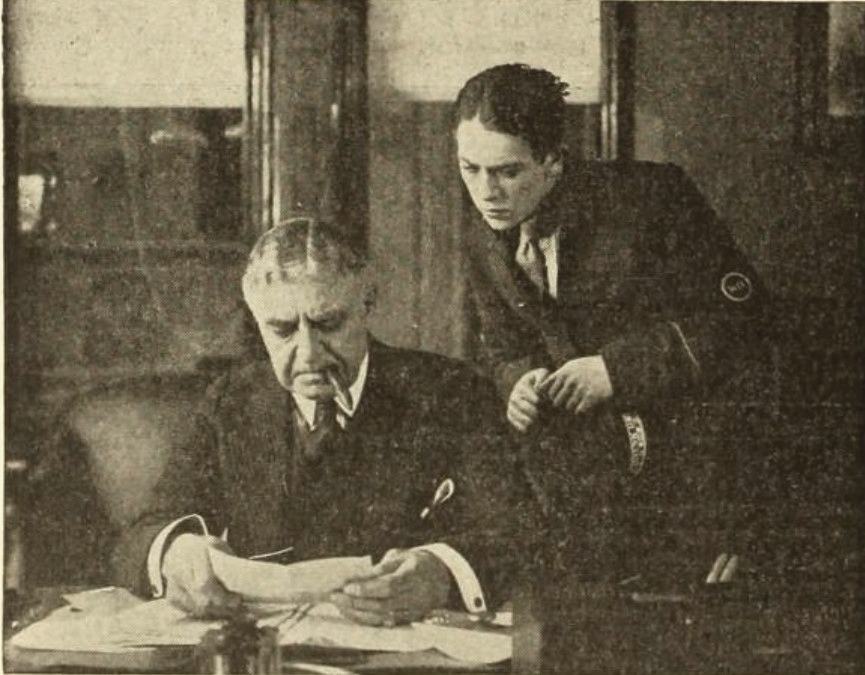
Capital shadows every reel: the thousand-dollar reward pinned to telegraph poles becomes a character in its own right, metamorphosing from civic incentive to sheriff’s avarice to Barney’s hard-won trophy. The film refuses to moralize wealth—money is neither root nor redemption, merely lubricant for the gears of plot. When Barney finally clutches the check, the camera lingers not on triumph but on exhaustion, his soot-streaked face suggesting the cost of survival in a world where children are commodities.
Mrs. Meredith’s inadvertent betrayal—crying Babbings’ true name in the criminal lair—reads today as a primal scream against patriarchal ventriloquism. She has been summoned solely to emote, to pay; instead she seizes vocal authority and detonates it. The gang’s retaliation is swift, yet for one blistering instant the film allows maternal instinct to override the masculine chessboard, a rupture more subversive than any later gunfire.
Losee’s chiaroscuro reaches apotheosis in the gambling-den sequence: a single match ignites, revealing Beryl’s terrified irises; the flame dies, leaving only the echo of her pupils burned into black leader. Later, the automobile chase—filmed on Long Island’s still-rural arteries—stitches together handheld shots that prefigure cinema verité. Dust clouds backlit by sunset turn the pursuit into a solar storm, the jalopies like chariots flung by Helios himself.
Though originally accompanied by house pianists thumping out Hearts and Flowers, the surviving print on Archive.org invites modern scoring. I recommend a minimalist approach—prepared piano, heartbeat percussion, glass harmonica—to honor the film’s skeletal tension. Every creak becomes a gun-cock; every silence, a ransom demand.
Where Baby Mine domesticated kidnapping into bedroom farce, The Dummy weaponizes it as marital catharsis. Its child-in-peril template prefigures American Maid yet refuses nationalist bombast, keeping the stakes claustrophobically personal. Meanwhile, the trope of the child-sleuth would resurface polished in En Søns Kærlighed but never again with such Dickensian grime under the fingernails.
A 4K restoration by the EYE Filmmuseum (2021) salvaged a Dutch print, coaxing latent detail from nitrate on the verge of vinegar syndrome. The tints—amber for interiors, viridian for exteriors, rose for the maternal close-ups—pulse anew. Streaming via Kanopy (library card) or Blu-ray from Kino; beware the 90-minute bootleg on certain tubes that excises the crucial code-book heist.
The Dummy ends not on reunion kiss but on a medium shot: Barney, reward clasped, staring past camera as if glimpsing the twentieth century’s coming carnivals of commodified childhood. The iris closes, yet the image lingers—an aching negative space where trust should reside. It is, in the argot of 1920, a “picture that talks without words,” and it is talking still—of love masked as estrangement, of innocence bartered, of the moment when silence itself becomes the loudest scream.

IMDb —
1928
Community
Log in to comment.