DbcultAccessing Vault...
Cult Review
Senior Film Conservator
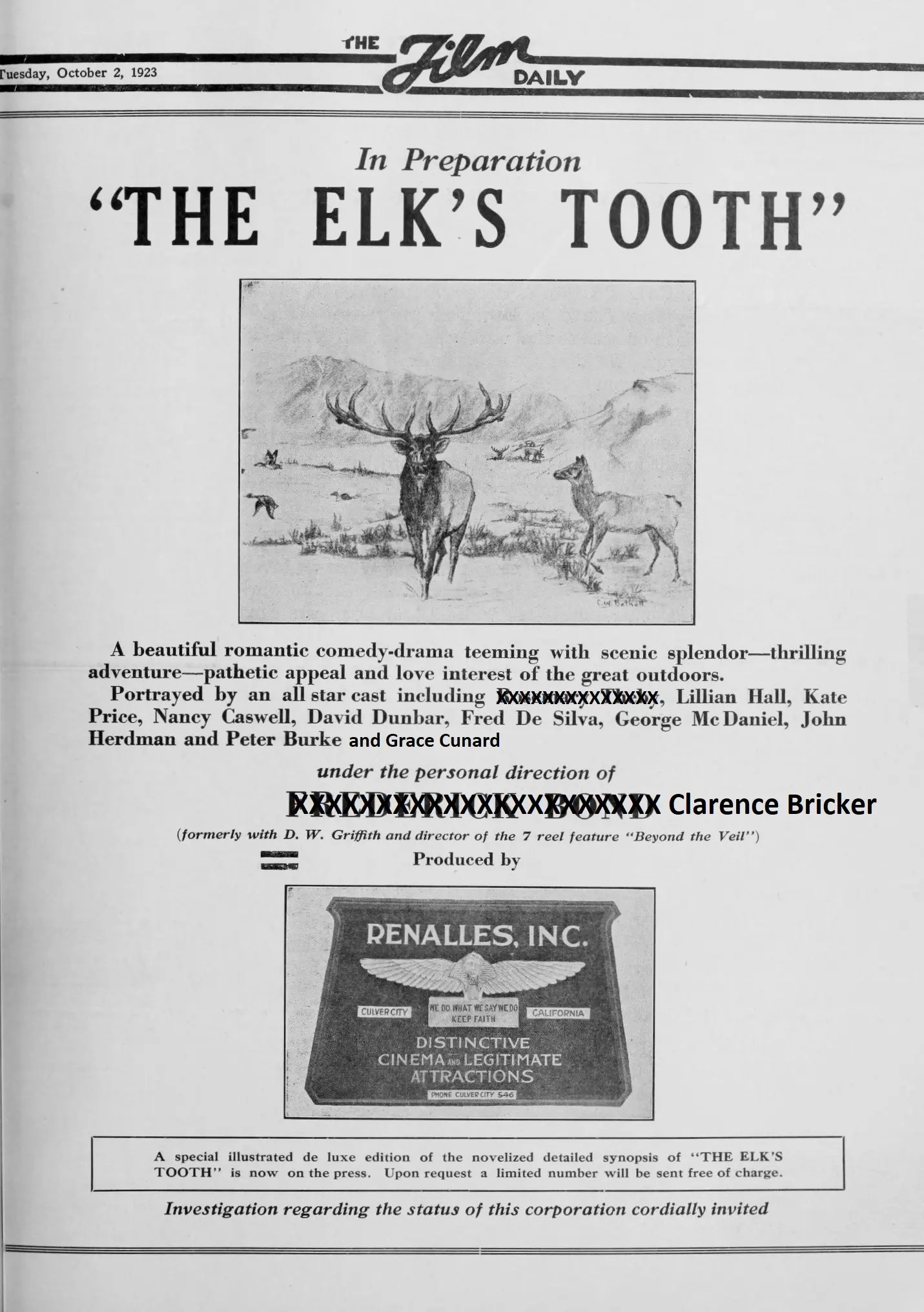
The year 1924 stands as a monumental pillar in the evolution of visual storytelling, a period where the silent medium transcended its primitive origins to embrace a sophisticated, almost lyrical complexity. Within this fertile ground, The Elk's Tooth emerges not merely as a relic of a bygone era, but as a profound exploration of human frailty and the totemic power of objects. Unlike the more urban-centric narratives found in From Gutter to Footlights, this production plunges its audience into the raw, unvarnished grit of the wilderness, demanding an engagement with the primal forces of nature and greed.
The screenplay, penned by the often-underappreciated Clarke Renalle, is a masterclass in economy and subtext. In an age where intertitles often leaned toward the didactic, Renalle allows the visual cues to carry the thematic weight. The plot, centered on the titular elk's tooth, uses this artifact as a synecdoche for a larger, more elusive sense of belonging and legitimacy. It is a MacGuffin of the highest order, yet it carries a spiritual resonance that mirrors the tragic inevitability seen in Tess of the D'Urbervilles. The pacing is deliberate, refusing to succumb to the frantic kineticism of slapstick contemporaries, choosing instead a slow-burn tension that mirrors the encroaching shadows of the frontier dusk.
One cannot help but draw parallels between the structural integrity of this film and the Dickensian depth found in Oliver Twist. Both films deal with the disenfranchised seeking a foothold in a world that views them as expendable, though The Elk's Tooth replaces the smog-choked streets of London with the vast, indifferent expanses of the American West.
Fred DeSilva delivers a performance of remarkable restraint. In an era characterized by histrionic gestures and exaggerated facial expressions, DeSilva’s stoicism is a revelation. He occupies the frame with a heavy, gravitational presence, his eyes conveying a weary wisdom that suggests a lifetime of hardship before the first reel even begins. This groundedness provides the perfect foil for Grace Cunard, whose luminosity and expressive range remind us why she was one of the most formidable forces of the silent screen. Cunard, often associated with high-octane serials, brings a nuanced vulnerability here that rivals the emotional depth of The Girl I Loved.
The supporting cast, featuring stalwarts like David Dunbar and the imposing Bynunsky Hyman, creates a rich tapestry of frontier life. Kate Price and John Herdman provide the necessary communal friction, ensuring that the central conflict never feels isolated from the broader social fabric. There is a sense of lived-in reality here that is frequently missing from more stylized productions like Silk Stockings. The characters in The Elk's Tooth do not feel like archetypes; they feel like survivors, etched out of the very rock and soil they inhabit.
Technically, the film is a triumph of location shooting and naturalistic lighting. The cinematography captures the staggering scale of the landscape, making the human figures appear small and precarious—a visual metaphor for the fragility of civilization. This aesthetic choice aligns the film more closely with the pastoral beauty of Rose o' Paradise than the theatrical artifice of The Fotygraft Gallery. The use of deep focus allows the background to remain a constant, looming presence, suggesting that the environment itself is a character with its own inscrutable motives.
The editing, while adhering to the conventions of the time, exhibits a sophisticated understanding of psychological rhythm. The cuts during the climactic confrontation are sharp and jarring, designed to unsettle the viewer and mirror the fracturing of the protagonist’s moral compass. It lacks the supernatural whimsy of The Ouija Board, opting instead for a grounded, almost oppressive sense of consequence that feels startlingly modern.
At its core, The Elk's Tooth is an interrogation of the American Dream—or perhaps, the American Nightmare. It examines the cost of acquisition and the corrosive nature of obsession. While Idolators explored the corruption of the soul through social climbing, The Elk's Tooth looks at the same decay through the lens of physical survival and masculine identity. The film exists in conversation with Brigadier Gerard in its treatment of heroism, yet it strips away the gallantry to reveal the desperation beneath.
The inclusion of the fraternal elk's tooth is particularly poignant. In the early 20th century, fraternal organizations were the bedrock of social security and community identity. By making this symbol the center of a violent struggle, the film suggests a breakdown of the social contract. It’s a theme that resonates with the disillusionment found in Chains of the Past, where the ghosts of history refuse to remain buried. The Elk's Tooth posits that our symbols are only as strong as the men who carry them, and in this film, those men are often found wanting.
When viewed alongside international efforts like the Danish Kærlighedsspekulanten, The Elk's Tooth feels uniquely American in its preoccupation with space and self-reliance. However, it shares a certain existential dread with Passing Night, a sense that the darkness of the human heart is universal, regardless of the setting. It avoids the domestic sentimentality of The Good Provider, choosing instead to dwell in the uncomfortable spaces between right and wrong.
The film also serves as a fascinating precursor to the 'reformed outlaw' subgenre. We see early iterations of the themes that would later define the Western genre for decades. Much like The Clean-Up, it deals with the necessity of purging one's past to secure a future, though The Elk's Tooth offers a much bleaker outlook on the possibility of true absolution. The 'tooth' is a reminder that we are always tethered to our actions, a physical manifestation of a debt that can never fully be repaid.
To watch The Elk's Tooth today is to witness a medium in the throes of self-discovery. It is a film that demands patience, rewarding the viewer with a rich, multi-layered experience that transcends its silent constraints. The performances of DeSilva and Cunard remain hauntingly effective, serving as a testament to the power of pure visual acting. The film doesn't just tell a story; it evokes a world—a world of dust, sweat, and hard-won morality.
In the final analysis, this celluloid artifact stands as a vital piece of cinematic history. It challenges our perceptions of the Western genre and offers a sobering look at the human condition. It is a work of profound ambition and startling execution, a jagged, beautiful piece of storytelling that, much like the tooth at its center, remains an enduring symbol of a lost era. For those willing to look beyond the scratches and the flicker of the aged film stock, a masterpiece awaits, hidden in the shadows of the frontier.
A seminal work that bridges the gap between frontier myth and psychological realism.
IMDb —
1935
Community
Log in to comment.