DbcultAccessing Vault...
Cult Review
Senior Film Conservator
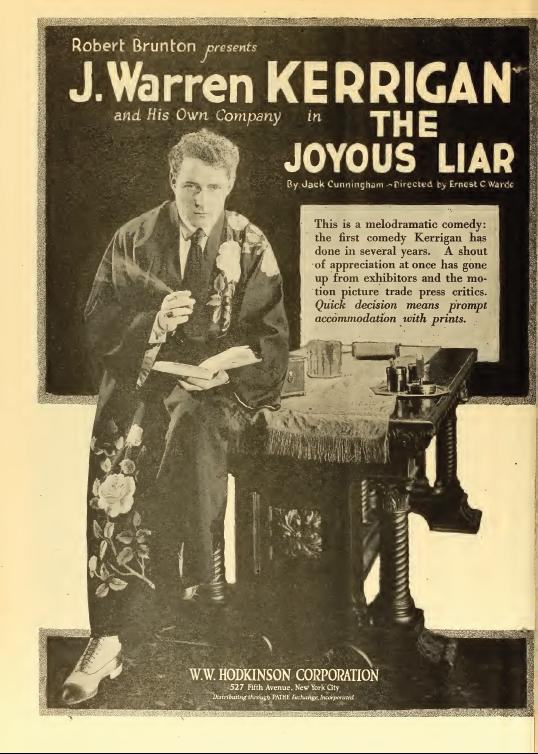
There’s a particular brand of silent film that, despite its age, feels remarkably fresh and subversive, a testament to the enduring power of clever storytelling and charismatic performances. ’The Joyous Liar’ is precisely such a picture, a delightful romp that gleefully upends expectations and celebrates the triumph of wit over rigid convention. At its core lies a premise so deliciously ironic, it could easily grace the screen today: a genuine hero, Burke Harlan, an artist no less, finds himself unjustly branded a criminal, and rather than fighting the misconception with tedious explanations, he embraces it with a mischievous twinkle in his eye.
The narrative unfurls with Harlan’s valiant rescue of Anne Warren from a band of auto thieves. A moment of pure heroism, swiftly followed by a bureaucratic blunder that sees him accused of the very crime he prevented. This initial misidentification sets the stage for a comedic masterpiece. Anne’s father, a criminologist with an almost naive belief in his own ability to reform delinquents, takes Harlan under his wing. This isn't a punitive measure, but a paternalistic experiment in social rehabilitation. What the elder Warren doesn't realize, of course, is that his 'project' is an astute, charming imposter, one who finds the entire situation utterly amusing and, more importantly, a perfect conduit to the affections of his daughter, Anne.
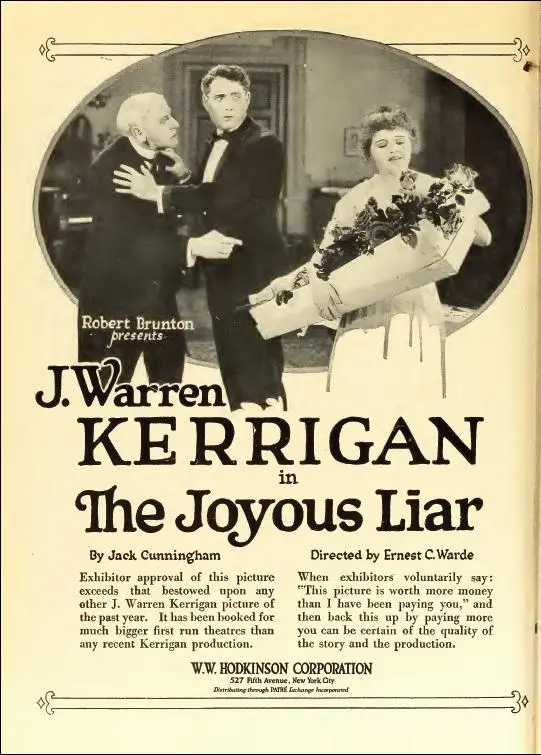
Burke Harlan, as embodied by Pell Trenton, must have been a revelation. His character is not merely a man mistaken for a thief; he is a man who consciously, gleefully, and strategically leans into the misconception. This isn't a desperate act of self-preservation, but a playful game, a romantic pursuit cloaked in the guise of a social experiment. His 'delinquency' becomes a canvas for his artistic temperament, each feigned misstep a brushstroke in a larger, more intricate portrait of charm and cunning. One can only imagine the subtle shifts in expression, the knowing glances, the barely suppressed smiles that Trenton would have employed to convey Harlan's inner mirth and calculated manipulation. It’s a performance that demands a unique blend of sincerity and theatricality, a tightrope walk between genuine affection and deliberate artifice.
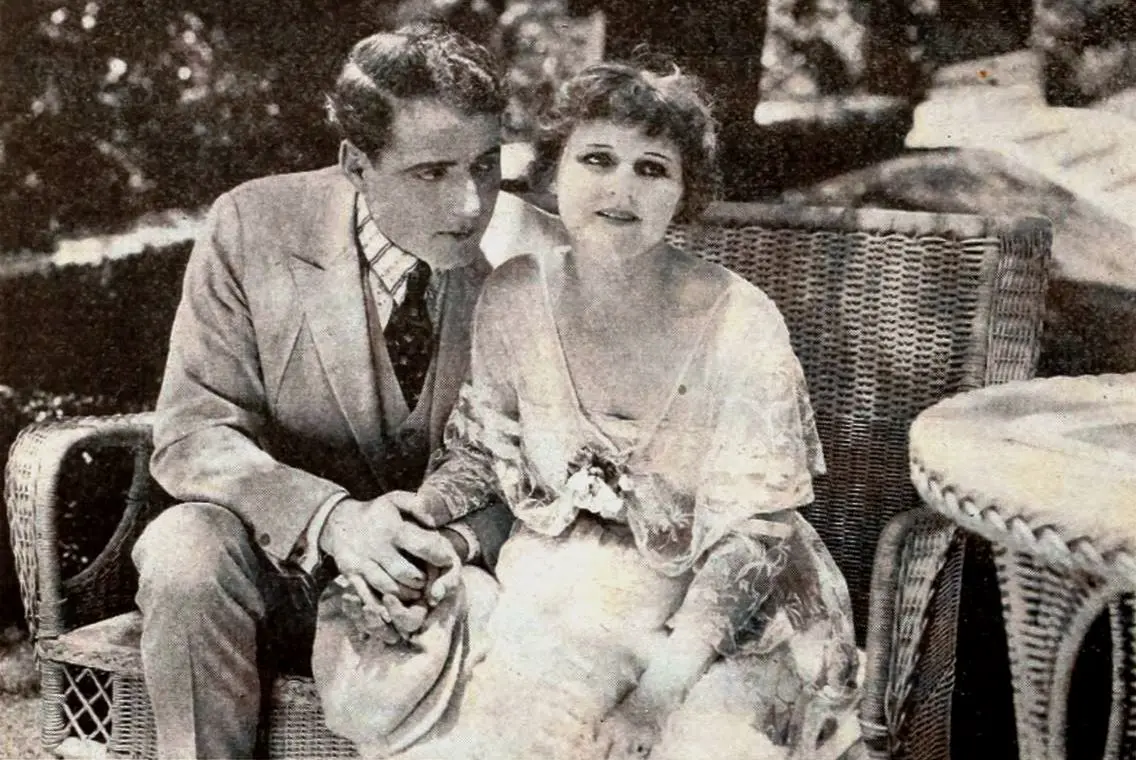
Anne Warren, portrayed by Lillian Walker, is not merely a prize to be won, but an integral player in this elaborate charade. Her initial perception of Harlan, shaped by her father’s well-intentioned but flawed judgment, slowly gives way to an undeniable attraction. She sees past the fabricated facade of the 'delinquent' to the genuine sparkle in his eyes, the intelligence behind his playful demeanor. It’s a testament to the film's nuanced characterizations that Anne isn't portrayed as a simple, easily fooled ingenue. Instead, she possesses an intuitive understanding, perhaps a subconscious recognition of Harlan's true nature, even as her logical mind grapples with the evidence presented. Her romantic entanglement is further complicated by the presence of her beau, the police commissioner, a figure of rigid authority and predictable virtue. He serves as the perfect foil to Harlan’s spontaneous, unconventional charm, a symbol of the very establishment Harlan so effortlessly outwits.
The thematic richness of ’The Joyous Liar’ extends beyond mere romantic comedy. It’s a clever commentary on societal perceptions, the often-flawed nature of judgment, and the power of individual charisma to subvert entrenched systems. Harlan’s ability to manipulate the criminologist’s reform efforts highlights the inherent theatricality of social roles and the ease with which appearances can be deceiving. The film subtly critiques the notion that character can be neatly categorized or 'reformed' by external forces, arguing instead for the inherent agency and complex motivations of individuals. This playful challenge to authority resonates even now, offering a timeless observation on human behavior.
In the silent era, storytelling relied heavily on visual cues, exaggerated expressions, and the interpretive power of intertitles. For a film like ’The Joyous Liar’, these elements would have been crucial in conveying Harlan’s intricate schemes and the subtle humor of his deceptions. One can imagine intertitles brimming with witty retorts and knowing asides, guiding the audience through the layers of Harlan’s performance. The pacing would have been vital, allowing moments of comedic tension to build, punctuated by swift, decisive actions. Compared to the more overtly dramatic narratives of the time, such as ’The Silent Voice’ or the grand biblical scale of ’The Life of Moses’, ’The Joyous Liar’ likely distinguished itself through its sophisticated comedic timing and its reliance on character-driven humor rather than broad slapstick.
The genius of Jack Cunningham’s writing lies in crafting a narrative where the protagonist’s 'lie' is ultimately a vehicle for truth. Harlan is not genuinely deceitful; he is simply playing a role to achieve an honest outcome: love. This distinction is vital and elevates the film beyond a simple comedy of errors. It speaks to the idea that sometimes, the most direct path is not always the most effective, and that a dash of theatricality can often reveal deeper truths about individuals and relationships. The film’s romantic core is robust, portraying a connection that blossoms not despite the deception, but almost because of it, as Anne is drawn to Harlan’s unconventional spirit and evident intelligence.
Consider the parallels with other films exploring themes of mistaken identity or unconventional romance. A film like ’The Impersonation’ might delve into the dramatic consequences of assuming another's identity, but ’The Joyous Liar’ uses it for lighter, more romantic ends. Similarly, where ’Why Not Marry’ might explore the social pressures surrounding marriage, ’The Joyous Liar’ focuses on the delightful subversion of those pressures through a clever personal scheme. The film’s strength lies in its confident embrace of its premise, never wavering from the comedic potential of Harlan’s elaborate game. The cast, including J. Warren Kerrigan, Alfred Hollingsworth, Joseph J. Dowling, and Albert R. Cody, would have each contributed to the rich tapestry of reactions and counter-reactions that Harlan's presence undoubtedly provoked, each performance a vital cog in the comedic machinery.
The climax, where Harlan orchestrates his triumphant elopement with Anne, is the ultimate payoff for his elaborate masquerade. It’s a moment of pure cinematic joy, where the audience is invited to revel in the cleverness of the protagonist and the satisfying comeuppance of the well-meaning but ultimately outmaneuvered authority figures. His true identity, revealed only after the deed is done, serves as the final, triumphant flourish, cementing his status not as a liar, but as a supremely cunning romantic hero. It’s a narrative arc that leaves a lasting impression, not just for its wit, but for its celebration of individuality and the pursuit of happiness on one’s own terms.
This film, though a product of its time, speaks to universal desires for autonomy and genuine connection. It reminds us that often, the most endearing characters are those who dare to defy convention, who see life as a grand performance, and who approach even their most serious pursuits with a sense of playful irreverence. ’The Joyous Liar’ is more than just a silent film; it's a vibrant, intelligent comedy that deserves to be rediscovered and celebrated for its timeless charm and ingenious narrative construction. It stands as a testament to the fact that a good story, well told, with characters who spark and schemes that delight, can transcend the boundaries of era and technology, continuing to entertain and provoke thought generations later.
The film's exploration of perception versus reality feels particularly resonant, even in a world saturated with information. Harlan’s success isn't just about his cleverness, but about the willingness of others to believe what they want to believe, or what their preconceptions dictate. The criminologist sees a 'delinquent' to be reformed; the police commissioner sees a rival to be apprehended. Neither truly sees Harlan until he chooses to reveal himself, and by then, the game is won. This sophisticated layered approach to character and plot is what sets ’The Joyous Liar’ apart, elevating it beyond a simple farce into a truly intelligent piece of cinema from the early 20th century. It invites us to question our own assumptions and perhaps, to appreciate the joy in a little well-placed deception, especially when it leads to true love.
IMDb 4.6
1917
Community
Log in to comment.