DbcultAccessing Vault...
Cult Review
Senior Film Conservator
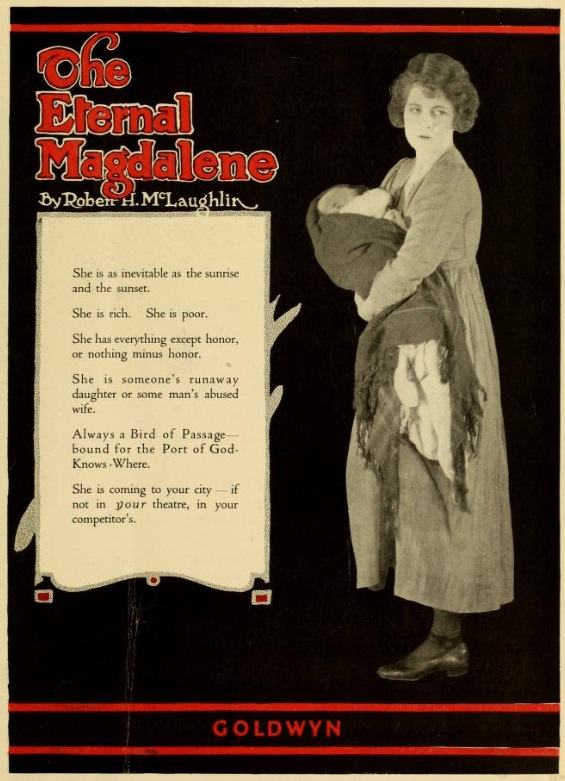
In the annals of silent cinema, few works possess the haunting, almost liturgical resonance of The Eternal Magdalene. Directed with a surprising degree of psychological acuity, this 1918 feature serves as more than a mere morality play; it is a stratified examination of the societal mechanisms that manufacture pariahs. The film posits the Magdalene not as a historical relic of biblical lore, but as a recurring, inevitable presence—a ghost in the machine of human civilization. Much like the stylistic grandiosity found in Aphrodite, the film leverages the ethereal presence of its lead to bridge the gap between the mundane and the mythic.
Maxine Elliott delivers a performance that transcends the pantomime common to the era. Her portrayal of the titular figure is one of quiet, agonizing dignity. She is the 'Magdalene' in all her permutations: the wealthy woman whose status is a fragile veneer, and the impoverished wanderer who has been stripped of everything but her pulse. This duality is central to the film’s thesis. It suggests that the 'fallen' state is not a moral destination but a socio-economic trapdoor. The cinematography captures Elliott with a reverence that borders on the hagiographic, yet the narrative never shies away from the grit of her circumstances.
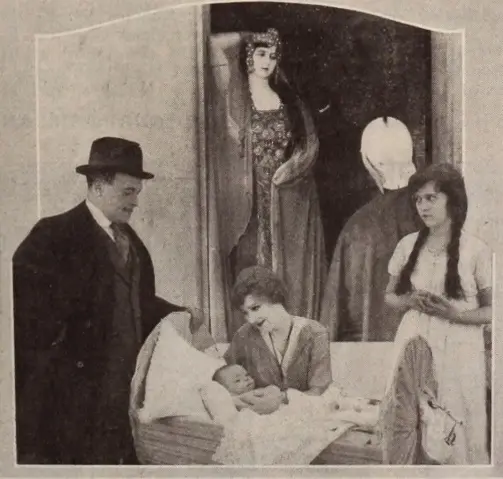
When comparing this to contemporary works like The Interloper, one notices a distinct shift in how domestic disruption is handled. While many films of the time focused on the external threat to the family unit, The Eternal Magdalene looks inward, suggesting that the threat is the very morality the family claims to uphold. The runaway daughter and the abused wife are not villains; they are refugees from a system that demands honor while providing no safety.
Charles Dalton’s portrayal of the social reformer, Paul Bradshaw, is a masterclass in the slow erosion of certainty. Bradshaw begins the film as a man of granite convictions, a crusader for a purity that is as cold as it is sterile. His journey is the narrative engine of the film. Through a series of visions—or perhaps a prolonged dark night of the soul—he is forced to confront the reality that his reforms are often the very instruments of the suffering he claims to despise. This psychological deconstruction is far more sophisticated than the binary heroics found in Tennessee's Pardner.
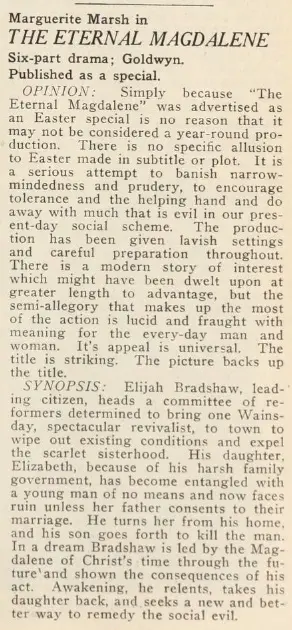
The film utilizes a dream-like structure that allows it to bypass the literal and engage with the symbolic. This was a bold choice for 1918. By blurring the lines between reality and allegory, the director forces the audience into a state of moral vertigo. We are no longer watching a story about 'those' people; we are witnessing a universal trial of the human conscience. The presence of Vernon Steele and Charles Trowbridge adds a layer of theatrical gravity to the proceedings, ensuring that the heavy themes are anchored by robust, believable interactions.
Visually, the film is a feast of chiaroscuro. The interplay of light and shadow serves as a constant metaphor for the protagonist's internal struggle. The 'sunrise and sunset' motif mentioned in the plot is rendered through clever lighting transitions that were quite advanced for the period. There is a tactile quality to the sets, from the opulent parlors to the shadowed alleyways, creating a sense of place that feels lived-in and oppressive. This attention to atmospheric detail rivals the technical precision seen in Sherlock Holmes productions of the same decade.
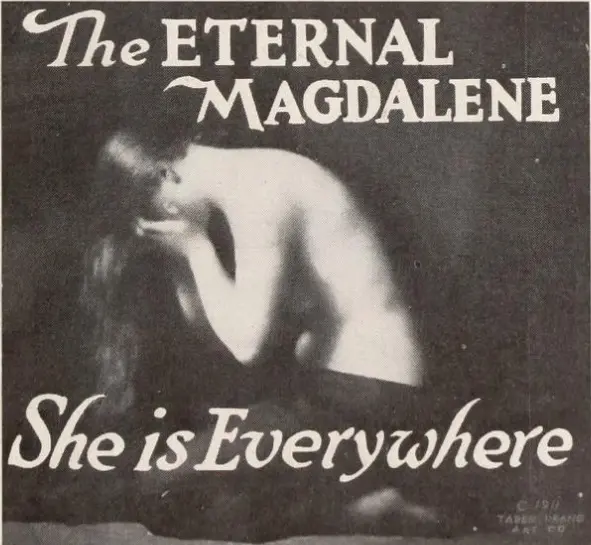
Furthermore, the screenplay by Robert McLaughlin avoids the flowery, over-explanatory intertitles that plagued many silent features. Instead, it allows the imagery to carry the emotional weight. When the Magdalene is described as having 'nothing minus honor,' the visual of her standing against a desolate horizon tells the story better than any text could. It is a stark, visceral realization of existential despair.
To understand the impact of The Eternal Magdalene, one must look at how it diverges from the 'fallen woman' tropes found in European cinema of the time, such as Baronin Kammerjungfer. While the European counterparts often leaned into the tragedy of class displacement, this film leans into the spiritual inevitability of the character. She is a force of nature, a cosmic necessity that exists to test the empathy of the 'righteous.'
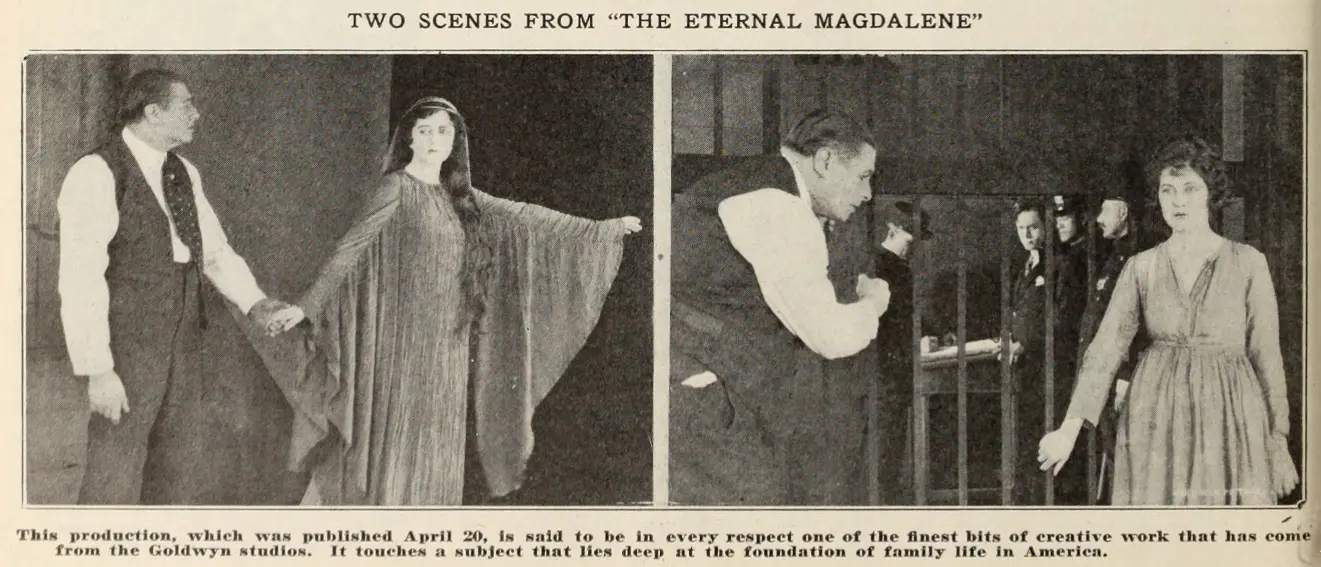
The film also shares a surprising thematic kinship with The Sea Wolf, particularly in its exploration of the brutal nature of survival. However, where London’s story focuses on the physical struggle against a tyrannical force, McLaughlin’s script focuses on the psychological struggle against a tyrannical morality. The 'abused wife' and the 'runaway daughter' are not just plot points; they are indictments of a society that offers no exit ramps for women who do not fit the narrow mold of domestic subservience.
It is impossible to discuss this film without returning to Maxine Elliott. Her screen presence is magnetic, possessing a gravitas that suggests a deep understanding of the character’s plight. In an era where female roles were often relegated to the ingenue or the crone, Elliott occupies a middle ground of complex, weary humanity. She is the soul of the film, and her ability to convey a lifetime of sorrow with a single look is what elevates the movie from a period piece to a timeless work of art.
The supporting cast, including Donald Gallaher and Marguerite Marsh, provide the necessary friction to make the world feel inhabited. Their characters represent the various pressures—familial, social, and romantic—that converge upon the Magdalene. The film’s pacing is deliberate, allowing the weight of these pressures to build until the final, cathartic realization. It lacks the frantic energy of A Roadside Impresario, opting instead for a somber, reflective tone that lingers long after the credits roll.
Ultimately, The Eternal Magdalene is a film about the failure of judgment. It argues that the moment we categorize a human being as 'other' or 'fallen,' we lose our own humanity. The reformer’s ultimate realization—that he is no better than those he seeks to 'save'—is a powerful message that remains relevant over a century later. It is a work of profound empathy, wrapped in the aesthetics of a gothic melodrama.
For those interested in the evolution of social commentary in film, this is essential viewing. It predates the more overt political messaging of France in Arms or the documentary-style realism of A Trip Through China, yet it manages to be just as provocative. It is a reminder that the most significant battles are often fought within the confines of the human heart, and that the 'eternal' nature of the Magdalene is a reflection of our own eternal struggle to balance justice with mercy.
In the landscape of 1918, a year defined by global upheaval and the shadows of the Great War, The Eternal Magdalene offered a different kind of introspection. It didn't look at the borders of nations, but at the borders of the soul. It remains a staggering achievement, a silent scream against the hypocrisy of the ages, and a testament to the power of cinema to act as a conscience for the world.
IMDb —
1929
Community
Log in to comment.