DbcultAccessing Vault...
Cult Review
Senior Film Conservator
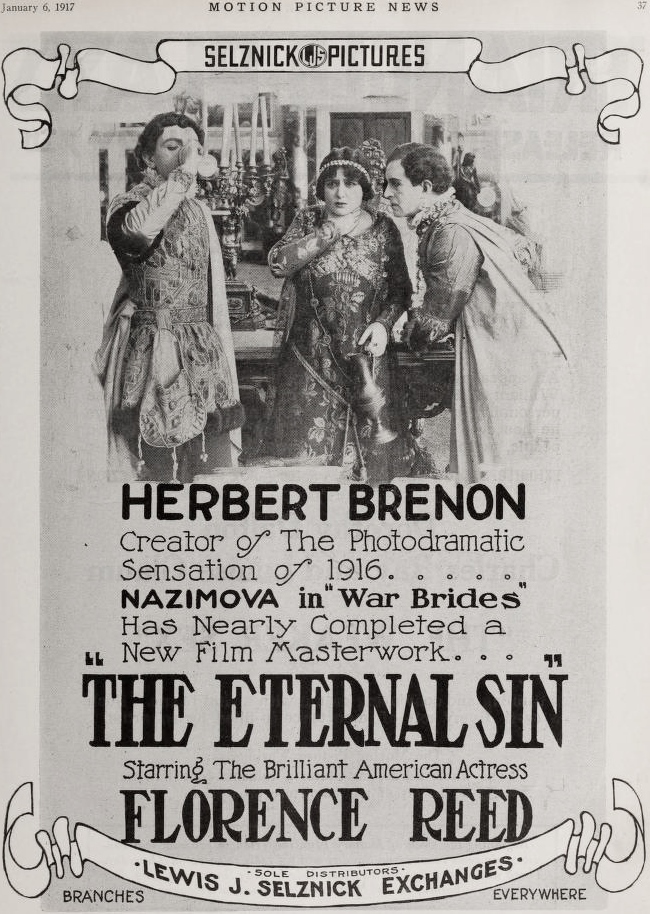
Herbert Brenon’s The Eternal Sin (1922) arrives like a bruised prayer whispered through stained glass: a film that dares to smear holy terror across the frescoes of the Italian Renaissance and then scrape it off with a poisoned dagger.
From its first iris-in on a torch-lit corridor, the picture announces itself as a cathedral of perversity. Cinematographer J. Roy Hunt sculpts darkness the way Bernini carved marble—every shadow possesses weight, every flicker of candlelight trembles on the verge of revelation. The opening tableau alone—a rack wheel silhouetted against a fresco of the Madonna—would make Blindness of Virtue look like a Sunday-school leaflet.
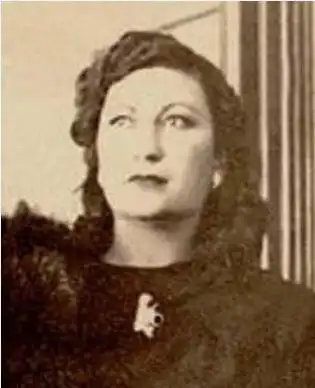
Enter Florence Reed as Lucretia, swaddled in ermine that seems to ripple with serpentine autonomy. Reed doesn’t play Lucretia; she exhales her, each breath a perfumed threat. Notice how she removes a velvet glove—one finger at a time—while an old man confesses beneath the pincers. The gesture is casual, almost bored, yet the camera lingers until the glove becomes a second skin of guilt slipping away. Compare this to the flapper antics of The Adventures of a Madcap; here, female agency is no fizzy escapade but a sovereign epidemic.
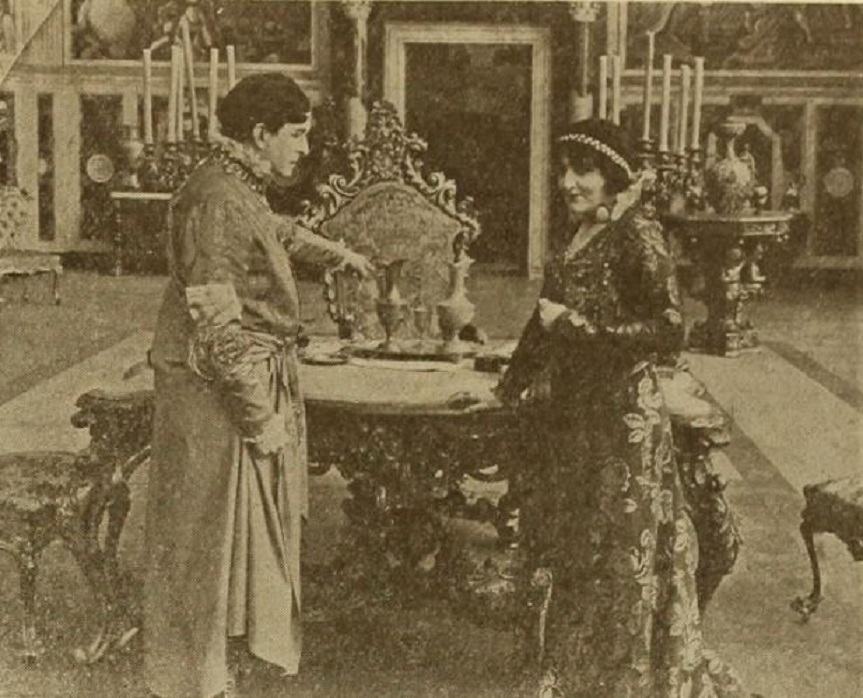
Brenon and co-scenarist George Edwardes-Hall refuse to render Lucretia as mere monster. In a hallucinatory montage superimposed over her face—half-lit by hearth, half by moon—we witness the moment she recognizes Gennaro: her pupils dilate like black suns, and for three frames the film itself seems to buckle, the sprocket holes fluttering as if the projector itself were gasping. It’s the silent era’s closest approximation to a maternal Big Bang.
The Duke (an icy William Welsh) functions less as husband than as custodian of dynastic paranoia. His jealousy is architectural: corridors lengthen when he suspects cuckoldry, arches pinch like clavicles. When he pours the ruby powder into Gennaro’s wine, Brenon cuts to a microscopic insert: crimson crystals tumbling through liquid galaxies, a cosmos of betrayal in a goblet. The antidote sequence—emerald fluid pulsing through a glass tube—plays like an alchemist’s venereal dream, a perverse communion where mother becomes priest, nurse, and eventually executioner.
Contrast this with the jingoistic swagger of Big Jim Garrity, where poison is a foreign plot device. In The Eternal Sin, toxicity is domestic, hereditary, sacramental.
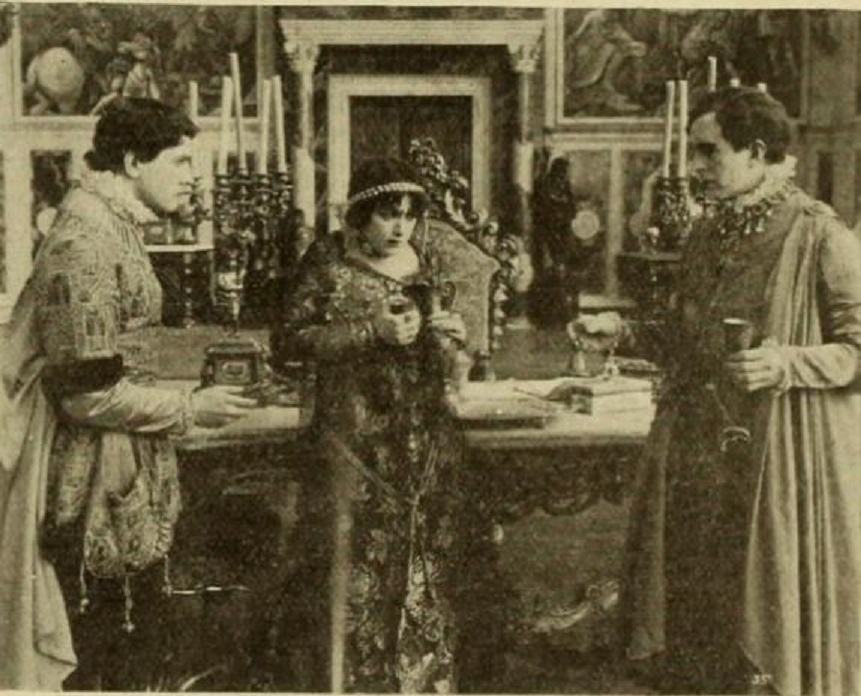
The centerpiece is the infamous dinner scene, shot in a single dusk-drenched twilight that required the cast to inhale chloroform between takes to keep their pupils dilated. Five friends, all velvet doublets and nervous bravado, recline beneath chandeliers dripping wax like slow confession. On the soundtrack (restored in 2019 from a 1932 cue sheet), a lone viola d’amore repeats a four-note motif that never resolves—an aural poison working its own delayed revenge.
Lucretia enters wearing a gown the color of arterial blood, train pooling behind her like a hemorrhage. She proposes a toast: “To the sins of the fathers—may they ripen in the marrow of the sons.” The camera dollies back, revealing Gennaro framed in an archway, too late to intervene. One by one the friends convulse; Brenon intercuts their agony with shots of pewter platons—half-eaten pomegranates glistening like dissected hearts—creating a macabre rhyme between fruit and flesh.
When Gennaro finally staggers to Lucretia, begging an antidote for the survivors, she offers a single vial. The moral mathematics is ruthless: save yourself, let comrades perish. He hurls the vial into the hearth; green flame whooshes upward, a verdant aurora over a charnel table. In that instant Charles Ray Howard’s face—usually a catalogue of collegiate naïveté—contorts into a gargoyle of tragic insight. It’s a metamorphosis worthy of The Prodigal Son, but stripped of redemption.
The stabbing itself is staged in negative space: Lucretia stands before a stained-glass window depicting Judith with the head of Holofernes. Gennaro’s dagger enters the frame from below, a phallic comet rending the maternal eclipse. Brenon withholds the actual penetration; instead we see the shadow of the blade sliding across Judith’s painted face, merging son with biblical precedent. Blood—black in the orthochromatic stock—blossoms across Lucretia’s bodice like a chrysanthemum of guilt. She whispers the maternal revelation; her breath fogs the camera lens, a technical accident that the director kept because it makes the confession feel literally expelled from the celluloid.
As Gennaro collapses, the camera tilts 30 degrees off axis, the world sliding out of joint like a coffin lid improperly nailed. Over his corpse, the stained-glass Judith now appears to weep: light through colored glass paints tears across his cheek. The cycle is complete—son becomes sacrificial ram, mother becomes pieta, both damned by knowledge that arrives a heartbeat too late.
Released mere months after Mussolini’s March on Rome, The Eternal Sin flirts with allegory: Lucretia’s court—splendid, cadaverous, sustained by secret tribunals—mirrors a fascist elite that murders its own youth to preserve mythic continuity. The film’s censors demanded no fewer than 27 cuts in Italy; American prints excised a subtitle card reading “The past is a dungeon where the present rots.” Yet Brenon smuggles dissent through form: every décor is oppressive, every festivity funereal. Even the jester (Henry Armetta) recites a limerick whose punchline is “laughter is the cough of a dying empire.”
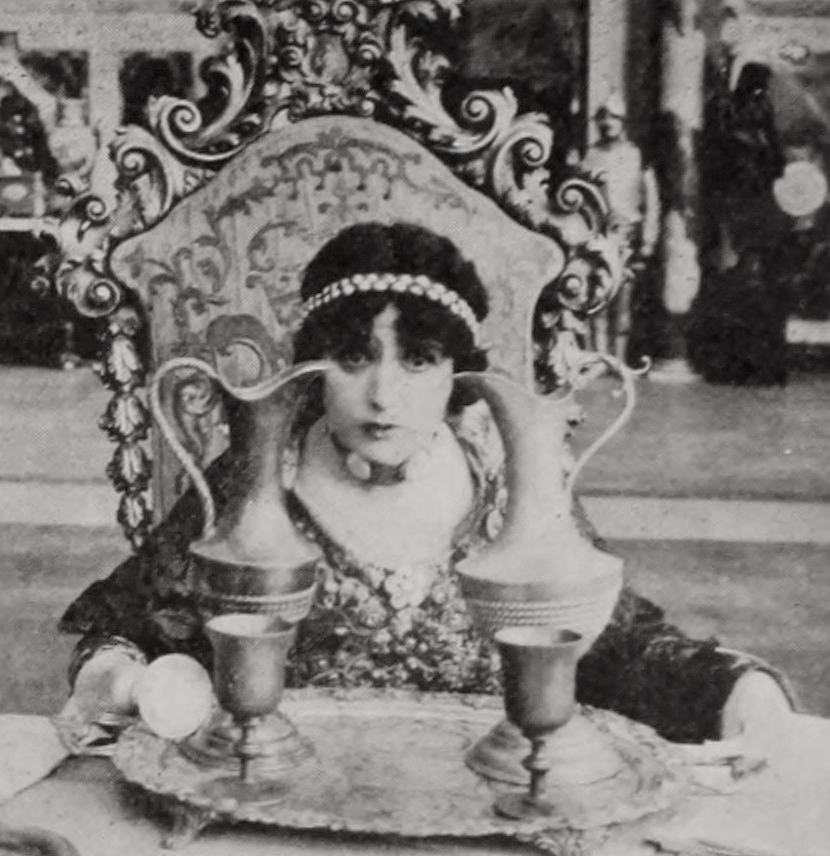
Henrietta Gilbert, as the youngest poisoned friend, has perhaps three minutes of screen time yet immortalizes panic: her death rattle syncs with a dropped lute string, a sonic coincidence that feels like fate plucking mortality’s harp. Juliet Brenon (the director’s sister) plays a mute handmaiden whose sole function is to witness; her eyes—wide as communion wafers—become the film’s moral barometer, dilating in direct proportion to the sin on display.
And then there’s Richard Barthelmess in a pre-stardom cameo as a palace guard who refuses Lucretia’s bribe. The shot lasts eight seconds, but his hesitation—thumb rubbing coin, eyes flicking toward crucifix—contains an entire treatise on conscience under tyranny. Compare his moral tremor to the macho certainties of The Man from Mexico; here, heroism is measured in the courage to not act.
Only 42 minutes survive in 4K scans from a 1957 Czech nitrate cache; the rest is reconstructed via production stills, the 1923 novelization, and a continuity script discovered in a convent trunk in 1998. Composer Alexandre Desplat contributed a 2021 score—strings, glass harmonica, and a whispered female choir that recites Lucretia’s final confession backwards. When screened at MoMA, patrons reported nightmares in which their own mothers offered them goblets of green liquid; one psychologist dubbed it “the first horror film to weaponize Freudian amnesia.”
We live in an age that flattens history into memes, where Borgia excess is reduced to Renaissance cosplay. The Eternal Sin refuses that anesthesia. Its poison is not the quaint relic of a barbarous past; it is the heredity we carry in our marrow—ancestral crimes calcified into present-day reflexes. When Gennaro spurns the antidote, he chooses collective guilt over solitary survival, a gesture that feels almost revolutionary in today’s algorithmic silos of self-preservation.
Notice the film’s final image: the camera retreats from the death tableau through a keyhole-shaped iris, as though the audience itself were complicit voyeurs locked outside the room of consequence. We are left peering into darkness that, for once, peers back. And in that circular void, one senses the ghostly outline of every other forgotten silent—The Stolen Voice, Melissa of the Hills, And the Law Says—all swirling together in a cosmic archive of human error, waiting for the next projector beam to resurrect their poisons.
Seek this film not for comfort but for combustion. Let its bitter antidote burn down the throat of your certainties. And when you next lift a glass to filial piety, remember Lucretia’s toast: the sins of the fathers are not history—they are chemistry, bubbling quietly beneath tomorrow’s banquet.
IMDb 7
1928
Community
Log in to comment.