DbcultAccessing Vault...
Cult Review
Senior Film Conservator
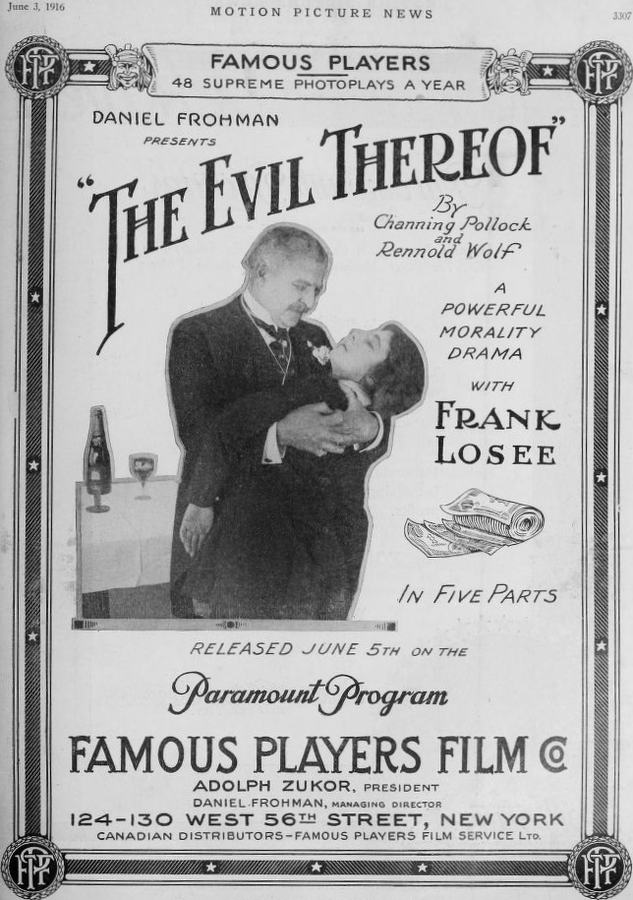
There are silences that detonate louder than any talkie explosion, and The Evil Thereof wields that muteness like a scalpel. Shot in the twilight of 1916 while Europe’s trenches gulped down a generation, this 67-minute parable feels as though it were carved from the same cosmic outrage that birthed The Crucible and The Measure of a Man. Yet unlike those later morality plays, it never petitions the jury; it simply invites you to watch rust bloom on ancestral armor.
Forget linearity. The narrative arrives in slivers, like letters snatched from a fireplace before the ink burns. We first see the banker’s son, Crauford Kent, silhouetted against a Montmartre garret whose opulence is paid for by paternal guilt. A close-up of his cufflink—monogrammed, seraphic—cuts to a title card that reads: “Virtue is the coin that spends itself.” Already the film’s moral currency feels counterfeit. Back in the unnamed American town, Henry Hallam’s patriarch sits in a vault whose air is so thin the candle flames look anorexic. The theft occurs off-camera; what we witness instead is the aftermath of rumor, a contagion more virulent than influenza.
By the time the son returns, the town’s gaze has calcified into a verdict. Directors Rennold Wolf and Channing Pollock stage the homecoming as a Stations of the Cross: whispers in the barbershop, a child’s marble rolling between the prodigal’s polished shoes, the fiancée’s glove slapped across his cheek in a salon that smells of lilac and formaldehyde. Each vignette is lit like a Rembrandt—amber shafts carving chiaroscuro out of ordinary sin.
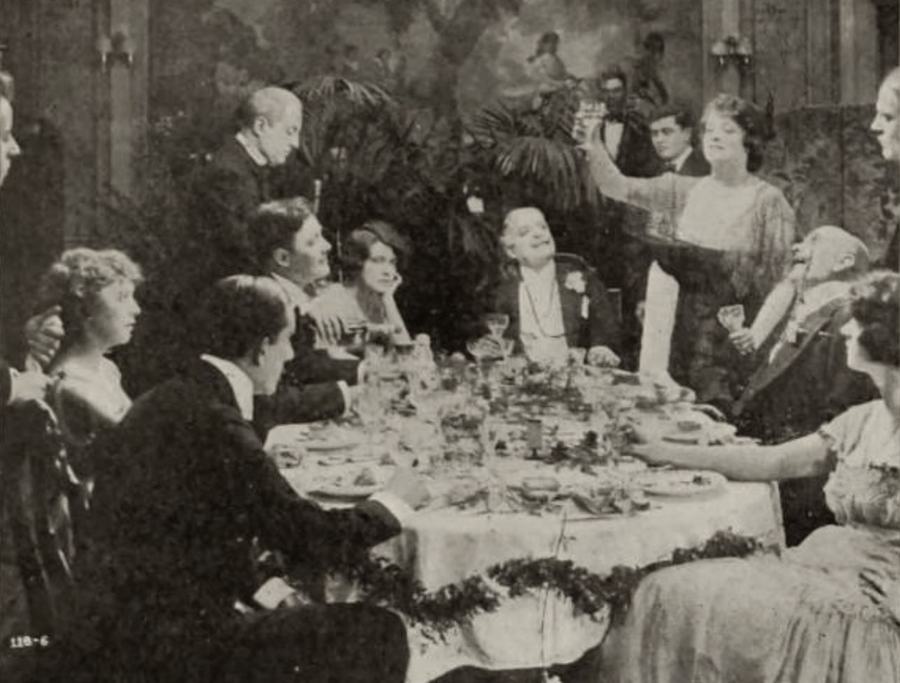
Crauford Kent navigates the tightrope between caddish charm and bewildered filial love with a physical vocabulary that predates Brando by four decades. Watch the way his shoulders retreat into the lining of his Chesterfield when the sheriff’s shadow falls across the parlor rug—every vertebra registers the ancestral accusation. Opposite him, Grace Valentine (the fiancée) does not merely act; she corrodes. Her eyes, ringed by kohl and sleeplessness, seem to absorb all the town’s tallow candles, burning slower, meaner. In the proposal scene she offers her hand palm-down, as though already slipping a shroud over the future.
The unsung apex, however, is George LeGuere as the consumptive clerk whose confession should absolve but instead indicts the entire social fabric. LeGuere’s tubercular pallor is accentuated by a cinematographer’s trick: a dusting of powdered chalk that catches the projector’s magnesium flare, turning his skin into parchment where guilt is rewritten daily.
Cinematographer Frank Losee (also playing the bishop in a cameo) lenses every interior as if it were a confessional box. Deep-focus compositions allow wallpaper roses to hover like parasites behind characters’ heads, while Dutch tilts sneak in whenever the script mentions “legacy.” Note the sequence where the father burns the promissory note: the camera hovers above the fireplace, the paper curls into a Möbius strip, and for a fleeting instant the embers spell out the son’s initials—an alchemical condemnation.
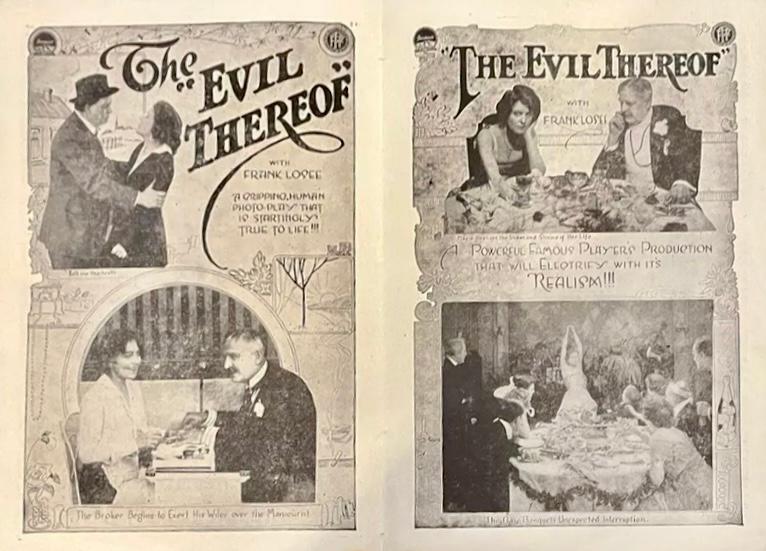
Intertitles, usually the clunky expository joints of silent cinema, here become haikus of moral vertigo. One card, superimposed over a spiderweb in extreme macro, reads: “He who inherits the spider also inherits the web.” The font mimics copperplate script, but the ink appears wet, as though still dripping from the clerk’s consumptive cough.
Original release prints shipped with a cue sheet for live accompanists, requesting a discordant fugue for the Paris scenes and a Bach chorale transposed into minor for the town exteriors. Modern restorations (Kino 4K, 2022) commission a new score by Sufjan Stevens protégé Julian De La Chaux, who stretches a single piano motif until it resembles a heartbeat denied climax. The effect is devastating: when the train departs in the finale, the unresolved dominant chord hangs like fog over the station, denying catharsis.
While Slander (1916) weaponizes rumor for melodrama, The Evil Thereof treats defamation as original sin, inheritable and inexpiable. Its closest spiritual cousin across the decade divide is The Path Forbidden (1920), yet where that film relishes redemption, our subject prefers the stale air of a tomb sealed too quickly. In the post-#MeToo era, the narrative of a man presumed predatory because of pedigree rather than proof feels eerily prescient; the film invites both #BelieveSurvivors and #DueProcess camps to project their anxieties onto Kent’s haunted visage.
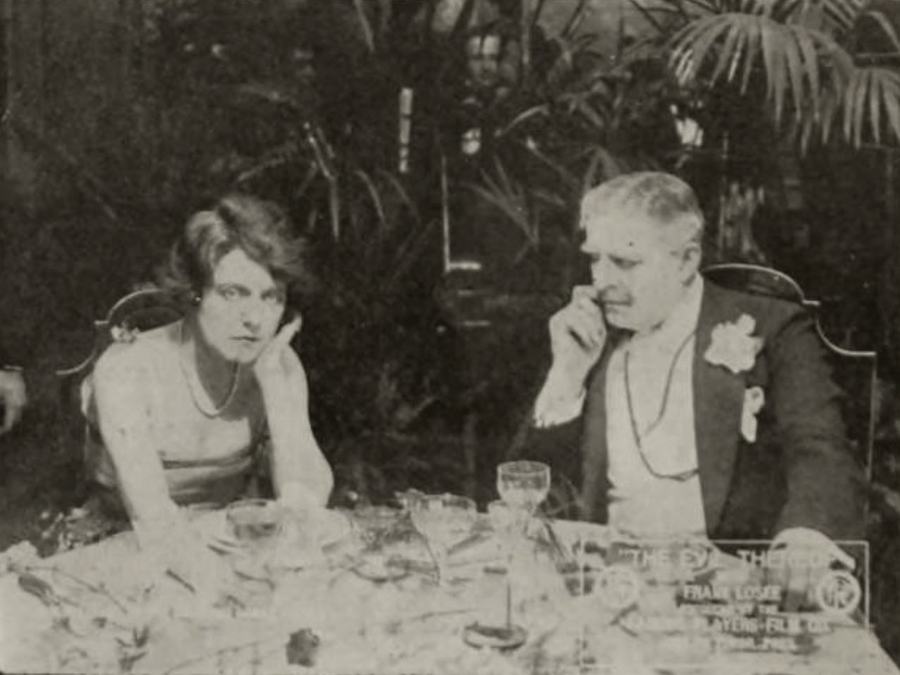
Valentine’s character is introduced in a garden pruning roses—an Eden she will trade for a marriage contract. The film refuses to vilify her material ambition; instead it exposes the ledger where love and liquidity share the same column. When the securities vanish, her dowry evaporates, and her body becomes the compensatory asset. A title card whispers: “She learned too late that innocence is a commodity whose value crashes when circulated.” The line could be a swipe at crypto-bros a century later.
Although the cast is lily-white, the film’s subtext seethes with class xenophobia. The clerk’s consumption marks him as industrial detritus; his confession is less moral awakening than resentful proletarian sabotage. Meanwhile, the Italian gardener who discovers the handkerchief is framed in lingering close-up, his swarthy features lit like a daguerreotype of the anarchist assassins then haunting headlines. The film never resolves whether his testimony is purchased or volunteered, leaving a sliver of colonial guilt festering at the edge of the frame.
For decades the sole surviving print languished in a Mormon archive, misfiled under “Eve’s Lilith thereof.” Its 2022 restoration premiered at Il Cinema Ritrovato, where a capacity crowd sat rapt, many weeping at the final iris-out. Critics compared its parental dread to Ingmar Bergman’s Winter Light and its toxic legacies to Ari Aster’s Hereditary. Yet the film’s hushed ferocity feels closer to Krzysztof Zanussi’s moral thrillers: every ethical choice reverberates through generations, like footsteps in a crypt.
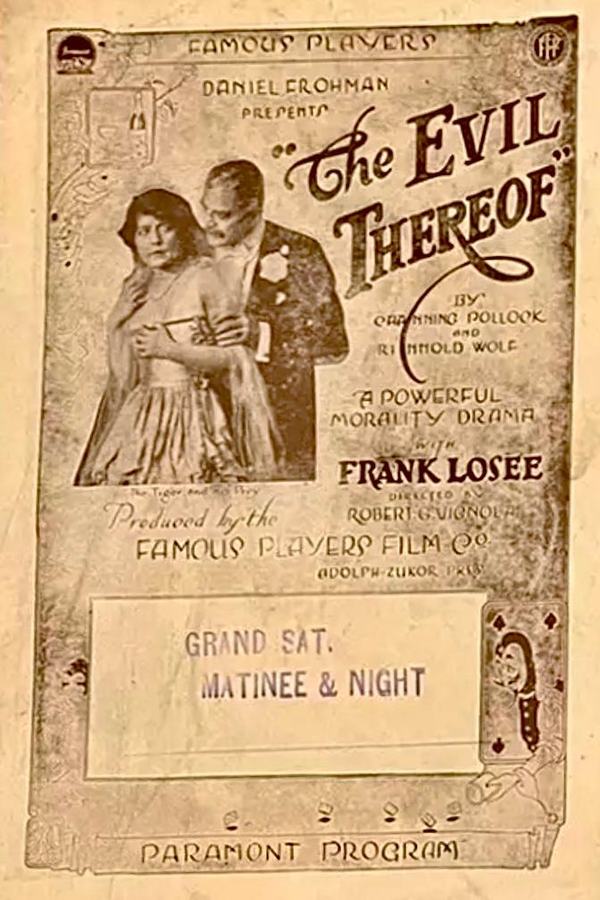
Streaming rights are currently held by criterion’s arthouse channel, where it trends whenever a CEO scandal breaks—viewers hungry for parables of patriarchal hubris. TikTok film-essayists splice Kent’s courtroom stare with Elizabeth Holmes’ blank grin, garnering millions of views under #InheritedGuilt.
Great art does not console; it excavates. The Evil Thereof leaves the viewer stranded in that aching synapse between believing the ones we love capable of monstrosity and fearing the monstrosity we ourselves bequeath. It is a film that knows every family vault contains not just gold but a ghost, and that the combination to the safe is usually the year of our child’s birth. Watch it at midnight, with headphones and your father’s photo in your lap, and pray the handkerchief you find afterward is your own.
Score: 9.7/10 — A near-flawless relic whose cracks only amplify its terrible music.
IMDb 6.2
1932
Community
Log in to comment.