DbcultAccessing Vault...
Cult Review
Senior Film Conservator
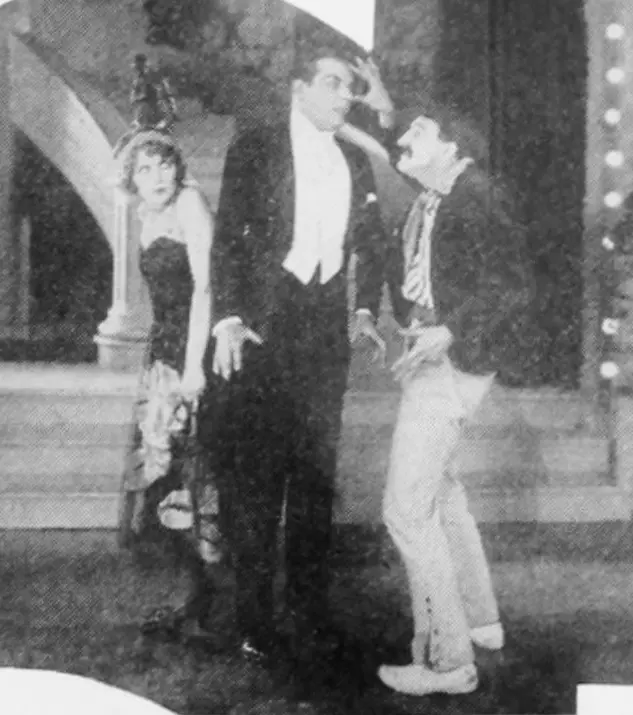
The year 1923 was a peculiar nexus for American cinema, a time when the visual language of the silent era was reaching its zenith while the narrative structures remained delightfully, and often bafflingly, experimental. Enter A Parisian Knight, a Fox Film Corporation production that attempts to marry the sophisticated urbanity of Richard Harding Davis’s prose with the kinetic, slapstick-adjacent energy of the early twenties. This isn't merely a detective story; it is a fever dream of social hierarchy, gender performance, and the American fascination with the 'exotic' dangers of the French capital.
At the center of this whirlwind is Van Bibber, played with a surprising amount of physical commitment by Lynn Cowan. Van Bibber, as a character, represents the archetypal American socialite—unburdened by financial necessity but perpetually seeking a venue for his dormant heroism. Unlike the more grounded protagonists found in John Heriot's Wife, Van Bibber is a creature of whim. When the Police Prefect (Frank Beal) hands him a badge and a mandate to find a kidnapped child, the film transitions from a travelogue into a proto-noir caper, albeit one drenched in the sunshine of comedic convenience.
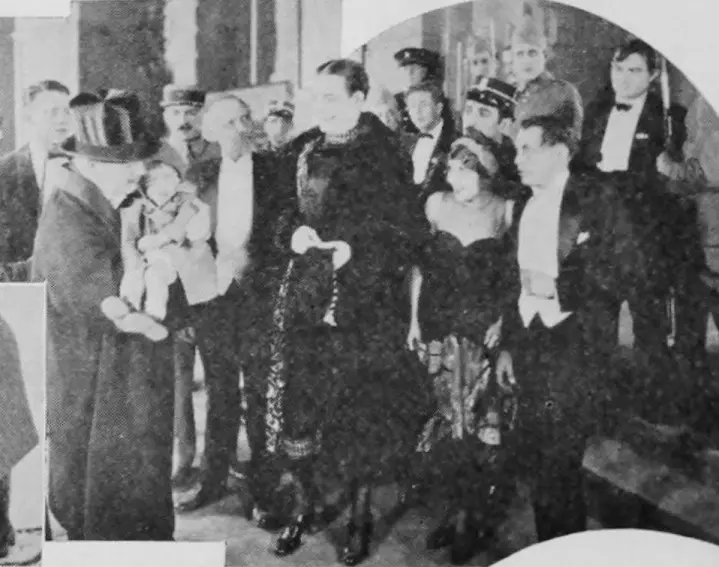
The sequence that defines the film occurs in a dimly lit café, a set piece that mirrors the gritty atmosphere found in Bella Donna (1923), though with a decidedly more slapstick pulse. When a local 'tough' disrespects Van Bibber's fiancée (Hazel Howell), the ensuing brawl is choreographed with a frantic energy that rivals the chaotic energy of Look Out Below!. However, it is Van Bibber's escape that provides the film's most enduring image: his transformation into a woman.
"The cross-dressing trope in silent cinema was often a vehicle for low-brow comedy, yet here, it serves as a literal and figurative veil that allows the protagonist to penetrate the 'Apache' subculture—a demographic of Parisian outlaws that Hollywood obsessed over during this period."
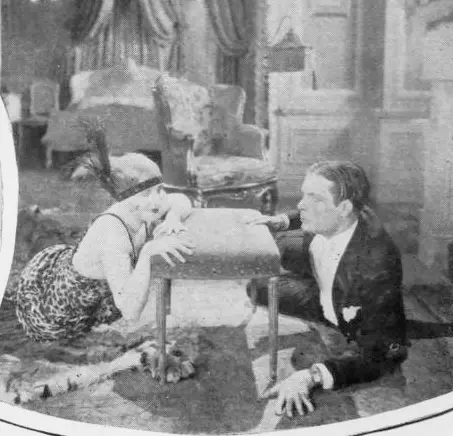
As Van Bibber, clad in drag, stumbles into the Apache den, the film takes an almost surreal turn. The kidnappers, rather than suspecting this newcomer, appoint 'her' as the nurse for the abducted infant. This domesticity-in-peril theme echoes the sentimental stakes of A kölcsönkért csecsemök, yet it is played with a tension that is uniquely American. The sight of a dandy-turned-detective-turned-nursemaid provides a layered commentary on the flexibility of identity when removed from the rigid social structures of Manhattan.
To understand the stakes of A Parisian Knight, one must look at how it treats the 'stolen child' motif compared to its contemporaries. In Kids and Kidlets, the presence of children is often a catalyst for domestic comedy. In contrast, A Parisian Knight uses the child as a MacGuffin to explore the darker corners of Paris, similar to the way Singer Jim McKee uses a quest for justice to explore the rugged frontier. The 'Apache' den is a masterclass in set design for the period—shadowy, cluttered, and populated by actors like Walter Wills and Robert Klein, who lean into the grotesque to contrast with the polished veneer of the film’s opening act.
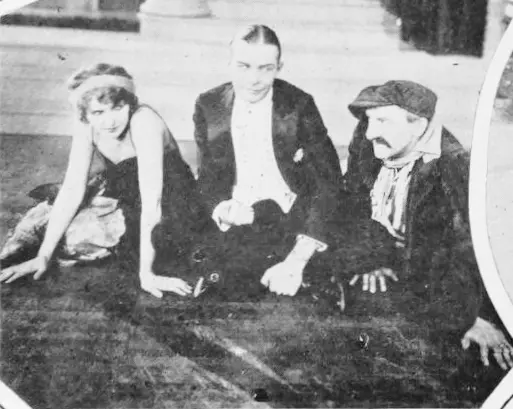
The pacing of the second act is relentless. Once Van Bibber is inside the den, the film abandons the leisurely pace of a drawing-room comedy and adopts the frantic survivalism seen in Up and Going. The tension isn't just about whether he will get caught, but whether he can maintain the performance of femininity under the watchful eyes of the criminal element. It’s a performance within a performance, and Cowan handles it with more nuance than one might expect from a 1923 Fox production.
One cannot discuss this film without acknowledging the literary DNA of Richard Harding Davis. Davis was the quintessential war correspondent and novelist who defined the 'Gilded Age' hero. In A Parisian Knight, we see the transition of his literary ideals into the visual medium. The writing team, led by Davis himself in spirit and credit, ensures that despite the absurdity, the internal logic of the 'gentleman adventurer' remains intact. This is a stark contrast to the more folk-oriented storytelling found in Willy Reilly and His Colleen Bawn, where the hero is defined by blood and soil rather than wit and wardrobe.
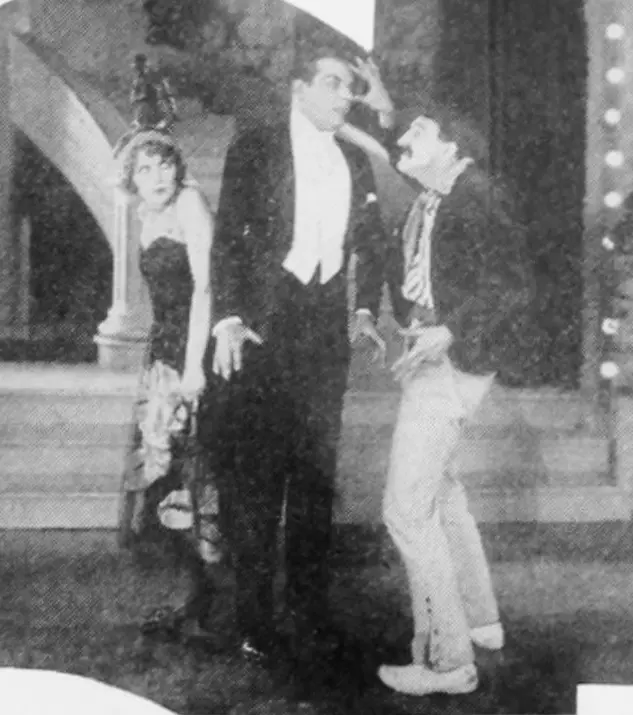
The film also touches upon themes of international perception. To the Parisian police, Van Bibber is a novelty; to the Apaches, he is a servant; to his fiancée, he is a source of exasperation and eventual pride. This multifaceted perception is a sophisticated narrative device for the time, arguably more complex than the straightforward morality of Builders of Castles or the stark survivalism of Wild.
While the director (often uncredited in various prints, but working within the Fox house style) utilizes standard medium shots for the dialogue-heavy sequences, the film comes alive during the escape. The use of low-key lighting in the Apache den creates a sense of claustrophobia that is genuinely effective. It lacks the expressionist extremes of Minaret Smerti or the fairy-tale whimsy of Der verlorene Schuh, but it occupies a middle ground of 'commercial realism' that served Fox well during the silent era.
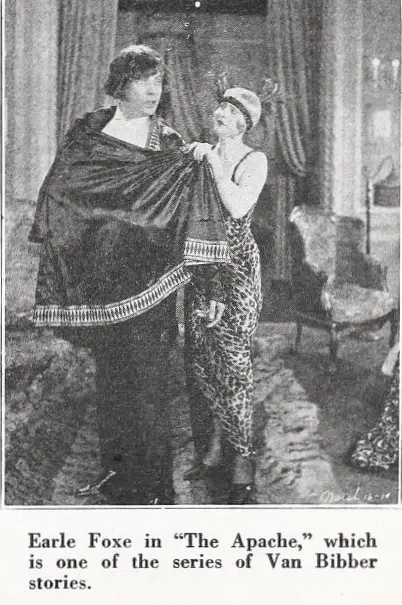
The cinematography captures the essence of the 'Hick' in the metropolis—though Van Bibber is no hick, his American sensibilities are constantly at odds with the European environment, much like the thematic core of Hick Manhattan. The final chase sequence, involving the delivery of the infant and the revelation of Van Bibber’s identity, is edited with a rhythmic precision that suggests a sophisticated understanding of audience expectation and tension release.
A Parisian Knight is a fascinating artifact. It is a film that refuses to be categorized. Is it a comedy? Yes. A thriller? Certainly. A commentary on the fluidity of social class? Surprisingly, yes. It manages to avoid the heavy-handed moralizing found in Everyman's Price, opting instead for a breezy, if slightly manic, exploration of what it means to be a 'knight' in the modern world.
The performances of Florence Gilbert and Earle Foxe provide solid support, ensuring the film doesn't drift too far into the realm of pure farce. While it may not have the historical weight of some of its contemporaries, its sheer inventiveness and the audacity of its central conceit make it a mandatory watch for anyone interested in the evolution of the American action-comedy. It stands as a testament to a time when cinema was unafraid to put its leading man in a dress for the sake of a kidnapping plot, proving that in the silent era, the only limit was the reach of the imagination.
Technical Specifications & Historical Context:
For those who enjoyed the frantic energy of Eine weisse unter Kannibalen but want a more urban, sophisticated setting, A Parisian Knight is the perfect cinematic detour.
IMDb —
1923
Community
Log in to comment.