DbcultAccessing Vault...
5.4/10
Senior Film Conservator
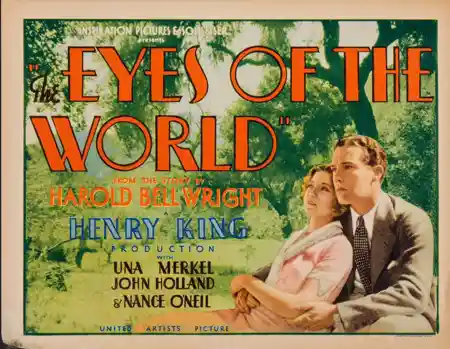
A definitive 5.4/10 rating for a film that redefined the boundaries of cult cinema. The Eyes of the World remains a cornerstone of transgressive art.
Okay, so The Eyes of the World from 1930, this isn't your Saturday night popcorn flick. If you’re into dusty old melodramas, the kind where everyone suffers *a lot*, then maybe, just maybe, this is for you. For most folks, though? It’s a tough sell, probably best avoided unless you’re doing a deep dive into early talkies or just really, really curious about how wild plots could get back then. Don’t expect a smooth ride. 🧐
The whole thing kicks off with Myra, just a naive young woman, getting tricked into a fake marriage. Pretty dark start to a story. Then BAM, an acid attack by the *real* wife. Leaves scars, not just on Myra but also on her baby daughter. Can you even imagine? That’s some intense stuff for 1930, or any year really. Myra hides away, basically from the 'eyes of the world,' up in some mountain town.
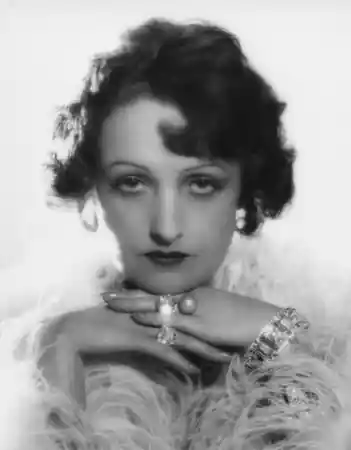
Fast forward thirty years, and her daughter, Gertrude, is grown up. Myra, still scarred and hidden, tries to set up Gertrude with some rich old guy, Edward Taine. Sounds like a plan to secure something, anything, after all that pain. But then Gertrude meets Aaron King, a young artist in Paris, and things get messy, as they always do. Really messy, even for an old picture show.
Taine, the old husband, tries to break up Gertrude and Aaron by taking everyone – including a young James Rutledge, Jr. (the son of the guy who wronged Myra, oh boy) – to a mountain camp. It's like, a dramatic strategy, I guess? Up there, Aaron meets Sybil, another woman, and things shift again. It's a lot of people moving around, emotionally, physically. The whole thing with James Jr. showing up, that's just _asking_ for trouble, you know?
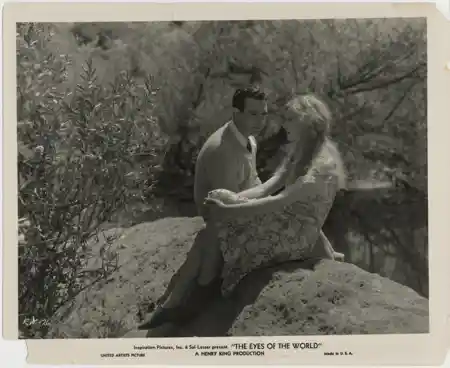
Sybil gets humiliated by Gertrude, which feels like a classic melodrama trope. So, she goes home with James, Jr., who immediately tries to make a move. Predictable, but still kinda squirmy. And then, *bam*, Myra steps in. The old, disfigured Myra, recognizing her abuser's son. She almost kills him! The tension here, it’s pretty wild for a movie of its era. This is where it really comes together, or falls apart, depending on your view. 🔪
Aaron and Gertrude show up right then, stopping Myra. And then Myra *reveals her identity*. Everything clicks into place. Sybil finds out Gertrude wasn't actually trying to steal Aaron, it was all a big misunderstanding. So, everyone reconciles. It's a lot to take in, like a really, really packed novel crammed into a short film. The ending feels a bit rushed, you know? Like, 'Okay, problem solved, everyone go home now.' 🤷♀️
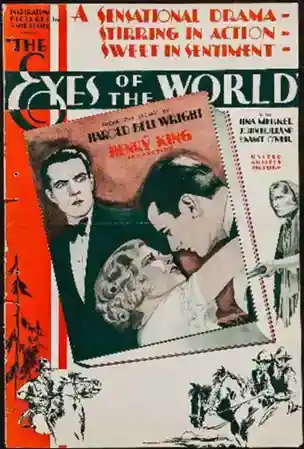
One thing that stuck out: the way they handled Myra's disfigurement. It's more implied fear than graphic detail, which probably worked for 1930 audiences. And the acting, it’s all very *big*. Lots of wide eyes and hand-wringing. You can see the stage influence in every gesture.
Una Merkel, bless her heart, she does a lot with not much screen time. Her character is kinda caught in the middle of all this drama, just trying to make sense of it all. The whole picture feels very much of its time, a real relic. The sound quality, too, is pretty rough around the edges, as you'd expect from an early talkie. Sometimes the dialogue is a little hard to catch. 🗣️
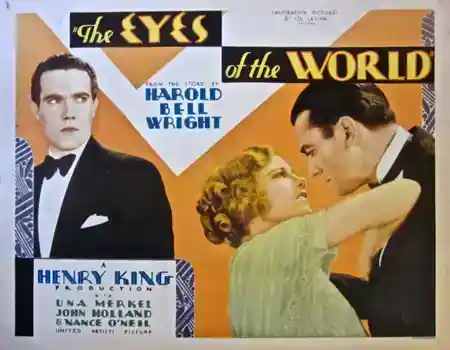
The scene where Myra almost stabs James Jr. is genuinely tense. You can feel the weight of all those years of hiding, the bitterness, in her face, even under the heavy makeup. But then the resolution, it's just so quick. Like turning a faucet off. It makes you wonder how much more they wanted to tell, but couldn't, or just didn't have the runtime. A strange choice, to build all that up just to deflate it so fast.
The transition between the city and the mountains feels quite abrupt. One moment everyone's in Paris, next they're roughing it in the wilderness. You almost miss the explanation for the sudden change of scenery. And the shot of the mountain camp, it looks... kinda sparse? Like they didn't have many props for it. Just a few tents and some trees. Not exactly grand.
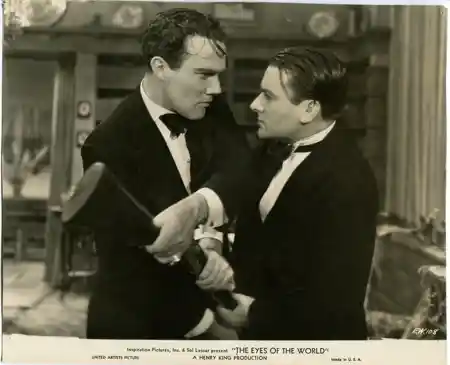
Conrad LaGrange, the novelist character, kinda just… exists. His daughter Sybil gets pulled into the drama, but his role feels more like a convenient plot device. You don't really get a sense of him as a person. Just a name on the screen. ✍️
So, The Eyes of the World? It’s a curiosity. A genuine piece of early cinema history with a plot that would make soap operas blush. It’s not 'good' by today's standards, not really. But if you're keen on seeing how these kinds of stories were told way back when, or if you just have a soft spot for *utterly bonkers* melodrama, then give it a shot. Otherwise, there are plenty of other old films that might be an easier watch. It's an interesting *experience*, if nothing else. You might find yourself just staring at the screen, kinda bewildered. 🤔
IMDb —
1921
Community
Log in to comment.