DbcultAccessing Vault...
Cult Review
Senior Film Conservator
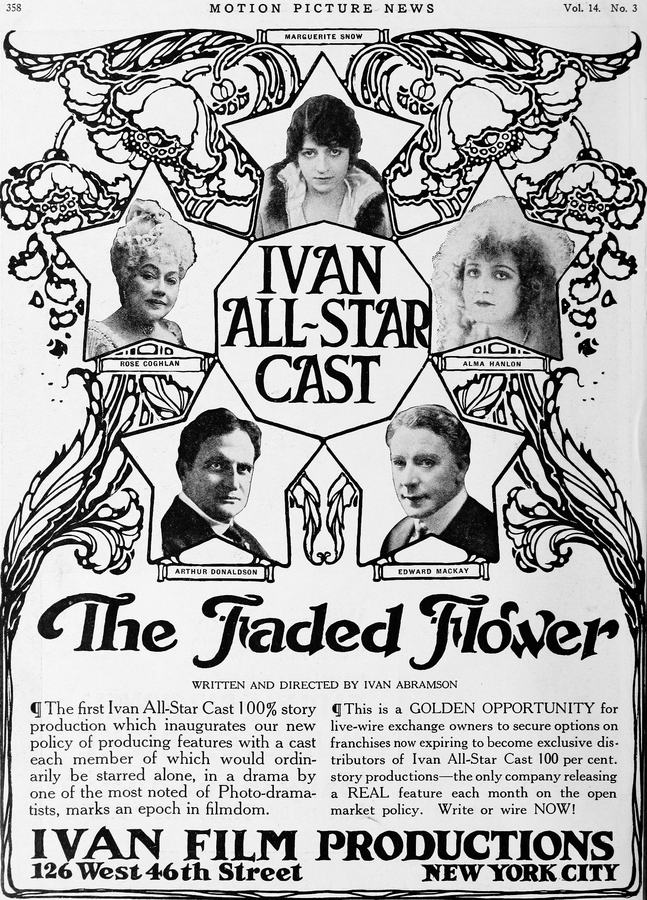
In the annals of early cinema, where narratives often leaned into grand melodrama and stark moral lessons, The Faded Flower emerges as a particularly potent and heart-wrenching exploration of human frailty, sacrifice, and the corrosive power of unfounded jealousy. Released in an era when film was still finding its voice, this picture, penned by Ivan Abramson, transcends mere plot mechanics to delve into the very psychological bedrock of its characters, presenting a tragic tableau that resonates with timeless emotional weight. It’s a film that asks us to ponder the true cost of selfless acts and the devastating ripple effects of suspicion allowed to fester unchecked. More than just a story of ill-fated romance, it's a profound commentary on communication breakdowns and the internal prisons we construct for ourselves and others.
At the narrative's core is Lillian Hill, portrayed with a compelling blend of quiet resolve and burgeoning despair by Marguerite Snow. Lillian is not a woman driven by romantic whims or social ambition; her motivations are far more profound and altruistic. She is a dutiful daughter, burdened by the plight of her blind mother. When the elderly, wealthy widower Wilbur Mason (Edward MacKay) proposes, promising to finance a groundbreaking operation that could restore her mother's sight, Lillian makes a choice born of desperate love, not personal desire. This pragmatic acceptance of a marriage of convenience immediately sets her on a path fraught with emotional peril. Her sacrifice, initially a beacon of hope, quickly transforms into a heavy chain, binding her to a life devoid of genuine affection and riddled with unspoken regrets. The film masterfully portrays this internal struggle, showcasing Snow's ability to convey complex emotions through subtle gestures and expressions, a hallmark of powerful silent film acting. Her initial hope, palpable in the scene where she introduces Mason to her mother, quickly dissolves into a stoic resignation after the specialist's efforts prove futile. This pivotal moment underscores the tragic irony: her immense sacrifice was, in the end, for naught, leaving her with a shattered dream and a marriage built on a now-void promise. This profound disappointment is the seed from which her emotional distance from Mason grows, a distance he tragically misinterprets.
Edward MacKay's portrayal of Wilbur Mason is a study in tragic flaws. Initially presented as a benevolent, if somewhat self-absorbed, figure, Mason's character quickly devolves under the weight of his own insecurities and possessiveness. His love for Lillian, while genuine in its own way, is tainted by a profound lack of empathy and an inability to perceive the world from her perspective. He offers her material comfort and a chance for her mother's sight, but fails to connect with her emotional landscape. When Lillian's natural coldness—a manifestation of her deep-seated grief and the futility of her sacrifice—begins to show, Mason's mind, perhaps already predisposed to suspicion by his advanced age and the transactional nature of their union, leaps to the worst possible conclusion. His jealousy is not merely a fleeting emotion; it becomes an all-consuming obsession, a monstrous entity that devours his reason and ultimately, his happiness and Lillian's life. The scene where he witnesses Lillian giving Henry Parker a rose is a masterclass in cinematic misdirection. What is, from Lillian's perspective, an innocent gesture of kindness, perhaps even a subtle acknowledgment of a shared past or a nascent friendship with Anne, is twisted by Mason's warped perception into undeniable proof of infidelity. This moment is the catalyst for his descent into ungovernable rage, tearing the rose from Parker's lapel in a fit of possessive fury. This unchecked jealousy, reminiscent of the destructive passion seen in films like Playing with Fire, highlights how easily love can curdle into a poisonous obsession when trust is absent.
The characters of Henry Parker (Arthur Donaldson) and Anne Mason (Alma Hanlon) serve as both emotional counterpoints and unwitting catalysts for the tragedy. Parker, initially a struggling playwright nursing a silent affection for Lillian, resurfaces two years later as a successful figure. His renewed presence, alongside Anne, introduces a glimmer of genuine romance and happiness into the bleak narrative. The burgeoning love between Parker and Anne is portrayed with a delicate tenderness, a stark contrast to the strained, joyless marriage of Lillian and Wilbur. Anne, as Mason's daughter, represents a bridge between the generations and, ironically, becomes an innocent party caught in the crossfire of her father's pathological jealousy. Her suggestion to invite Parker to call on them, an act of simple hospitality and budding romance, is another seemingly innocuous event that Mason twists into further 'proof' of Lillian's supposed betrayal. The film deftly uses these characters to amplify the tragedy, showing how innocent interactions can be weaponized by a mind consumed by suspicion. Their eventual, bittersweet union, sanctioned by a repentant Mason, offers a faint glimmer of hope, a suggestion that love, when unburdened by jealousy, can still find its way, even amidst the ashes of despair. The contrast between the genuine, evolving affection between Anne and Henry and the static, decaying relationship of Lillian and Mason is a powerful thematic device, echoing the complexities of marital dynamics explored in films like Her Husband's Wife.
The rose in The Faded Flower is far more than a mere prop; it is a profound, evolving symbol that encapsulates the film's central themes of love, jealousy, and tragic misunderstanding. Initially, it represents Mason's affection for Lillian, a daily ritual of tenderness, a gesture meant to convey his devotion. However, when Lillian, perhaps out of a momentary lapse of judgment, or simply a gesture of polite warmth, gives one of these roses to Henry Parker, its meaning is irrevocably altered. In Mason's distorted perception, the rose transforms from a symbol of his love into a damning piece of evidence, a scarlet letter proclaiming Lillian's supposed infidelity. He tears it from Parker's coat, a violent act that signifies his tearing apart of their marriage, his destruction of trust. Later, the same rose, now withered and faded, becomes a poignant emblem of Lillian herself—her lost vitality, her fading hope, and ultimately, her untimely demise. Mason's secret weeping over the faded rose is a powerful moment of belated realization and profound regret, a visual metaphor for the beauty he destroyed through his own unfounded suspicions. The film’s title itself, "The Faded Flower," directly references this central motif, underscoring the ephemeral nature of happiness and the destructive power of unchecked emotion. This symbolic use of an everyday object to carry such heavy thematic weight is a sophisticated narrative technique for the era, setting it apart from more straightforward melodramas.
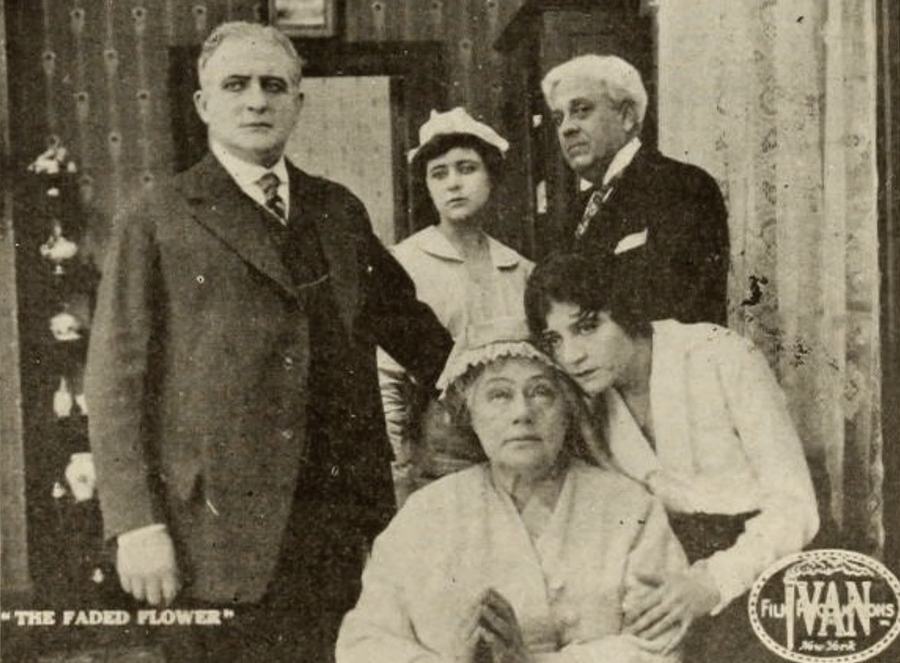
The true tragedy of The Faded Flower lies in its depiction of how a complete breakdown in communication can lead to irreparable destruction. Mason's accusations are relentless, baseless, and entirely self-generated. He never seeks clarification, never allows Lillian to explain; instead, he projects his own fears and insecurities onto her actions. Lillian, for her part, is too grief-stricken, too emotionally exhausted by her futile sacrifice and Mason’s relentless hounding, to effectively defend herself. Her silence, born of despair, is tragically misinterpreted by Mason as an admission of guilt. This cycle of accusation and withdrawn silence creates an impenetrable wall between them, leading to Lillian's profound illness and eventual departure from Mason's home. Her retreat to her mother's care is a desperate act of self-preservation, but by then, the damage is already done. The film portrays the insidious nature of jealousy, not just as an emotion, but as a force that actively distorts reality, creating a self-fulfilling prophecy of misery. This aspect of the narrative could draw comparisons to the psychological torment found in a film like The Pitfall, where characters are ensnared by circumstances born of suspicion and moral compromise.
The film’s climax is a powerful, gut-wrenching sequence that leaves an indelible mark. Lillian's death, preceded by her fragile forgiveness of a now-repentant Mason, is the culmination of his destructive jealousy. His belated remorse, spurred by Mrs. Hill's anguished appeal, arrives too late to save Lillian, but not too late to witness her final, merciful act. The scene at her bedside is a masterclass in silent film emotionality, with MacKay conveying Mason's overwhelming grief and regret through raw, physical performance. The immediate retribution, Mason's paralytic stroke as he attempts to uncover Lillian's face, serves as a stark, almost biblical judgment for his actions. It’s a moment designed to elicit both pity and a sense of poetic justice, trapping him in a body that mirrors his earlier emotional paralysis and self-inflicted torment. The subsequent scenes, where Mason weeps in secret over the faded rose and later visits Lillian's grave, are steeped in profound melancholy. His final lament, "Lillian, my faded flower, you died a martyr to my unfounded jealousy. May your soul find peace in the Kingdom of Heaven," is a heartbreaking confession, a stark admission of guilt that underscores the entire film's tragic message. This profound, almost spiritual repentance, albeit too late for Lillian, allows him to find a measure of peace by uniting Anne and Parker, an act of selfless love finally triumphing over his former possessiveness. Such intense emotional arcs and themes of redemption through suffering can be seen in other dramatic works of the period, perhaps even subtly echoing the moral quandaries presented in films like As Ye Repent.
Ivan Abramson, the writer behind this compelling narrative, demonstrates a keen understanding of human psychology and the dramatic potential of silent cinema. While known for a prolific output, The Faded Flower stands out for its sustained emotional intensity and its commitment to exploring the darker facets of human relationships. The direction, likely also by Abramson or a collaborator, effectively utilizes the visual language of the era—intertitles, close-ups, and dramatic staging—to convey the escalating tension and profound sorrow. The performances, particularly from Marguerite Snow and Edward MacKay, are exemplary, showcasing the nuanced acting required to communicate complex inner lives without spoken dialogue. Snow’s portrayal of Lillian's quiet suffering and MacKay’s descent into jealous madness are both powerful and convincing. The film's aesthetic, while perhaps simplistic by modern standards, effectively serves its purpose, creating an atmosphere that enhances the sense of impending doom and personal tragedy. The use of natural light and stark contrasts often found in films of this period contributes to the somber mood, painting a canvas where shadows often reflect the characters' inner turmoil. This careful crafting of mood and character, even in the early days of cinema, speaks to the enduring power of storytelling through images.
The Faded Flower is more than just a historical curiosity; it is a powerful piece of cinematic art that speaks to universal human experiences. Its themes of selfless sacrifice, the corrosive nature of jealousy, and the devastating consequences of miscommunication remain as relevant today as they were upon its release. The film serves as a poignant reminder of how fragile trust can be and how easily love can be destroyed by the very emotions meant to protect it. It stands as a testament to the emotional depth and narrative sophistication achievable in the silent era, proving that compelling drama doesn't require dialogue to convey profound truths. For those interested in the evolution of cinema and the enduring power of human stories, The Faded Flower offers a rich and deeply affecting viewing experience. It invites reflection on the choices we make, the perceptions we cling to, and the ultimate price of allowing our inner demons to dictate our external realities. Its somber conclusion, while tragic, is not without its own form of redemption, albeit a bittersweet one, reminding us that even in death, forgiveness can be found, and new beginnings can emerge from the ashes of past mistakes. This film, much like other silent era gems such as After the Ball, captures a particular emotional intensity and moral complexity that defines the period's best dramatic offerings, offering a window into the societal anxieties and romantic ideals of its time.
Ultimately, The Faded Flower is a masterclass in tragic melodrama. It doesn't shy away from the harsh realities of human nature, instead embracing them to craft a narrative that is both heartbreaking and thought-provoking. The film's ability to evoke such strong emotions through purely visual storytelling is a testament to the artistry of its creators and the enduring power of silent cinema. It reminds us that some stories are universal, transcending time and technological advancements to speak directly to the human heart. The lingering image of Mason weeping over the faded rose, a symbol of all he lost and all he destroyed, is a powerful visual that stays with the viewer long after the credits roll. It's a film that encourages introspection, urging us to consider the devastating impact of unchecked emotions and the profound importance of understanding and communication in our relationships. In its quiet power, The Faded Flower blossoms into a timeless cautionary tale, its petals wilted but its message eternally vibrant.
IMDb —
1920
Community
Log in to comment.