DbcultAccessing Vault...
Cult Review
Senior Film Conservator
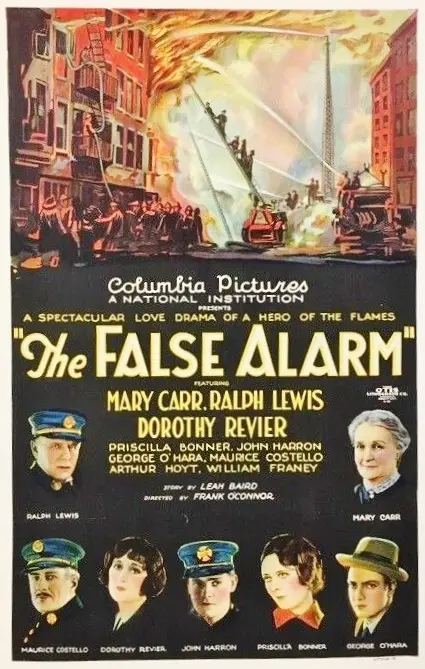
Is The False Alarm a forgotten masterpiece of the silent era or just another dusty melodrama? Short answer: It is a visceral, if structurally uneven, study of redemption that survives its silent-era clichés through sheer physical intensity. This film is for viewers who appreciate the raw, dangerous stunt work of the 1920s and those interested in early cinematic depictions of psychological trauma. It is certainly not for those who demand fast-paced modern editing or nuanced, feminist-leaning character arcs.
This film works because it treats the fear of fire as a legitimate psychological hurdle rather than a simple character flaw. This film fails because the romantic subplot involving Mary Doyle feels like a mandatory box-ticking exercise that slows down the high-stakes tension of the firehouse. You should watch it if you want to see how pre-CGI Hollywood handled large-scale industrial disasters with terrifying realism.
The False Alarm opens with a sequence that feels surprisingly modern in its grimness. We see Ralph Lewis as 'Fighting John' Casey, a man who defines himself by his proximity to death. When he dies, the film doesn't just mourn him; it uses his ghost to haunt Joe Casey, played with a wide-eyed, trembling vulnerability by John Harron. Harron’s performance is the anchor here. In an era often defined by over-the-top gesticulation, his internal struggle is palpable. You can see the sweat. You can see the shame.
The scene where Joe stands frozen outside the burning building while his father screams inside is genuinely haunting. The camera lingers on Joe's face, capturing a cocktail of adrenaline and pure, unadulterated phobia. It’s a bold move for a 1926 film to present its protagonist as a 'coward' for the first forty minutes. It challenges the audience's empathy. We are conditioned to want the hero to charge in, but Leah Baird’s script forces us to sit with Joe in his failure. It’s uncomfortable. It works.
When we talk about the technical achievements of this era, we often point to Sherlock Jr. for its meta-cinematic brilliance. However, The False Alarm deserves credit for its commitment to industrial realism. The steel mill fire in the final act is a masterclass in practical effects. There are no green screens here. The actors are surrounded by actual molten metal and roaring flames. The heat seems to radiate off the screen.
However, the film stumbles when it leaves the firehouse. The rivalry between Joe and his brother Tim, played by George O'Hara, feels like a regression into standard soap opera territory. Their competition for Mary Doyle (Dorothy Revier) lacks the grit of the main plot. Revier is a talented actress, but her role is largely reduced to being a trophy for the 'bravest' brother. It’s a dynamic we’ve seen in countless films of the period, from The Vow to The Light That Failed, and it adds little to the unique psychological profile the film tries to build for Joe.
Yes, The False Alarm is worth watching for anyone interested in the evolution of the action-drama. While the middle section sags under the weight of its romantic subplots, the bookending action sequences are breathtaking. It provides a rare look at the 'coward' archetype in early cinema. Most films of this era, like Davy Crockett, focused on unshakeable heroism. This film is different. It’s about the fragility of the human spirit.
The direction by Frank O'Connor is functional but shines during the chaos. He understands how to use deep space in his compositions. In the steel mill sequence, he places the camera at low angles to make the machinery look like looming monsters. This visual language reinforces Joe’s fear. The mill isn't just a workplace; it’s a dragon Joe has to slay to earn back his name. The pacing, however, is a bit of a slog in the second act. The domestic scenes between the Casey brothers feel repetitive. We get it—Tim is the 'good' son and Joe is the 'bad' one. The film spends about fifteen minutes too long hammering this point home.
The cinematography relies heavily on tinting, which was common for the time. The transition from the cool blues of the night scenes to the violent oranges of the fires is effective. It creates a sensory shift that alerts the audience: the stakes have changed. It’s a simple trick, but in the hands of a capable DP, it’s incredibly evocative. It reminds me of the atmospheric work in Blind Chance, where the environment reflects the internal state of the lead.
Pros:
1. John Harron’s nuanced portrayal of fear and PTSD.
2. Incredible practical pyrotechnics that put modern CGI to shame.
3. A strong, redemptive ending that feels earned rather than gifted.
Cons:
1. The female lead is given almost nothing to do except look worried.
2. The 'coward' label is applied with a lack of nuance that feels dated.
3. Pacing issues during the transition between the two major fire sequences.
Here is something most critics miss: The False Alarm is actually an anti-industrial film disguised as a hero’s journey. The steel mill is depicted as a deathtrap, a place where men are chewed up by progress. Joe’s redemption doesn't happen in a noble house fire; it happens in the belly of the capitalist beast. There’s a subtle critique of the working conditions of the 1920s buried under the soot and ash. It’s a gritty, soot-stained reality that you don't often see in the more polished productions like A Prince of India.
The False Alarm is a sturdy piece of filmmaking. It works. But it’s flawed. It takes a stance on the nature of courage that is both traditional and surprisingly modern. By focusing on the internal paralysis of its hero, it rises above the level of a standard 'rescue' flick. While you might find yourself checking the clock during the romantic interludes, the final twenty minutes will have you gripped. It’s a testament to the power of silent cinema to communicate complex emotions through nothing but fire, sweat, and a desperate pair of eyes. If you can handle the 1920s melodrama, the fire is worth the wait.
IMDb 7
1935
Community
Log in to comment.