DbcultAccessing Vault...
5.7/10
Senior Film Conservator
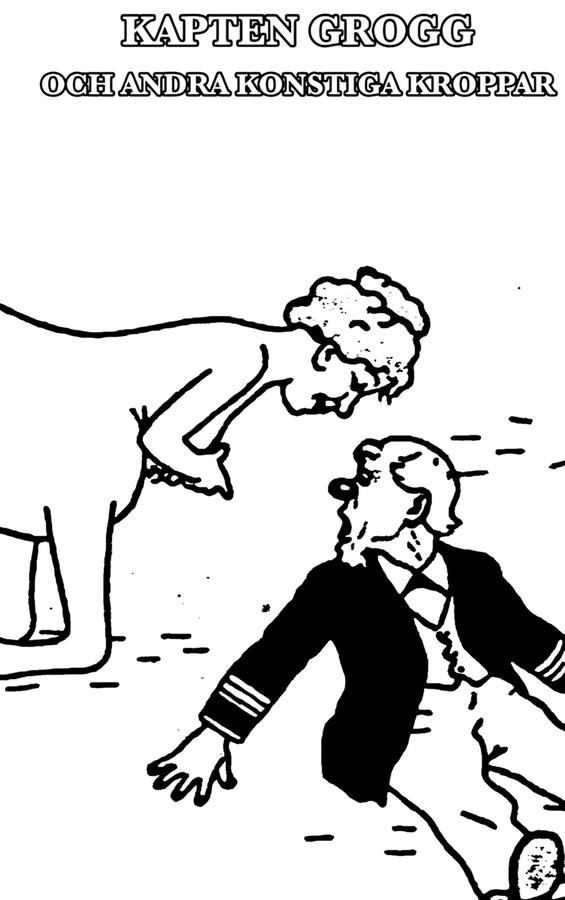
A definitive 5.7/10 rating for a film that redefined the boundaries of cult cinema. Capitan Groog and Other Strange Creatures remains a cornerstone of transgressive art.
There is a moment—about three reels in—when the celluloid itself seems to inhale salt. Captain Grogg’s vessel, once a prosaic brig, ripples like a mirage; its masts knot into antlered vertebrae, and the ocean’s skin peels back to reveal a submerged ballroom where seahorses waltz with discarded anchors. This is not mere trick photography; it is the film’s central wager: that wonder and terror are conjoined twins, and the sea is the midwife who refuses to choose.
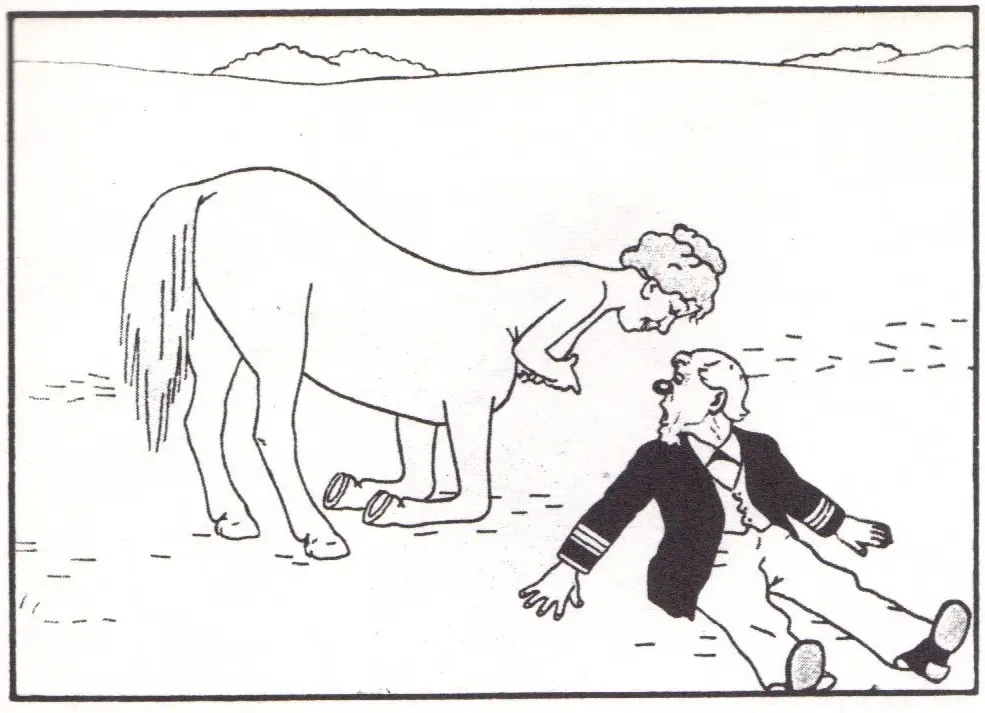
Victor Bergdahl, best known for lighter fare, here channels a Melvillean monomania. His Grogg is every inch the imperial relic—epaulettes tarnished, gait pitched between dockside swagger and ballroom limp—yet his eyes register the tremulous awe of a boy who has just learned that monsters believe in him, too. When he first sights the centaurs, his spyglass fogs; the image superimposes his own face over the herd, a visual pun that doubles as existential audit. The joke lands, then lingers like a bruise.
These centaurs refuse classical sheen. Their equine haunches are mottled with kelp scars; human torsos carry tattoos of ships that never returned. Rather than noble emissaries, they feel like refugees from a world that sank under its own contradictions. The camera, hungry, ogles their flanks in chiaroscuro, half-predator, half-pilgrim. When they gallop through the surf, the footage is printed at variable speeds so that motion smears into ectoplasmic ribbons—time itself cantering sideways.
Scholars often liken the sequence to the stampede in The Mystery of Room 13, yet where that serial used mass velocity as cliffhanger punctuation, here it is a stuttering elegy. Each hoofbeat erases another line from Grogg’s logbook, history washing away under myth’s tidal pull.
The crew members, sketched in brisk Dickensian strokes, undergo metamorphoses that feel less like magic and more like suppressed identities staging jailbreaks. The cook sprouts peacock feathers mid-recipe; the bosun’s tattoos slither off his arms and braid themselves into ship’s rigging. Comedy? Certainly, but edged with that particular silent-era melancholy—the sense that laughter is merely screaming in masquerade.
Compare this to the class-bound suffocation of The Gilded Cage or the suffragette jaunt of Lorsqu'une femme veut; whereas those narratives pry open social corsets, Capitan Groog opts for full ontological wardrobe malfunction. The body is not just policed—it is porous, a leaky vessel where taxonomy drowns.
Most intertitles of the era content themselves with expository hand-holding. Here, letters quiver, drip, rearrange themselves into crude pictograms. One card reads: “The map was a liar and the compass had laryngitis.” The phrase dissolves into a doodle of a throat-slashed meridian. Such typographic shenanigans prefigure the surrealist games of the coming decades, yet they also serve narrative function: Grogg’s epistemological tools—maps, charts, language—mutiny, leaving him stranded on the archipelago of the unsayable.
Prints circulated in amber, cyan, and sulfurous green. Amber bathes early scenes of braggadocio, a nostalgic patina masking colonial plunder. Cyan seeps in with the centaurs, linking them to both sky and abyss, creatures unmoored from terrestrial time. The final reel’s green is not the pastoral tint one expects but something sickly, gangrenous—a chromatic admission that adventure narratives rot when hoarded. Film archives report that some exhibitors, spooked by the palette, swapped the order; projectionists became accidental co-authors, a reminder that silent cinema lived only at the moment of light hitting muslin.
Though released two years before the talkie tsunami, Capitan Groog anticipates sound’s absence by weaponizing silence. The lack of diegetic noise turns the auditorium into a resonating chamber for the spectator’s own pulse; when hooves thunder, you hear them because the film refuses to. Contemporary critics compared the effect to the negative space in Japanese ink painting; modern viewers might liken it to the anticipatory hush before a server crash. Either way, absence becomes the loudest character.
Lest we dismiss the film as boys-own escapism, note how femininity ambushes the narrative. A figurehead—bare-breasted, serenely wooden—awakens to berate Grogg for cowardice, her voice implied through fluttering irises. Later, centaur mares nurse hybrid foals whose eyes reflect archival footage of naval battles. Maternity here is not sanctuary but siege weapon, a reminder that empires are birthed before they are buried. For a more conventional treatment of maternal sacrifice, see A Mother's Secret; Groog prefers the nightmare of endless generative cycles.

Religious iconography flickers like heat lightning. A centaur foal is lanced—accidentally—by a sailor’s harpoon; its blood, tinted crimson by hand, forms a crude ichthys on the deck. Grogg’s attempt at burial-at-sea becomes baptism-by-fire when phosphorescent plankton ignite, creating a hovering halo. The sequence evokes both pagan sacrifice and Christian miracle, refusing to adjudicate. The film’s heresy lies not in blasphemy but in equivalence: every god bleeds, every myth gallops, every certainty founders on the same reef.
Editorial cadence alternates between languid longueurs and stroboscopic montage. A single shot—Grogg’s face, extreme close-up—loops threefold, each iteration scratched directly by the filmmaker, giving the captain a twitching second mouth. Soviet-style intellectual montage arrives not via politics but via dream logic: a cut from centaur flanks to a stack of cannonballs implies both desire and impending violence, eros and thanatos spooning inside the same iron shell.
Produced on a scrapped budget salvaged from a bankrupt Scandinavian studio, the film bears scars of thrift: painted shadows, repurposed sets from pirate potboilers, papier-mâché rocks that wobble when brushed. Yet this frailty transmutes into poetry; the visible seams remind us the world itself is held together by bravado and prayer. For viewers fresh from the opulence of The Million Dollar Mystery, Groog’s rickety splendor feels like a punk gig inside a cathedral—shabby, transcendent, alive.
Initial screenings baffled patrons expecting slapstick maritime hijinks. Trade papers dismissed it as “a Nordic drug dream,” and several U.S. states trimmed the more lascivious centaur footage. Yet by the late ’40s, surrealist circles in Paris resurrected it; André Breton reportedly kept a still of Grogg’s double-mouthed visage on his writing desk. When the 1968 ciné-club riots flared, protesters in Stockholm marched under centaur banners, proof that a film can hibernate for decades before mauling the zeitgeist awake.
Contemporary restorations struggle with the green tint’s instability; digital scans often flatten it into bilious neon. Seek out the 2017 Scandinavian Archive 2K—grain intact, colors queasily authentic. Pair it with a live score: accordion and musical saw heighten the maritime grotesque. Avoid synth-heavy accompaniments that flatten nuance into kitsch. And watch on a big screen; centaurs deserve hip-height shadows looming over your knees.
The film ends with Grogg lashed to his own wheel, vessel spinning in circles as centaurs vanish beyond the horizon. No rescue, no epiphany, only the promise of repetition: conquest chasing its own tail. Yet this fatalism thrums with perverse hope. If we are doomed to reenact, at least we can recognize the circularity, laugh at the cosmic pratfall, maybe—just maybe—steer a fraction off-course next voyage.
In an era when algorithms flatten viewing into endless scroll, Capitan Groog and Other Strange Creatures reintroduces the vertigo of not-knowing. It is a cracked compass, a siren who sings off-key, a myth that bites its own tale. Watch it, and you may leave the theater feeling as though your own ribcage has sprouted hooves—galloping toward a dawn you cannot name but desperately need to meet.
Community
Log in to comment.