DbcultAccessing Vault...
Cult Review
Senior Film Conservator
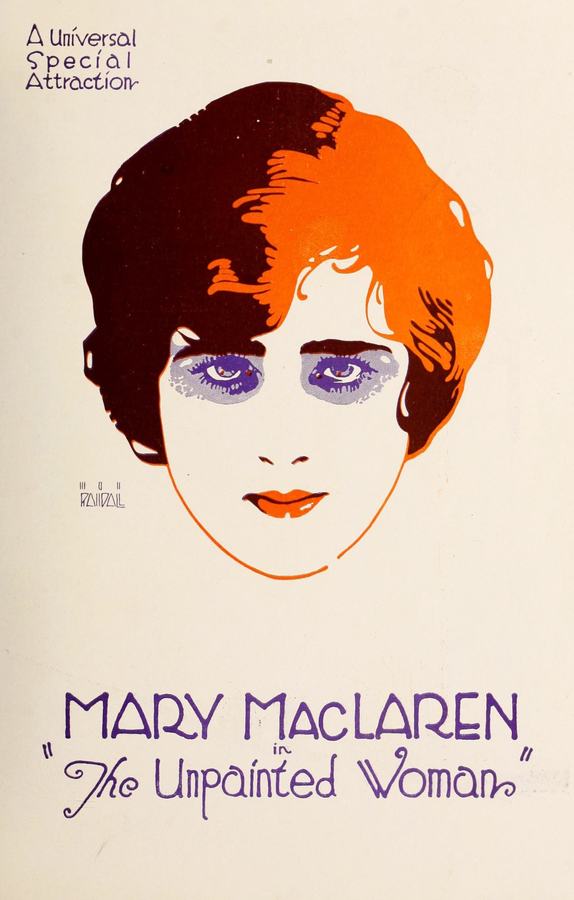
Stepping back into the annals of cinematic history often reveals forgotten gems, narratives that, despite their age, resonate with an uncanny timelessness. The Unpainted Woman, a silent film from 1919, is precisely such a discovery. Far from being a mere relic, it emerges as a poignant, robust drama, a testament to the evocative power of early filmmaking and the enduring human spirit it so eloquently captures. Directed by Tod Browning, though he is not credited in the provided list, and penned by a formidable team including the renowned Sinclair Lewis, alongside Allen G. Siegler and Waldemar Young, this picture offers a fascinating window into the social fabric and moral complexities of early 20th-century America.
At its core, The Unpainted Woman is a saga of resilience, a raw and unflinching look at the struggles of a woman navigating a world often hostile to her ambition and independence. The narrative introduces us to Gudrun, portrayed with remarkable depth by Mary MacLaren. Gudrun is a Swedish émigré, a hired girl in the vast, unforgiving wheat country, her life a cycle of arduous labor under the employ of the demanding Mrs. Hawes. MacLaren imbues Gudrun with a quiet dignity, her expressive eyes conveying a world of unspoken dreams and burdens. It's a performance that transcends the lack of spoken dialogue, relying instead on nuanced gestures and a profound emotional honesty.
The narrative’s initial thrust delves into the rigid class distinctions prevalent at the time. Gudrun, despite her earnestness and undeniable charm, is an outsider. Her burgeoning romance with Charley Holt, the scion of a prosperous local family, quickly throws these societal fissures into sharp relief. When Charley takes Gudrun to a dance, an event that should be a moment of joy and acceptance, it instead becomes a crucible of social exclusion. His mother and sister, embodying the era's snobbery, deliver a stinging snub, their disdain for Gudrun's humble origins palpable even without words. This sequence, masterfully depicted through the actors' reactions and the framing of their interactions, speaks volumes about the invisible yet impenetrable barriers of class. It is a theme often explored in silent cinema, much like the social commentary found in films such as The Perils of Divorce, which also grappled with societal expectations and judgments, albeit from a different angle of marital discord.
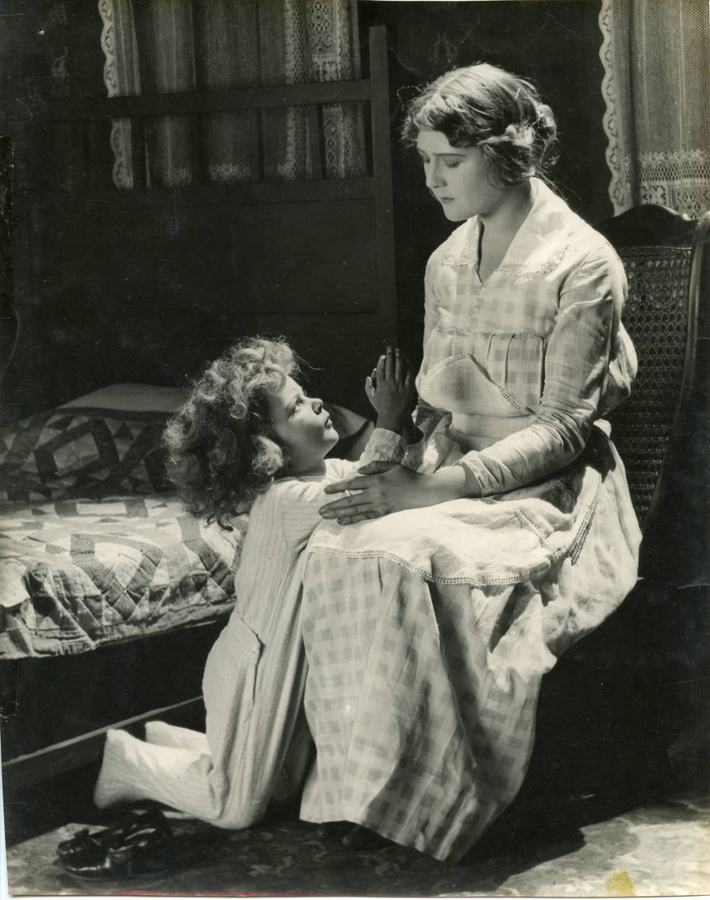
Charley Holt, played by Thurston Hall, is initially presented as a man of principle and defiance. Furious at his family's elitist contempt, he makes a choice that irrevocably alters his life and Gudrun’s: he marries her. This act of rebellion, though born of love and righteous indignation, carries significant consequences. Charley severs ties with his privileged background, embracing a life of manual labor as a mill worker. This dramatic shift is a powerful statement on his character, highlighting a desire for authenticity over inherited comfort. However, the film is not content with a simple 'happily ever after' following this grand gesture. Life, as The Unpainted Woman so sagely observes, is far more complex.
The birth of their child, a symbol of their bond and their new life, does little to alleviate the growing shadows in their home. The pressures of a menial job, the loss of his former status, and perhaps an underlying weakness in his character, lead Charley down a perilous path. He succumbs to alcoholism, transforming from the defiant lover into a troubled, often absent, husband. Gudrun's life, once seemingly uplifted by love, descends into a new form of unhappiness, marked by Charley’s escalating addiction and the instability it brings. This portrayal of alcoholism is stark and unsentimental, a realistic depiction of its devastating impact on families, a theme that would continue to challenge storytellers for decades. It adds a layer of raw, human tragedy that distinguishes the film from simpler romantic narratives.
The film’s narrative arc takes a dark turn with Charley’s untimely demise in a saloon brawl after five years of marriage. This event, while tragic, serves as a catalyst for Gudrun’s ultimate transformation. Widowed and left to fend for herself and her child, she refuses to be defeated. Instead, she channels her grief and formidable inner strength into a bold new venture: she buys a small farm. This decision marks a pivotal moment, showcasing Gudrun's indomitable spirit and her deep connection to the land. We witness her working the wheat fields, her hands, once those of a hired girl, now those of an owner, a provider, a woman forging her own destiny. MacLaren’s portrayal during this period is particularly compelling, conveying a sense of quiet determination that speaks volumes.
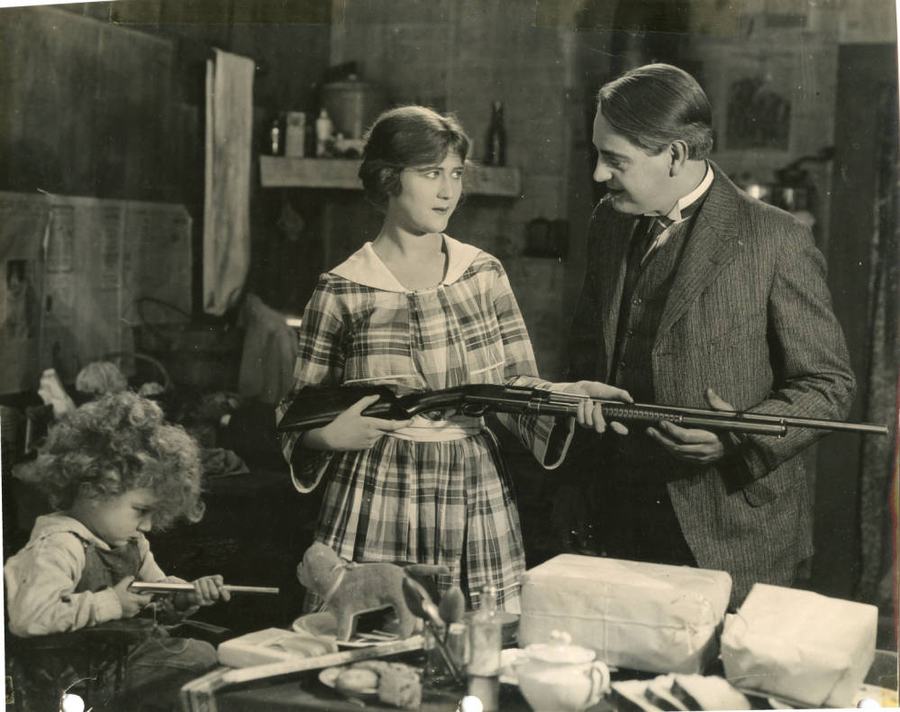
It is during this period of arduous, solitary labor that a new figure enters Gudrun’s life: Martin O'Neill, a tramp. Their initial encounter is born of compassion, as Gudrun, despite her own struggles, offers him food. In return, Martin offers his labor, and a symbiotic relationship begins to form. David Butler, as Martin O'Neill, brings a grounded, earnest presence to the screen. His character is a foil to Charley, offering a different kind of masculinity – one of quiet strength and reliability. The development of their relationship is gradual, built on shared work, mutual respect, and unspoken understanding, a refreshing contrast to the more tumultuous romance with Charley.
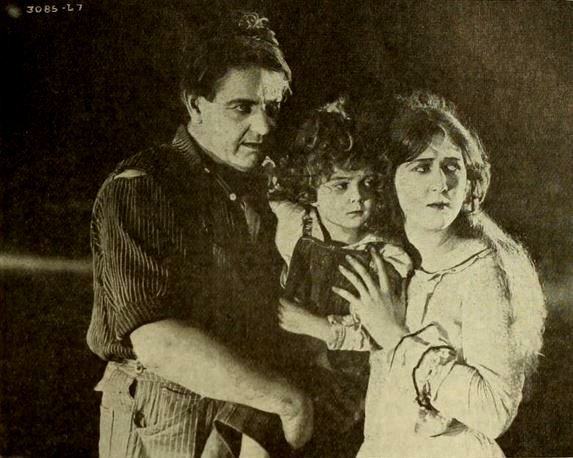
The film then escalates into a dramatic climax when Gudrun and her child are imperiled by a barn fire. Martin, without hesitation, heroically rushes into the blaze, saving them from certain death. This act of bravery, however, is met not with gratitude but with suspicion. In a chilling portrayal of mob mentality and prejudice, Martin is accused of starting the fire himself. The local community, quick to judge the outsider, nearly lynches him. This harrowing sequence, with its palpable tension and sense of injustice, is a powerful critique of societal biases and the dangers of hasty judgment. It echoes themes of wrongful accusation and the precariousness of justice found in other films of the era, such as The Broken Law, though The Unpainted Woman grounds it in the stark realities of rural suspicion.
The truth, as it often does in compelling narratives, eventually surfaces. It is disclosed that Heine, a jealous rival, was the true arsonist. This revelation not only exonerates Martin but also solidifies his bond with Gudrun. With justice served and their connection forged in the crucible of shared peril, Gudrun and Martin finally marry. Their union, unlike Gudrun’s first, feels earned, a culmination of shared struggle, loyalty, and an understanding that transcends words. It’s a resolution that feels both satisfying and hard-won, reflecting the film’s overall theme of perseverance.
Mary MacLaren’s performance as Gudrun is the linchpin of The Unpainted Woman. Her portrayal is a masterclass in silent acting, conveying a vast spectrum of emotions – from youthful hope and defiance to profound sorrow, unwavering determination, and ultimately, serene contentment – all without uttering a single word. Her ability to communicate such complexity through facial expressions, body language, and subtle gestures is truly remarkable. She embodies the 'unpainted' woman, not just in the literal sense of lacking societal polish, but as a genuine, unvarnished soul whose strength is inherent, not adorned. Her nuanced performance stands as a testament to the power of non-verbal storytelling, a skill that was paramount in the silent era and often underestimated by modern audiences. It is a performance that invites comparison to other strong female leads of the time, such as those in Should a Wife Forgive? or The Girl with No Regrets, where actresses were similarly tasked with carrying profound emotional weight.
Thurston Hall, as Charley Holt, delivers a compelling performance as well, particularly in his descent into alcoholism. His initial charm and eventual degradation are handled with a realism that is both unsettling and empathetic. The transformation is convincing, making his fate all the more tragic. David Butler, as Martin O'Neill, provides a steady, reliable counterpoint, his quiet strength serving as a grounding force in Gudrun’s tumultuous life. The supporting cast, including Fritzi Ridgeway as Charley's sister and Lydia Yeamans Titus as Mrs. Hawes, effectively populate Gudrun's world, their characters serving as both obstacles and catalysts for her journey.
The screenplay, credited to Sinclair Lewis, Allen G. Siegler, and Waldemar Young, is remarkably robust for its time. Lewis, celebrated for his incisive social critiques in novels like 'Main Street' and 'Babbitt', brings a keen observational eye to the rural American landscape and its inhabitants. The script deftly navigates themes of class struggle, the immigrant experience, the destructive nature of addiction, the injustice of mob rule, and ultimately, the triumph of human resilience and love. The pacing is deliberate, allowing the emotional beats to register fully, a hallmark of well-crafted silent film narratives. The intertitles, crucial conduits of dialogue and exposition, are concise and impactful, never overstaying their welcome but providing just enough information to propel the story forward and deepen character understanding.
Visually, The Unpainted Woman benefits from the cinematography of Allen G. Siegler, who also contributed to the writing. The wide shots of the wheat fields are breathtaking, imbuing the natural landscape with a sense of both grandeur and oppressive vastness. These scenes are not merely backdrops; they are active participants in Gudrun’s story, symbolizing her connection to the land and the arduous nature of her existence. The close-ups are used sparingly but effectively, highlighting the emotional intensity of key moments, particularly in MacLaren's performance. The direction, often attributed to Tod Browning, though uncredited in the supplied information, demonstrates a clear understanding of visual storytelling, a skill that defined many silent era masters. Browning, known for his later work in horror, here applies his dramatic sensibilities to a more grounded, human drama, proving his versatility. The film's visual language, like its narrative, is direct and powerful, shorn of unnecessary embellishment, much like the 'unpainted' quality of its protagonist.
In an era where cinema was still finding its voice, The Unpainted Woman stands out for its sophisticated narrative and its profound emotional resonance. It’s a film that speaks to the universal struggles of finding one's place, overcoming adversity, and the enduring power of genuine human connection. It reminds us that stories of grit, determination, and the search for happiness are timeless, transcending the technological limitations of their creation. For those interested in the evolution of film, the artistry of silent cinema, or simply a compelling human drama, this film is an essential viewing experience. It offers a rich tapestry of social commentary and personal triumph, making it far more than just a historical artifact. It is a vibrant, living story that continues to captivate and inspire, proving that some narratives, like the spirit of Gudrun, are truly unbreakable.
The themes explored here – social stratification, personal sacrifice, the intoxicating allure and destructive power of vice, and ultimately, the redemptive quality of perseverance – are as relevant today as they were a century ago. The film doesn't offer easy answers but presents a nuanced view of life’s challenges, celebrating the strength found in adversity. It's a powerful reminder that true character is forged in the fires of trial, not in the comfort of privilege. The journey of Gudrun, from a marginalized immigrant to a self-sufficient farmer and a woman who finds love on her own terms, is an inspiring one, a testament to the enduring human capacity for growth and resilience. This film, though a product of its time, carries a message that transcends generations, making it a valuable piece of cinematic heritage that deserves wider recognition and appreciation.
IMDb —
1920
Community
Log in to comment.