DbcultAccessing Vault...
Cult Review
Senior Film Conservator
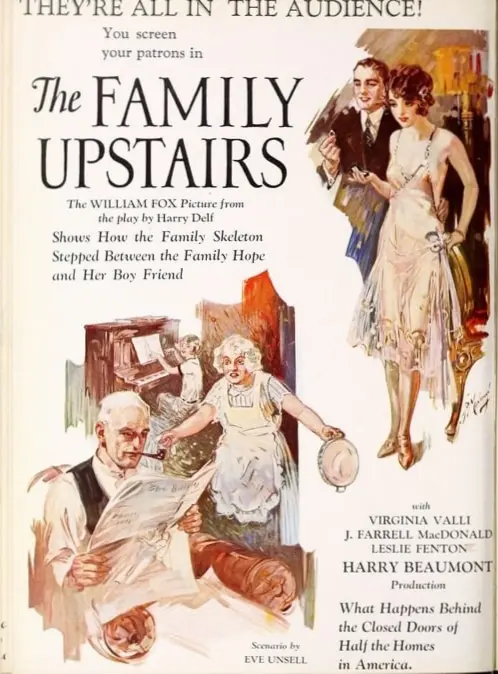
Short answer: Yes, but there's a catch. The Family Upstairs is a curious entry in the silent film era, offering a window into early 20th-century family dynamics and social mores. Yet, its dated narrative and somewhat predictable plot may not fully satisfy modern viewers.
This film is best appreciated by those with a keen interest in silent cinema, social history, and the nuances of early 20th-century American life. It's not for those seeking groundbreaking storytelling or complex character development.
Julie Bishop delivers a restrained yet effective performance as Louise, the quiet and refined young woman caught between her family's expectations and her own desires. Allan Simpson as Charles Grant is charismatic and sincere, effectively conveying the intensity of his feelings despite the limitations of silent film acting. The supporting cast, including J. Farrell MacDonald and Lillian Elliott, offer support with their roles, but their characters are largely underdeveloped.
Director Harry Delf and cinematographer Gordon Rigby create a visually appealing film, with the luxurious apartment and the bustling Coney Island scenes providing a stark contrast. However, the film's pacing can be uneven, slowing down during expository scenes and speeding up during emotional moments, which can be jarring for modern viewers.
The plot of The Family Upstairs is a straightforward tale of love and misunderstanding. Louise's mother and siblings mock her for her lack of a sweetheart, leading to a series of events that culminate in a confrontation between Charles and Louise's office boys. The tone is melodramatic, with moments of tension and heartwarming reconciliation. While the story is engaging, it relies heavily on predictable tropes that may feel clichéd to contemporary audiences.
While The Family Upstairs may not be a cinematic masterpiece, it offers a fascinating glimpse into the silent film era's storytelling techniques and the social norms of early 20th-century America. It's a film that works because of its visual beauty and the performances of its lead actors. However, it fails because of its predictable plot and one-dimensional characters. It's worth watching if you're a silent film enthusiast or a student of early 20th-century American culture, but it may not hold the same appeal for modern viewers.
It works. But it's flawed. The Family Upstairs is a film that captures the essence of early 20th-century American life and has its moments of emotional resonance. However, its reliance on predictable tropes and one-dimensional characters may not fully satisfy modern viewers. For those with a keen interest in silent cinema, it's a must-see, but for everyone else, it's a nostalgic journey through a bygone era of filmmaking.
IMDb 6.3
1917
Community
Log in to comment.