DbcultAccessing Vault...
Cult Review
Senior Film Conservator
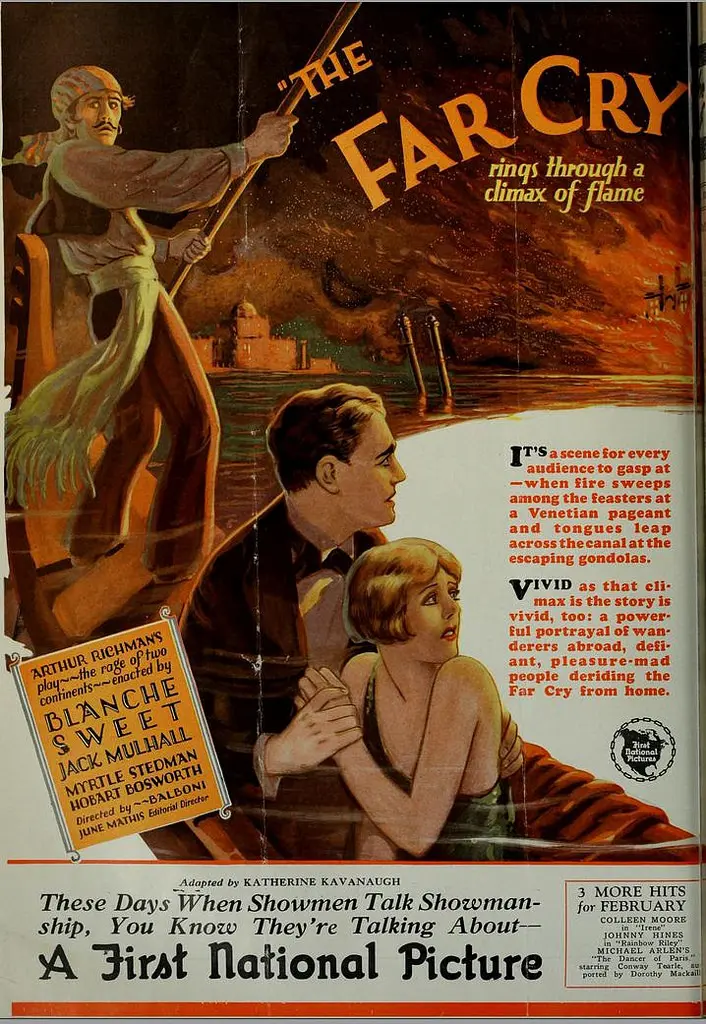
Is 'The Far Cry' worth your time in the modern era? Short answer: No, unless you are a dedicated historian of Blanche Sweet’s filmography or a silent-era completionist.
This film is specifically for those who enjoy the 'sophisticated' Continental melodramas of the mid-1920s, but it will likely alienate anyone looking for a romance rooted in genuine character growth rather than plot-driven contrivances.
1) This film works because Blanche Sweet delivers a performance that transcends the script’s petty motivations, offering a glimpse into the 'modern woman' archetype of 1925.
2) This film fails because the third act relies on a literal 'deus ex machina' fire to resolve complex emotional conflicts that the characters were too stubborn to fix themselves.
3) You should watch it if you want to see how silent cinema utilized European locations like Venice to mask a thin, repetitive narrative.
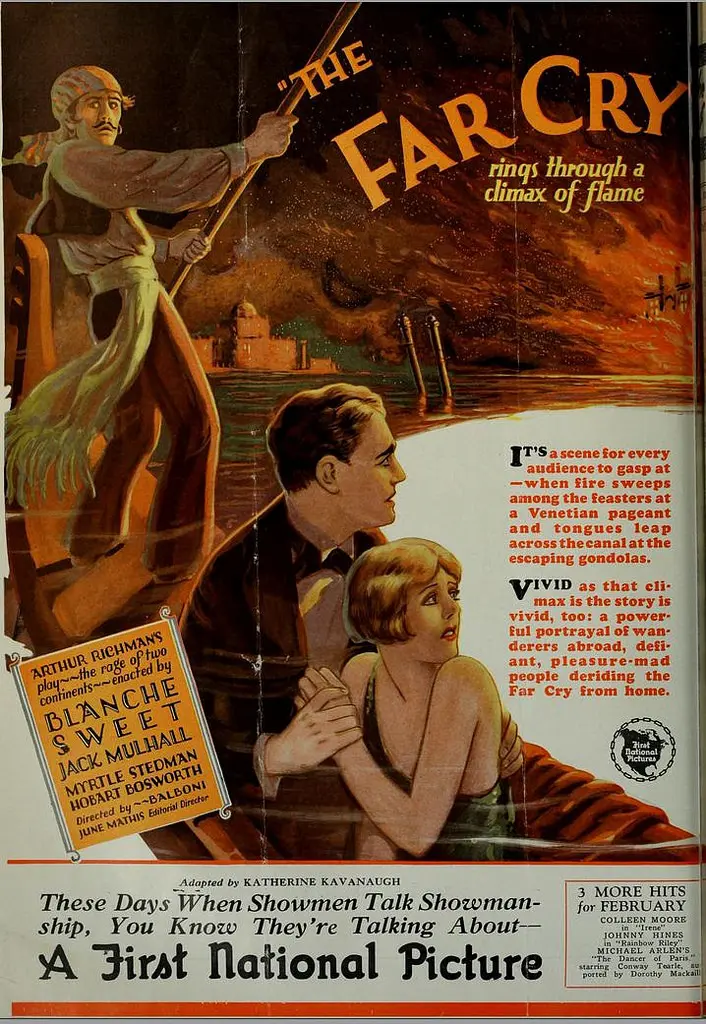
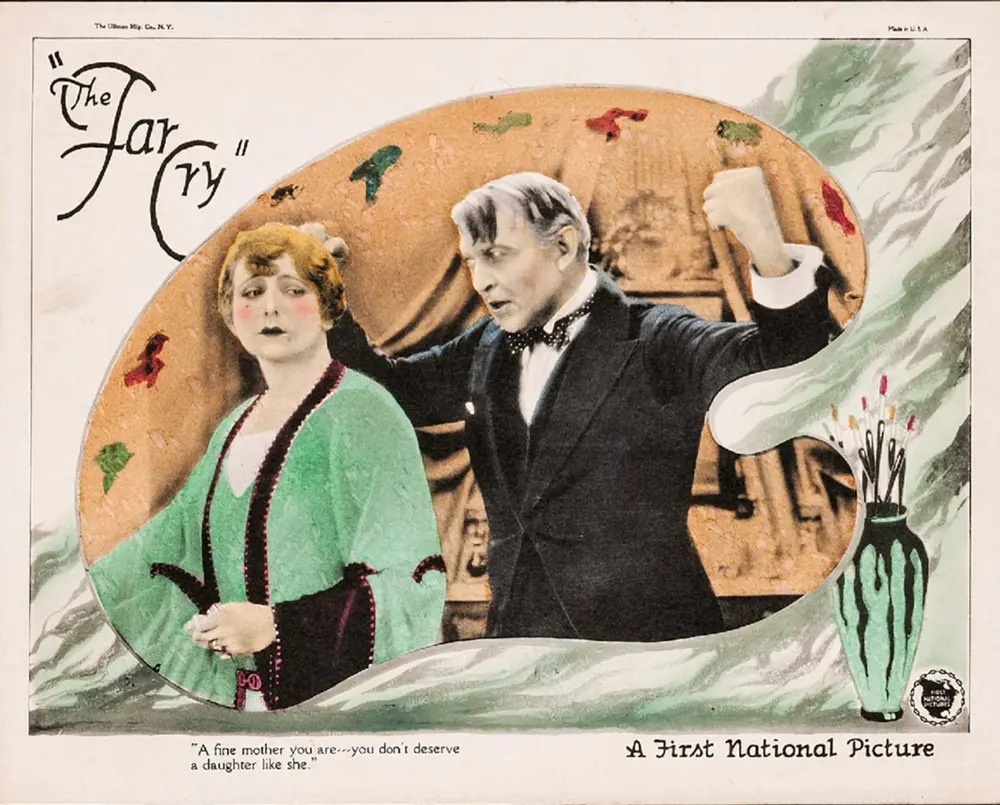
The Far Cry is a film that lives and dies by its central conceit: the idea that love is a weapon. In many ways, it mirrors the cynical social dynamics found in Josselyn's Wife, where the domestic sphere becomes a battlefield. Claire Marsh is not your typical silent film ingenue. She is reactive, sharp, and occasionally cruel. When Mrs. Clayton attempts to buy her off or insult her into submission, Claire doesn't weep. She retaliates.
The scene where Claire lures Dick into a proposal just to reject him in front of his mother is genuinely uncomfortable. It’s a moment of psychological cruelty that feels surprisingly modern. It’s a far cry from the slapstick antics of Monkeying Around or the lightheartedness of His New Papa. Here, the stakes are social standing and ego.
Blanche Sweet plays Claire with a certain hardness. You can see the gears turning behind her eyes. She isn't just a victim of Mrs. Clayton’s elitism; she is a participant in her own social destruction. It’s a bold choice for a lead actress in 1925, and it makes Claire one of the more interesting, if unlikable, characters of the era.
When the action shifts to Venice, the film attempts to pivot into a more romantic, atmospheric register. Dick Clayton, played with a somewhat wooden earnestness by Jack Mulhall, goes to the canals to 'forget.' This trope of the tortured artist was already well-worn by 1925, appearing in various forms in films like Ostap Bandura. However, the cinematography here is surprisingly effective.
The use of shadows and water reflections provides a visual depth that the script lacks. There is a specific shot of Dick standing on a bridge, his silhouette cast against the shimmering water, that captures the isolation of his heartbreak. But the film quickly undercuts this mood by having Claire follow him almost immediately. The tension is lost. The 'forgetting' phase lasts all of five minutes of screen time.
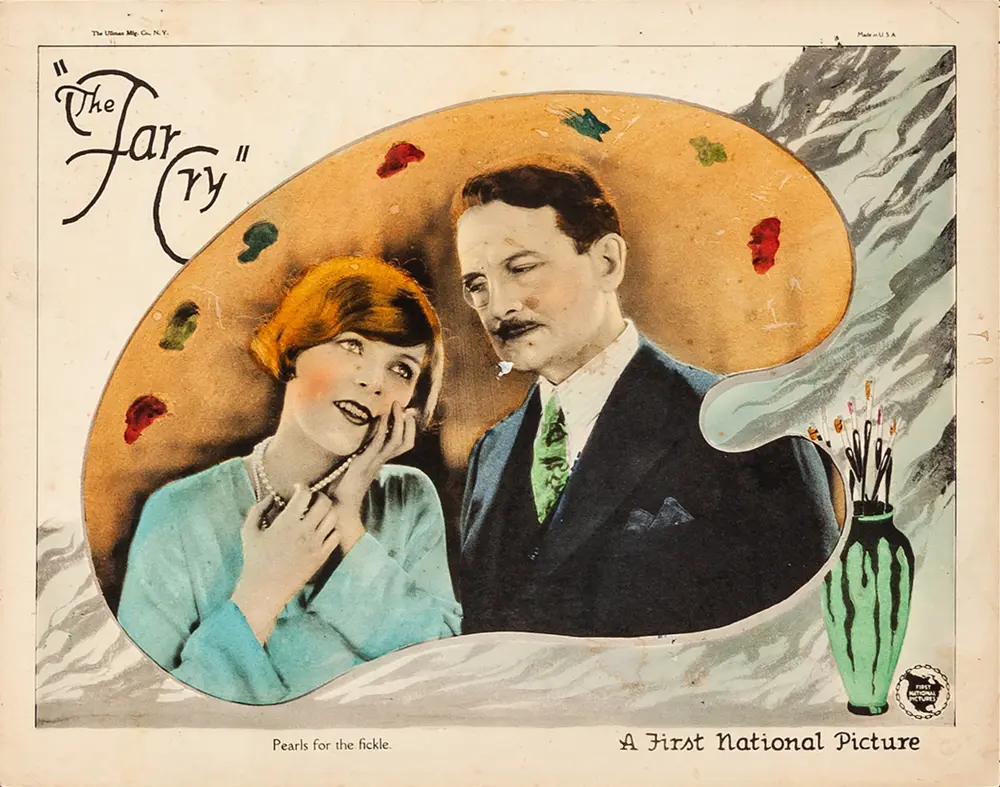
The jealousy subplot that follows feels forced. The introduction of an admirer for Claire serves no purpose other than to trigger Dick’s possessiveness. It feels like a narrative treadmill—running in place without actually moving the characters forward. It’s a repetitive pattern that we see in many lesser dramas of the period, such as The Firing Line.
The final act of 'The Far Cry' is where the film truly loses its way. After another quarrel, Claire returns to Paris, and Dick follows. Up to this point, the film has been a drama of manners and words. Suddenly, it turns into an action thriller. A fire breaks out, and Dick must save Claire. It’s a lazy resolution. It works. But it’s flawed.
Why does a house fire suddenly make their toxic personality clashes irrelevant? The film suggests that shared trauma is a substitute for actual communication. It’s a sentiment found in many silent-era 'thrillers' like Tiger Rose, but here it feels unearned. The fire is a spectacle designed to provide a happy ending that the narrative hadn't actually built toward.
The pacing in this final sequence is frantic. It contrasts sharply with the slow, deliberate movements of the Venice scenes. This tonal whiplash is one of the film's biggest flaws. One moment we are looking at oil paintings and gondolas, and the next, we are watching a studio-set burn down with all the subtlety of a Tut! Tut! King short.
If you are looking for a masterpiece of silent cinema, look elsewhere. 'The Far Cry' is a mid-tier melodrama that benefits from high production values and a strong lead performance, but it is hampered by a script that doesn't know how to resolve its own conflicts. It is a fascinating artifact of how 1920s cinema viewed wealth and romance, but it lacks the emotional resonance of the era's better works.
The film is essentially a series of beautiful postcards held together by a thin thread of spite. It’s visually competent but emotionally hollow. For those interested in the technical evolution of the medium, the location work is worth a glance, but the story will likely leave you cold.
Pros:
Cons:
The direction by the uncredited hand (often attributed to the studio's house style) is functional. There are moments where the camera attempts to mimic the European art house style of the time—perhaps influenced by the works of those like the directors of Les gaz mortels—but it always retreats into the safety of American melodrama. The pacing is uneven, with a long, languid middle section in Venice that feels like a travelogue, similar to Wonderful London: London's Free Shows, followed by a rushed, chaotic finale.
The lighting during the fire sequence is the technical highlight. For 1925, the use of practical effects and tinted film to simulate the heat and glow of the blaze is impressive. It’s just a shame that such technical skill was used to prop up a weak narrative conclusion. It’s a classic case of style over substance, a trend that was as prevalent in the silent era as it is today.
"The Far Cry is a film that wants to be a sophisticated comedy of manners but settles for being a pyrotechnic melodrama."
Ultimately, 'The Far Cry' is a relic. It’s an interesting mess. It shows us a cast of characters who are largely unlikable, put into situations that are largely unbelievable, and resolved in a way that is largely unsatisfying. Yet, there is a glimmer of something real in Blanche Sweet’s performance—a defiance that makes you wish she was in a better film. If you have 90 minutes to kill and a deep love for the flickering shadows of the past, give it a look. Otherwise, you’re better off watching The Ragamuffin or Gridiron Glory for more consistent entertainment.
IMDb —
1922
Community
Log in to comment.