DbcultAccessing Vault...
4.4/10
Senior Film Conservator
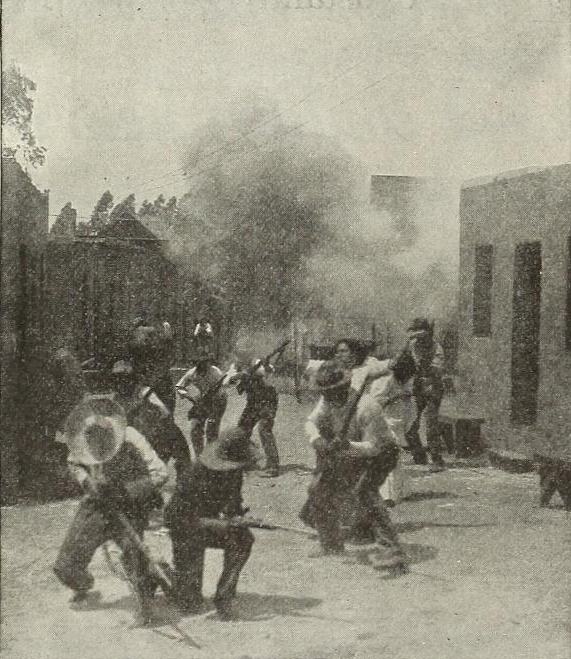
A definitive 4.4/10 rating for a film that redefined the boundaries of cult cinema. The Outlaw's Revenge remains a cornerstone of transgressive art.
In the pantheon of early silent cinema, few works bridge the chasm between raw historical document and stylized melodrama as provocatively as The Outlaw's Revenge. This film, a re-contextualized iteration of Raoul Walsh’s earlier explorations into the life of Pancho Villa, stands as a visceral testament to the turbulent birth of modern Mexico. It is a work that eschews the sanitized heroics of its contemporaries, opting instead for a gritty, dust-caked realism that feels remarkably ahead of its time. The cinematic language employed here is one of stark contrasts—the blinding white heat of the Mexican sun against the deep, obsidian shadows of moral ambiguity.
The protagonist’s journey from a humble peon to a revolutionary icon is handled with a psychological depth that rivals the character studies found in A Fight for Freedom; or, Exiled to Siberia. Unlike the archetypal heroes of the era, our outlaw is birthed from a crucible of absolute loss. The destruction of the domestic sphere—the farm and the sisters—serves as a microcosm for the larger state of the nation. Walsh utilizes the camera not just to record action, but to interrogate the emotional landscape of his characters. The scene of the sisters’ tragedy is filmed with a claustrophobic intensity that makes the subsequent wide-angle shots of the Mexican plateau feel even more desolate.
The casting of W.E. Lawrence and the presence of Raoul Walsh himself lend the film an authentic, almost documentary-like gravitas. There is a ruggedness to the performances that stands in sharp contrast to the theatrical gesticulations often found in early 1910s cinema, such as in The Truth About Helen. Here, the grief is internal, expressed through the tightening of a jaw or the hollow gaze of a man who has seen his world incinerated.
Technically, the film is a marvel of early editing and composition. The transition from the intimate horrors of the cottage to the sprawling chaos of the battlefield is handled with a rhythmic precision that suggests a sophisticated understanding of narrative pacing. The use of the covered wagon as a symbol of American interventionism and sanctuary provides a fascinating cross-cultural commentary, perhaps more nuanced than the simplistic depictions in A Gentleman from Mississippi. The wagon train, moving slowly across the horizon, becomes a temporary liminal space where the protagonist can shed his identity as a victim and begin his ascent as a leader.
The battle sequences are where the film truly finds its pulse. The cavalry charges are captured with a kinetic energy that must have been breathtaking to 1915 audiences. The dust kicked up by the horses’ hooves creates a naturalistic filter, blurring the lines between the combatants and emphasizing the chaotic, fog-of-war reality of the revolution. This is not the choreographed violence of The Jockey of Death; this is a brutal, visceral struggle for survival and sovereignty.
At its core, The Outlaw's Revenge is an interrogation of the morality of retribution. When the protagonist finally achieves the rank of General, his power is absolute, yet he remains tethered to the ghosts of his past. The killing of the first official is presented not as a moment of triumph, but as a grim necessity. The film asks the audience to consider whether justice can ever truly be served when the original wound is so deep. This thematic preoccupation with the cyclical nature of violence echoes the somber undertones of The Eternal Law, suggesting that the outlaw is as much a prisoner of his destiny as he was a prisoner of the state.
The final act, involving the rescue of the Americans, serves as a clever narrative pivot. It allows the protagonist to demonstrate his nobility and strategic brilliance, effectively rehabilitating his image from a simple bandit to a legitimate statesman. The recognition of the second official during the heat of battle is a masterstroke of melodramatic timing. It brings the sprawling political epic back to the personal level, reminding us that for all the grand movements of history, the human heart is driven by much more intimate grievances.
Comparing this film to others of its era, such as The Adventures of Kathlyn, one immediately notices the absence of escapist whimsy. Walsh is not interested in providing a comfortable viewing experience. He wants the audience to feel the grit in their teeth and the weight of the sun. The portrayal of the Mexican government as a greedy, monolithic entity is handled with a lack of subtlety that was common for the time, yet it feels grounded in the genuine grievances of the Mexican populace. The film functions as both a piece of entertainment and a potent, if biased, historical artifact.
The inclusion of Mae Marsh and Robert Harron—stalwarts of the Griffith era—adds a layer of cinematic prestige. Their presence ensures that the emotional beats of the story land with maximum impact. Even in the more conventional moments of the plot, such as the escape from jail with the help of the old servant, there is a sense of urgency that prevents the film from falling into the trap of formulaic storytelling. It lacks the comedic diversions of Stop Thief!, maintaining a consistent, somber tone throughout.
As the film hurtles toward its conclusion, the tension is palpable. The cavalry charge is not just a rescue mission; it is a collision of two worlds—the old order of the corrupt officials and the new, burgeoning power of the revolutionary army. The ending, which leaves the final act of vengeance somewhat to the imagination as the film fades, is a sophisticated choice. It allows the viewer to contemplate the protagonist's soul at the moment of his ultimate satisfaction. Has he found peace, or has he merely completed a grim circuit of blood?
In the broader context of silent cinema, The Outlaw's Revenge remains a towering achievement. It captures a specific moment in history with a blend of fictional flair and documentary-style observation that few directors other than Walsh could master. It is a story of metamorphosis—of a man, a family, and a nation. While it shares some DNA with the social critiques found in Unjustly Accused, its scale and ambition place it in a category of its own. This is cinema as a force of nature, sweeping across the landscape and leaving an indelible mark on the viewer’s consciousness.
For those interested in the evolution of the Western and the war film, this is essential viewing. It predates the more polished epics of the 1920s but contains within it all the seeds of the genre's future. The performances are haunting, the direction is bold, and the story is as timeless as the pursuit of justice itself. It is a reminder that even in the silent era, the screen could scream with the fury of a thousand voices demanding to be heard.
In summation, Walsh has crafted a work that is as much about the landscape of the human spirit as it is about the geography of Mexico. The Outlaw's Revenge is a masterpiece of early narrative ambition, a film that refuses to blink in the face of tragedy and ultimately finds a strange, violent beauty in the wreckage of a life reborn.
IMDb —
1925
Community
Log in to comment.