DbcultAccessing Vault...
Cult Review
Senior Film Conservator
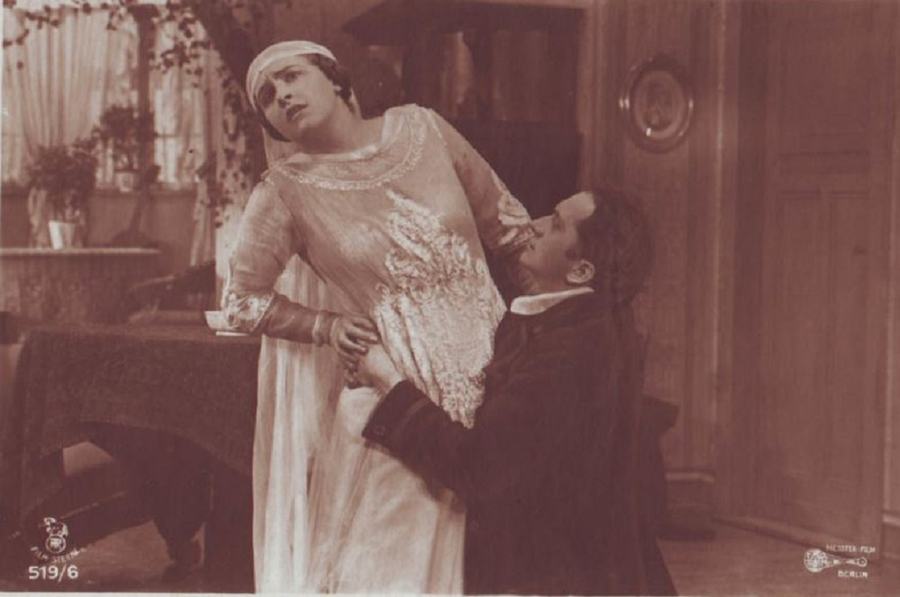
Stepping back into the cinematic crucible of 1918, Robert Wiene's Edelsteine - Phantastisches Drama in 4 Akten emerges not merely as a relic of early German cinema, but as a prescient exploration of human greed, obsession, and the inexorable hand of fate. Long before his indelible mark on German Expressionism with The Cabinet of Dr. Caligari, Wiene, as both writer and director, crafted a narrative that is as psychologically dense as it is visually arresting, even in its silent grandeur. This is a film that demands more than passive viewing; it insists upon contemplation, inviting audiences to unravel its intricate allegory of desire and consequence.
The central motif of Edelsteine is the mythical Serpent's Eye emeralds, a collection of jewels rumored to bestow both immense wealth and an equally profound curse upon their possessors. Wiene masterfully deploys this macguffin across four distinct acts, each serving as a self-contained tragedy while simultaneously building towards a devastating collective climax. The narrative opens with Baron von Kessel, portrayed with chilling conviction by Paul Hartmann. Hartmann imbues von Kessel with a desperate charm, a man teetering on the precipice of ruin, driven by a relentless ambition to restore his family's tarnished legacy. His calculated manipulation of the innocent artist, Elise (Hanna Brohm), to acquire the first of the emeralds sets a tone of moral decay that permeates the entire film. Hartmann’s performance is a study in quiet desperation, his eyes often betraying the calculating mind beneath a veneer of aristocratic decorum.
The second act introduces us to Henny Porten as Liana Marechal, a celebrated opera singer whose life, at the zenith of her career, becomes inextricably intertwined with the now-complete Serpent's Eye emeralds. Porten, a luminous presence on the silent screen, delivers a performance of profound emotional depth. As the jewels exert their insidious influence, Liana's initial joy gives way to a creeping paranoia and isolation. Porten's expressive face, a canvas for every nuanced emotion, portrays Liana's descent into a psychological prison, where the jewels become sentient tormentors, whispering promises of doom. Her manager, played by Theodor Loos, acts as a grounded counterpoint, his pragmatic concern a stark contrast to Liana's ethereal unraveling. Loos, often cast in roles requiring a certain stoicism, here embodies a helpless rationality against the encroaching irrationality of the curse. This act, in particular, resonates with the thematic undercurrents found in films exploring the psychological toll of ambition and fate, perhaps even hinting at the fatalistic romanticism present in dramas like What Love Can Do, albeit with a far darker conclusion.
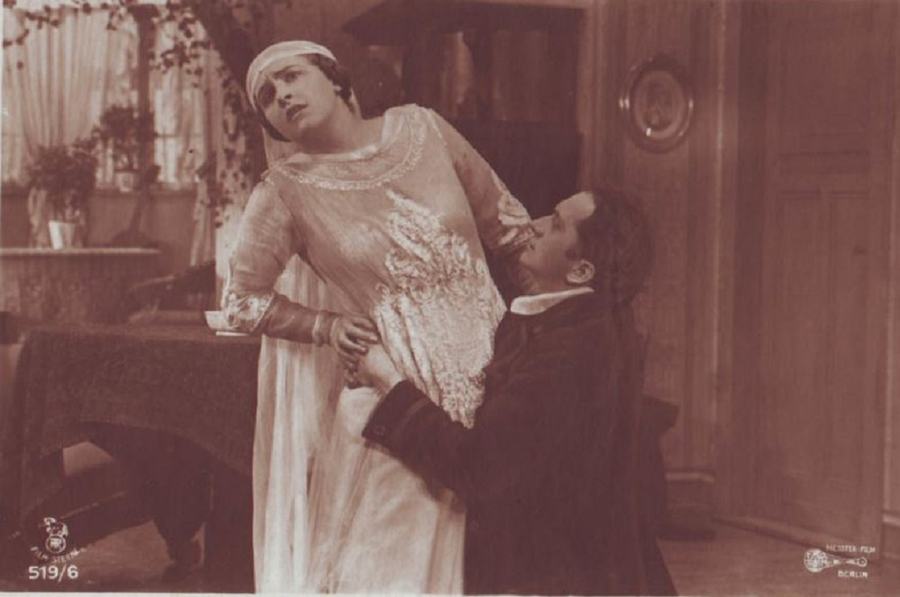
Paul Bildt's portrayal of Professor Aris in the third act is nothing short of mesmerizing. Bildt, known for his ability to convey intellectual intensity, transforms Aris into an eccentric gemologist, whose obsession with the emeralds transcends mere material value. For Aris, the jewels are not wealth, but ancient artifacts imbued with cosmic power. His quest to unlock their mystical secrets leads him down a path of madness, culminating in social ostracism and a reclusive existence. Bildt's physicality and intense gaze convey the profound internal struggle of a man consumed by an intellectual pursuit that ultimately destroys him. This segment of the film delves deeply into the idea of knowledge as a double-edged sword, echoing the Faustian bargains explored in other fantastic dramas of the era, and perhaps even touching upon the scientific hubris seen in films like Homunculus, 4. Teil - Die Rache des Homunculus, though with a focus on ancient mysticism rather than artificial life.
Wiene, through Edelsteine, masterfully dissects the human condition, exposing the inherent frailties that drive individuals towards self-destruction. The film is a profound meditation on the corrosive nature of desire, whether it manifests as financial ambition, artistic yearning, or intellectual obsession. Each character, in their unique pursuit of the jewels, embodies a different facet of human longing, only to be consumed by the very object of their desire. The emeralds themselves act as a silent, malevolent force, a mirror reflecting the darkest aspects of the human soul. They do not actively curse, but rather amplify existing flaws, accelerating the inevitable downfall of those who covet them. This allegorical power of inanimate objects to influence human destiny is a recurring theme in cinema, often seen in films like Unclaimed Goods, where possessions become catalysts for dramatic events, though Edelsteine elevates this to a more mystical, existential plane.
The film also explores the theme of fate versus free will. Are the characters truly cursed, or do their own choices, driven by inherent flaws, lead them to their tragic ends? Wiene subtly suggests a symbiotic relationship: the jewels merely provide the opportunity for latent avarice and ambition to flourish unchecked. The dramatic climax, where all the disparate lives converge, is less a moment of divine intervention and more a catastrophic culmination of individual choices. Elise's hardened pursuit of revenge, Liana's broken but resilient spirit, and Professor Aris's deluded ritual all coalesce into a powerful statement on the inescapable consequences of human action. The ending, with the jewels scattered and the lives shattered, leaves a lingering sense of unease, a testament to the enduring power of material desire and its capacity to unravel the very fabric of existence.
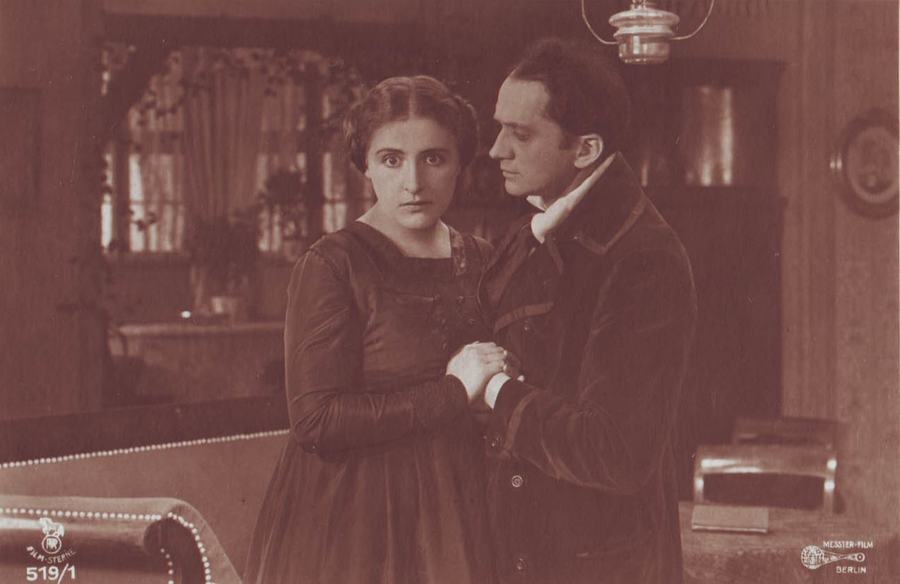
Even in this early work, Wiene's directorial prowess is evident. While perhaps not yet fully embracing the distorted realities of full-blown Expressionism, Edelsteine showcases a nascent understanding of visual storytelling that would later define his career. The cinematography, though confined by the technical limitations of its era, effectively uses chiaroscuro lighting to enhance the dramatic tension. Shadows are not just absences of light; they are active participants in the narrative, obscuring motives and foreshadowing doom. The opulent settings of von Kessel's decaying estate and Liana's extravagant life contrast sharply with the stark, almost clinical environment of Professor Aris's laboratory, each backdrop meticulously crafted to reflect the psychological state of its inhabitant. The transition between these acts, each introducing a new protagonist and environment, maintains a cohesive thematic thread through clever visual cues and recurring motifs related to the jewels.
Wiene's camera often lingers on the faces of his actors, allowing their nuanced expressions to convey volumes of unsaid dialogue. The close-ups of Porten's anguished face or Hartmann's calculating gaze are particularly potent, drawing the audience into their internal struggles. The fantastical elements, while subtle compared to later Expressionist works, are hinted at through dream sequences and the almost hypnotic allure of the emeralds themselves, which seem to glow with an inner, malevolent light. The pacing, divided into four distinct acts, allows for a deliberate unfolding of the tragedy, building tension incrementally rather than relying on rapid-fire plot developments. This measured approach grants the audience ample time to absorb the psychological weight of each character's journey. It feels akin to a grand opera, where each act builds upon the last, culminating in a powerful, almost operatic finale. This methodical construction can be seen as a precursor to the careful narrative layering in films like The Celebrated Stielow Case, which also demands attention to detail in its unfolding drama.
The ensemble cast of Edelsteine delivers performances that are nothing short of extraordinary, particularly given the constraints of silent cinema. Henny Porten, a true star of her era, captivates as Liana Marechal. Her portrayal is a masterclass in conveying complex emotions through gesture, posture, and facial expression. The transformation from a vibrant, celebrated artist to a haunted, paranoid recluse is deeply affecting, making her character's descent into psychological torment utterly believable. Her eyes, often wide with fear or resignation, communicate more than any intertitle could. Porten's ability to project both strength and vulnerability makes Liana a profoundly tragic figure.
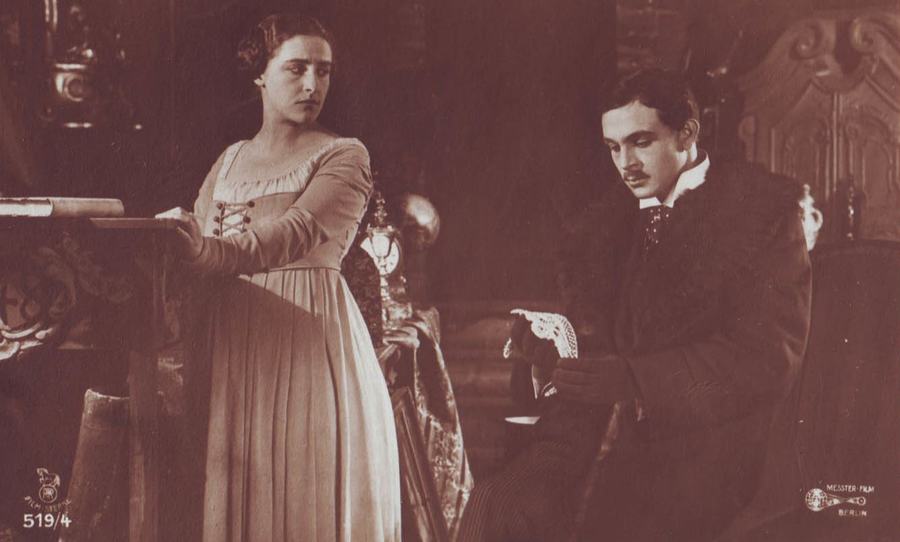
Paul Hartmann's Baron von Kessel is a compelling antagonist, his ambition a palpable force. Hartmann avoids caricature, instead crafting a character whose desperation makes his ruthless actions understandable, if not forgivable. The subtle shifts in his demeanor, from suave manipulator to desperate wretch, are expertly rendered. Paul Bildt, as Professor Aris, is a marvel of physical acting. His hunched shoulders, wild hair, and intensely focused gaze perfectly embody the obsessive academic driven to the brink of madness. His scenes are charged with an intellectual fervor that borders on the demonic, making his character's ultimate fate all the more poignant. Hanna Brohm, as the initially naive Elise, provides a crucial emotional anchor, her early innocence sharply contrasting with the cynical world of the emeralds, and her later transformation into a woman hardened by betrayal speaks volumes without a single word. Theodor Loos, while in a supporting role, grounds the more fantastical elements with his naturalistic portrayal of Liana's concerned manager, offering a glimpse of ordinary humanity caught in an extraordinary tragedy. His quiet despair is a stark counterpoint to the more dramatic expressions of the other characters.
While often overshadowed by Wiene's later, more overtly Expressionistic works, Edelsteine - Phantastisches Drama in 4 Akten stands as a significant early contribution to German silent cinema. It showcases Wiene's nascent genius for crafting psychologically rich narratives and his ability to elicit powerful performances from his cast. The film’s exploration of universal themes—greed, obsession, fate, and the corrupting influence of power—ensures its continued relevance. Its allegorical structure and emphasis on the internal struggles of its characters place it firmly within the tradition of sophisticated dramas that sought to delve beyond superficial plot mechanics, much like the introspective narrative of The Reincarnation of Karma or the moral complexities explored in The Morals of Marcus. It serves as a vital bridge between the melodramas of early cinema and the more stylized, psychologically complex films that would define the Golden Age of German cinema.
For modern viewers, Edelsteine offers a fascinating glimpse into the artistic ambitions of early filmmakers. It demonstrates how, even without spoken dialogue, a film could construct a richly layered narrative, evoke profound emotions, and pose enduring philosophical questions. The enduring power of the Serpent's Eye emeralds, as a symbol of humanity's insatiable desires and the tragic consequences that often follow, resonates deeply, proving that some stories, like precious gemstones, retain their captivating brilliance across generations. This is a film that rewards careful study, offering new insights with each viewing and solidifying Robert Wiene’s reputation as a visionary storyteller who understood the profound potential of the cinematic medium to explore the darkest corners of the human psyche. Its dramatic structure and focus on the interplay of characters and destiny might also draw parallels to the intricate legal and moral quandaries presented in The Divorcee, showcasing Wiene's versatility in weaving compelling human drama, regardless of the specific genre trappings.
Ultimately, Edelsteine - Phantastisches Drama in 4 Akten is far more than a historical curiosity. It is a compelling, dark fable that reminds us of the seductive power of material wealth and the often-catastrophic cost of obsession. Wiene’s early mastery of visual metaphor, coupled with the profound performances of his cast, ensures that this silent masterpiece continues to sparkle, albeit with a chilling, cautionary gleam, in the vast constellation of early cinematic achievements. It’s a testament to the fact that even in its nascent stages, cinema was capable of plumbing the depths of the human soul, crafting narratives that transcended mere entertainment to become enduring works of art. The film, in its quiet intensity, challenges the audience to look beyond the surface, much like the varied interpretations one might find in a complex drama such as Kampen om barnet, where societal values and personal desires clash dramatically. Its narrative sophistication and thematic depth position it as a foundational piece for anyone seeking to understand the evolution of cinematic storytelling in Germany and beyond.
Community
Log in to comment.