DbcultAccessing Vault...
Cult Review
Senior Film Conservator
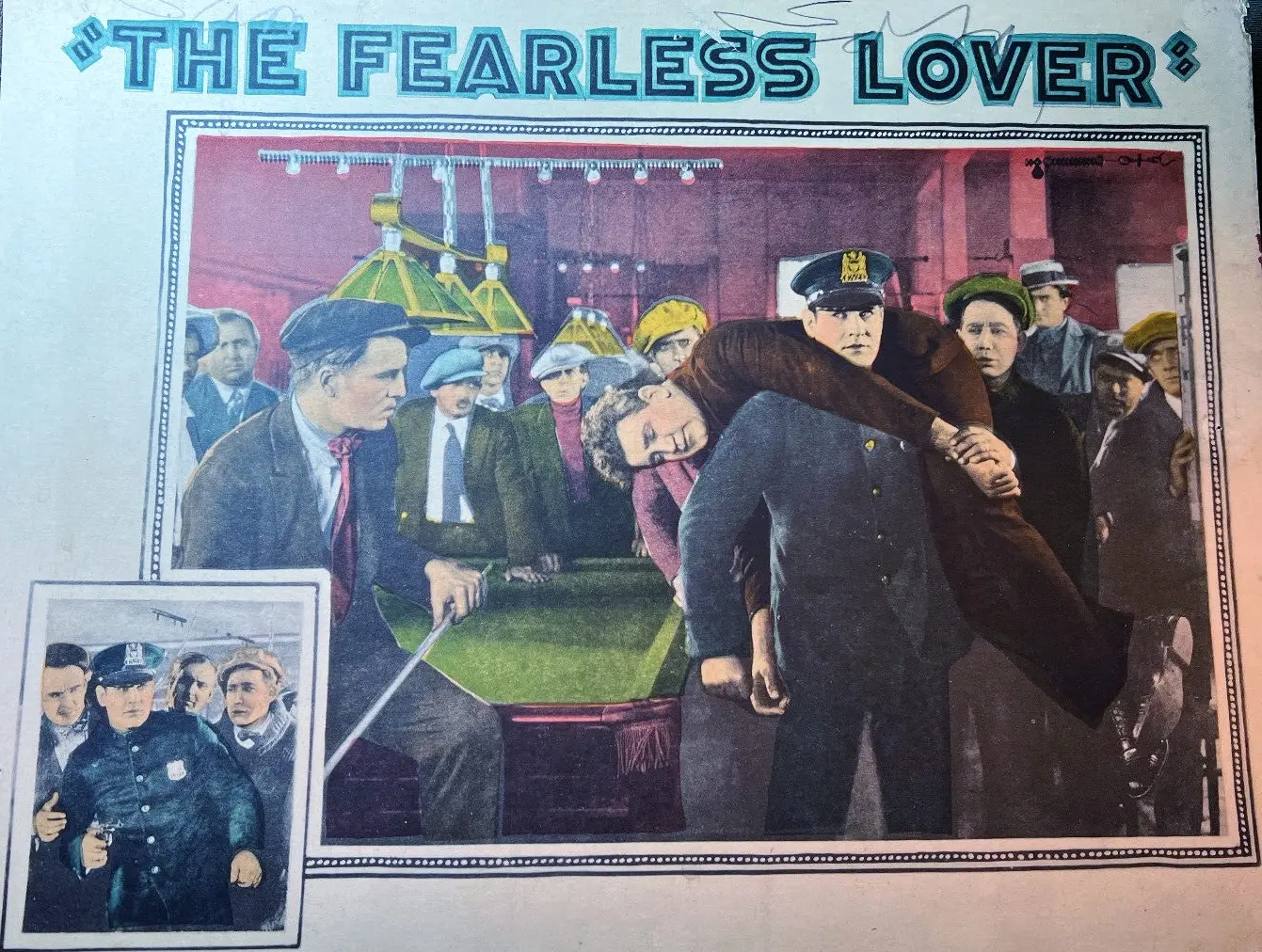
In the bustling, often unforgiving landscape of early 20th-century cinema, a film like The Fearless Lover emerges not just as a relic of a bygone era, but as a vibrant testament to the enduring power of narrative. This silent-era gem, penned by Scott R. Dunlap, deftly weaves together threads of burgeoning romance, stark urban crime, and profound social commentary, delivering a compelling experience that, even without spoken dialogue, resonates with a surprising intensity. It’s a snapshot of a city grappling with its own identity, a canvas upon which heroes are forged in the crucible of duty and desire.
At the heart of this tumultuous narrative stands Patrick Casey, portrayed with commendable conviction by Arthur Rankin. Casey is not merely a police recruit; he is an embodiment of the era's nascent idealism meeting the harsh realities of metropolitan life. Assigned to a particularly volatile sector, his instructions are unambiguous: bring order, even if it means resorting to a certain degree of forceful persuasion. Rankin imbues Casey with a blend of youthful earnestness and burgeoning authority, a figure whose moral compass remains steadfast amidst the swirling vortex of corruption and despair. His initial encounters with the city’s underbelly are a masterclass in silent film acting, conveying determination through posture and expression, a silent declaration of his intent to reclaim the streets from the clutches of lawlessness. The character’s journey is less about physical prowess alone and more about a psychological hardening, a transformation from a green uniform to a symbol of unwavering justice.
The city itself acts as a formidable character, a sprawling, grimy entity teeming with both menace and opportunity. It’s a world where the lines between right and wrong are perpetually blurred, and Casey's arrival is a deliberate attempt to etch them back into clarity. His dedication to his post is palpable, creating a foundational layer of respect for his character long before the personal stakes become irrevocably intertwined with his professional obligations. This portrayal of a dedicated public servant, unyielding in his pursuit of order, sets a powerful tone for the film.
Enter Enid Sexton, the telephone operator, brought to life with understated grace by Lydia Knott. Enid represents the vital, yet often overlooked, connective tissue of urban society. Her profession places her at the nexus of communication, a silent guardian of connections in an increasingly complex world. It is in protecting her from the crude advances of Dugan, the nefarious gang leader, that Casey's path first decisively crosses with hers, sparking an immediate, profound connection. Knott’s performance conveys a quiet resilience, a dignity that shines through the mundane routines of her work and the looming threats of the city. The romance that blossoms between Enid and Casey is not one of dramatic declarations, but of shared glances, unspoken understanding, and a mutual recognition of integrity. It's a love story that feels grounded, born from circumstance and solidified by a shared sense of moral fortitude.
The film then introduces a pivotal element that elevates its narrative beyond a simple crime-romance: the telephone exchange girls’ strike. This industrial action is more than just a plot device; it’s a searing piece of social commentary, highlighting the vulnerability of modern infrastructure and the profound human cost of its disruption. The subsequent tragedy, where a child dies because a doctor cannot be reached due to the idle lines, is a moment of chilling impact. It’s a stark, brutal reminder of how interconnected society had become, even in the early 20th century, and how quickly that delicate web could unravel. This sequence, undoubtedly powerful in its silent depiction, serves to deepen the audience’s empathy for Enid and her colleagues, while simultaneously underscoring the chaotic consequences of societal breakdown. It transforms what might have been a personal drama into a broader social critique, echoing themes of collective responsibility and the unseen labor that underpins daily life.
Every hero needs a formidable adversary, and The Fearless Lover delivers with Dugan, the ruthless gang leader. While the specific actor embodying Dugan isn't definitively listed in the provided details (William Fairbanks or Tom Kennedy are strong candidates for such a role, alongside Arthur Rankin as Casey), the character’s presence looms large over the narrative. He represents the entrenched criminality that Casey is sworn to dismantle, a force of chaos that thrives in the city's darker corners. His initial harassment of Enid establishes him immediately as a villain worthy of Casey’s focused attention, setting the stage for their inevitable confrontation.
The stakes become intensely personal when Enid’s younger brother, Ted, portrayed with an affecting innocence by Frankie Darro (a common child actor of the era), falls prey to Dugan’s influence. Ted’s entanglement in a planned silk robbery is a classic narrative trope, yet it’s handled here with a genuine sense of pathos. It’s the moment when Casey’s professional duty collides directly with his burgeoning personal life, creating a powerful emotional dilemma. The choice he makes—to leverage his influence for Ted’s freedom in exchange for bringing down Dugan’s entire operation—solidifies his character as a man of both principle and compassion. This development injects a vital dose of urgency and personal investment into the overarching crime plot, making the audience root not just for justice, but for the safety of a family.
The film builds inexorably towards its thrilling climax, a sequence that encapsulates the raw, kinetic energy of silent-era action. Casey, driven by his promise and his unwavering moral code, infiltrates Dugan’s headquarters alone. This audacious act of defiance, armed with only a club and a gun, is a visceral display of courage. One can imagine the expert choreography of the time, the rapid-fire intertitles conveying the intensity of the struggle, and the physicality of Rankin’s performance as he systematically tackles the gang. The pursuit of Dugan to the rooftops of the city is a particularly iconic silent film trope, providing a dramatic backdrop for their final confrontation. The elevation adds a layer of peril and spectacle, a literal and metaphorical high-stakes battle.
The strength of The Fearless Lover lies not just in its compelling narrative, but in the nuanced performances that bring its characters to life. Arthur Rankin, as Patrick Casey, embodies the quintessential silent film hero – stoic yet expressive, capable of conveying deep emotion and unwavering resolve through gestures and facial expressions. His portrayal is both physically demanding and emotionally resonant. Lydia Knott, as Enid Sexton, offers a counterpoint of quiet strength and vulnerability, making her character deeply sympathetic and her romance with Casey genuinely believable. Her ability to convey dignity and resilience without uttering a single word is a testament to the power of silent acting.
The supporting cast also plays a crucial role in enriching the film's tapestry. While specific roles for William Fairbanks, Tom Kennedy, Eva Novak, and Ruby Lafayette are not detailed in the plot summary, their presence undoubtedly contributes to the vibrant ensemble. Frankie Darro, likely as the impressionable young Ted, would have provided a poignant, innocent counterpoint to the hardened world of crime. Scott R. Dunlap’s writing is sharp and efficient, crafting a plot that moves with purpose and builds tension effectively, a hallmark of successful silent-era storytelling where every visual cue and intertitle must count. The direction, while not explicitly attributed beyond the writer, would have focused on clear visual storytelling, dynamic action sequences, and evocative close-ups to convey emotion and character motivation.
When considering its peers, The Fearless Lover stands as a robust example of the silent crime drama. While not a direct comparison, one might consider films like The Black Circle or The Night Riders for their explorations of lawlessness and vigilantism in different contexts. However, The Fearless Lover distinguishes itself through its potent blend of social commentary, particularly concerning the strike and its dire consequences, alongside its central romance. It avoids the purely sensational, instead grounding its drama in tangible human experiences and societal pressures. The narrative’s careful pacing ensures that both the romantic elements and the crime plot receive ample development, creating a satisfying and multi-layered viewing experience typical of the era's best offerings.
In its entirety, The Fearless Lover is more than just a historical artifact; it is a compelling piece of cinema that speaks to universal themes. It explores the eternal struggle between order and chaos, the personal sacrifices demanded by duty, and the redemptive power of love. The film's ability to create vivid characters and a gripping plot without the benefit of spoken dialogue is a powerful reminder of the artistry and ingenuity of silent film. It captures the anxieties of a rapidly modernizing world, where technology brought both progress and new vulnerabilities, and where individual heroism remained a potent force for change. For those seeking to delve into the rich tapestry of early American cinema, this film offers an insightful and thoroughly entertaining journey into a world where courage was silent, but its impact was profoundly felt. It truly is a testament to the enduring appeal of a well-told story, regardless of the technological limitations of its time.
IMDb 6.6
1931
Community
Log in to comment.