DbcultAccessing Vault...
Cult Review
Senior Film Conservator
Should you invest your time in this nearly century-old silent comedy? Short answer: yes, but only if you have a high tolerance for the hyper-kinetic, often exhausting physical comedy of the mid-1920s.
This film is a treat for those who enjoy the 'accidental hero' trope and Southern Gothic settings played for laughs. It is definitely not for viewers who require nuanced character development or a plot that doesn't rely on convenient coincidences.
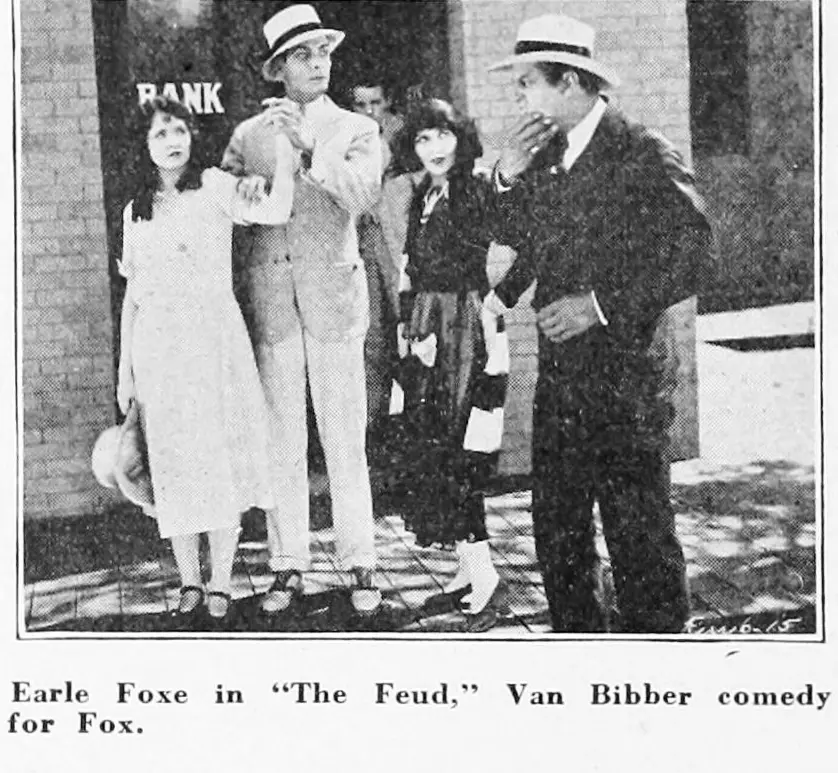
1) This film works because it leans heavily into the charisma of Earle Foxe, who manages to make Van Bibber’s utter incompetence feel charming rather than irritating.
2) This film fails because the central misunderstanding at the auction—the film’s entire catalyst—is stretched so thin that it threatens to snap the audience's suspension of disbelief within the first twenty minutes.
3) You should watch it if you are a fan of Richard Harding Davis adaptations or if you want to see a fascinating snapshot of how 1920s Hollywood satirized the 'Old South' through the lens of a New York socialite.
The Feud is worth watching for its historical value and its surprisingly modern pacing. Unlike some of its contemporaries, such as the more methodical The Easiest Way, this film moves with a frantic energy that prevents it from ever feeling stagnant.
It serves as a bridge between the pure slapstick of the early 1910s and the more narrative-driven comedies of the late silent era. If you can move past the dated portrayal of the 'deaf villager' trope, there is a genuine heart at the center of the chaos.
Earle Foxe was an actor who understood the power of the silhouette. In 1926, the 'gentleman adventurer' was a common archetype, but Foxe adds a layer of frantic anxiety that makes Van Bibber feel unique. In the auction scene, his face goes through a dozen micro-expressions of horror as the price climbs.
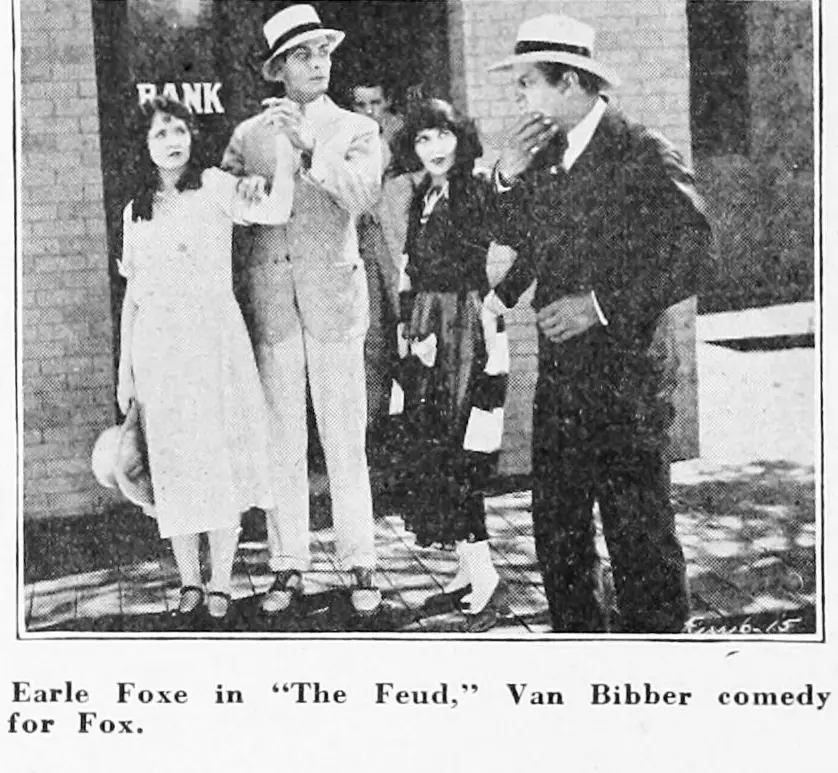
It’s a performance that rivals the physical commitment seen in The New Adventures of J. Rufus Wallingford. Foxe doesn't just play the hero; he plays a man who is desperately trying to survive his own luck. This keeps the audience on his side even when his actions are objectively foolish.
The supporting cast, particularly Fanny Midgley, provides a necessary grounding. Midgley brings a sense of gravity to the 'Southern' side of the story, ensuring the stakes feel real even when the action is absurd. Without her presence, the feud elements of the plot would likely have drifted into pure parody.
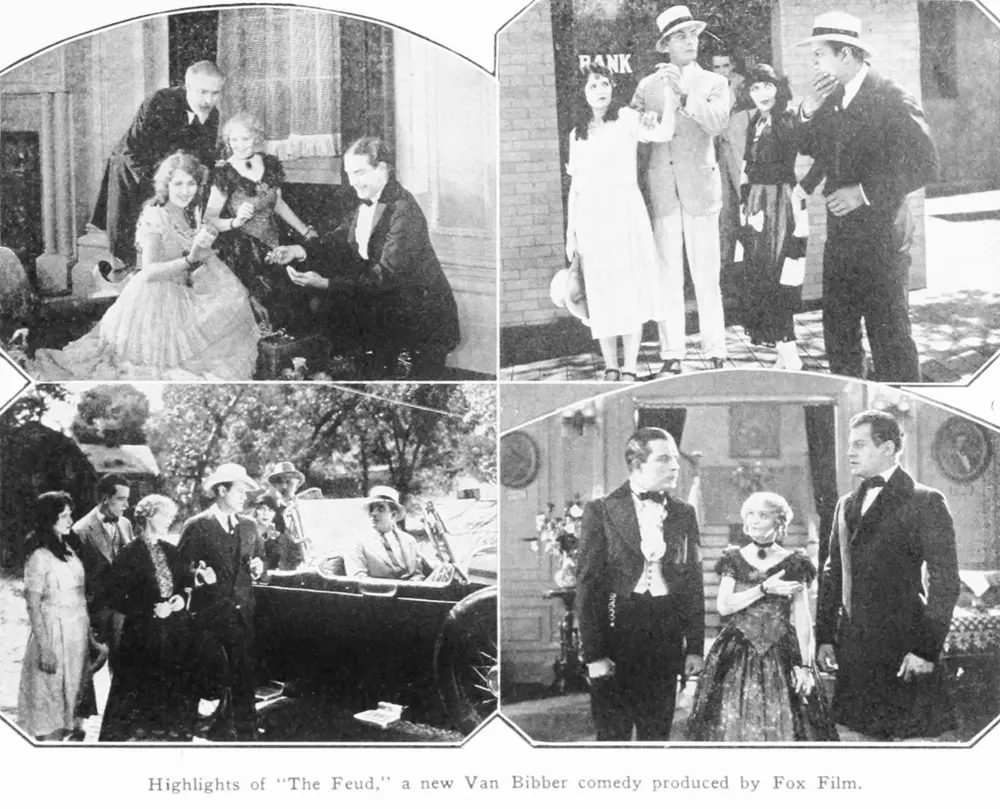
The visual language of The Feud is surprisingly sophisticated for a B-picture of the era. The use of shadows in the mansion scenes creates a proto-noir atmosphere that contrasts sharply with the bright, sun-drenched outdoor motor sequences. This visual shift mirrors Van Bibber’s transition from a carefree traveler to a man trapped in a dangerous mystery.
Consider the moment Van touches the secret spring. The camera lingers on the dust falling from the ceiling, a small but effective detail that emphasizes the age of the house. It’s a level of environmental storytelling often missing from films like The Invisible Enemy.
The framing during the final 'free-for-all scrap' is also noteworthy. Rather than focusing on a single fight, the director uses wide shots to show the scope of the chaos. It’s messy. It’s loud for a silent film. It works because it captures the visceral nature of a mob turning on itself.
Richard Harding Davis was a master of the 'gentleman in trouble' narrative. In this adaptation, the writers manage to preserve his cynical view of social classes while injecting enough humor to keep it light. The dialogue intertitles are punchy and avoid the flowery prose common in films like Her Great Match.
The script makes a bold choice by having the antagonists 'knock themselves out.' It’s a cynical observation on human nature—the idea that a feud is a self-consuming fire that doesn't actually need a hero to extinguish it. Van Bibber is merely the witness who collects the rewards.
This cynical edge is what separates The Feud from more sentimental films of the period like The Legacy of Happiness. It’s a movie that acknowledges that people are often motivated by greed and stubbornness, even if it wraps that message in a comedic package.
Cons:
The film’s tone is its most interesting aspect. It fluctuates between a lighthearted travelogue and a high-stakes treasure hunt. While this could have been jarring, the director maintains a consistent rhythmic pace. The editing in the auction scene is particularly sharp, cutting between the auctioneer’s gavel and Van’s increasing panic.
Compared to the slower, more melodramatic Life, The Feud feels remarkably modern. It doesn't dwell on the tragedy of the mansion's original owners; it focuses on the absurdity of the present. This lack of sentimentality is refreshing.
However, the tone occasionally stumbles when the violence of the feud escalates. There is a brief moment where the threat feels too real for the comedy to land, but the film quickly course-corrects by returning to Van’s bewildered reactions. It’s a delicate balance that mostly succeeds.
One surprising observation is how the film treats the concept of ownership. Van Bibber 'buys' a mansion he doesn't want, finds 'treasure' he didn't earn, and becomes a 'hero' for a fight he barely participated in. The film is a subtle critique of the upper-class ability to fail upward.
It’s a stance that feels surprisingly bold for 1926. While films like Prodigal Daughters often moralized about the behavior of the wealthy, The Feud simply laughs at the sheer luck of it all. It’s a cynical, funny, and deeply human perspective.
The Feud is a chaotic, occasionally brilliant piece of silent cinema. It is not a masterpiece of storytelling, but it is a masterclass in kinetic energy. It works. But it’s flawed. If you can accept the absurdity of its premise, you will find a film that is far more entertaining than many of its more 'serious' contemporaries.
While it may not have the lasting emotional impact of What Women Love, it offers a visceral, funny experience that highlights the best of what 1920s comedy had to offer. It is a loud, proud, and perfectly ridiculous romp through a Southern village that never was.
IMDb 8.4
1931
Community
Log in to comment.