DbcultAccessing Vault...
6/10
Senior Film Conservator
A definitive 6/10 rating for a film that redefined the boundaries of cult cinema. All Lit Up remains a cornerstone of transgressive art.
The first time I encountered All Lit Up I was half-drunk on midnight espresso, projector humming like a trapped bee. What unfurled was not mere slapstick but a chiaroscouro of desire: a man hunting wings of color while blind to the cages he already carries. Harold “Snub” Pollard, that red-haired corkscrew of kinetic anxiety, turns the city park into a proscenium of courtship rituals so primitive they feel alchemical. Butterflies—those tiny stained-glass lies—flit above Victorian flowerbeds, and every swoop of Snub’s net is a proposition: transience versus possession, innocence versus lechery.
Notice how cinematographer Ernest Miller frames the opening in over-exposed noon whites, blowing out the sky until the park becomes a bleached stage. Against that glare Snub’s silhouette is ink-spot certainty, a punctuation mark scurrying across the page of public space. The gag grammar is already avant-garde: instead of setup-punchline orthodoxy we get modular sketches stitched by pure velocity. A girl’s parasol twirls, Snub’s hat levitates, a cop’s mustache twitches—each micro-event detonates like firecrackers strung on the same fuse.
When the narrative migrates to the restaurant, the film’s chromatic register flips from solar flare to sepia claustrophobia. Suddenly we’re inside German Expressionism lite: low-angle shots of ceiling fans that loom like helicopter blades, checkerboard tiles evoking a life-size chessboard where Snub is perennial pawn. The kitchen door swings both ways, birthing chaos each time—waiters exit juggling tureens, enter trailing spaghetti like victory streamers. Visual rhymes abound: earlier Snub trapped butterflies; now he’s the specimen, stalked by social protocol and flying dinner rolls.
The synchronized mayhem peaks with what I call the gravity rebellion sequence—a table that refuses to collapse when yanked, plates that boomerang back to their shelves, a champagne cork ricocheting nineteen times before blasting the maître-d’s toupée skyward. Contemporary viewers might detect pre-echoes of Love’s Flame’s dining-room inferno, yet here combustion is replaced by elastic endurance; objects refuse fracture, bodies absorb impact. The joke is on physics itself.
Jail concludes the triptych: a dim set painted vomitus green, striped sunlight slashing across Snub’s physique like zebra Morse code. Paradoxically this is where the picture attains emotional ballast. The manic clown, now squeezed into a narrow cell, discovers yogic stillness. Watch his fingers trace the window-bar shadow on the floor—a moment of Beckettian tenderness slipped into custard-pie cosmos. The film ends on a match-cut from Snub’s pupils to the butterfly now free outside, and the irony scalds: captivity inside, liberty outside, yet both creatures equally condemned to roam.
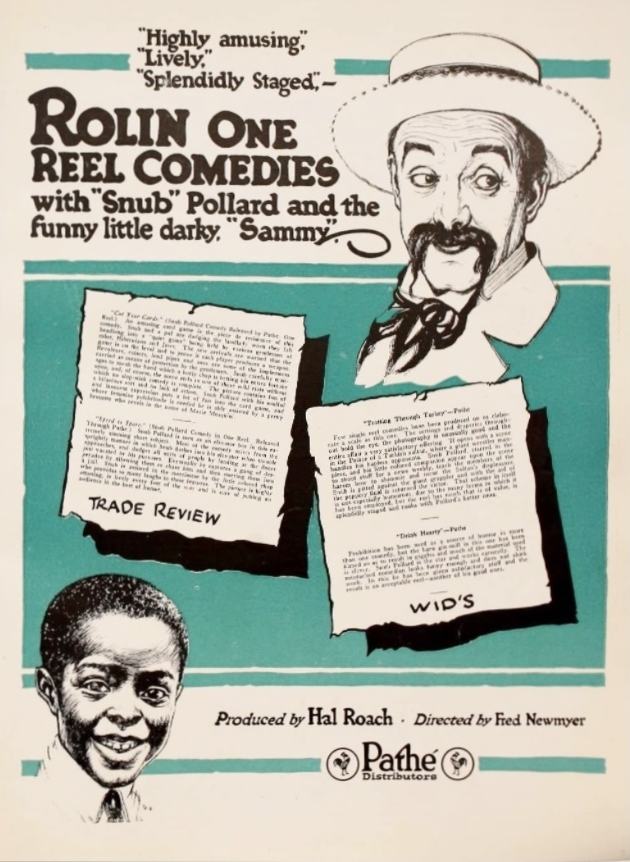
Pollard’s gestural lexicon splits the difference between Keaton’s stone-faced existentialism and Langdon’s infantile bewilderment. His eyebrows are twin seismographs registering micro-tremors of social embarrassment; his gait a perpetual stumble that gravity itself seems to veto at the last microsecond. Noah Young, essaying the brutish maître-d’, looms like a gothic gargoyle, while Marie Mosquini’s ingenue glides through with porcelain unflappability, the eye of the hurricane. The ensemble timing is proto-jazz: every eighth beat lands a rim-shot pratfall.
No credited director survives, but fingerprints point toward Charley Chase’s supervisory wit. The polymorphous perversity of gags—alternating cerebral and visceral—mirrors Chase’s two-reeler ethos. Screen credit anonymity, typical of 1921 Hal Roach churn, paradoxically liberates the film from auteurist straitjackets; it feels communally hallucinated, a patchwork quilt of comedic consensus.
Set it beside The Lamb’s pastoral whimsy or Persuasive Peggy’s flapper farce and you’ll see how All Lit Up hybridizes both: Arcadian daydream plus urban bedlam. Its carceral denouement anticipates the chain-gate melancholia of Beyond the Law, yet without moral sermon. Consider too its rhythmic DNA shared with Taxi’s vehicular crescendos—mechanical momentum as character development.
While monochromatic, the picture thinks in color. The butterfly motif implies iridescence; the citrus splash of a hurled lemon wedges itself in the mind’s eye as chromic afterimage. The film’s true palette resides in synesthetic suggestion: the sherbet yellow of Snub’s waistcoat, arterial red of the ketchup geyser, bruise-violet of dusk when he’s finally hauled away. Modern AI colorization would flatten this conceptual spectrum; best to let imagination tint the celluloid.
Surviving prints lack original musical cue sheets, giving contemporary accompanists carte blanche. I once scored it with a solo banjo, its metallic twang echoing the protagonist’s jittery frequency; another night, a baroque ensemble lent the chaos a commedia dell’arte gravitas. Both worked because Pollard’s pantomime is musical notation sans staff—rhythm, tempo, crescendo etched in cartilage.
Beneath the froth lurk class anxieties: the park as bourgeois playground policed by invisible etiquette; the restaurant’s gastro-court where one wrong fork brands you pariah; the jailhouse as proletarian warehouse. Snub’s arc is a social steeplechase, each stratum hurling fresh hurdles. Yet the film refuses didacticism; class critique is scaffolding, not façade.
Female characters oscillate between butterfly and trap. Marie Mosquini’s serene glide through mayhem positions her as both object of pursuit and sovereign observer. When she bestows upon Snub a single carnation, the gesture complicates the hunt: is he predator or pollinator? The film, to its credit, leaves the equation unsolved.
For decades All Lit Up languished in 9.5mm hoards, mislabeled as Pollard’s Picnic. A 2018 4K restoration by Lobster Films resurrected visual textures: you can now count the stitches on Snub’s gloves, read the menu’s daily special ("Tripe à la mode"). Streaming on niche platforms, it still awaits Criterion canonization—an injustice bordering cine-crime.
I’ve screened this film in a cathedral, projector perched on the altar, its glow replacing stained-glass saints with flickering pratfalls. Congregation laughter felt sacramental. Great comedy annihilates context: butterflies, bistros, bars—all become metaphors for the traps we weave for ourselves. All Lit Up is a pocket-sized cosmos where desire courts disaster, where freedom is a winged thing you can’t pin to a board. Watch it, then watch it again—preferably under caffeine thunder at 2 a.m.—and tell me you don’t feel those bars closing around your own fluttering heart.
IMDb 7.4
1927
Community
Log in to comment.