DbcultAccessing Vault...
5.7/10
Senior Film Conservator
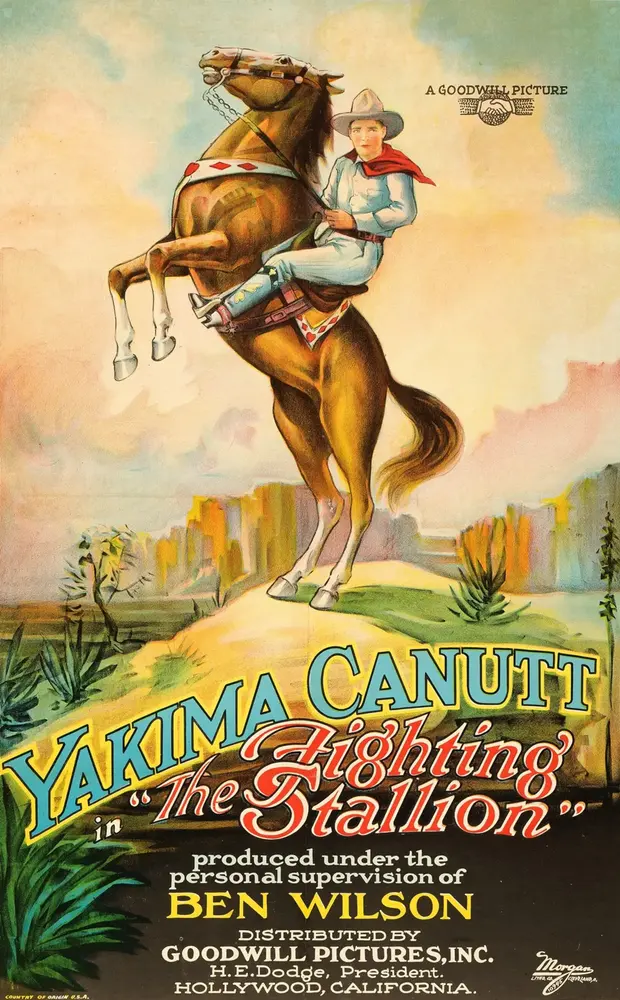
A definitive 5.7/10 rating for a film that redefined the boundaries of cult cinema. The Fighting Stallion remains a cornerstone of transgressive art.
Is 1924's The Fighting Stallion worth your attention in the modern era? Short answer: yes, but only if you view it as a historical document of physical prowess rather than a narrative powerhouse. This film is a mandatory watch for enthusiasts of stunt history and early Western archetypes; it is absolutely not for those who require complex pacing or high-definition emotional nuances.
The Fighting Stallion occupies a strange, dusty corner of cinematic history. It isn't just a movie; it is a showcase for Yakima Canutt, the man who would eventually teach John Wayne how to walk and talk like a cowboy. In this film, we see the raw materials of the American Western being forged in real-time. The plot is a familiar skeleton, but the meat on the bones is the sheer physicality of the performances.
What makes this film endure despite its age? It provides a visceral look at the transition from rodeo showmanship to narrative filmmaking. Unlike the more polished dramas of the era, such as The Man from Glengarry, this is a film that breathes through its action sequences.
1) This film works because Yakima Canutt’s stunt work provides a level of authenticity that modern CGI cannot replicate.
2) This film fails because the secondary characters, particularly the villain Mays, are written with the depth of a wet paper towel.
3) You should watch it if you want to understand the foundational stunts that defined the Western genre for the next fifty years.
Yakima Canutt was never the world's greatest dramatic actor. His face often remains a stoic mask, even when he’s being framed for murder. But when he moves, the screen comes alive. In the sequence where Yak first encounters the wild stallion, there is a lack of trick photography that is genuinely refreshing. He doesn't just ride the horse; he negotiates with it. This is a far cry from the more theatrical animal handling seen in films like Solid Ivory.
The way Canutt uses his body to convey authority over the animal is the film's true dialogue. There is a specific moment where Yak has to rope the stallion in a tight corral. The camera stays wide, capturing the dust, the sweat, and the very real danger of a half-ton animal thrashing in close quarters. It is brutal. It is simple. It is effective.
Walter Shumway plays Mays with a sneer that you can almost feel through the grain of the silent film stock. While the rustling plot is a bit of a cliché—even for 1926—the way Mays uses the horse as a scapegoat is a clever bit of psychological manipulation. He plays on Gilmore’s frustration, turning a natural element of the wild into a phantom menace. This mirrors the social anxieties often found in silent dramas like Prohibition, where an external 'evil' is blamed for internal failures.
However, the narrative takes a sharp, somewhat clunky turn when Mays frames Yak for murder. The transition is jarring. One moment we are watching a beautiful documentary-style taming of a horse, and the next, we are thrust into a courtroom-adjacent melodrama. The film loses its footing here, trading its unique outdoor energy for a standard 'wronged man' trope that feels less inspired.
The cinematography in The Fighting Stallion is surprisingly rugged. The filmmakers didn't have the luxury of sound stages, so they used the natural light of the American West to their advantage. The shadows cast by the rocky outcrops during the final raid are deep and oppressive, adding a layer of tension that the script lacks. It lacks the polish of a high-budget production like The Cabaret, but it gains a sense of place that is undeniable.
There is a specific shot of the stallion silhouetted against the horizon that serves as a visual metaphor for the untamable spirit of the frontier. It’s a bit on the nose, but it works. The camera work during the chase scenes is frantic, sometimes losing focus, but this only adds to the sense of chaotic realism. It feels like the cameraman was just as worried about being trampled as the actors were.
If you are looking for a story that will make you weep or rethink your life, look elsewhere. Perhaps try Charity for a more emotional beat. But if you want to see the birth of the American action hero, The Fighting Stallion is essential. It is a film that prioritizes the 'moving' in moving pictures. The plot is merely a clothesline to hang the stunts on, and those stunts are magnificent.
The interaction between Boy the Wonder Horse and Canutt is the emotional core. While Neva Gerber provides a solid performance as the ranch owner's daughter, her character is largely a passenger in the plot. The real romance is between the man and the beast, a theme that would be repeated in Westerns for decades to come.
The authenticity of the ranch setting is palpable. You can almost smell the leather and the dust. Yakima Canutt’s presence is magnetic; he possesses a natural coolness that predates the 'Man with No Name' archetype. The horse, Boy, is surprisingly expressive, often out-acting his human counterparts.
The pacing drags significantly once the action moves away from the horses and into the plot to frame Yak. The editing is occasionally choppy, making certain transitions between the ranch and the town confusing. The villain's motivation is never explored beyond 'he is a bad man who wants money.'
The Fighting Stallion is a rough-hewn gem that shines brightest when it’s not trying to be a drama. It works. But it's flawed. The film is a testament to a time when actors were expected to be athletes first and poets second. While the story might be forgettable, the image of Canutt atop a bucking stallion is burned into the celluloid. It is a vital piece of the Western puzzle, even if some of the pieces don't quite fit together. If you can forgive the creaky plot, the physical spectacle is more than enough to justify the runtime.
IMDb 3.5
1927
Community
Log in to comment.