DbcultAccessing Vault...
Cult Review
Senior Film Conservator
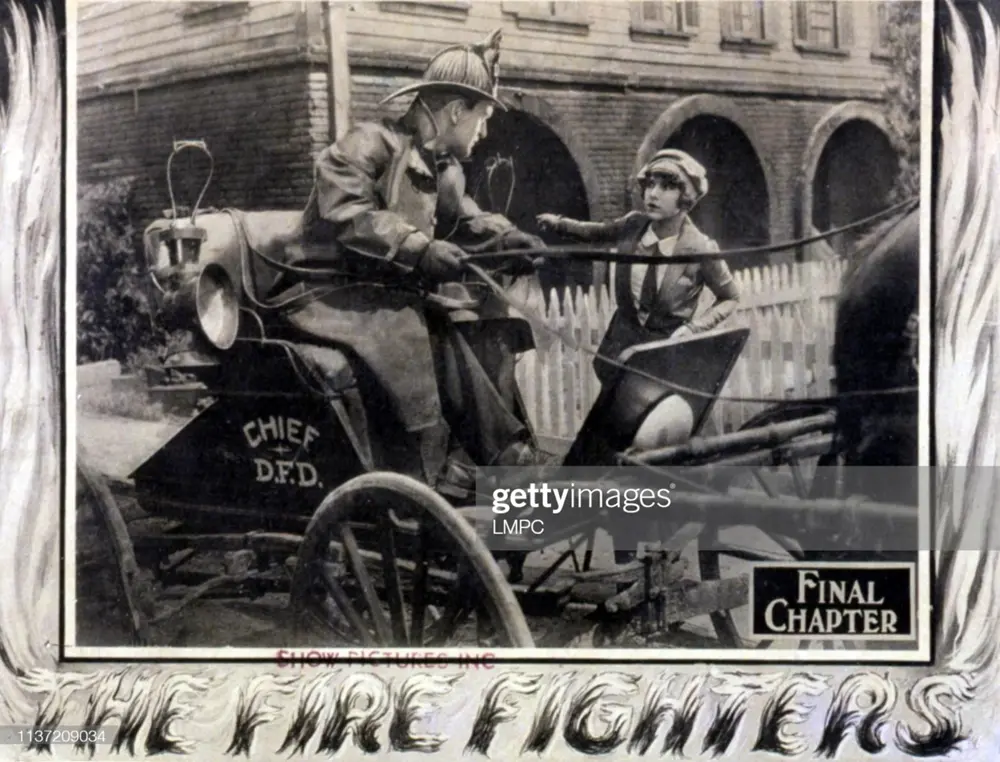
Is 'The Fire Fighters' worth your time in the modern era? Short answer: yes, but only if you have a refined palate for the high-octane melodrama and rhythmic editing of the late silent era. This film is essential for historians of the 'thriller' genre and fans of practical stunt work, yet it will likely alienate those who require the nuance of modern dialogue or the speed of contemporary digital effects.
This film works because its stakes are grounded in the visceral reality of fire and the psychological weight of a father’s failure. It fails because the villain’s motivation—securing water rights—is a trope that feels archaic even by 1927 standards. You should watch it if you want to understand the architectural blueprints of the modern action-cliffhanger.
Yes, 'The Fire Fighters' remains a compelling watch for those interested in the evolution of the action serial. It offers a rare glimpse into the 'occupational hero' subgenre that flourished before the advent of the superhero. The film provides a raw, unfiltered look at early 20th-century heroism, stripped of irony and focused on the physical toll of duty.
The brilliance of 'For Life and Liberty' lies in its structural irony. We begin with Fred Powers at the height of his social standing. The Fire Fighter's Tournament is not just a sports sequence; it is a communal celebration of civic virtue. When Fred wins, he isn't just winning money; he is winning the right to a domestic future with Mary Kent. Lafe McKee plays Fred with a sturdy, almost naive optimism that makes his subsequent fall into the Kentucky Club's gambling den all the more painful to witness.
The transition from the bright, open spaces of the tournament to the smoky, claustrophobic interiors of the Kentucky Club is a masterful tonal shift. Director Wilbur McGaugh uses the environment to signal Fred’s entrapment. In the club, the shadows are longer, and the faces of the henchmen are perpetually obscured. It is a stark contrast to the earlier scenes, much like the moral descent seen in Soul Mates, where the protagonist's environment reflects their internal decay.
Al Hart’s portrayal of Grant Stewart is a fascinating study in silent-era villainy. Unlike the flamboyant antagonists of Disraeli, Stewart is a predator of the ledger. He doesn't want to rule the world; he wants the water under Fred's house. This 'small-scale' villainy actually makes the film feel more grounded and dangerous. The scene where Stewart’s henchmen manipulate the gambling game is shot with a focus on hands and cards—a tactile approach to tension that predates the noir aesthetic by nearly two decades.
There is a brutal simplicity to the way Fred is dismantled. He isn't just outsmarted; he is psychologically broken. By the time he signs over the deed to his homestead, he has lost more than his land—he has lost his identity as the town's protector. This theme of a man losing his soul to a corrupt system is a recurring motif in films like The Conquest of Canaan, but here it is accelerated by the ticking clock of the serial format.
The climax of Chapter 1 is the fire at the Kentucky Club, and it is here that the film earns its title. In 1927, there were no CGI fire effects. The flames we see are real, and the danger to the actors is palpable. When Fred discovers Fenton’s cheating, the subsequent shootout leads to an overturned lamp—a classic trope, but executed here with such kinetic energy that it feels fresh. It works. But it’s flawed by the era's technical limitations in lighting.
"The fire in the Kentucky Club isn't just a plot device; it's a purgative force that burns away Fred's moral failings, forcing him to choose between his son's life and his own safety."
The sequence where Jimmie is trapped on the upper floor is a masterclass in cross-cutting. We see Fred’s realization of the danger, the mounting flames, and the boy’s terror. This isn't just 'action'; it's emotional stakes. It reminds me of the high-tension domestic dramas found in Cheated Hearts, but amplified by the physical threat of incineration. The rescue is desperate and messy, lacking the polished grace of modern stunt work, which makes it feel significantly more authentic.
Lafe McKee’s performance is the anchor of this film. While some silent actors relied on grand gestures, McKee uses his eyes to convey the transition from pride to shame. His confrontation with Fenton is a highlight; you can see the moment the 'firefighter' is replaced by a man with nothing left to lose. It’s a performance that stands up against the work in The Silence of Dean Maitland, focusing on the internal weight of a secret—or in this case, a failure.
Helen Ferguson as Mary Kent is unfortunately sidelined in this first chapter, serving more as a motivation than a character. However, her presence in the early scenes provides the necessary stakes for Fred’s gamble. One hopes that in subsequent chapters, she is given the agency seen in female leads of films like So This is Eden. The pacing is relentless, typical of the serial format, which must hook the audience every twenty minutes to ensure they return the following week.
The film excels in its portrayal of 'the everyman' hero. Fred Powers isn't a superman; he is a man who makes a terrible mistake and has to fight his way back. The cinematography during the tournament is surprisingly fluid, capturing the motion of the fire engines with a sense of scale that was rare for its time. Additionally, the film avoids the slapstick humor common in some contemporary shorts like Monkeys Prefer Blondes, opting instead for a gritty, melodramatic realism.
The secondary characters are largely archetypal. The henchmen have little personality beyond their function in the plot. The transition from the gambling loss to the shootout feels slightly rushed, leaving the audience with little time to process Fred's psychological break before the action takes over. It’s a common issue in serials, which often prioritize 'the next big thing' over character depth, unlike more focused features like Le rêve.
One unconventional observation is how the film treats the concept of 'luck.' Fred’s win at the tournament is framed as a result of skill and community spirit, while his loss at the Kentucky Club is a result of 'luck' (which we know is rigged). The film suggests that honest men can only thrive in transparent environments, and as soon as they step into the shadows of private clubs, they are doomed. This moralistic stance is common in 1920s cinema, such as in Open Your Eyes, but here it is literalized through the destruction of the club itself.
'The Fire Fighters: Chapter 1' is a blistering introduction to a classic serial. While it suffers from some of the narrative shortcuts inherent in the format, the central performance by Lafe McKee and the genuinely dangerous-looking fire effects make it a standout of its era. It burns with an intensity that many modern action films, with their sterile digital effects, fail to replicate. It isn't a masterpiece of subtlety, but as a piece of kinetic, emotional storytelling, it is undeniably effective. It burns. It breaks. It leaves you wanting the next chapter.
IMDb 5.5
1935
Community
Log in to comment.