DbcultAccessing Vault...
Cult Review
Senior Film Conservator
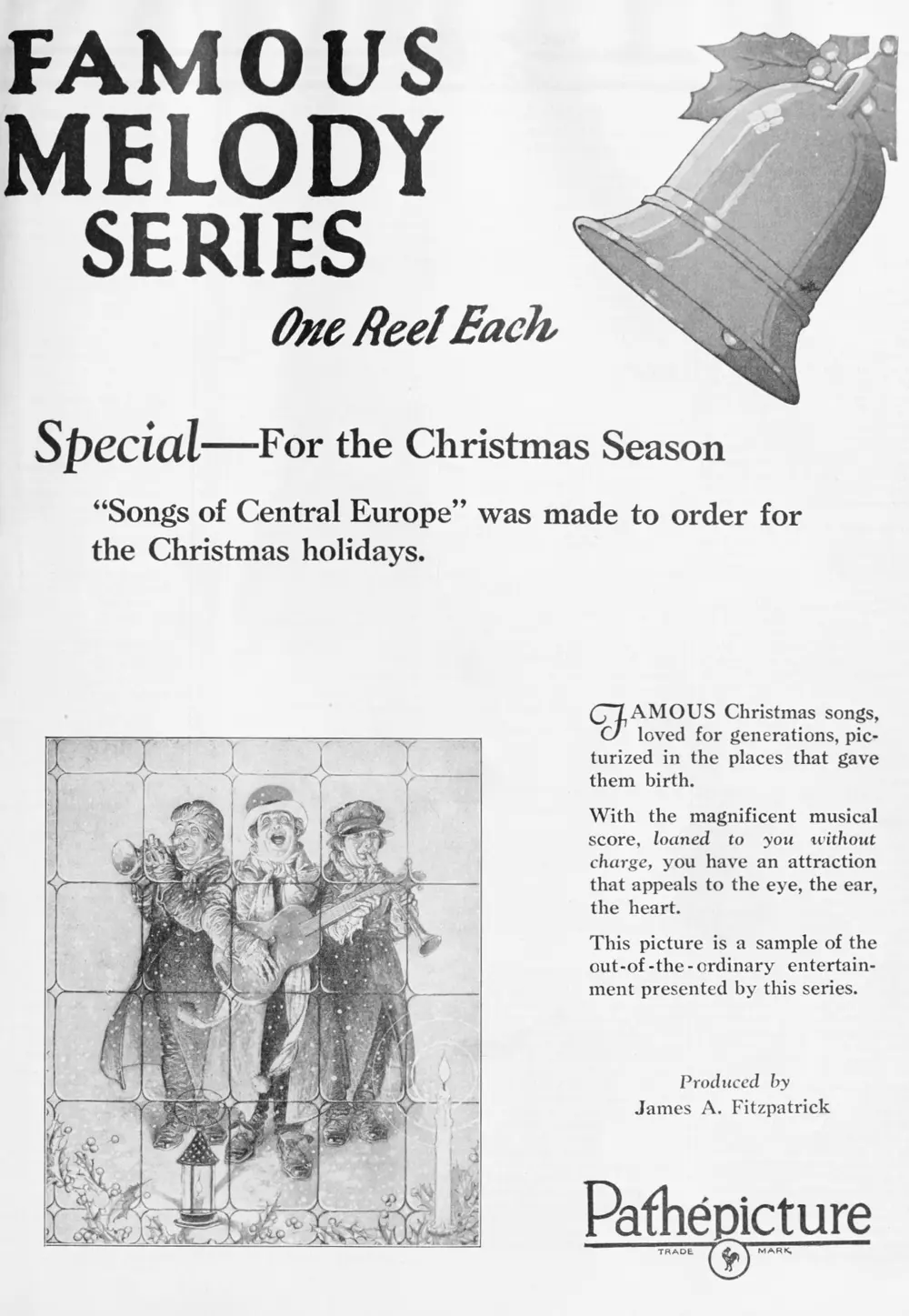
Is this film worth watching today? Short answer: Yes, but only if you are a dedicated student of silent-era aesthetics and cultural history. It is a slow-burn experience that rewards the patient viewer while likely alienating anyone looking for modern narrative velocity.
This film is for the cinephile who finds beauty in grain and the historian who wants to see the ghosts of a pre-industrial Europe. It is absolutely not for those who demand tight plotting or high-octane action.
1) This film works because it captures an authentic sense of place that studio-bound productions of the era, such as The Prince of Pilsen, often failed to replicate.
2) This film fails because its middle act meanders into ethnographic self-indulgence, losing the thread of Peggy Shaw’s personal journey in favor of repetitive landscape shots.
3) You should watch it if you appreciate the raw, unpolished beauty of location shooting and the specific, expressive face of Peggy Shaw.
Songs of Central Europe operates on a frequency that modern audiences might find jarring. It does not hold your hand. Instead, it invites you to sit in its silence. The cinematography is remarkably grounded, eschewing the expressionist shadows of Manon Lescaut for a more naturalistic, almost documentary-like approach.
Consider the scene where Shaw’s character stands at the edge of a village market. The camera doesn’t focus on the drama of her arrival. It lingers on the textures of the woven baskets, the weathered faces of the elders, and the way the light hits the dust. It is atmospheric to a fault. It works. But it’s flawed.
The film lacks the theatrical polish of The Trap, but it gains something far more valuable: a sense of lived-in reality. There is a specific shot of a sunset over the Carpathian Mountains that feels less like a movie and more like a window into a world that was about to be irrevocably changed by the 20th century.
Peggy Shaw is the reason this film remains watchable. While many of her contemporaries relied on the grand gestures common in films like Sheltered Daughters, Shaw understands the power of the micro-expression. Her performance is a masterclass in internal monologue.
In one sequence, she is asked to sing a song of her homeland. Since we cannot hear her voice, we must read her throat, her shoulders, and her eyes. The way she closes her eyes for a fraction of a second too long conveys a grief that no dialogue could capture. It is a stunning display of screen presence.
However, the script often leaves her stranded. There are long stretches where the narrative stops entirely to show us local dances or agricultural practices. While these are historically fascinating—similar to the ethnographic depth found in Armenia, the Cradle of Humanity—they do no favors for the film’s momentum. Shaw is forced to react to things rather than drive them.
To answer this question directly: Yes, provided you adjust your expectations. If you go in expecting a traditional romance like A Dream or Two Ago, you will be disappointed. This is a film of moods and textures.
The film is worth watching for its sheer audacity in being quiet. In an era where even silent films were beginning to lean into slapstick or melodrama, like The Galloping Cowboy, Songs of Central Europe chooses to be a meditation. That choice is brave, even if it isn’t always entertaining.
Let’s be honest: the pacing is glacial. There is a sequence involving a carriage ride through the countryside that seems to happen in real-time. It lacks the kinetic energy of The Ridin' Kid from Powder River. For some, this will be hypnotic. For others, it will be an invitation to check their watch.
The film struggles to balance its desire to be a travelogue with its desire to be a drama. It sits uncomfortably between the two genres. When it leans into the drama, it is poignant. When it leans into the travelogue, it feels like a high-end home movie from a century ago.
The lighting is the unsung hero here. Unlike the flat lighting found in The Wonderful Chance, the directors here use natural light to create depth. The interior of the peasant cottages are lit by what looks like single windows or candles, creating a chiaroscuro effect that adds a layer of mystery to the proceedings.
However, the editing is often choppy. Transitions between scenes are sometimes abrupt, leaving the viewer momentarily confused about the timeline. It lacks the sophisticated cross-cutting seen in more high-budget contemporary works. It is a raw piece of filmmaking, for better and for worse.
Pros:
- Exceptional location photography that captures a bygone era.
- A lead performance that avoids the over-acting common in the 1920s.
- A unique focus on Central European folk culture that feels authentic rather than caricatured.
Cons:
- Glacial pacing that will test the patience of most modern viewers.
- A thin plot that serves more as a clothesline for visual ideas than a cohesive narrative.
- Occasional technical inconsistencies in film grain and exposure.
Songs of Central Europe is a beautiful, frustrating, and essential artifact. It doesn’t care if you’re entertained; it only cares that you look. It is a film that demands you sit with it, much like I valdesi. Un popolo di martiri, and witness a culture through the lens of a single, expressive human face.
While it lacks the narrative punch of The Man Pays or the whimsical charm of Lucky Stars, it offers a profound sense of melancholy that lingers long after the final frame. It is a ghost of a film, haunting and distant. If you can handle the silence, the songs are worth hearing.
IMDb 6.2
1932
Community
Log in to comment.