DbcultAccessing Vault...
Cult Review
Senior Film Conservator
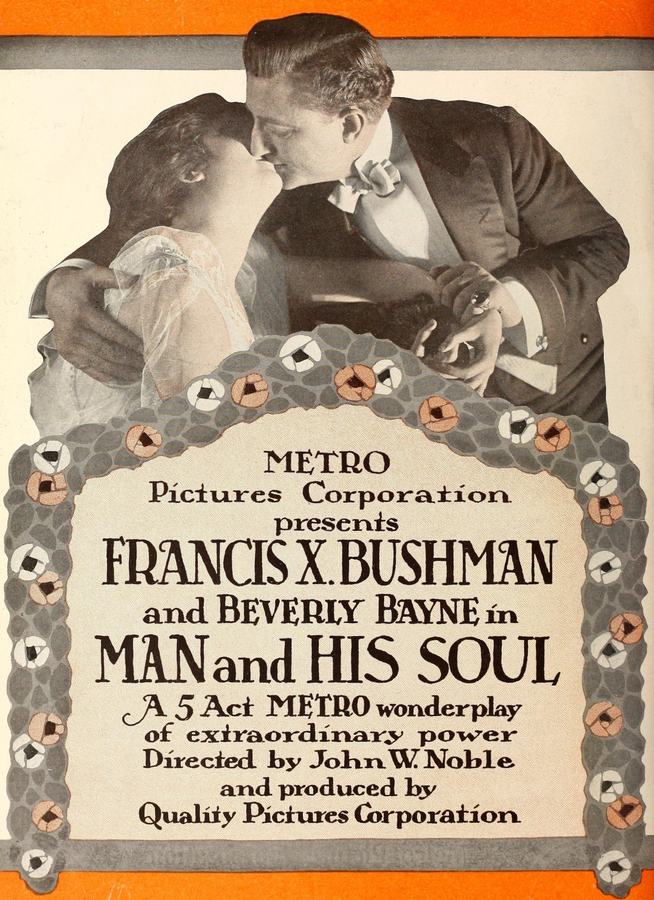
From the very genesis of its narrative, Man and His Soul (1916) unfurls as an audacious, almost mythic, exploration of humanity's intrinsic moral fabric, personified by an omnipresent, allegorical force: Conscience. This isn't merely a silent film; it is a grand, sweeping epic of spiritual struggle, beginning not with man, but with the very birth of moral awareness from the primordial elements. It is Conscience that bears witness to humanity's foundational missteps—the serpent's insidious whisper in Eden, the shattering of the Tablets on Sinai, the stoic suffering of Christ before an unfeeling Pilate. This profound, almost cosmic prelude establishes a thematic gravitas rarely attempted, let alone achieved, in the burgeoning cinematic landscape of the early 20th century. It sets the stage for a narrative that transcends mere melodrama, elevating itself into a profound moral fable.
The allegorical figure of Conscience, having observed the sweep of human history, then descends to touch a newborn babe, christening him John Conscience. This symbolic act imbues the protagonist with a destiny tethered to moral rectitude, a profound burden and a guiding light. As John matures, he embodies the intellectual idealism of his namesake, rising to the esteemed position of an economics professor at a prominent university. His exhortation to the graduating class is a seminal moment, a fiery denunciation of the burgeoning industrialist class and their predatory exploitation of the working poor. He implores his students to wield their intellect and influence not for personal gain, but for societal betterment, guided by an unshakeable moral compass. This speech, however, serves as a catalyst for his downfall in the eyes of the entrenched elite. The university's trustees, wealthy magnates whose interests are directly challenged by John's principles, demand his immediate resignation. This immediate consequence underscores the film's stark portrayal of the clash between idealism and entrenched power, a struggle as relevant today as it was over a century ago.
Amidst this professional ostracization, one trustee, Stephen Might, a man of considerable influence, recognizes a latent, albeit misdirected, potential in John. Might suggests that John could achieve great success in an arena where the vexing question of conscience need not be raised, a proposition that subtly foreshadows the moral compromises to come. Undeterred initially, and sustained by the unwavering encouragement of his mother, John embarks on a series of ventures, each met with failure. His principled stance, once his strength, now appears to be an impediment in a world seemingly devoid of ethical anchors. It is during this period of existential wandering that John encounters Mary Knowles, a young woman on the brink of despair, contemplating suicide by the river. In a moment of profound empathy and moral intervention, John dissuades her, offering her solace and guidance, leading her to the comforting embrace of his mother. Mary's poignant tale of leaving her father's home to forge an independent path, only to be met with the harsh realities of a unforgiving world, resonates deeply with John. His mother's wise counsel for Mary to return home, coupled with John's act of benevolence, ignites a renewed sense of purpose within him, a flicker of hope in the encroaching darkness.
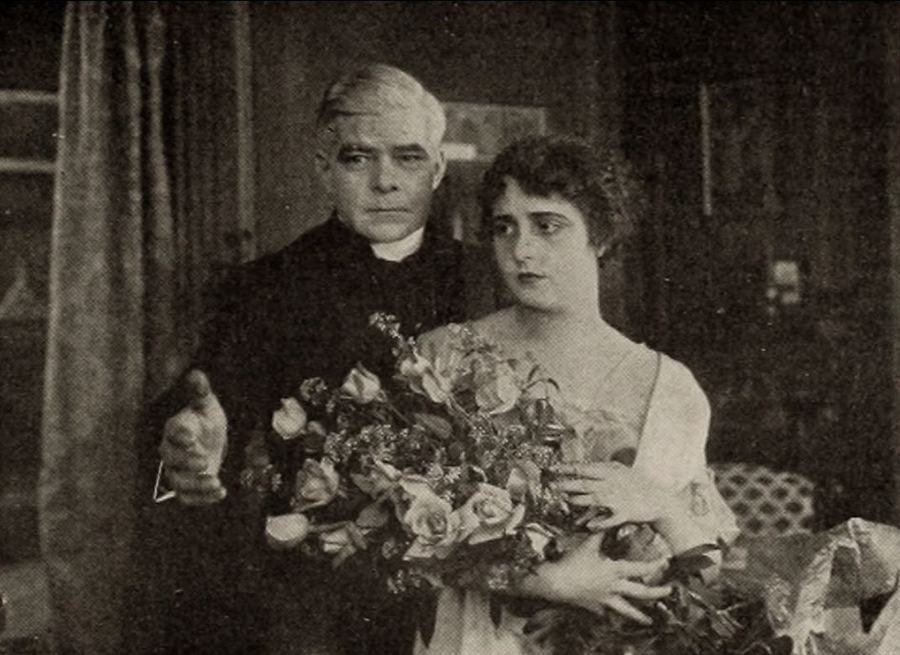
Inspired by this redemptive encounter, John approaches Stephen Might, securing not only a position for himself but also for Mary within Might's company. This act of compassionate advocacy marks a new chapter, one where his innate decency momentarily aligns with the demands of the corporate world. John's acumen and diligent application see him ascend swiftly within the company ranks. A tender romance blossoms between John and Mary, their shared experiences forging a deep bond. However, the burgeoning love affair is complicated by the affections of Stephen Might Jr., the son of the company's patriarch, who also harbors feelings for Mary. This classic love triangle injects a potent dose of personal drama into the socio-economic narrative, setting the stage for a catastrophic misunderstanding that will irrevocably alter John's trajectory. The film masterfully weaves these threads, demonstrating how personal betrayals can precipitate profound moral collapses, mirroring the larger societal betrayals of principle for profit.
The pivotal turning point arrives when a rival company attempts to bribe John into divulging proprietary secrets that would devastate Might and Company. It is in this crucible of corporate espionage that John stumbles upon Mary in the arms of Stephen Might Jr. Misinterpreting the scene as an acceptance of Stephen Jr.'s affections and a betrayal of their nascent love, John's carefully constructed moral framework crumbles. The weight of his namesake, 'Conscience,' becomes an unbearable burden. He casts it aside with a chilling resolve, embarking on a relentless, uncompromising drive for wealth and power. This dramatic transformation is swift and absolute. John Conscience, the idealistic professor, ceases to exist, replaced by John Power, a man driven by a singular, unfeeling ambition. His relocation to Chicago symbolizes a departure from his former self, a reinvention as a titan of industry whose factories become monuments to his newfound ruthlessness. His employees are reduced to mere cogs in a colossal, impersonal machine, their humanity stripped away by the unyielding hand of their new overlord. The film's portrayal of John Power's rise is a stark indictment of unchecked capitalism, echoing the social critiques found in contemporary literature and journalism.
As John Power's empire reaches its zenith of material success, the human cost of his transformation becomes painfully evident. Mary Knowles, meanwhile, confronts her own past. Realizing the profound error of her judgment regarding John and the manipulative role played by Stephen Might Jr. and even her own father in the misunderstanding, she denounces them and flees. In a cruel twist of fate, she finds herself seeking employment as a stenographer in one of John Power's very factories, a silent witness to the dehumanizing conditions he now champions. The narrative brings these two estranged souls into proximity without immediate recognition, heightening the dramatic irony. John, consumed by his desire for revenge, specifically targets Stephen Might's concern, employing unscrupulous business tactics to drive his former mentor to financial ruin. This vendetta, rooted in a personal perceived betrayal, becomes intertwined with his broader corporate ruthlessness, showcasing how unchecked power can weaponize personal grievances.

The impending collapse of Might and Company brings Stephen Might Jr. to Power's office, unaware that the ruthless industrialist he confronts is none other than John Conscience, the man who once inspired him. As John prepares to deliver the final, crushing blow of his revenge, Stephen Jr., in a desperate attempt to explain the past, reveals the truth about Mary. He clarifies the misunderstanding, explaining that Mary had run away the very night John disappeared, implying her rejection of Stephen Jr. and her distress over John's absence. This revelation acts as a shattering epiphany for John. Simultaneously, he has been under relentless scrutiny from public safety committees, facing mounting pressure over the unsanitary conditions and lack of safety in his factories—accusations he had hitherto met with obdurate indifference. The confluence of these events—the clearing of Mary's name and the external pressures on his immoral empire—cracks the impenetrable shell of John Power, allowing a faint glimmer of his former self to emerge. He postpones his final decision regarding Might and Company, signaling a nascent shift in his hardened resolve.
Returning to his opulent, yet emotionally barren, library, John sits by the fireplace, grappling with the seismic shifts within his soul. It is here that Conscience, the allegorical figure from the film's opening, reappears. This spectral visitation is not a condemnation but a profound intervention. Conscience presents John with a series of stark contrasts, illuminating the vast chasm between the ephemeral, material power he has amassed over the financial world and the enduring, spiritual power that Conscience wields over the souls of men. This visual and thematic juxtaposition is crucial, forcing John to confront the emptiness of his triumphs and the profound cost of his moral abandonment. He is, at last, receptive. The long-dormant seed of Conscience, once discarded, now finds fertile ground, re-entering his soul. This moment of spiritual reclamation is the true climax of the film, a powerful testament to the possibility of redemption, even for the most morally compromised individuals. It echoes the transformative journeys seen in other moralistic dramas of the era, such as The White Scar, which often explored profound personal metamorphoses against societal backdrops.
The immediate aftermath of Conscience's return is a flurry of benevolent action. John, now truly John Conscience once more, summons architects and builders, not to expand his empire, but to fundamentally reconstruct his factories, prioritizing the safety and well-being of his employees. This commitment to reform is a tangible manifestation of his renewed moral compass, a direct repudiation of his 'John Power' persona. However, before these vital renovations can commence, fate intervenes with a cruel test of his redemption. A massive fire erupts in one of his factories, a terrifying symbol of the very dangers he had so callously ignored. Mary, tragically, is caught in an upper story, her life hanging in the balance. This dramatic inferno serves as a crucible, demanding not just intellectual acknowledgment of past wrongs, but a courageous, selfless act of atonement. John, without hesitation, rides furiously to the scene. Spotting Mary at a window, he plunges into the burning edifice, confronting the inferno he inadvertently created. His heroic rescue of Mary is not merely a romantic climax; it is a profound act of spiritual rebirth, a physical manifestation of his reclaimed soul. Their romance, once derailed by misunderstanding and moral decay, finds its proper, redemptive conclusion amidst the ashes, signifying that true love and true power reside in the integrity of the human spirit.

Man and His Soul, though a product of its time, resonates with a timeless urgency. Its allegorical framework provides a powerful lens through which to examine the perennial struggle between individual conscience and the corrupting allure of power. John Davidson, in the dual role of John Conscience and John Power, must have delivered a performance of remarkable range, navigating the profound psychological shifts from idealistic academic to ruthless industrialist, and finally to a redeemed humanitarian. The transformation is not merely external, but a deep-seated change in demeanor, in the very essence of his being. Beverly Bayne, as Mary Knowles, would have conveyed the vulnerability and resilience of a woman caught in the machinations of corporate ambition and personal misunderstanding, her character serving as both a catalyst for John's fall and a beacon for his redemption. The supporting cast, including Charles Prince and Edward Brennan, would have contributed to the rich tapestry of this moral drama, embodying the forces that either challenge or enable John's journey.
The film's direction, even without explicit details, must have been acutely aware of the visual language necessary to convey such weighty themes in the silent era. The contrast between the pristine university setting and the grimy, dangerous factory floors, the stark difference between John Conscience's earnest gaze and John Power's steely resolve, would have been communicated through nuanced acting and carefully composed cinematography. The allegorical sequences involving Conscience itself would have required innovative visual effects and symbolic staging to effectively convey its ethereal nature and profound influence. One can imagine the use of lighting to emphasize moral clarity versus moral darkness, or perhaps even double exposure to visually represent Conscience's presence. While we might compare its thematic ambitions to other early moral dramas like Called Back or even the social commentary of The Undesirable, Man and His Soul distinguishes itself through its explicit, pervasive allegorical structure, elevating its cautionary tale to a universal human condition.
The narrative's exploration of industrial conditions and the exploitation of labor places it firmly within a period of significant social reform movements. The public safety committees, mentioned in the plot, were a real-world response to the harsh realities of industrialization, reflecting a growing societal awareness of corporate responsibility. The film doesn't shy away from depicting the consequences of prioritizing profit over human welfare, making its message particularly potent for contemporary audiences. It serves as a cinematic document, reflecting the anxieties and moral debates of its time, while simultaneously offering a timeless message about the corrupting influence of unchecked power and the enduring necessity of ethical leadership. The journey of John Conscience/Power is a microcosm of societal struggles, a personal battle reflecting broader moral dilemmas. His eventual decision to rebuild his factories with safety in mind is more than just a plot point; it's a powerful statement on the potential for industry to serve humanity, rather than merely exploit it.
The character of Mary Knowles, though initially a damsel in distress, evolves into a crucial moral compass and a symbol of the human cost of John's ambition. Her journey from vulnerability to resilience, and her eventual role in John's redemption, highlight the interconnectedness of personal morality and social justice. The resolution of their romance, forged in the fires of both literal and metaphorical destruction, signifies a holistic healing—not just of John's soul, but of the fractured relationships his moral abandonment had caused. It suggests that true success is not measured in financial empires, but in the integrity of one's character and the strength of one's human connections. The film's conclusion, with John's heroic rescue and the rekindling of love, offers a powerful message of hope and the redemptive power of self-sacrifice. It is a cinematic sermon, delivered with the dramatic flair characteristic of early cinema, yet imbued with a philosophical depth that transcends its era. The title itself, Man and His Soul, perfectly encapsulates the central conflict—the eternal struggle within each individual to reconcile ambition with ethics, and the profound consequences when the soul is neglected in the pursuit of worldly power.
Ultimately, Man and His Soul is more than a historical curiosity; it is a profound moral allegory that challenges viewers to reflect on their own relationship with power, wealth, and, most importantly, conscience. It stands as a powerful example of early cinema's capacity for complex storytelling and deep thematic exploration, a testament to the enduring human quest for meaning and redemption in a world often swayed by transient desires. Its legacy lies not just in its pioneering narrative structure but in its unwavering commitment to the idea that, no matter how far one strays, the soul can always be reclaimed, and the guiding light of conscience, once rekindled, can illuminate the path back to true humanity. It asks us, unequivocally, what price we are willing to pay for power, and what value we place on the intangible yet indispensable essence of our soul.
IMDb —
1926
Community
Log in to comment.