DbcultAccessing Vault...
Cult Review
Senior Film Conservator
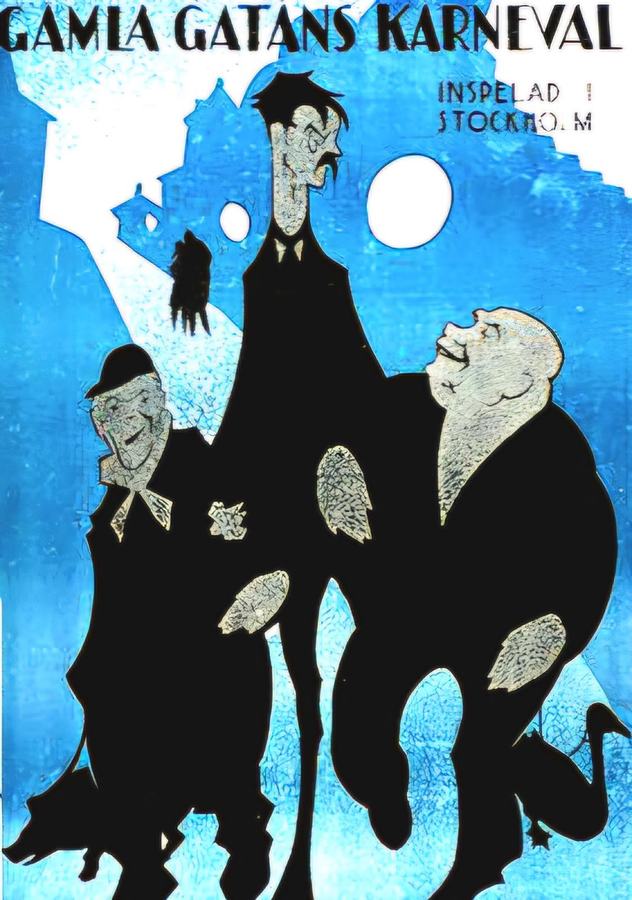
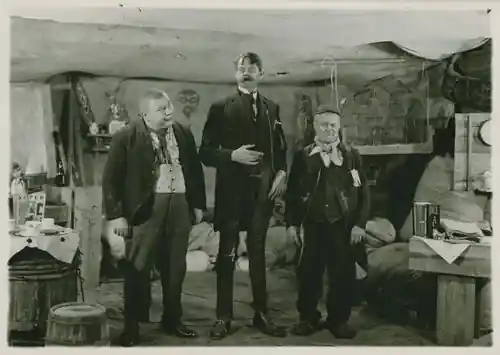
To witness Gamla gatans karneval is to step into a flickering time capsule of 1923 Stockholm—a city vibrating with the nervous energy of a post-war generation caught between tradition and the burgeoning hedonism of the Jazz Age. Directed and written by Bror Abelli, this silent relic offers more than a mere narrative; it serves as a visceral document of a specific cultural friction. The protagonist, Ville Bom, played with a mercurial intensity by Amandus Bonnesen, is the proprietor of a dual-purpose academy: a boxing gym and a dance institute. This juxtaposition is not merely a plot device but a profound metaphor for the era's dualities—the brutal physicality of survival and the performative elegance of social aspiration.
Ville Bom is a character defined by his contradictions. In the boxing ring, he represents the raw, atavistic struggle of the working class, a theme we often see explored in more rugged settings like Shadows of the West. Yet, the moment he steps onto the dance floor, he transitions into a world of artifice and grace. This shift is where the film finds its rhythm. The "dissolute life" mentioned in the synopsis isn't portrayed with heavy-handed moralizing, but rather with a voyeuristic curiosity that feels remarkably modern. Unlike the rigid moral frameworks found in The Natural Law, Abelli allows Bom to inhabit his vices with a certain degree of charisma.
The cinematography, though constrained by the technical limitations of its time, utilizes a primitive yet effective chiaroscuro. The gym scenes are bathed in a gritty, high-contrast light that emphasizes the musculature of the fighters—including the legendary Harry Persson, whose presence adds a layer of pugilistic authenticity to the proceedings. Conversely, the carnival and dance sequences are softer, utilizing the flickering light to create a dreamlike, almost ephemeral atmosphere. This visual dichotomy mirrors Bom’s own internal conflict as he navigates a world where pleasure and pain are inextricably linked.
The ensemble cast is a veritable "who's who" of early 20th-century Swedish talent. Dagny Lind brings a subtle, grounded presence to the film, acting as a necessary foil to Bonnesen’s often frantic energy. However, it is the appearance of Thor Modéen that truly catches the eye. Even in this early stage of his career, Modéen possesses a screen presence that hints at the comedic legend he would become. His timing, even in the silent format, provides a levity that balances the more sordid aspects of Bom’s dissolute habits.
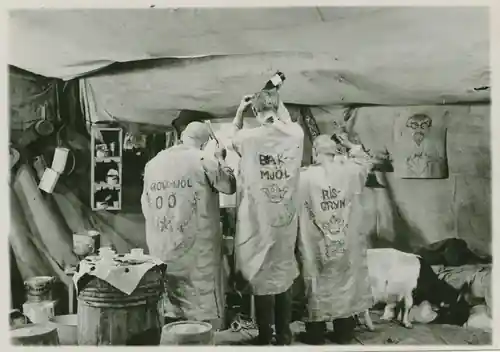
Supporting turns by Gucken Cederborg and Ruth Weijden flesh out the social milieu, providing a sense of a lived-in community. These characters aren't just background noise; they represent the societal pressures and expectations that Bom is constantly trying to outrun. There is a sense of financial desperation bubbling under the surface, a theme that resonates with the struggles depicted in Easy to Make Money. In the world of the Old Street (Gamla gatan), money is the grease that keeps the carnival gears turning, and its absence is felt in every shadowed alleyway.
The titular carnival serves as the film’s emotional and narrative climax. In cinema, the carnival is often a place of transgression, where social norms are temporarily suspended. Abelli captures this brilliantly. The masks, the costumes, and the frantic movement create a sense of controlled chaos. It’s a space where Bom’s dissolute nature isn't just accepted—it's celebrated. This sequence calls to mind the escapist fantasies of The Butterfly Girl, though with a significantly darker undertone.
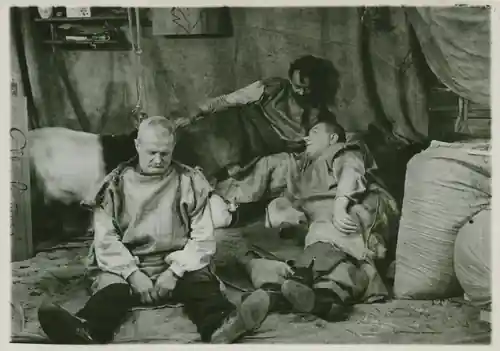
There is a palpable sense of the grotesque in these scenes. The laughter seems a bit too loud, the dancing a bit too desperate. It’s a reflection of a society trying to forget the trauma of the past decade by immersing itself in the sensory overload of the present. The carnival is a temporary reprieve from the crushing weight of reality, much like the diversions found in Champagne caprice, but here it feels more like a desperate gasp for air than a lighthearted romp.
Bror Abelli, as both writer and director, demonstrates a keen understanding of pacing. While some silent films of the era suffer from a lack of narrative momentum, *Gamla gatans karneval* maintains a brisk, almost breathless speed. This might be a reflection of the boxing influence—the film hits hard and fast, moving from one vignette to the next with the precision of a well-timed combination. The structure is episodic, yet unified by Bom’s downward spiral. It lacks the melodrama of Transgression, opting instead for a more observational, almost documentary-like approach to its protagonist’s failings.
The writing avoids the pitfalls of over-explanation. We aren't told why Bom is the way he is; we simply witness the consequences of his choices. This lack of backstory makes him a more universal figure—a man caught in the machinery of his own impulses. The film explores the concept of personal responsibility in a way that feels akin to Not Guilty, though the stakes here are more social than legal. Bom is guilty of nothing more than living too much and too fast, but in the eyes of his peers, that is a crime in itself.
One cannot overlook the economic subtext of the film. The 1920s were a time of massive wealth disparity, and the "Old Street" of the title suggests a world that is being left behind by modernization. Bom’s academy is a relic of an older, more physical world, even as it tries to cater to the new demand for dance and entertainment. This tension between the old and the new is a recurring motif in Swedish cinema of the period, often seen in films like Ma and Pa.
The film also touches upon the allure of the "quick buck," a sentiment echoed in $30,000 and The Almighty Dollar. For Bom, the institute is both a passion and a desperate attempt at financial stability. His dissolute life is, in many ways, a reaction to the pressure of maintaining appearances in a world that values the shimmer of the carnival over the grit of the gym.
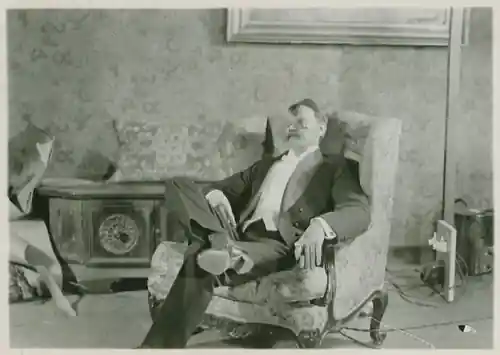
The lack of dialogue in *Gamla gatans karneval* forces the actors to rely on a heightened physicality. Amandus Bonnesen is particularly adept at this, using his entire body to convey Bom’s shifting moods. Whether he is slumped in a chair after a night of excess or standing tall in the ring, his posture tells the story. This physical storytelling is a lost art, one that required a level of nuance often missing from modern cinema. The film’s ability to convey complex social dynamics through movement and facial expression is a testament to Abelli’s skill as a director.
In comparison to other films of the era like The Gorgona or In the Spider's Grip, which often leaned into gothic or suspenseful tropes, *Gamla gatans karneval* feels grounded in a gritty reality. Even the carnival scenes, for all their artifice, feel like they could be happening just down the street. There is a tangible sense of place here—the cobblestones, the dust, the smell of sweat and cheap perfume seem to permeate the screen.
While it may not have the international name recognition of Sjöström or Stiller’s works, *Gamla gatans karneval* is an essential piece of the Swedish cinematic puzzle. It captures a moment in time when the world was changing faster than people could keep up with, and it does so with a raw, unvarnished energy. The film’s exploration of the "dissolute life" is both a warning and a celebration, a reminder that the line between the boxing ring and the dance floor—between struggle and joy—is thinner than we think.
For those interested in the evolution of physical comedy and drama, the early work of Thor Modéen and Amandus Bonnesen here is invaluable. The film stands as a precursor to the more polished social dramas that would follow, but it possesses a vitality that is often lost in more refined productions. Like the characters in The Rescue or The Dear Departed, the people of the Old Street are survivors, navigating a world that is both beautiful and brutal. *Gamla gatans karneval* is a punch to the gut and a whirl on the dance floor, and it remains as captivating today as it was in 1923. It is a film that demands to be seen, not just as a historical curiosity, but as a living, breathing piece of art that continues to resonate with the timeless struggle of the human spirit against its own darker impulses.
If you enjoyed this look into the past, be sure to check out our analysis of Carry On for more insights into early 20th-century social dynamics.
IMDb —
1916
Community
Log in to comment.