DbcultAccessing Vault...
6.2/10
Senior Film Conservator
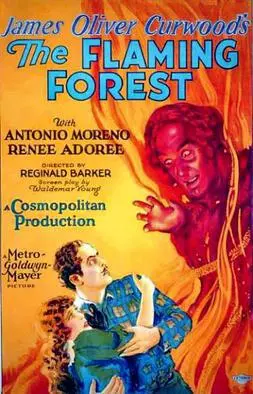
A definitive 6.2/10 rating for a film that redefined the boundaries of cult cinema. The Flaming Forest remains a cornerstone of transgressive art.
Is The Flaming Forest worth your time in the modern era? Short answer: yes, but only if you view it as a historical artifact of ambition rather than a cohesive narrative masterpiece.
This film is specifically for silent cinema completionists and those fascinated by the early mythologizing of the North West Mounted Police. It is absolutely not for viewers who require nuanced pacing or modern political sensibilities, as its 1920s worldview is as rigid as the uniforms its heroes wear.
This film works because of its sheer technical scale, particularly the climactic forest fire sequence which remains impressive despite the lack of digital effects.
This film fails because it relies on heavy-handed racial archetypes and a protagonist, Sergeant Carrigan, who often feels more like a cardboard cutout than a man of flesh and blood.
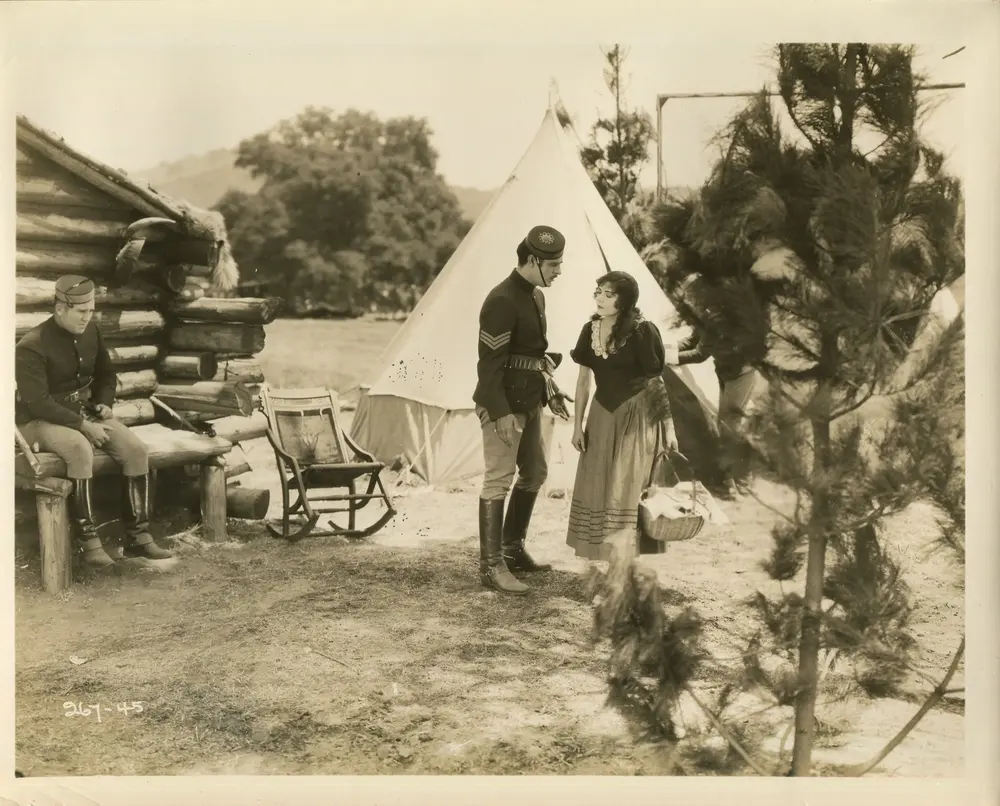
You should watch it if you want to see the exact moment the 'Mountie' became a cinematic icon of moral purity and rugged survival.
Directed by W.S. Van Dyke, The Flaming Forest is a testament to the era's obsession with 'location' pictures. Unlike the stage-bound intimacy of The Cricket on the Hearth, this film breathes the air of the outdoors. The cinematography captures the Canadian wilderness with a sense of dread that is palpable even through the grain of a century-old print. The forest fire itself is the film's true star. In an era before CGI, the production literally set the landscape ablaze, creating a wall of heat and light that forces the actors into genuine physical distress.
Compare this to the more domestic drama of Miss Nobody, and you see the divergence in 1920s filmmaking: one path leads to the psychological, the other to the epic. Van Dyke chose the epic. The way the smoke chokes the frame during the final rescue is a masterclass in environmental tension. It isn't just a backdrop; it is a character that actively hampers the characters' movements and visibility. It works. But it’s flawed in its execution of the human drama surrounding it.
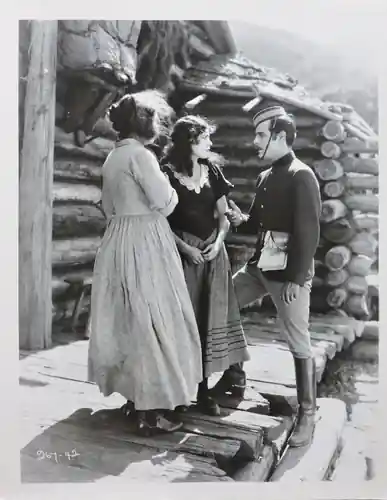
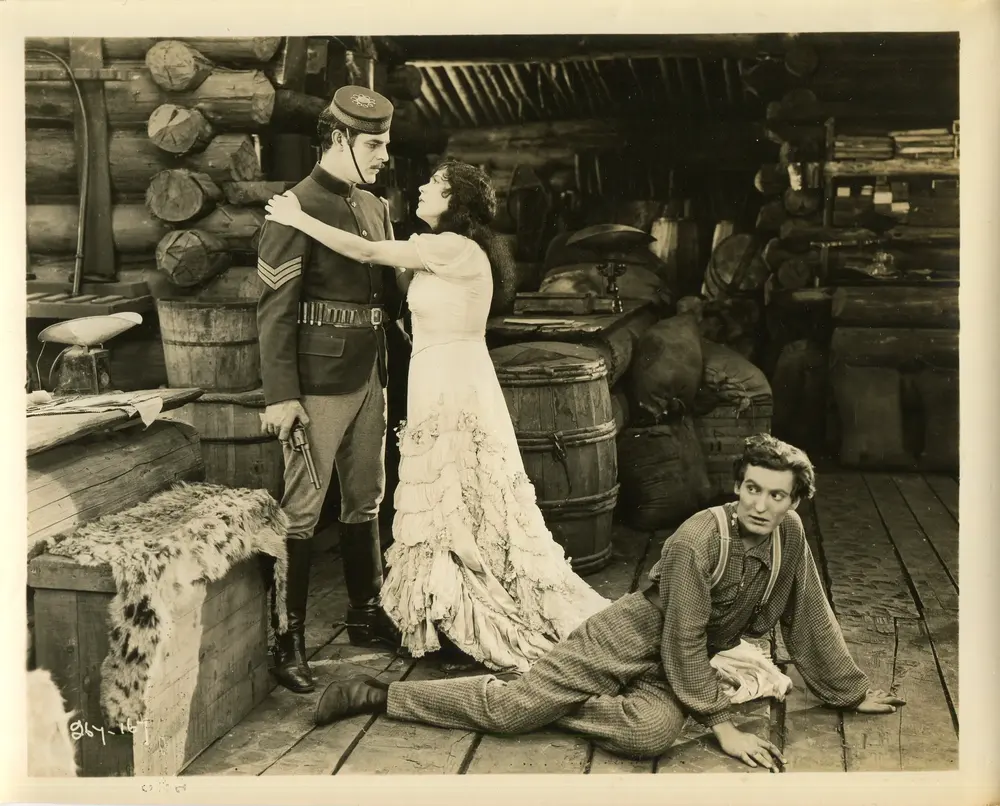
Antonio Moreno, playing Sergeant Carrigan, delivers a performance that is almost aggressively stoic. While Moreno was a massive star of the period, his work here lacks the playful charm seen in The Perfect Flapper. In The Flaming Forest, he is tasked with representing the 'Law' with a capital L. This makes him a somewhat frustrating lead. He doesn't evolve; he simply persists. His romance with Renée Adorée’s Jeanne-Marie feels secondary to his duty, which may be historically accurate for the character type but leaves the audience wanting more emotional depth.
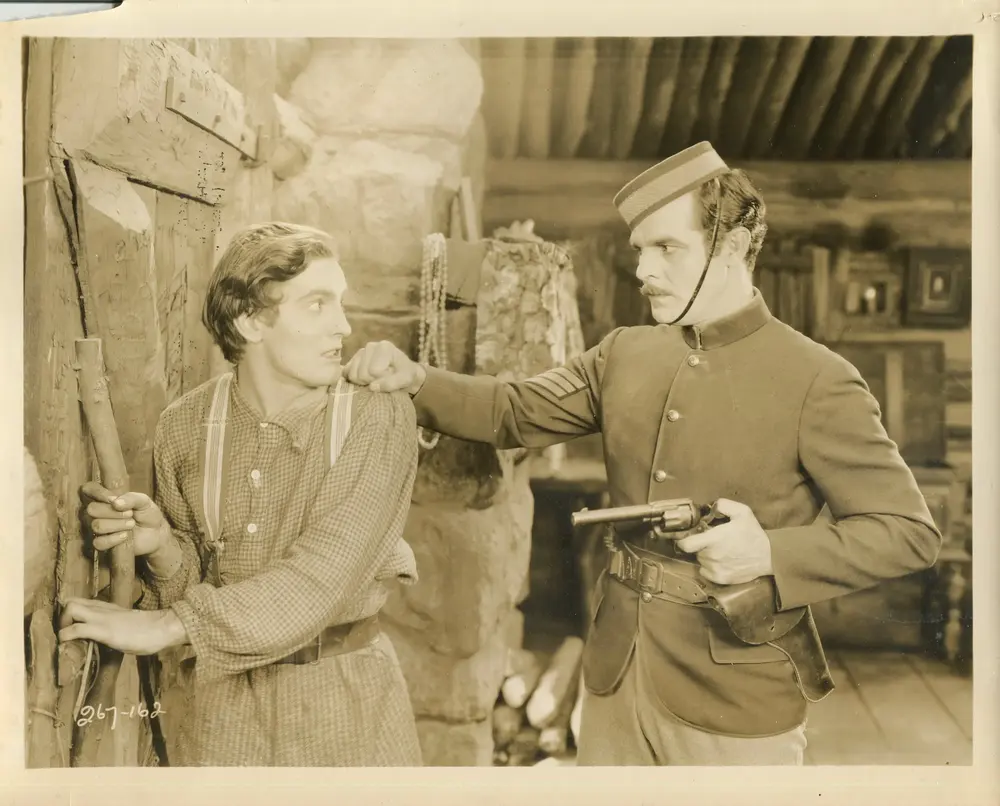
Adorée, however, brings a much-needed fire to the screen. Her Jeanne-Marie isn't just a damsel; she is the political catalyst who keeps the settlers from fleeing. When she turns against Carrigan after he attempts to arrest her brother, Roger, for the murder of their parents' killers, we see a flicker of real human complexity. It is a rare moment where the film acknowledges that 'the law' is often at odds with 'justice.' This moral friction is far more interesting than the primary conflict with Lagarre, yet it is resolved too cleanly to leave a lasting impact.
Jules Lagarre is a fascinating, if problematic, antagonist. The film uses his 'half-breed' status as a shorthand for his supposed instability and villainy, a trope that is difficult to stomach today. However, if one looks past the period's prejudices, Lagarre represents a genuine threat to the burgeoning Canadian state. He isn't just a thief; he is a separatist. His desire to form a 'provisional republic' mirrors actual historical tensions in the region, such as the Riel Rebellions.
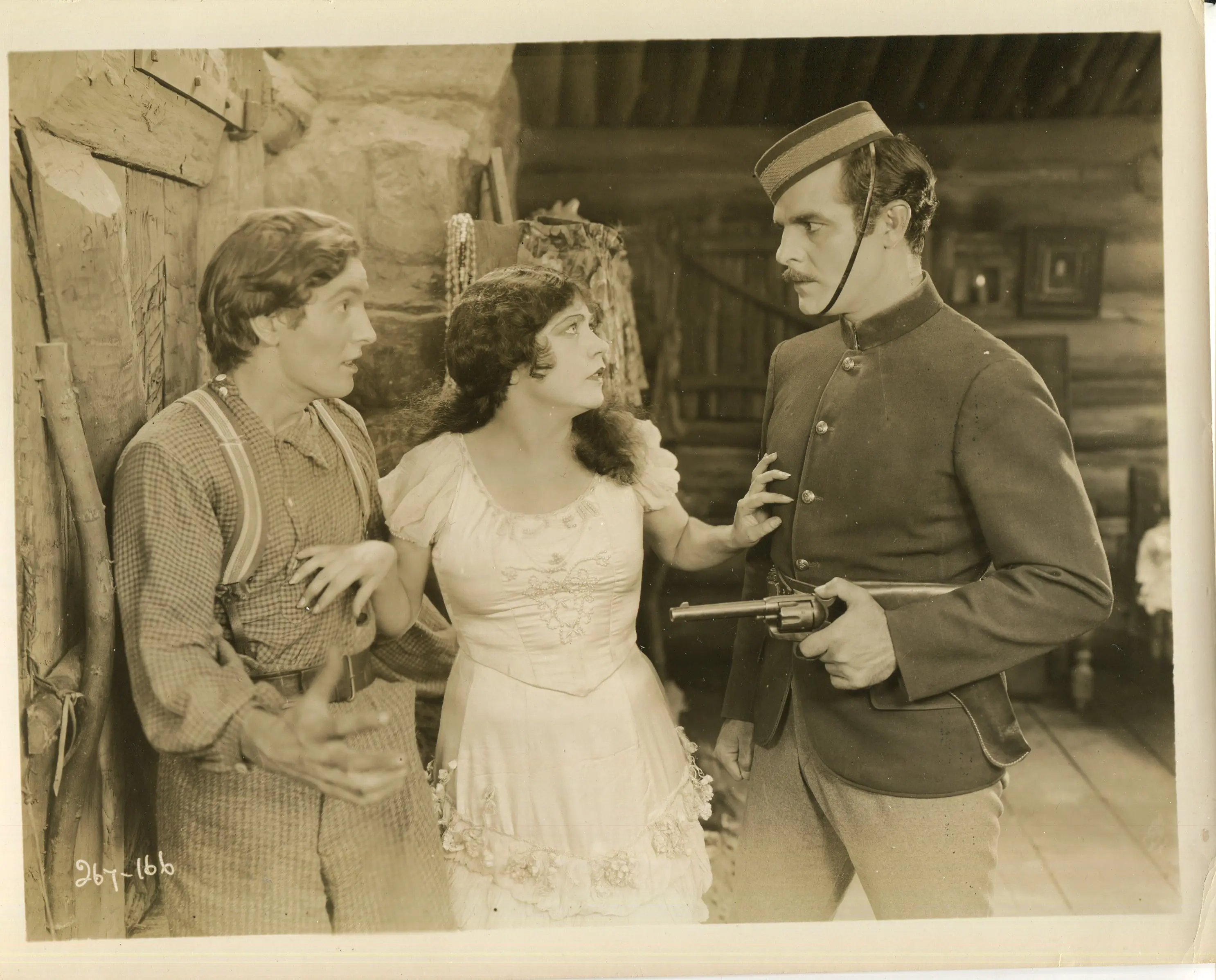
The scene where Lagarre orders the forest set on fire to trap the Mounties is a chilling display of 'if I can't have it, no one can.' It’s a scorched-earth policy that feels surprisingly modern in its nihilism. Unlike the lighthearted antics in Percy, the stakes here are existential. Lagarre isn't just fighting a man; he’s fighting the inevitable march of time and government.
To answer the question of modern relevance: The Flaming Forest is worth watching primarily for its place in the evolution of the action genre. It bridges the gap between the simple chases of early shorts and the complex, multi-layered epics of the 1930s. If you can tolerate the slow middle act where the plot gets bogged down in repetitive dialogue cards, the payoff in the final twenty minutes is genuine cinematic adrenaline.
However, for the casual viewer, the pacing will be a barrier. Silent films often struggle with 'shoe-leather' scenes—the time spent getting characters from point A to point B—and this film is no exception. It lacks the tight editing found in something like Battling Mason. You have to be willing to wait for the fire.
Pros:
The location shooting provides an authenticity that studio sets can't match. Renée Adorée gives a spirited performance that outshines her male co-stars. The film successfully establishes the 'Mountie' mythos that would dominate Westerns for decades.
Cons:
The subplot involving Roger’s revenge is resolved through a convenient death rather than a difficult moral choice. The villain's motivations are tied too closely to his ethnicity rather than his political ideology. The middle section of the film drags significantly during the settler negotiations.
The Flaming Forest is a sturdy, if slightly rusted, example of the 1920s adventure film. It doesn't have the psychological depth of The Moonstone, nor does it have the pure comedic energy of Jes' Call Me Jim. What it does have is scale. It is a film that wants to be big—big in its themes of law vs. anarchy, and big in its physical presentation of the elements. While the human elements often feel dwarfed by the burning trees, there is a rugged honesty to the production that is hard to dislike. It is a fiery relic that, while scorched at the edges, still manages to provide a spark of genuine excitement for those willing to look for it.
IMDb —
1920
Community
Log in to comment.