DbcultAccessing Vault...
Cult Review
Senior Film Conservator
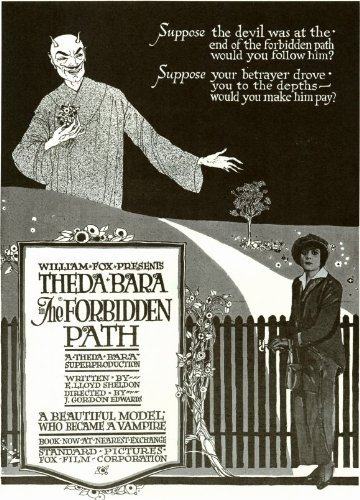
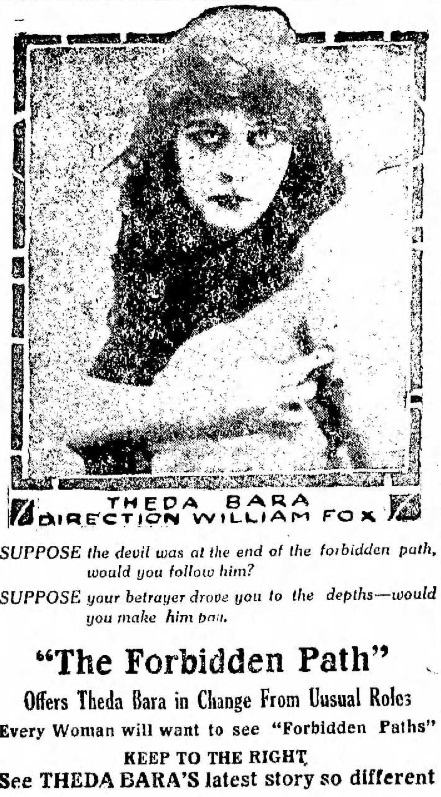
In the pantheon of silent cinema, few figures loom as large or as enigmatically as Theda Bara. While often pigeonholed by the 'Vamp' archetype that she helped codify, The Forbidden Path (1918) offers a more nuanced, albeit devastating, exploration of the feminine condition under the yoke of early 20th-century societal rigidity. This film is not merely a moralistic fable; it is a visceral, stylistic descent into the psychology of trauma and the subsequent empowerment found in the wreckage of one's reputation. Much like the gritty realism explored in Peterburgskiye trushchobi, this narrative refuses to look away from the squalor that awaits those cast out from the 'respectable' middle class.
The story commences with Mary Lynde, a character whose initial purity is rendered with a soft-focus idealism that stands in stark contrast to the shadows she will eventually inhabit. Her encounter with Felix Benavente, the artist, establishes the film's central metaphor: the female body as a canvas upon which men project their ideals or their moral failures. However, it is Robert Sinclair, played with a chilling, caddish indifference by Hugh Thompson, who serves as the catalyst for Mary’s destruction. Sinclair represents the predatory nature of the leisure class—a theme frequently revisited in contemporary works like Cheating the Public, which critiques the systemic exploitation of the vulnerable.
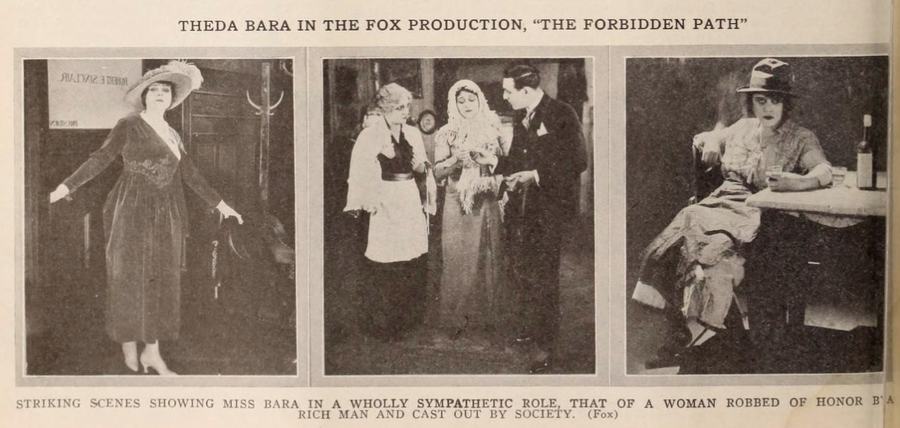
The narrative trajectory of Mary’s fall is documented with a lugubrious intensity. The pregnancy, the desertion, and the eventual death of her child are handled with a gravitas that transcends the typical melodrama of the era. Theda Bara’s performance here is revelatory; she sheds the stylized artifice of her more exotic roles, such as Salome, to provide a performance grounded in a very human, very palpable despair. When her father, a man whose morality is as rigid as a tombstone, casts her out, the film shifts from a tragedy of the heart to a tragedy of the social contract. This is where The Forbidden Path distinguishes itself from its peers; it posits that the 'forbidden' nature of the path is not chosen, but rather enforced by a society that offers no path for the fallen to return.
The second act of the film introduces a fascinating meta-textual element. Felix Benavente, in his search for a model to represent the literal 'end of the bad-choice path,' finds Mary in the depths of her degradation. The irony is thick and bitter: the man who once saw her as an emblem of innocence now sees her as the ultimate symbol of ruin. This sequence mirrors the artistic obsession found in The Eyes of the World, where the gaze of the artist becomes a secondary form of judgment. Mary’s acceptance of this role is her first step toward reclaiming agency. She is no longer the victim of the narrative; she becomes the narrative itself.
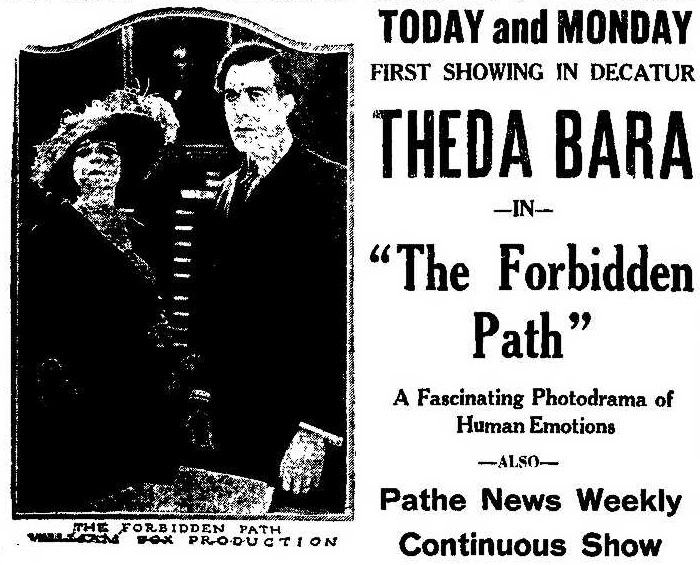
The final third of the film is a masterclass in psychological warfare. The reappearance of Sinclair, now comfortably ensconced in a respectable engagement, triggers a transformation in Mary that is nothing short of breathtaking. She discards the remnants of her victimhood and adopts the very 'Vamp' persona for which Bara was famous—but here, it is weaponized. She forces Sinclair into a cycle of extortion, compelling him to service her financial demands. This is not mere greed; it is a calculated extraction of the life Sinclair stole from her. The cinematic tension here is palpable, reminiscent of the high-stakes moral dilemmas in The Single Code, which also challenged the double standards of the era.
To satisfy Mary’s demands, Sinclair is driven to criminality, a descent that mirrors Mary’s own, though his is born of cowardice rather than necessity. The irony of the situation is heightened by the visual language of the film—the lavish apartment Mary demands becomes a gilded cage for Sinclair’s conscience. Unlike the swashbuckling heroics of The Three Musketeers, the conflict here is internal and corrosive. There are no grand duels, only the slow, agonizing tightening of a noose. Mary’s insistence on marriage is the ultimate gambit, a way to force the world to acknowledge the union Sinclair sought to erase.
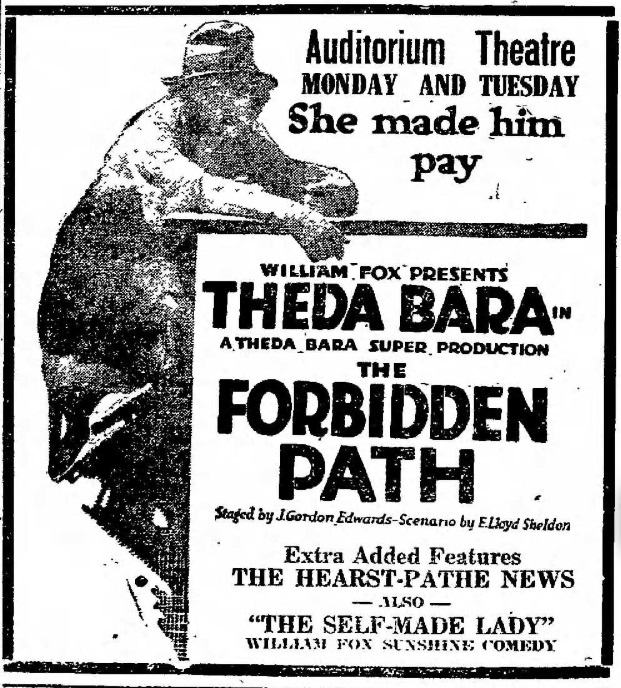
The climax of The Forbidden Path takes place in the sanctuary of a church, a setting that underscores the moral weight of the revelation. Mary’s arrival on the morning of the wedding is not a plea for love, but a proclamation of truth. The way she dismantles Sinclair’s facade in front of his peers and his fiancée is a moment of pure, cinematic catharsis. It is a scene that echoes the dramatic exposures found in Gambier's Advocate or the social unmasking in Lyubov statskogo sovetnika. Sinclair’s disgrace is total, and his departure from the church is a symbolic expulsion from the society he so desperately tried to maintain.
However, the film does not end on a note of triumph. The final moments, where Felix goes to comfort Mary, suggest a lingering melancholy. The 'forbidden path' has been traversed, and while the villain has been vanquished, the scars on the protagonist remain. This nuanced ending elevates the film above the simplistic moralizing of many of its contemporaries, such as Fides or Lorena. It acknowledges that revenge, while satisfying, is not a restoration of what was lost. It is a scorched-earth policy that leaves the survivor standing in the ashes of their former life.
Technically, the film is a testament to the burgeoning visual sophistication of 1918. The use of lighting to delineate Mary’s two worlds—the bright, pastoral scenes of her youth and the deep, expressionistic shadows of her vengeful phase—is remarkably effective. The direction by J. Gordon Edwards ensures that the pacing never falters, maintaining a sense of impending doom that keeps the viewer engaged. While some might find the melodramatic tropes dated, one must view them through the lens of the time, much like the wartime sensibilities of Australia's Peril or Our American Boys in the European War. These films were products of a world in flux, and their heightened emotions reflected a global state of anxiety.
The script by Adrian Johnson and E. Lloyd Sheldon is sharp, avoiding the cloying sentimentality that often plagued silent dramas. The dialogue intertitles are used sparingly but effectively, allowing Bara’s expressive face to carry the emotional burden of the narrative. In an era where detective stories like Detective Craig's Coup or The Dare-Devil Detective were popular for their escapism, The Forbidden Path offered a more confrontational experience. It forced the audience to reckon with the consequences of social hypocrisy and the fragility of virtue.

To watch The Forbidden Path today is to witness a pioneer of the 'revenge' genre in its most raw and potent form. It is a film that bridges the gap between the theatricality of the 19th century and the psychological depth of the 20th. Theda Bara remains the heart of the film, her performance serving as a bridge between the 'vamp' of legend and the tragic heroines of modern noir. While other films of the era, like Diane of the Follies, may have touched on similar themes of performance and identity, few did so with the sheer, unrelenting force of this production.
Ultimately, the film stands as a monumental achievement in silent storytelling. It is a harrowing, beautifully crafted exploration of a woman’s refusal to be erased. By walking the forbidden path, Mary Lynde did not just find ruin; she found a voice. And though that voice was forged in the fires of betrayal and grief, it resonates with a power that can still be felt over a century later. For any serious student of cinema, this film is an essential chapter in the history of the medium, a dark orange flame flickering in the sea blue shadows of the past.
IMDb 4.9
1930
Community
Log in to comment.