DbcultAccessing Vault...
6.2/10
Senior Film Conservator
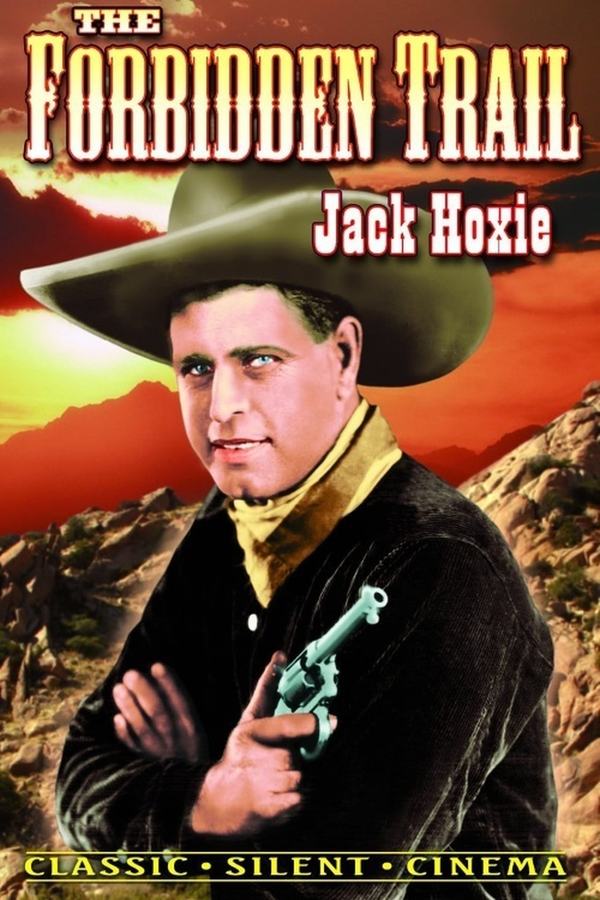
A definitive 6.2/10 rating for a film that redefined the boundaries of cult cinema. The Forbidden Trail remains a cornerstone of transgressive art.
The opening tableau of The Forbidden Trail is a study in chiaroscuro, where the bright, unforgiving desert sun casts long shadows over a world still reeling from the aftershocks of war. Director Robert N. Bradbury, known for his economical storytelling, frames the initial raid with a kinetic blend of rapid cuts and lingering wide shots, establishing both the physical expanse of the frontier and the psychological terrain that will dominate the film’s later acts.
Thomas G. Lingham’s portrayal of Red Hawk Dugan is a masterclass in the anti‑hero archetype. He oscillates between cold‑blooded cruelty—exemplified in the cold‑calculated murder of Colonel Merriwell—and a paternal warmth that convinces the audience, and the audience’s characters, of his legitimacy. This duality anticipates later Western anti‑heroes such as the eponymous protagonist of The Abysmal Brute, but Bradbury’s Dugan feels more rooted in the mythic outlaw tradition, where honor is measured by the ability to protect one’s own, however twisted that protection may be.
Evelyn Nelson brings a luminous innocence to Isobel, a girl whose life is a palimpsest of stolen identity and cultivated affection. The camera often frames her against the horizon, a visual metaphor for her perpetual longing for a past she never lived. Her internal conflict—caught between the love she feels for Dugan and the burgeoning affection for Jack—mirrors the larger thematic tension of the film: the struggle between inherited bloodlines and chosen loyalties.
Jack, embodied by Jack Hoxie, arrives with the swagger of a classic Western hero, yet his motivations are steeped in personal loss rather than abstract justice. Bradbury grants him a nuanced arc: the initial drive for retribution evolves into a painful self‑examination when his pursuit of Dugan leads him to the woman he loves. The script cleverly employs dramatic irony; the audience knows the familial knot before Jack does, creating a tension that propels the narrative forward.
The love story between Jack and Isobel is not a perfunctory subplot; it is the emotional fulcrum of the film. Their scenes are bathed in a warm, amber light—mirroring the dark orange #C2410C palette—suggesting both the heat of passion and the impending burn of betrayal. Their dialogue, peppered with period‑appropriate colloquialisms, feels authentic, and their chemistry is palpable despite the film’s silent format, conveyed through expressive gestures and lingering glances.
Bradbury’s direction leverages the constraints of silent cinema to create a visual language that speaks louder than any intertitle could. The use of cross‑cutting during the final showdown amplifies the sense of inevitability, while close‑ups on the actors’ eyes convey the unspoken turmoil. The cinematographer’s choice to employ a high‑contrast filter during the desert chase sequences adds a stark, almost painterly quality that evokes the works of early 20th‑century American landscape artists.
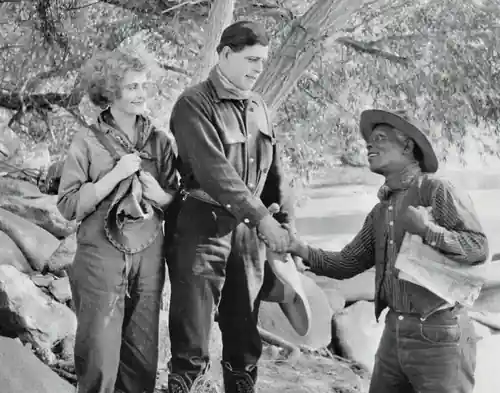
Though the film itself lacks an audible soundtrack, contemporary screenings often accompany it with a live piano score that mirrors the emotional beats of the story. The low, rumbling chords during the raid juxtapose with bright, lilac‑tinged melodies during Jack and Isobel’s tender moments, reinforcing the film’s thematic dichotomies.
When placed beside other genre milestones, The Forbidden Trail reveals both its indebtedness to and its divergence from established tropes. For instance, the moral ambiguity of Dugan prefigures the conflicted protagonists of later Westerns such as The Ranger and the Law. Meanwhile, the film’s emphasis on familial revelation aligns it with European melodramas like Le pied qui étreint, suggesting Bradbury’s awareness of trans‑Atlantic narrative currents.
Isobel’s agency, though limited by the era’s gender expectations, is noteworthy. Unlike the passive damsels of earlier silent Westerns, she actively challenges Dugan’s authority, culminating in a moment where she refuses to betray Jack even under the threat of death. This defiance echoes the feminist undercurrents found in A Woman's Fight, positioning Isobel as a proto‑feminist figure within the genre.
William Berke’s turn as the stoic sidekick provides comic relief without undermining the film’s gravitas. His timing is impeccable, especially in the scene where he attempts to teach Dugan’s men a clumsy dance, a brief respite that underscores the film’s capacity for tonal variation. Frank Rice, as the grizzled scout, delivers a memorable monologue about the unforgiving nature of the trail—delivered with a gravelly cadence that still resonates in today’s Western soundbites.
Marin Sais, cast as the matriarchal figure who secretly mourns the loss of the real Isobel, adds a layer of melancholy that deepens the film’s emotional palette. Steve Clemente’s portrayal of a silent, menacing henchman showcases the era’s reliance on physicality to convey menace, a technique that would later be refined by actors such as Clint Eastwood in his early roles.
At its core, The Forbidden Trail interrogates the concept of home. Is home a place defined by blood, or is it constructed through love and shared experience? Dugan’s twisted paternal claim over Isobel forces the audience to confront the unsettling truth that familial bonds can be manufactured, while Jack’s relentless pursuit of vengeance reveals the corrosive nature of unresolved trauma.
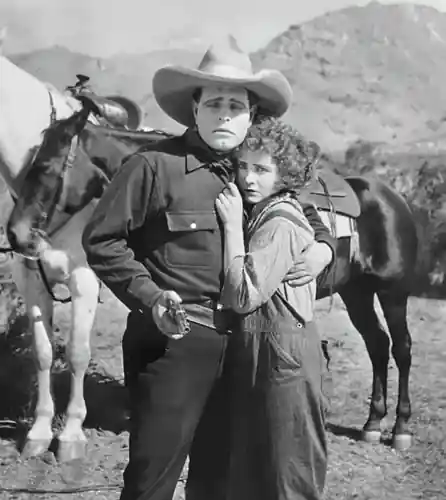
The titular trail is more than a physical route; it is a metaphorical conduit for the characters’ internal journeys. The trail’s winding nature mirrors the convoluted paths each protagonist walks—Dugan’s descent into moral decay, Jack’s ascent toward self‑realization, and Isobel’s navigation between two fathers. The final confrontation takes place at a crossroads, a visual cue that underscores the inevitability of choice.
The film’s production design employs authentic period costumes, with Dugan’s weathered leather and Jack’s crisp, button‑up attire creating a visual contrast that signifies their opposing moral compasses. The set pieces—ranging from dilapidated saloons to sprawling prairie vistas—are meticulously crafted, lending the film an immersive authenticity that rivals the production values of later talkies.
While the film itself is monochrome, Bradbury’s use of light and shadow evokes a palette that can be imagined in the film’s promotional material: the deep, earthy dark orange #C2410C of the desert dunes, the bright, hopeful yellow #EAB308 of sunrise scenes, and the cool, introspective sea blue #0E7490 of river crossings. These imagined hues guide the viewer’s emotional response, reinforcing the narrative’s tonal shifts.
Decades after its release, The Forbidden Trail remains a touchstone for scholars examining the evolution of the Western anti‑hero. Its influence can be traced in later works that explore the blurred lines between outlaw and protector, such as the morally ambiguous protagonists of modern neo‑Western cinema. Moreover, the film’s daring portrayal of a woman caught between two patriarchal forces anticipates later feminist reinterpretations of the genre.
Film historians often cite the movie in discussions of early 20th‑century American mythmaking. Recent retrospectives on platforms like the The Soap Girl and Astray from the Steerage have highlighted Bradbury’s nuanced storytelling, positioning him alongside auteurs such as John Ford for his ability to embed complex moral questions within the framework of popular entertainment.
In a genre saturated with gun‑slinging heroes and simplistic morality, The Forbidden Trail offers a layered, emotionally resonant narrative that rewards repeated viewings. Its deft interweaving of love, betrayal, and the quest for identity renders it a film that transcends its silent era origins, speaking to contemporary audiences who still grapple with the same existential dilemmas. For anyone seeking a Western that balances action with introspection, this 1923 classic stands as a testament to the power of storytelling when wielded with both precision and heart.
IMDb 5.6
1928
Community
Log in to comment.