DbcultAccessing Vault...
Cult Review
Senior Film Conservator
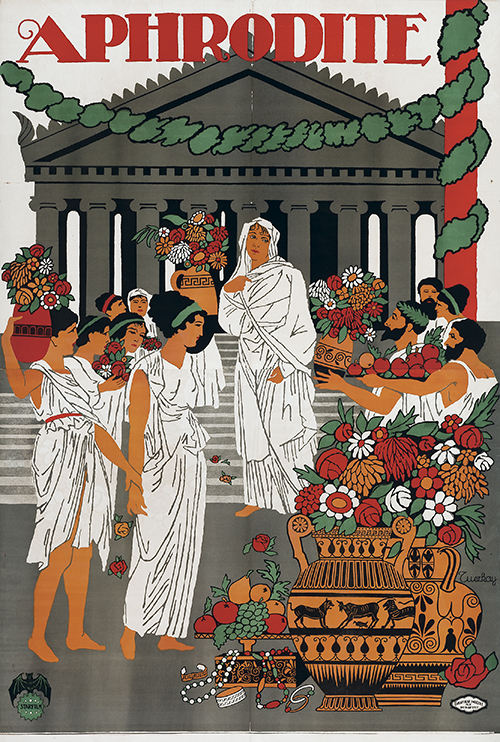
The very air crackles with an almost palpable excitement whenever a lost piece of cinematic history resurfaces from the forgotten depths of time. Such is the case with Alfréd Deésy’s 1918 Hungarian silent film, 'Aphrodite'. For decades, the early days of Hungarian cinema were largely defined by absence – a tragic void where countless reels once spun, now mere ghosts in the annals of filmography, victims of neglect, war, and the ravages of time. The narrative of their demise is often heartbreaking: repurposed into mundane objects, consumed by fire, or simply left to decay in forgotten cellars, as was the fate of many works from the Kolozsvár factory. To suggest that only a couple dozen works survived is not hyperbole, but a stark reality that underscores the monumental significance of any new discovery. Thus, the news that discerning Italian specialists from the Bologna film archive, with their profound understanding of universal film history, stumbled upon Deésy’s work in London during the curation process for an Italian silent film festival, sent ripples of exhilaration through the global film community. This isn't just another old film; it's a resurgent fragment of a lost cultural legacy, a silent echo from a bygone era that demands our attention and meticulous re-evaluation.
Imagine, if you will, the hushed reverence of historians as they unspool these fragile ribbons of celluloid, each frame a whisper from the past, each flicker a testament to the artistry and storytelling prowess of a nascent film industry. 'Aphrodite', even in its potentially fragmentary state, offers a rare glimpse into the thematic preoccupations and aesthetic sensibilities of Hungarian cinema during the tumultuous years of World War I. The title itself, evoking the Greek goddess of love, beauty, pleasure, and procreation, immediately sets a tone of grandeur and potential melodrama. One can almost picture the majestic intertitles, the dramatic swells of a live orchestra, and the expressive physicality of actors conveying complex emotions without uttering a single word. It’s a tantalizing prospect, one that forces us to engage not just with what is presented, but with the boundless possibilities of what was and what could have been.
József Pakots, the film’s writer, was a master of crafting narratives that resonated with the public of his time. His work often delved into the intricacies of human relationships, the moral quandaries of society, and the enduring power of love and sacrifice. For 'Aphrodite', one can hypothesize a plot rich in emotional depth, perhaps centered around a woman of intoxicating beauty whose very presence disrupts the lives of those around her. Klára Peterdy, a prominent actress of the era, would have been an exquisite choice for the titular role. Her screen presence, even through the grainy, flickering images of a century-old film, would have been magnetic, a veritable force of nature. One can envision her Aphrodite as a figure of both vulnerability and immense power, her allure an almost supernatural force that shapes destinies. She might have been a muse, a femme fatale, or a tragic heroine caught in a web of circumstances beyond her control, much like the compelling female leads in contemporary films such as The Painted Soul or Fine Feathers, where women often navigated complex social landscapes with varying degrees of agency.
The supporting cast, featuring talents like Norbert Dán, Gyula Margittai, Annie Góth, Richard Kornay, Camilla von Hollay, and Gusztáv Turán, would have provided a robust ensemble to bring Pakots' vision to life. Norbert Dán, often cast in roles demanding both charm and gravitas, might have portrayed a passionate admirer, perhaps a young artist or a wealthy industrialist, whose life is irrevocably altered by Aphrodite’s charm. Richard Kornay, known for his ability to convey intensity, could have been cast as a rival suitor, perhaps a more sinister or obsessive figure, whose jealousy propels much of the film's conflict. The interplay between these characters, their unspoken desires, their furious glances, and their tender gestures, would have been the very language of silent cinema, a ballet of expressions and gestures meticulously choreographed to convey the full spectrum of human emotion. The absence of dialogue, far from being a limitation, often forced filmmakers and actors to hone their craft to an almost sublime degree, creating a universal language of emotion that transcended national boundaries.
Alfréd Deésy, the visionary director behind 'Aphrodite', was a prolific filmmaker whose contributions to early Hungarian cinema are only now beginning to be fully appreciated. His directorial style, though difficult to ascertain fully from incomplete works, was characterized by a keen eye for dramatic composition and an ability to elicit powerful performances from his actors. One can infer that in 'Aphrodite', Deésy would have utilized the nascent cinematic techniques of the era to their fullest potential: intricate close-ups to emphasize emotional states, sweeping long shots to establish setting and mood, and innovative editing to build suspense and accelerate narrative pace. The film, like many productions of its time, likely relied heavily on elaborate sets and costumes to transport its audience to a world of opulence and drama. The use of natural light and carefully constructed artificial illumination would have been crucial in creating the chiaroscuro effects so beloved in silent films, enhancing the dramatic impact of each scene and bathing Peterdy's Aphrodite in an almost divine glow.
The rediscovery of 'Aphrodite' is more than just an academic curiosity; it is a vital piece of the puzzle that helps us understand the broader landscape of European cinema in the early 20th century. Hungarian cinema, often overshadowed by its more prominent Western European counterparts, was nonetheless a vibrant and innovative force. Films like The Lash of Power or The Galloper illustrate the diverse thematic range and technical ambition of Hungarian filmmakers. To place 'Aphrodite' within this context is to acknowledge its potential contribution to a rich and often overlooked cinematic heritage. It allows us to draw new connections, to trace influences, and to appreciate the unique voice that Hungarian artists brought to the global stage. Was Deésy influenced by German Expressionism, or perhaps the burgeoning Italian neorealism (even if nascent)? Did his visual storytelling echo the French avant-garde, or did it forge a distinctly Hungarian path? These are the questions that the rediscovery of 'Aphrodite' compels scholars to ask, opening up new avenues for research and critical discourse.
The challenges of reconstructing and restoring such a film are immense. The fragility of nitrate film, the inevitable degradation over time, and the missing sequences all present formidable obstacles. Yet, the dedicated efforts of archivists and restorers are nothing short of heroic. They are the guardians of our collective cinematic memory, working tirelessly to preserve these ephemeral works for future generations. The Bologna film archive's role in this particular rediscovery underscores the indispensable value of international collaboration in film preservation. It is a testament to their unwavering commitment that a film, once thought irrevocably lost, can now offer its silent narrative to a new audience. The restoration process itself is an art form, a meticulous endeavor to mend the wounds of time, to stabilize the image, and to bring back the original luminosity and clarity without imposing modern interpretations. It's a delicate balance between preservation and recreation, aiming to present the film as authentically as possible to its original form.
Reflecting on the potential plot, one can imagine Aphrodite’s story unfolding against a backdrop of societal change. Post-World War I Hungary was a nation grappling with its identity, its traditions, and its future. Such a setting would have provided fertile ground for József Pakots to explore themes of moral decay, the intoxicating allure of materialism, and the ultimate futility of chasing superficial desires. Perhaps Aphrodite herself, a symbol of beauty, becomes a tragic figure, her external perfection masking an inner turmoil or a profound sense of disillusionment. The film might have served as a cautionary tale, or a poignant commentary on the human condition, echoing the complex character studies seen in films like Des Prokurators Tochter or Those Without Sin, which often explored the darker facets of human nature and societal pressures.
The very act of watching a silent film, particularly one that has been resurrected from near oblivion, is an immersive experience. It demands a different kind of engagement from the viewer, an active participation in deciphering the visual cues, the exaggerated expressions, and the rhythmic pacing. The absence of spoken dialogue allows the audience to project their own interpretations onto the characters' emotions, creating a deeply personal connection to the narrative. In 'Aphrodite', Klára Peterdy's performance would have been central to this experience. Her eyes, her posture, the subtle movements of her hands – these would have been the instruments through which her character's inner world was revealed. One can speculate on the dramatic intensity she brought to the role, perhaps a portrayal imbued with both a delicate fragility and an indomitable spirit, making her Aphrodite a truly unforgettable figure.
The legacy of 'Aphrodite', now that it has been brought back into the light, extends far beyond its intrinsic artistic merit. It serves as a powerful reminder of the countless stories that have been lost to us, the voices silenced, the visions obscured. Each rediscovered film is a triumph against entropy, a small victory in the ongoing battle to reclaim our cultural heritage. It enriches our understanding not just of Hungarian cinema, but of the global cinematic tapestry, revealing previously unseen threads and patterns. Scholars can now analyze Deésy's directorial choices, Pakots' narrative structures, and the acting styles of Peterdy, Dán, and their colleagues with fresh eyes, integrating this new data into the broader discourse of film history. It allows for a more nuanced appreciation of how different national cinemas contributed to the evolving language of film during its formative years. The comparative analysis with other films of the period, such as Clover's Rebellion or The Secret Seven, can now include this significant Hungarian contribution, offering a more complete picture of the global cinematic zeitgeist.
Ultimately, the resurrection of 'Aphrodite' is a cause for celebration. It is a testament to the enduring power of cinema, its ability to transcend time and space, and its capacity to continually surprise and enlighten us. This film, once a mere footnote in dusty archives, or perhaps not even that, now stands as a beacon, illuminating a previously darkened corner of film history. It invites us to delve deeper into the rich and complex world of early Hungarian cinema, to appreciate the forgotten masters and their groundbreaking works. The journey of 'Aphrodite' from obscurity to rediscovery is a story in itself, a poignant narrative of loss and reclamation that mirrors the very themes often explored within the silent films of its era. It reminds us that even when the physical reels are gone, the stories, the artistry, and the profound human experiences they captured, continue to resonate, waiting patiently for their moment to once again flicker across the screen and captivate new generations of cinephiles. The work of preservation is never truly done, and each successful retrieval of a lost film like 'Aphrodite' reinforces the invaluable importance of these archival endeavors for understanding the full, intricate narrative of cinematic evolution.

IMDb 6.2
1936
Community
Log in to comment.