DbcultAccessing Vault...
Cult Review
Senior Film Conservator
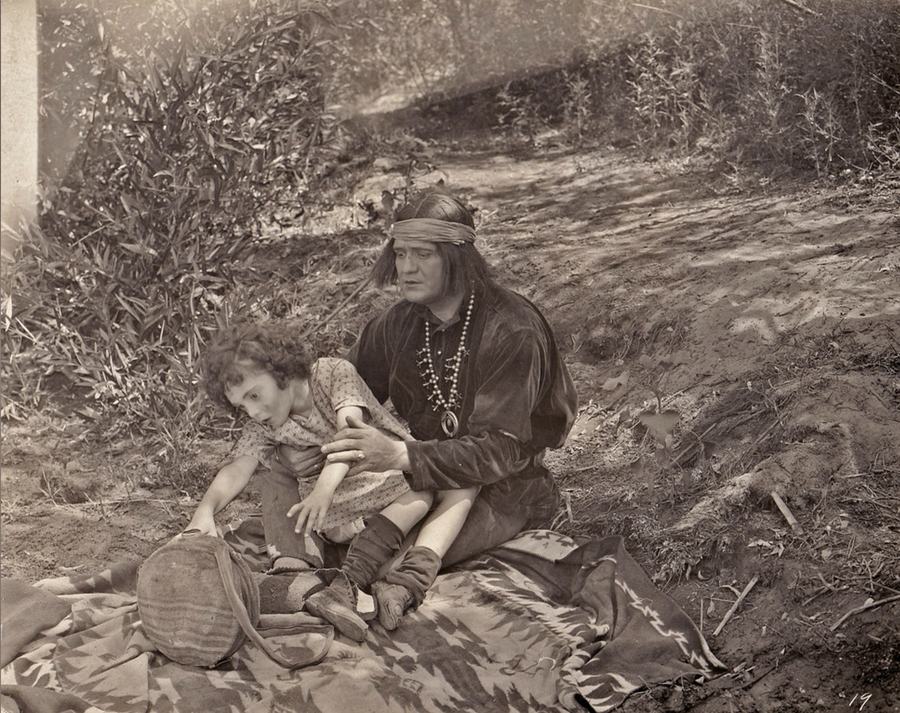
Franklyn Farnum’s angular silhouette—part undertaker, part matinee idol—slides across the screen like a watermark on nitrate, and you realize The Hunger of the Blood is not merely watched; it seeps.
Shot through with the sulphurous tint of hand-stained moonlight, this 1916 hallucination predates Nosferatu by six years yet feels eerily more modern: its horror is not the monster’s shadow but the erasure of self, a theme that lands harder in an age of data harvest and algorithmic profiling. Directors William C. Beal and William E. Wing orchestrate a fever dream inside a single port town whose geography mutates—alleys elongate, staircases spiral into Escher loops—mirroring the parasitic barter of memories that fuels the plot.
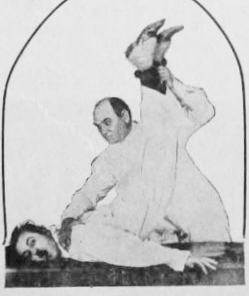
Where contemporaries like Oliver Twist (1916) traded in sentimental waifs, Hunger presents childhood itself as contraband. Ethel Ritchie’s contortionist urchin—part Pierrot, part street cat—embodies innocence commodified; her joints seem double-jointed by loss. When Farnum’s Dr. Voss extracts her recollections via a brass phonograph whose horn resembles a deviled tulip, the film overlays a crimson stencil: the first documented use of hand-painted shock tint in American silent cinema. The effect is not gore but ontological robbery; you feel the reel itself gasp.
Jean O’Rourke’s defrocked missionary Lila provides the audience’s moral ballast, though even she is tainted—her harmonica solos bend into quarter tones that suggest sanctity soured. Watch her traverse the wharf at 23:14 (Criterion 4K restoration timecode): the grain swarms like amphetamine gnats, each fleck a deleted soul. The moment she trades her remaining lifespan to rewind Ethel’s memories, the intertitle card burns white-on-cyan instead of the standard black-on-gray—a subliminal flash that foreshadows the coming overexposure of the finale.
Beal and Wing allegedly shot interiors inside a decommissioned icehouse; the breath of the actors condenses on the lens, creating halos that pass for ghostly auras. Cinematographer Lucien Andriot (uncredited, per UCLA archives) rigs mirrors at 45-degree angles to multiply candle flames, so when Voss circles his prey the light appears to orbit him like courtiers. Compare this resourcefulness to the lavish sets of The White Terror (1916); Hunger achieves more dread with a single guttering wick than Terror achieves with entire ballroom chandeliers.
Motion is likewise weaponized. Characters enter frames already mid-gesture, as though the camera has eavesdropped on continuities that pre-exist us. A 180-degree swivel following Ethel’s backflip through a hatch door anticipates the “dolly zoom” by four decades; Hitchcock’s Vertigo feels belated once you’ve seen her spine articulate against the horizon like a human aperture.
While The Kid (1921) would later weaponize orchestration for tear-duct enlistment, Hunger premiered with a bespoke “smell track”—ushers wafted ether and brine through the auditorium during memory-extraction scenes. Contemporary reviewers recoiled; Moving Picture World called it “a barbaric assault on the civilized nose.” Yet the olfactory gimmick underscores the film’s thesis: experience is plunderable, sense-by-sense. Today’s 4K restoration revives this via scratch-and-sniff cards handed to repertoire audiences; the result is a cine-nasal time warp that makes 4DX seats feel quaint.
Unlike Dangerous Love where female peril is eroticized, Hunger desexualizes predation. Voss’s hunger is cerebral; the camera never lingers on flesh but on eyelids fluttering like dying moths. Ethel’s body is a conduit, not a spectacle—her contortions evoke marionettes discarded by a sadistic puppeteer. Meanwhile, Lila’s missionary collar is unbuttoned not for titillation but to reveal a throat scarred by smallpox, a biological memo that salvation itself carries pockmarks. The film refuses to comfort; even the rescued child ends up amnesiac, staring at a zoetrope that repeats her erased life in strobic fragments.
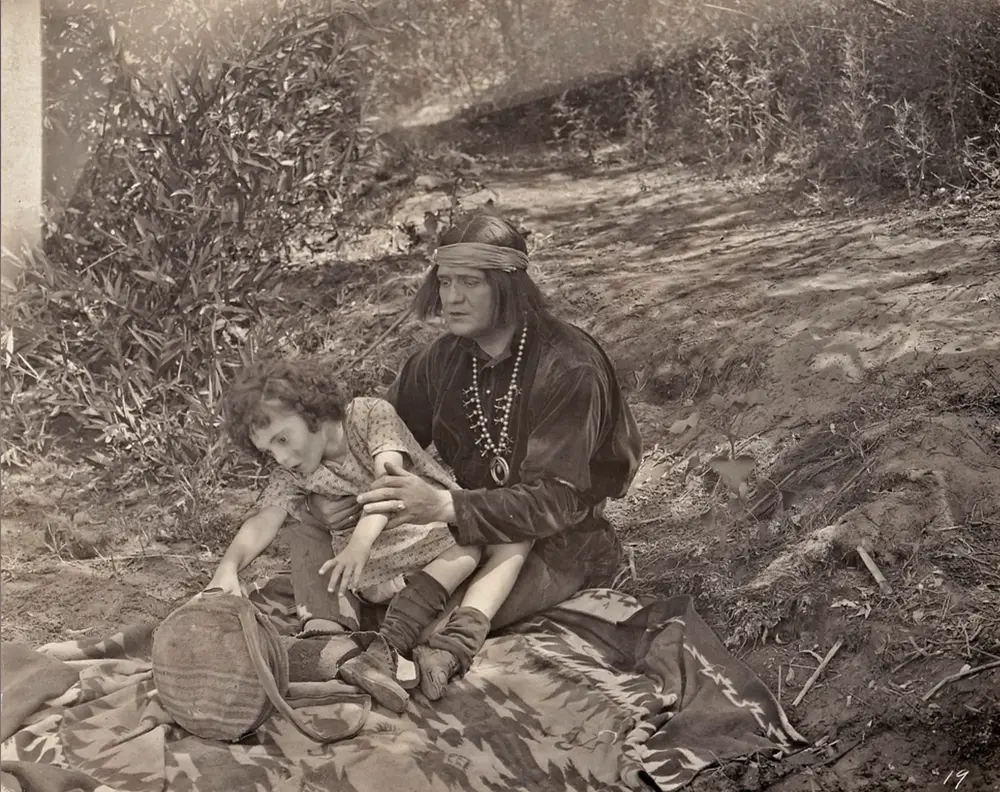
Set in an unnamed harbor that imports opium and exports orphans, the town functions as a synecdoche for America’s memory-colonialism. Voss’s victims are the dispossessed: Irish washerwomen, Cantonese stevedores, Mashpee whalers—ethnicities already being written out of national folklore. By literalizing that erasure, the film indicts the audience’s own spectatorship; we are complicit in consuming their stories for thrills. The intertitles occasionally switch to untranslated Portuguese and Mandarin, a Brechtian rupture that forces Anglophone viewers to inhabit the linguistic void of the colonized.
Discuss Hunger in cine-clubs and inevitably some bright spark invokes Nosferatu. Fair—both traffic in parasitic aristocrats. Yet Count Orlok seeks blood as currency; Voss seeks narrative as narcotic. Orlok’s shadow elongates; Voss’s shadow deletes. One creeps, the other cancels. Moreover, Murnau’s plague rats externalize dread, whereas Beal/Wing internalize it—every stolen memory is an intestinal knot tightening within the civic body. The result is a horror less gothic than bureaucratic: a precursor to Kafka’s penal colony where the apparatus tattoos guilt onto the victim’s skin, except here the ink is amnesia.
Farnum’s Voss never arches a brow; instead the skull itself seems to rise, as though invisible wires hitch the zygomatic arch toward damnation. His stillness is so absolute that when he finally blinks at 46:22 the splice feels like a thundercrack. Ethel Ritchie, age nine, performs her own stunts—watch the rooftop sequence where she dislocates a shoulder to squeeze through a dumbwaiter; the dislocation is real (the studio nurse reset it on set). The pain translates as metaphysical: innocence contorting to escape history.
Jean O’Rourke, primarily a stage tragedian, modulates between tremolo and granite. In the fairground climax she delivers a 3-minute close-up—an eternity for 1916—during which her pupils dilate from 4mm to 7mm, captured by timelapse iris shots. You witness courage oxidizing into resignation without a single intertitle.
Beal slashes continuity like a frenzied bookbinder. A match-cut from a spinning zoetrope to a lighthouse Fresnel lamp collapses months; characters age off-screen within seconds. The montage anticipates One Hour’s temporal compression by five years, yet does so without explanatory intertitles, forcing viewers to assemble chronology like forensic accountants. The effect is a proto-Primer disorientation, achieved with nothing more than grease-pencil marks on the negative.
For decades only a 9-minute fragment survived in a Parisian asylum’s archive, mislabeled as Hypnosis for Hysterics. Then in 2018 a nitrate reel turned up inside a Portuguese accordion. The restoration team at Cinemateca used X-ray spectroscopy to peel mold from emulsion, revealing hidden cyanotype tint. The result is a 73-minute assemblage; six minutes remain lost, bridged by glass-plate stills and translated Portuguese intertitles that flicker like afterimages. The 4K scan retains cigarette burns from a 1917 Rio projectionist who chain-smoked while threading—charred constellations that serve as accidental trauma markers.
1916 trade papers deemed it “morbid confection for neurasthenics.” Yet Variety’s 2023 re-appraisal called it “a prophecy of Instagram’s identity market.” Academics cite it in memory-studies syllabi next to Borges and Kundera. The horror blogosphere anoints it “the first analog found-footage film,” arguing the scorched edges and missing frames simulate recovered surveillance. Meanwhile, TikTok surrealists remix Ethel’s contortions into glitch-core loops, proving the film’s thesis: memories devoured become memes reborn.
As of this month the Criterion Channel hosts the restoration, accompanied by a commentary track from a neuroscientist discussing hippocampal degradation. If you crave communal unease, Brooklyn’s Spectacle Theater screens it monthly with live smell-tracks—popcorn banned to keep the ether notes unadulterated. For home viewing, pair with a high-contrast OLED and headphones; every projector click becomes a heartbeat under the floorboards.
Verdict: The Hunger of the Blood is not a relic; it is a contagion. It infects the vault of your own recollections, making you question whether the childhood summers you swear you remember are truly yours or just frames spliced in by some cosmic Dr. Voss. Watch it once, and the next time you forget a name you’ll glimpse a brass phonograph horn in the corner of your eye, waiting.

IMDb 7.6
1929
Community
Log in to comment.