DbcultAccessing Vault...
Cult Review
Senior Film Conservator
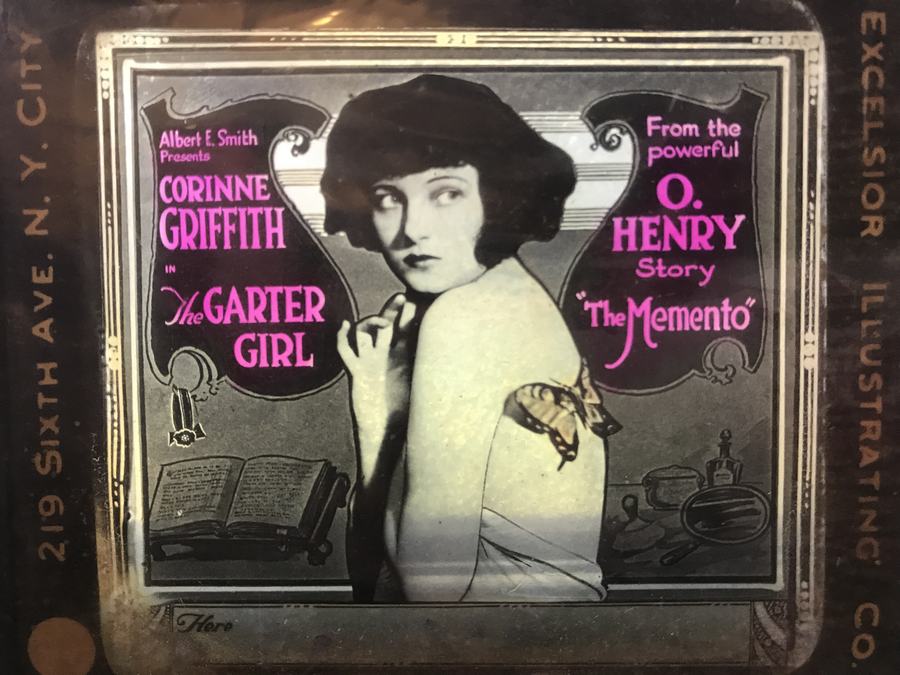
There is a specific, haunting quality to the Vitagraph productions of the early 1920s that seems to have evaporated from the collective cinematic consciousness. At the center of this ephemeral beauty stands Corinne Griffith, the 'Orchid of the Screen,' whose performance in The Garter Girl serves as a masterclass in silent-era pathos. This film, adapted from an O. Henry story, isn't merely a melodrama; it is a scathing indictment of the performative nature of morality and the inescapable gravity of the male gaze. While many contemporary critics might dismiss such plots as quaint, there is a jagged edge to Rosalie Ray’s disillusionment that feels startlingly modern.
The film opens not with the glitz of the stage, but with the spiritual fatigue of its protagonist. Rosalie Ray is a woman besieged. The admirers who flock to her dressing room aren't seeking her soul; they are seeking a trophy. Griffith conveys this exhaustion with a subtlety that rivals the best work in Salome, though her character is far more grounded in the harsh realities of the working class. When she flees to the country, the cinematography shifts, trading the high-contrast shadows of the theater for the flat, almost oppressive brightness of the rural landscape. It is a visual metaphor for her attempt to bleach her past.
However, as we see in films like The Eyes of the Mummy, the past is never truly buried; it is merely waiting for a different set of eyes to exhume it. In the small town, Rosalie encounters Arthur Lyle, played with a chillingly earnest fragility by Earl Metcalfe. Lyle is the archetype of the 'good man,' yet the narrative slowly peels back the layers of his devotion to reveal something far more prurient. The tension between his clerical duties and his hidden desires provides the film's central friction, a theme explored with perhaps less nuance in T'Other Dear Charmer.
The inclusion of O. Henry as a writer ensures that the narrative pivot is handled with surgical precision. The garter itself—the titular object—is transformed from a piece of burlesque costumery into a religious icon. When Rosalie discovers that Lyle has kept this item, she isn't merely finding proof of a past romance; she is discovering that her 'escape' was an illusion. The man who claimed to love her for her purity was actually worshipping the very symbol of her 'degradation.' This twist is far more psychologically complex than the straightforward romances of Hearts and Let Us.
The scene where Rosalie uncovers the box is a triumph of silent direction. The camera lingers on Griffith's face as her expression moves from curiosity to horror, and finally, to a cold, crystalline clarity. It is a moment of profound subversion. In many films of this era, such as Betty Be Good, the heroine might have forgiven the transgression in the name of love. But Rosalie Ray is not Betty. She recognizes that Lyle’s love is a form of taxidermy—he wants to keep the 'wild' thing in a box while preaching against the wilderness.
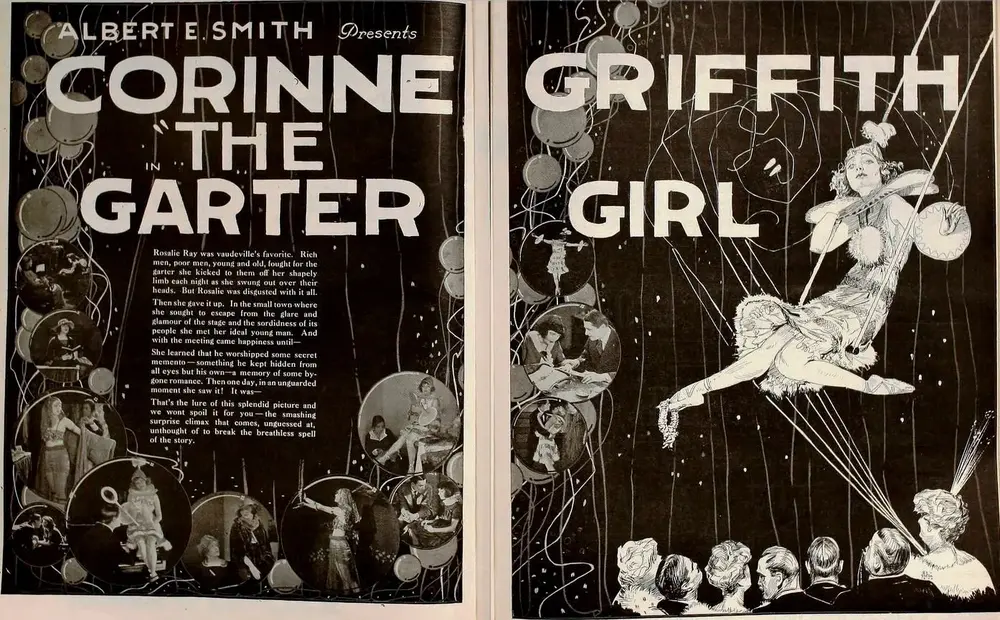
The supporting cast offers a fascinating contrast in masculine archetypes. Rod La Rocque, as the manager Brad Mortimer, represents the 'honest' vice. He doesn't pretend to be a saint; he offers Rosalie a partnership based on mutual utility and, perhaps, a more genuine form of respect than Lyle’s sanctimonious adoration. This dynamic mirrors the social tensions found in The Law That Failed, where the rigid structures of society prove less reliable than the bonds of the marginalized.
James Tarbell and Sally Crute round out a cast that feels lived-in. The boarding house setting is populated with characters who embody the judgmental gaze of the 'virtuous' public. It reminds one of the claustrophobic social circles in Three X Gordon. Every glance from a neighbor is a reminder that Rosalie is a guest in a world that would cast her out if they knew the truth—making the final revelation that the town's moral pillar is the one holding the 'sinful' relic all the more delicious.
Visually, The Garter Girl benefits from the high production standards of Vitagraph. The lighting in the theater sequences captures the smoky, amber glow of Vaudeville, contrasting sharply with the sterile, sea-blue tones of the church interiors. This color palette (as we imagine it through the tinting of the era) highlights the emotional temperature of Rosalie’s journey. The film’s pacing is deliberate, eschewing the frantic slapstick of Too Much Johnson for a slow-burn psychological tension that culminates in a finale that feels both earned and inevitable.
One must also consider the costume design. Rosalie’s transition from the elaborate, almost armor-like stage costumes to the drab, shapeless garments of her 'retirement' is a visual representation of her self-erasure. When she finally dons her stage attire again at the film's conclusion, it isn't a defeat; it's a reclamation. It’s a theme of bodily autonomy that resonates with the physical comedy of The Perfect '36', yet here it is treated with a dramatic weight that elevates the material.
Corinne Griffith’s performance here should be studied by anyone interested in the evolution of screen acting. She avoids the grandiosity that plagues some silent performances, opting instead for a weary, soulful presence. She makes us feel the weight of every unwanted hand and every judgmental stare. Her Rosalie is a woman who realizes that the 'safety' of a traditional life is just a different kind of stage, one where the script is written by men who fear the very things they desire. Unlike the protagonists in When We Were Twenty-One, Rosalie refuses to live in a nostalgic lie.
In the end, The Garter Girl is a remarkably cynical film for 1920. It suggests that the only way for a woman to be truly free is to embrace the artifice of her own choosing. By returning to the stage, Rosalie isn't choosing 'sin' over 'virtue'; she is choosing honesty over hypocrisy. She would rather be a dancer in a garter than a minister’s wife in a cage. It is a bold, defiant conclusion that places the film alongside works like Two-Gun Betty in its portrayal of female independence, albeit through a much darker, more satirical lens. For those seeking a silent film that bites back, The Garter Girl is an essential, if overlooked, masterpiece of the Vitagraph era.
IMDb —
1924
Community
Log in to comment.