DbcultAccessing Vault...
5/10
Senior Film Conservator
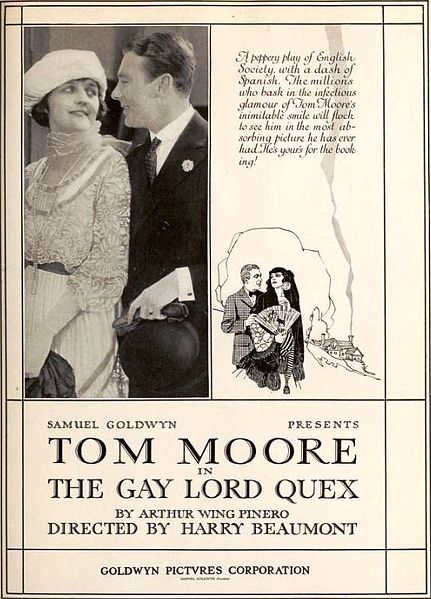
A definitive 5/10 rating for a film that redefined the boundaries of cult cinema. The Gay Lord Quex remains a cornerstone of transgressive art.
Stepping back into the cinematic landscape of 1919, one encounters a fascinating artifact of romantic drama in The Gay Lord Quex. This film, born from the theatrical pen of Arthur Wing Pinero and adapted for the screen by Edfrid A. Bingham, offers a compelling glimpse into the societal mores and intricate personal dilemmas of its era. It's a narrative that, despite its silent origins, speaks volumes about reputation, redemption, and the often-treacherous path to true love. The film’s central conceit revolves around a titular character whose very moniker, 'The Gay Lord Quex,' is laden with the weight of a past defined by amorous adventures and a certain carefree disregard for convention.
Lord Quex, portrayed with a nuanced blend of charm and underlying sincerity by Sidney Ainsworth, is introduced as a man who has traversed the globe, leaving a trail of broken hearts and whispered scandals in his wake. His journey, however, takes an unexpected turn when he encounters Muriel Eden, brought to life by the luminous Gloria Hope. Muriel, a woman of principle and a keen awareness of Quex’s notorious history, initially resists his advances. Her reluctance is entirely understandable; who would willingly entangle themselves with a man whose reputation precedes him like a storm cloud? Yet, Quex, perhaps for the first time, is genuinely smitten. His pursuit is not merely another conquest but a sincere effort to win the affection of a woman who sees beyond his charming façade to the potential for something deeper. This struggle between a man’s past and his present intentions forms the poignant core of their burgeoning romance.
The film deftly portrays Muriel’s internal conflict. Her heart is torn between her nascent feelings for Quex and a lingering, albeit misguided, affection for Captain Bastling, played by Rube Miller. Bastling is the quintessential cad: handsome, charming, and utterly devoid of moral compass, a fortune-hunting womanizer whose intentions are as transparent as they are mercenary. Muriel’s vulnerability to Bastling’s superficial charms, even after accepting Quex’s proposal, is a testament to the film’s subtle psychological insights. It’s a common human failing to cling to familiar, if flawed, affections, especially when confronted with the daunting prospect of a future with a reformed rake whose past looms large.
The narrative truly ignites with the introduction of the Duchess of Dowager, a character whose machinations serve as the catalyst for the ensuing drama. The Duchess, perhaps fueled by jealousy, mischief, or a misguided sense of propriety, cunningly orchestrates a scenario designed to suggest Quex’s continued contact with her. This act of deliberate deception is a classic plot device, expertly employed here to sow seeds of doubt and mistrust. Muriel, already harboring reservations and a latent attachment to Bastling, interprets this manufactured evidence as confirmation of Quex’s incorrigible nature. Her immediate reaction – turning to Bastling for solace and arranging a clandestine meeting – is both predictable and tragic, illustrating the fragility of trust and the destructive power of rumor.
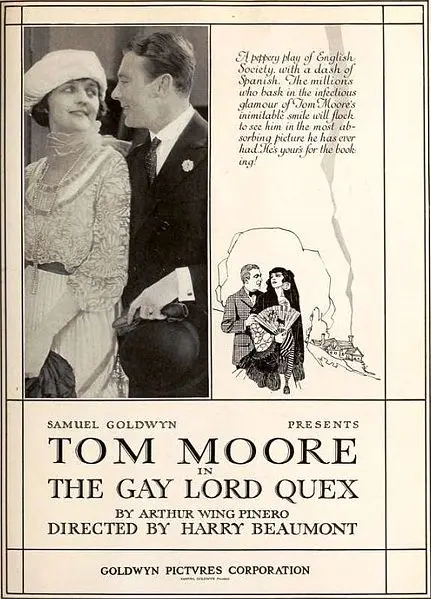
The stage for the climax is set in Sophie Fullgarney’s manicurist shop, a seemingly innocuous setting that becomes the arena for a dramatic confrontation. Sophie Fullgarney, portrayed by Kathleen Kirkham, emerges as the film’s true moral compass and an unexpected hero. Sophie is not merely a friend; she is a shrewd observer of human nature, a woman who has already discerned Bastling’s true, perfidious character. Her intelligence and loyalty to Muriel drive the film’s resolution. In a stroke of brilliant narrative design, Sophie devises a plan to expose Bastling’s faithlessness directly to Muriel. This moment, where Sophie openly flirts with Bastling as Muriel arrives for her rendezvous, is a masterclass in dramatic irony and subtle performance, perfectly suited for the silent film medium where gestures and expressions carry immense weight.
The revelation is swift and devastating. Muriel witnesses Bastling’s blatant disloyalty firsthand, his true nature laid bare for all to see. The scales fall from her eyes, and her lingering affection for the scoundrel evaporates instantly. This pivotal scene is not just about exposing a villain; it’s about Muriel’s journey to self-awareness, her realization that the man she thought was a safe harbor was, in fact, a treacherous sea. Her misplaced affections for Bastling give way to a profound understanding that Quex, despite his storied past, is the genuine article, the man whose reformed heart truly beats for her. It’s a powerful moment of clarity, a testament to the idea that true character often reveals itself not in grand pronouncements, but in moments of unvarnished truth.
The film’s exploration of themes like reputation versus reality is particularly potent. Lord Quex’s journey is one of shedding a notorious past to reveal a sincere present. Muriel, on the other hand, learns to look beyond superficial charm and societal whispers to discern genuine affection. This thematic depth elevates The Gay Lord Quex beyond a mere romantic melodrama, positioning it as a commentary on the complexities of human judgment and the transformative power of love. The silent era, with its reliance on visual storytelling and exaggerated yet expressive performances, was uniquely suited to convey these internal struggles and external deceptions. The actors, particularly Ainsworth and Hope, navigate their characters' emotional landscapes with a commendable subtlety that transcends the limitations of spoken dialogue.
Comparing The Gay Lord Quex to other films of its time reveals its strengths and contextual relevance. The theme of deception and its devastating consequences resonates strongly with films like The Innocent Lie, where characters are similarly misled by calculated falsehoods, highlighting the prevalent societal anxieties around trust and appearances. Sophie Fullgarney’s actions, driven by a fierce loyalty and a keen sense of justice, embody a form of moral courage that finds echoes in films such as Moral Courage, where individuals stand up against injustice or deceit despite personal risk. Her active role in exposing Bastling is a refreshing departure from passive female archetypes, suggesting a nascent feminist undercurrent.
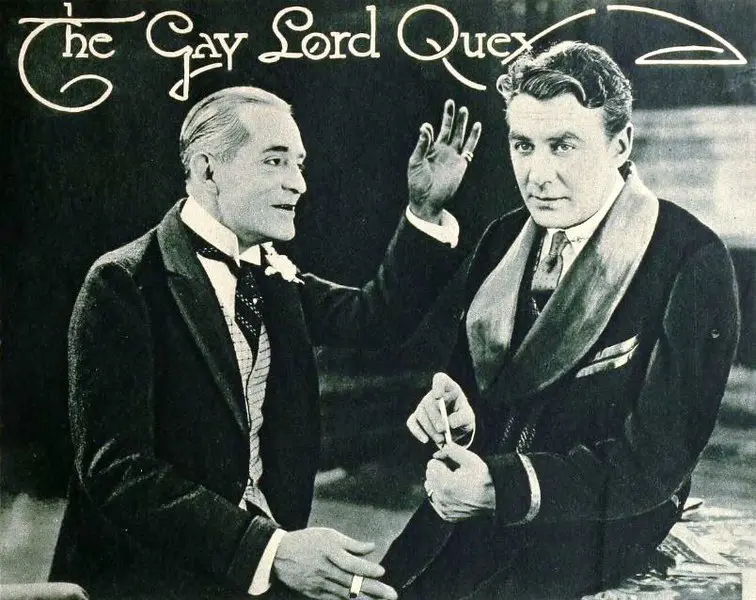
Furthermore, the journey of Lord Quex, from a man defined by his 'gay' past to one who genuinely seeks lasting love, touches upon themes of redemption and personal transformation. This arc, where a character's past misdeeds are confronted and ultimately overcome through sincere effort, aligns thematically with films like As Ye Repent, which similarly explores the consequences of past actions and the possibility of a changed future. While La dame aux camélias explores the tragic societal judgment of a woman with a past, The Gay Lord Quex offers a more optimistic counter-narrative, where a man's reputation can be overcome by genuine affection and clear-sightedness.
The film’s direction maintains a brisk pace, allowing the intricate plot to unfold without feeling rushed. The visual language, a cornerstone of silent cinema, is employed effectively to convey character emotions and plot twists. The subtle shifts in an actor's gaze, the dramatic sweep of a gesture, or the framing of a scene all contribute to the storytelling in a way that modern audiences, accustomed to dialogue, might initially find unfamiliar but ultimately rewarding. The production design, even in the limited details available from surviving accounts or stills, would have played a crucial role in establishing the social milieu, from the opulent settings associated with Lord Quex to the more intimate, yet fashionable, backdrop of Sophie’s salon.
The resolution of The Gay Lord Quex is satisfying precisely because it is earned. Muriel’s epiphany is not a sudden, unmotivated shift, but the culmination of a series of events that force her to confront uncomfortable truths about herself and those around her. Her ultimate realization that Quex is the man for her is a triumph of discernment over superficiality, of genuine affection over fleeting charm. It speaks to the enduring power of a love that can withstand gossip, manipulation, and personal doubt. The film, in its quiet way, champions the idea that true love is not about finding a perfect person, but about recognizing the worth in an imperfect one, and allowing them the space to grow and prove themselves.
In conclusion, The Gay Lord Quex stands as a compelling example of early 20th-century cinema’s ability to weave complex human dramas. It’s a testament to the enduring appeal of stories about love, betrayal, and the journey toward self-discovery. The performances by Ainsworth, Hope, and Kirkham, combined with a tightly constructed narrative by Bingham and Pinero, ensure that this silent film remains a vibrant and engaging piece of cinematic history. Its themes are timeless, its characters relatable, and its message of looking beyond the surface to find true value continues to resonate, proving that even without a spoken word, a film can communicate profound truths about the human condition with remarkable clarity and emotional impact. It’s a delightful dive into a bygone era, offering much for contemporary audiences to appreciate and ponder about the nature of love and the enduring power of reputation, both earned and unearned.
IMDb —
1933
Community
Log in to comment.