DbcultAccessing Vault...
Cult Review
Senior Film Conservator
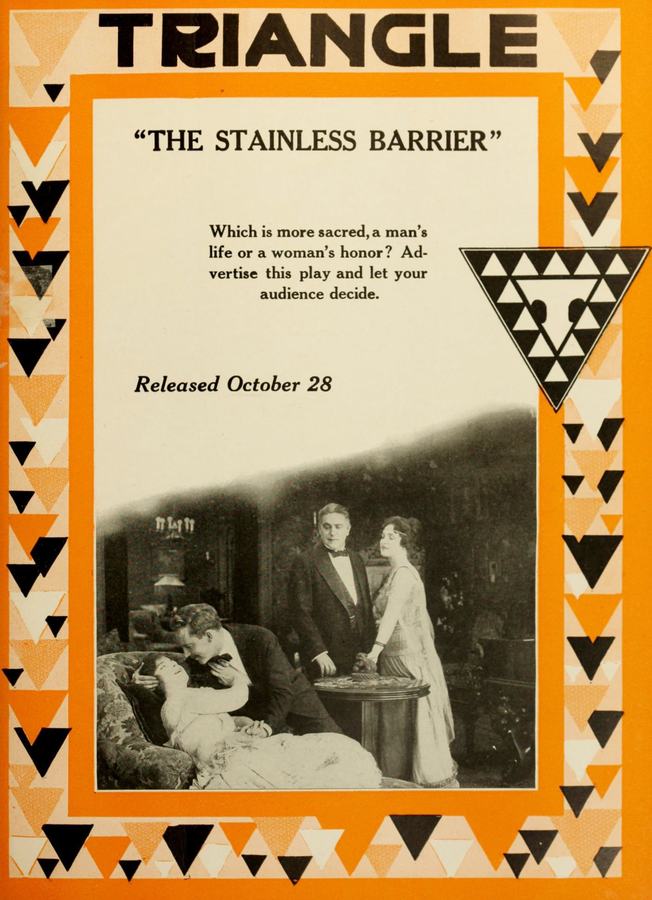
Jack Cunningham’s scenario for The Stainless Barrier lands like a bruised magnolia petal on the lap of post-WWI cinema: perfumed, decaying, impossible to ignore. Shot through with the citrus-light of a Carolina summer and the acrid smoke of forged futures, the picture stages a morality play inside a pressure cooker. Every parasol twirl, every cicada drone feels fated to implode.
Cinematographer John Lince (also doubling as the town’s beleaguered sheriff) bathes Myrtleville in over-exposed whites that flirt with solarization. Porch railings glow like hot filaments; faces slide half into umber shadow, half into chalky blaze. The effect is not mere pictorialism—it’s a visual prophecy of reputations about to combust. Compare this to the chiaroscuro of Lost in Darkness, where murk swallows sinners wholesale; here, sin is spotlighted, scaldingly public.
Hunt’s performance is a master-class in micro-repression. Notice how her gloved fingers fret the brim of a lemonade glass, the glove fabric creasing like scar tissue. When she learns her brother’s duplicity, the camera lingers on her pupils—two drops of squid-ink diffusing in water—before she steels her spine. No theatrical hand-to-forehead; the tremor is all internal. In the intertitle that follows, only three words suffice: "I still hope." Hope, in Myrtleville, is a currency more devalued than Confederate scrip.
Sherry essays the flim-flam man with vaudevillian bounce—pencil mustache twitching like a seismograph—yet he threads something feral beneath the carny charm. Watch him sell the munition-plant fantasy to a roomful of overalls and Sunday ties: arms outspread like a preacher, eyes darting to gauge appetite, voice (via intertitles) dripping molasses and mercury. His collapse is swift but not cartoonish; the moment Dick’s revolver coughs, Sherry’s knees fold with the resigned grace of a gambler who always knew the house would win.
Calvin Stone’s refusal to jilt Betsy feels, on paper, like dusty honor. Yet within the film’s gendered economy it becomes a radical act: by standing sentinel over her name, Calvin weaponizes courtly codes against the very patriarchy that invented them. Rowland V. Lee plays him with a stoic languor—think young Jefferson without the epistolary flair—letting the set of his shoulders broadcast conviction more than any subtitle can. The film critiques, without overt sermon, how women’s virtue operates as social collateral while men print money from rumor mills.
Cunningham’s script rhymes with Tempest and Sunshine’s sibling rifts, yet swaps that film’s reconciliation for a courtroom purgatory. The tonal whiplash—from garden-party gossip to lethal gunfire—anticipates the bifurcated sensibility of Sudden Riches and the urban fatalism of Alias Jimmy Valentine. Its pacing is jagged, almost newsreel: exposition gallops, then the film pauses to inhale jasmine-sc dread before detonating.
Archivists estimate ten to twelve minutes are gone, including (per censorship cards) an on-screen embrace deemed "salacious" by the Memphis board. The lost footage haunts the surviving print like a skipped heartbeat. Contemporary exhibitors were encouraged to accompany the climax with a pre-existing fox-trot, "Don’t Leave Me, Dolly," its jaunty melody perversely underlining fratricide—an early instance of ironic needle-drop predating His Picture in the Papers.
Myrtleville’s porches function as limens—thresholds between domestic sanctity and the masculine marketplace of scams. Betsy is repeatedly framed behind balustrades, her face segmented by vertical spindles that resemble prison bars. Once scandal erupts, she ventures beyond them, stepping into the dusty road where gazes brand her like hot coins. The physical act of crossing that boundary mirrors her social fall; the camera, stationary, forces us to watch stigma traverse geography.
Texas Guinan’s cameo as a gum-chewing stenographer supplies levity, yes, but also a barometer of economic panic. Her Brooklyn wisecracks ricochet off the courthouse walls while sharecroppers outside hawk heirlooms for war bonds. The gag is situational: she types indictments at break-neck speed, then pauses to file her nails with the same rhythmic clip—a sly nod to bureaucratic ennui amid civic apocalypse.
Farley, usually consigned to oafish sidekicks, here etches a portrait of jurisprudential fatigue. His badge weighs like a lead communion wafer. In one quietly devastating insert, he polishes the star with thumbnail and spit, knowing he must jail the boy he once coached at stickball. The gesture lasts maybe three seconds yet encapsulates the moral reflux of an entire community.
Louis Schneider’s intertitles oscillate between biblical cadence and rumor-mill patter. A title card describing Enderleigh reads: "He spoke of gold as if it were dew on the lips of dawn." The line is purple, certainly, but it weaponizes the Southern penchant for rhetorical velvet to cloak predation. Conversely, town chatter appears in jittery sans-serif, mimicking telegrams—truth at telegraph speed.
The murder transpires in an abandoned cotton gin, iron teeth poised like a dormant dragon. Cinematically, it’s a duel of vertical lines—corrugated walls, elevator shafts, rifle barrels—creating a stabbing geometry that anticipates German expressionism a year before The Cabinet of Dr. Caligari hits U.S. shores. Smoke from the discharged gun hangs in the projector beam, becoming a fleeting ectoplasm of guilt.
Purists may bridle at the eleventh-hour restoration of Betsy’s honor via Calvin’s courtroom heroics. Yet the film slyly undercuts triumph: the final shot frames the newly reunited couple through a cracked windowpane, the fracture bisecting their embrace. Order is restored but the fissure remains—history’s scar tissue. In this, The Stainless Barrier refuses the sunlit closure of Paz e Amor and flirts instead with the existential quandaries that would bloom in Scandinavian silents like Midnatssjälen.
Swap the munition plant for a cryptocurrency exchange and the narrative feels ripped from last week’s podcast. The film diagnoses the American susceptibility to the next big payoff, the grifter’s gospel that prosperity is just one handshake away. Enderleigh’s hasty suitcase bears the DNA of every Ponzi schemer who ever fleeced a church picnic. Censorship boards fretted that audiences might admire him; they missed the darker possibility—that they might become him.
Silent acting too often invites caricature, yet here the principals calibrate to chamber-music subtlety. Kate Bruce, as Betsy’s aunt, conveys entire sermons of caution with the flutter of a fan. Henry A. Barrows’ judge lowers his spectacles one inch down the bridge of his nose—an ocular guillotine—before sentencing. These microscopic choices accumulate into emotional verisimilitude, the opposite of the eye-rolling histrionics found in some Camille adaptations.
Most copies languish in European archives under the generic tag "Southern drama 1920." Yet even in truncated form, the film vibrates with a relevance that bypasses intellectual filters and rattles the ribcage. It is a cautionary folktune crooned in the language of capital, a mirror held up to every boom-and-bust cycle from railroad bonds to NFTs. For scholars, it’s a missing link between Griffith’s bucolic nostalgia and the cynical throb of noir; for casual viewers, a crackling yarn about how easily tomorrow can be mortgaged for the illusion of today.
Watch it if you can—preferably on a projector that clatters like a threshing machine, the scent of celluloid and citrus heavy in the air. Let the perforated darkness swallow you. When Enderleigh’s shadow falls across Betsy’s porch step, you might feel your own certainties shiver. The stainless barrier of the title is not a door, not a wall, but the brittle membrane of trust that keeps civilization from caving in. Once it buckles, as this forgotten gem reminds us, no amount of Southern courtesy can solder it whole again.
IMDb —
1913
Community
Log in to comment.