DbcultAccessing Vault...
7.4/10
Senior Film Conservator
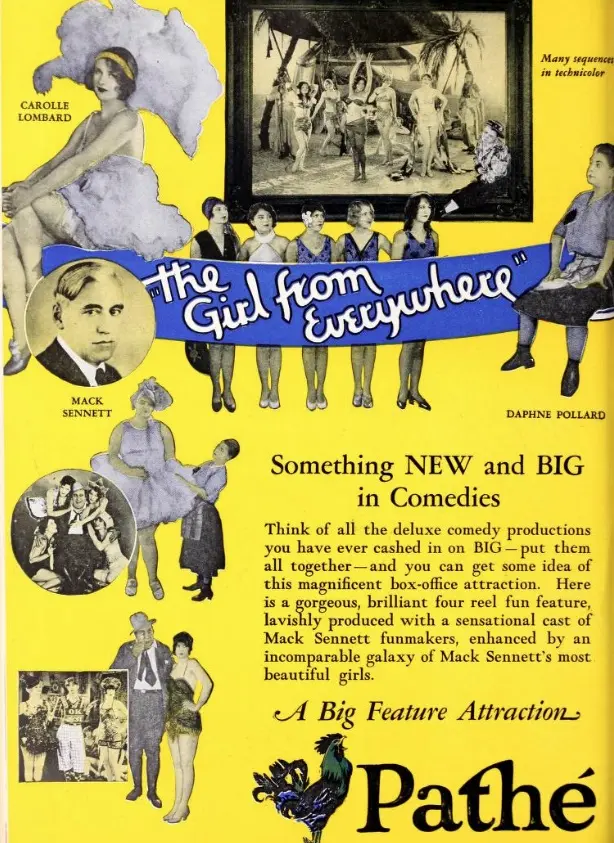
A definitive 7.4/10 rating for a film that redefined the boundaries of cult cinema. The Girl from Everywhere remains a cornerstone of transgressive art.
Is Mack Sennett’s The Girl from Everywhere a lost gem of the silent era? Short answer: Yes, but only if you are a dedicated historian of the Hollywood slapstick machine. This film is for viewers who relish the unpolished, frenetic energy of the 1920s; it is not for those who require a cohesive plot or modern pacing.
This film works because it serves as a chaotic time capsule of the Mack Sennett 'Bathing Beauty' era, delivering a raw look at the meta-humor of early Hollywood. This film fails because its reliance on sensory-based gags—like the smell of cheese—doesn't translate effectively to a silent medium. You should watch it if you want to witness the early, unrefined screen presence of legends like Carole Lombard and Sterling Holloway.
The Girl from Everywhere is a fascinating specimen of early Hollywood self-parody. Long before the industry became obsessed with its own mythology in films like Singin' in the Rain, Mack Sennett was already poking fun at the artifice of the studio system. The film functions as a 'movie about making a movie,' a trope that allows Sennett to recycle his favorite gags under the guise of cinematic critique. It is less a structured story and more a rhythmic assault of visual jokes. The pacing is relentless. It moves with a speed that makes modern comedies look lethargic.
In this short, the studio setting acts as a character itself. We see the scaffolding, the lights, and the frantic directors—elements that were usually hidden from the public eye. By exposing the 'fakeness' of the sets, Sennett creates a layer of irony. This is a stark contrast to the earnestness found in contemporary dramas like The Exiles or the gritty realism of Les Misérables, Part 1: Jean Valjean. Here, the artifice is the point. The film doesn't want you to believe in the world; it wants you to laugh at how poorly constructed it is.
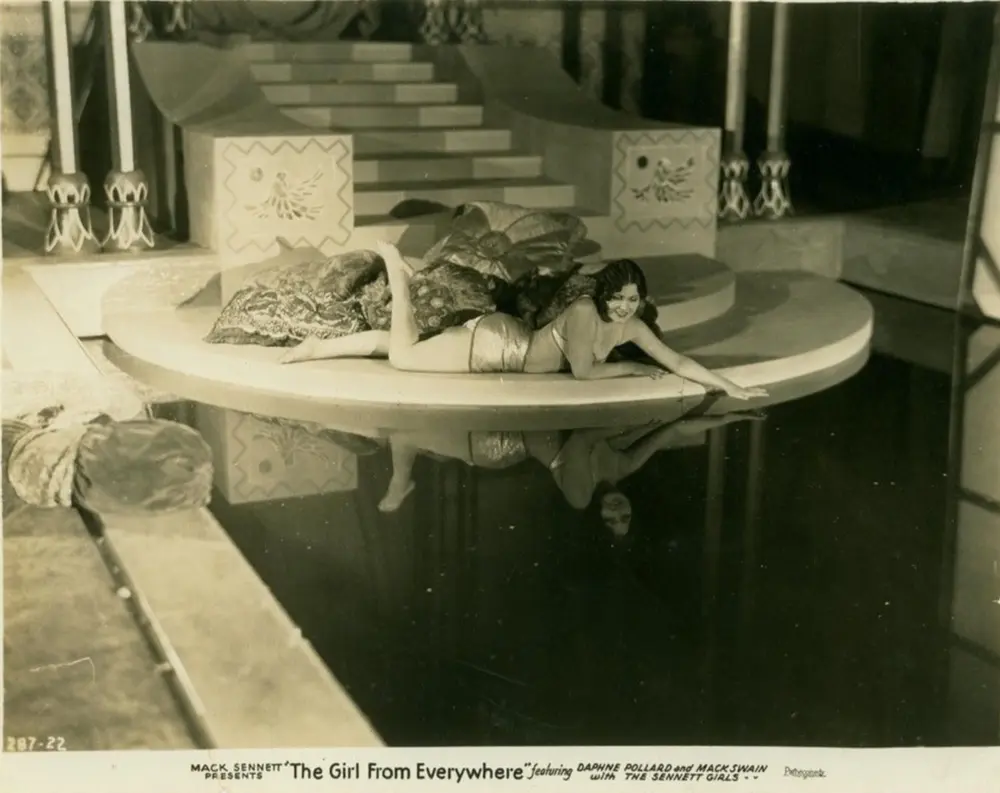
The cast is a revolving door of silent comedy staples. Sterling Holloway, with his distinctively gangly frame and expressive face, provides a prototype for the 'everyman' loser that would define his later career. His physical comedy is precise, even when the scenarios around him are not. Watching Holloway navigate a scene is like watching a slow-motion car crash—you can see the disaster coming, but his reactions make the impact worthwhile. He carries a nervous energy that anchors the more flighty elements of the production.
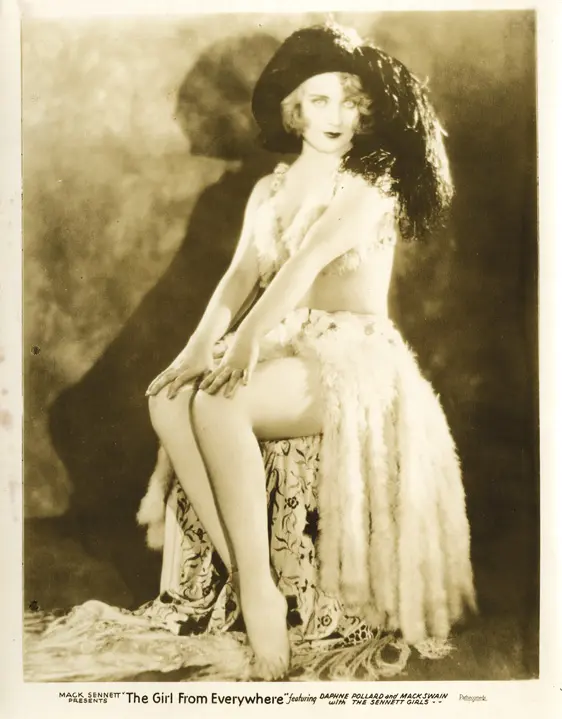
Then there is Carole Lombard. At this stage in her career, she was still a 'Sennett Girl,' a role that emphasized her physical beauty over her sharp comedic timing. However, even in this brief appearance, you can see the sparks of the screwball queen she would eventually become. She possesses a natural charisma that cuts through the thick layers of slapstick. Compared to the more traditional performances in Her Temporary Husband, Lombard feels modern. She isn't just a prop; she’s a presence. The ensemble, including veterans like Andy Clyde and Billy Bevan, operates like a well-oiled machine, hitting marks with a clinical efficiency that belies the onscreen madness.
The cinematography in The Girl from Everywhere is functional, designed to capture the widest possible view of the physical action. There are no artistic flourishes here; the camera is a witness to the carnage. However, the use of animals—specifically the lion—adds a genuine sense of danger that modern CGI simply cannot replicate. When a lion wanders onto a 1927 set, the fear on the actors' faces isn't always acting. This visceral reality provides a sharp edge to the comedy. It’s dangerous. It’s irresponsible. It’s classic Sennett.
The Limburger cheese gag is perhaps the most 'Sennett' moment in the film. It is a joke built entirely on a sensation the audience cannot experience: smell. The characters react with exaggerated disgust, holding their noses and fainting. It is a testament to the power of the silent medium that such a gag works at all. It requires the audience to project their own sensory memories onto the screen. It’s a bold choice, and frankly, it’s a bit gross. But that was the brand. While films like Land o' Lizards sought to capture the majesty of the outdoors, Sennett was content to capture the stench of a locker room.
Whether you should watch The Girl from Everywhere depends entirely on your tolerance for primitive humor. If you are looking for a masterpiece of narrative structure, look elsewhere. However, if you want to see the DNA of modern comedy, this is essential viewing. It is a loud, messy, and occasionally brilliant look at the birth of the Hollywood spoof. It is a film that values energy over elegance. In short: it’s a riot, provided you speak the language of slapstick.
Pros:
- High-energy performances from a massive ensemble cast.
- Genuine historical value as a document of the Sennett studio era.
- Surprisingly daring use of live animals for comedic effect.
- A rare glimpse at Carole Lombard before she became a superstar.
Cons:
- The 'smell' gags feel dated and occasionally repetitive.
- The lack of a central protagonist makes it hard to stay emotionally invested.
- The pacing is so fast it occasionally obscures the actual jokes.
The Girl from Everywhere is a fascinating, if exhausting, relic. It captures a moment in time when Hollywood was still figuring out its own identity and wasn't afraid to look ridiculous in the process. It isn't 'fine art' in the way La montée vers l'Acropole might be considered, but it is pure cinema. It is a reminder that before there were blockbusters, there was just a guy, a girl, a lion, and a very smelly piece of cheese. It works. But it's flawed. And that's exactly why it matters.
IMDb 5.6
1934
Community
Log in to comment.