DbcultAccessing Vault...
Cult Review
Senior Film Conservator
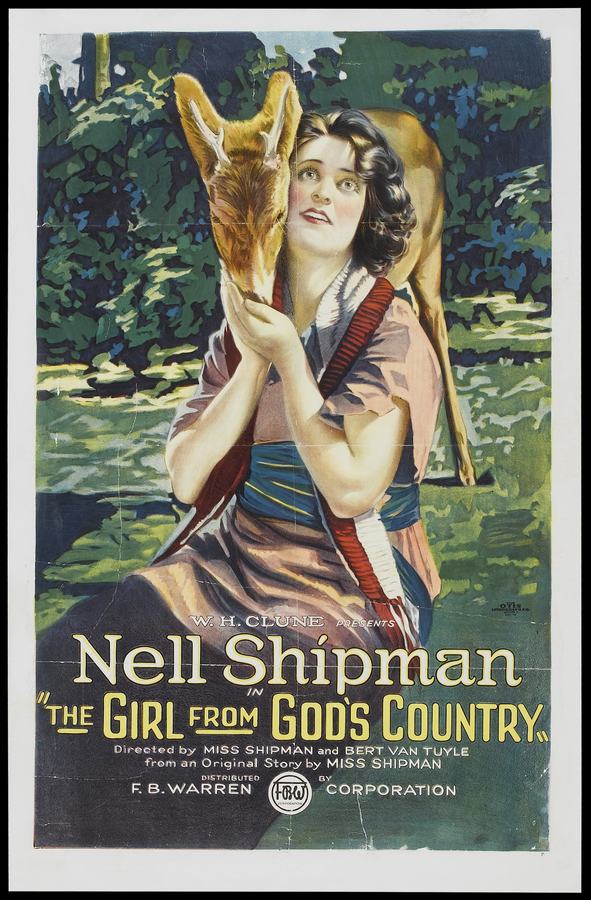
The 1923 silent film The Girl from God's Country, directed by and starring Nell Shipman, is a cinematic artifact that transcends its era, offering a layered meditation on paternal culpability, indigenous sovereignty, and the paradoxes of progress. At its core lies the fraught dynamic between J. Randall Carslake, an airplane manufacturer whose wealth is built on both innovation and moral ambiguity, and Neeka, the Métis girl whose life becomes inextricably tied to his. The film’s narrative duality—its simultaneous engagement with the mechanical and the organic, the paternal and the avenging—is rendered through a visual lexicon that marries the soaring grandeur of early aviation with the visceral rawness of human conflict.
Shipman’s performance as Neeka is a masterclass in silent film acting, her expressions conveying a range of emotions from wounded vulnerability to steely resolve. The character’s duality is central: she is both the daughter of the man who betrayed her mother and the savior of the very man who perpetuated that betrayal. This duality is mirrored in the film’s visual structure, which oscillates between the industrial landscapes of California and the untamed Canadian wilderness. The juxtaposition of these settings underscores the tension between civilization and nature, a recurring theme in Shipman’s oeuvre.
The trans-Pacific race, a narrative device that propels the film’s second act, serves as an allegory for the broader societal race toward progress. The fraudulent acquisition of “solidified gasoline” by Carslake—a secret obtained from a demented inventor—symbolizes the moral compromises often inherent in technological advancement. The inventor’s spectral return during a hangar fire is a haunting visual metaphor for the inescapable consequences of such ethical transgressions. This fire, which injures Carslake’s pilot, becomes a turning point, catalyzing Neeka’s alliance with the blind French aviator Pierre LeMort. Their partnership, wherein Neeka acts as LeMort’s eyes, is a poignant inversion of traditional power dynamics, elevating the indigenous protagonist from victim to agent of justice.

Comparisons can be drawn to Shipman’s other works, such as African Lions and American Beauties, which similarly explores the clash between empire and the natural world. However, The Girl from God’s Country distinguishes itself through its aviation-centric narrative, which elevates the film beyond mere adventure to a philosophical inquiry into the cost of progress. The aircraft, in this context, becomes a liminal space—a vessel of both possibility and peril, where identities are fluid and allegiances are tested.
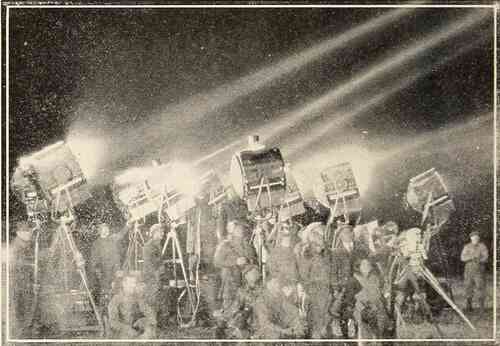
The film’s cinematography, though constrained by silent-era techniques, is remarkably evocative. The use of chiaroscuro in scenes depicting the hangar fire and the final duel over the Pacific creates a stark contrast between light and shadow, symbolizing the moral binaries at play. The fire, with its flickering orange glow, is a visual motif of destruction and revelation, while the ocean, rendered in deep blues and grays, becomes a site of catharsis. Shipman’s direction is meticulous in its attention to spatial dynamics; the vastness of the Pacific in the race sequence dwarfing the aircraft underscores the insignificance of human ambition against the forces of nature.
Notably, the film’s depiction of Neeka’s grandfather, whose accusation of betrayal against Carslake sets the plot in motion, is a quietly radical gesture. Unlike the typical native antagonists of contemporary cinema, the grandfather is portrayed with dignity and agency, his role as a moral compass challenging the audience to confront the film’s critique of colonial exploitation. This subversion is amplified by the resolution: Neeka’s realization of her true parentage and her subsequent alliance with the inventor’s consciousness—a spectral presence that embodies the voice of conscience—frames her as both daughter and redeemer.
The film’s climax, a high-stakes aerial confrontation between Carslake’s plane and Otto Kraus’s, is a tour de force of silent film storytelling. Kraus’s attempt to ram Carslake’s aircraft—a literal and metaphorical collision of ideologies—culminates in his demise, a fate that is as much a consequence of his own hubris as it is a result of Neeka’s intervention. The fight over the ocean, with its cascading images of aircraft in freefall and the vast, indifferent sea below, is a visual elegy for the sins of the past. Kraus’s drowning, framed in slow motion with the waves closing over him, is a poetic justice, his body vanishing into the very element that his greed sought to conquer.
In its resolution, the film offers a bittersweet epilogue. Neeka’s return to the Canadian wilderness, now free from the paternal yoke of Carslake, signals a tentative return to indigenous sovereignty. Yet the scars of betrayal remain, etched into the landscape and the characters’ psyches. This is not a film of tidy resolutions but of lingering questions, a testament to Shipman’s commitment to complexity over simplicity.
Though largely overlooked in mainstream cinema history, The Girl from God's Country resonates with contemporary audiences grappling with the legacies of colonialism and technological ethics. Shipman’s dual role as director and star challenges the male-dominated norms of early Hollywood, positioning her as a pioneering figure in the auteurist tradition. The film’s themes—identity, justice, and the cost of progress—are as pertinent today as they were a century ago, a reminder that cinema, when wielded with vision and integrity, can serve as a mirror to the soul of an era.
For further exploration of Shipman’s work, consider The Road to the Dawn and The Lash of Power, which similarly grapple with the intersection of personal and political agency. Yet The Girl from God's Country stands apart as a singular achievement, a film that soars not in its spectacle but in its unflinching examination of the human condition.

IMDb —
1919
Community
Log in to comment.