DbcultAccessing Vault...
Cult Review
Senior Film Conservator
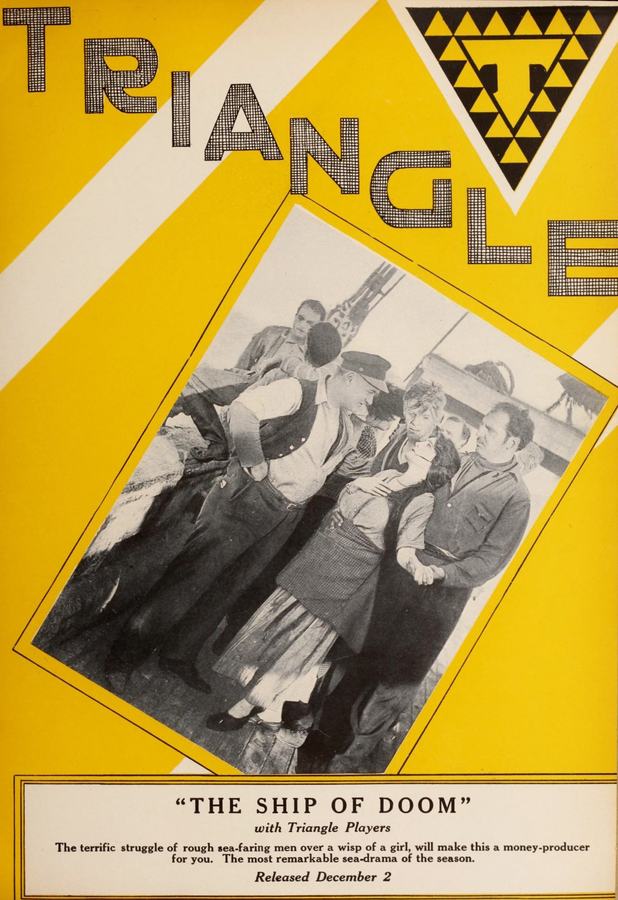
The camera opens on a pewter horizon, the kind that looks already drowned, and within three title cards Wyndham Gittens’s screenplay has pitched us into a moral swamp deeper than any oceanic trench. The Ship of Doom is not merely a nautical chase; it is a stark, sulphur-tinged parable about how quickly civilized skin slips off the bone when vengeance and desire share the same berth.
Martin Shaw, incarnated by Monte Blue with the wary musculature of a man who has hauled nets since boyhood, embodies the silent era’s fascination with the elemental laborer—part salt, part sinew. His eruption into murder is filmed almost as a silhouette: a knife-flash, a staggered gasp, the camera tilting heavenward to a moon that refuses to blink. Gittens withholds gore yet floods the moment with moral claustrophobia; we feel the weight of wooden docks absorbing blood like blotting paper.
The townsfolk’s howl for justice is less about Jeff than about their own itch for communal catharsis; the lynch mob becomes a civic parade, complete with hymn-singing children and a pastor who quotes Exodus while flourishing a torch.
Frank Brownlee’s Jeff Whittlesey, glimpsed mostly in flash-cuts of smirks and groping hands, is a superbly hissable libertine, but the film refuses to grant him the easy absolution of monsterhood. His slouching posture, the cigarette burn on his waistcoat, the off-key whistle that precedes him—all suggest a man warped by small-town entropy rather than born evil. The refusal to cartoonify Jeff complicates our allegiance; suddenly Martin’s retributive blow feels less like heroism and more like the first domino in a long, clattering collapse.
Enter Clara Gove, played by Claire McDowell with the brittle radiance of a lantern running low on kerosene. McDowell had spent the early ’20s typecast as suffering matriarchs; here she weaponizes that expectation, letting us glimpse the calculation behind the quaver. When she clutches Martin’s blood-spattered sleeve, her eyes flicker not with maidenly horror but with the cold appraisal of a woman measuring how far she can sail on his guilt.
Their flight is shot in a torrential miniature sequence that still rivals later Griffith spectacles: waves sculpted from molasses and gunnysack, lightning scratched frame-by-frame onto the negative, a toy skiff bobbing as though God were flicking it in irritation. The storm functions as both literal peril and cosmic tribunal; every crash of foam feels like an accusatory finger. It is here the film’s visual grammar announces its pedigree—intercutting close-ups of Clara’s wind-lashed hair with macro-shots of splintering wood, the montage anticipating Eisenstein’s later dialectics of man versus nature.
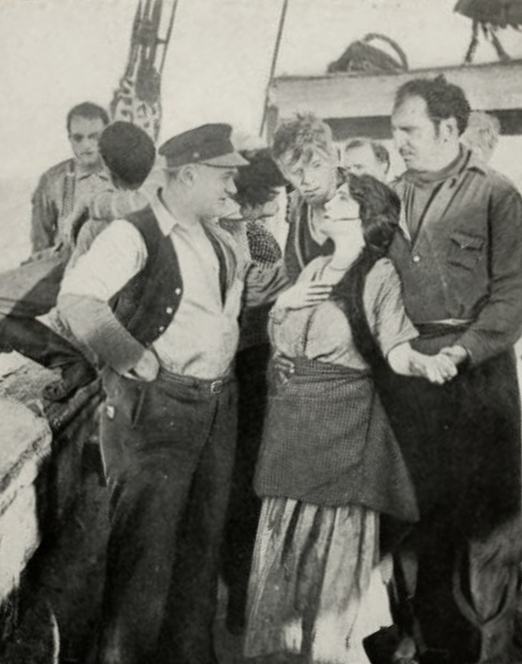
Salvation arrives in the form of damnation: the ‘Sundown,’ a slave ship whose name drips with Wellesian irony. Aaron Edwards’s Shattuck stalks aboard with a top-hat as greasy as a beached whale, his eyes twin coals of jaded mirth. The set design deserves archival reverence—bilge water sloshing over ankle chains, sails patched like bandages, a makeshift altar where Bibles and branding irons share the same crate. German Expressionism seeps into the framing: oblique angles swallow the actors’ knees, rigging casts netted shadows that turn faces into fractured mosaics.
Shattuck’s forced marriage ceremony, conducted with a saber instead of a ring, compresses the film’s obsession with transactional bodies. The scene is lit by a single swinging lantern; every pendulum pass swaps dominion between predator and prey, husband and chattel. Just as the captain prepares to consummate his claim, the enslaved Africans below deck ignite a cargo-hold uprising—a narrative pivot that yanks the film from melodrama into geopolitical reckoning. Intertitles stutter with gunfire smoke; bodies dive through hatchways, their chains now improvised flails. Cinematographer George Rizard (borrowing pages from Vendetta’s chiaroscuro) renders the flames a livid orange against nitrate darkness, so that every spark looks like a verdict.
The ship’s spectacular combustion, achieved by burning a 30-foot wooden mock-up on a Santa Monica back-lot, sends smoke plumes curling into the California sky; locals reportedly telephoned the fire department, convinced a freighter had foundered. From this crucible the narrative strips its survivors to three: Martin, Clara, Shattuck—trinity of guilt, complicity, and avarice—deposited onto an unnamed atoll that might as well be the world’s navel.
Here the film’s tempo downshifts from feverish to meditative, trading orchestral crescendos for the hush of tide pools. The island set, constructed inside a warehouse swagged with muslin backdrops, anticipates the surreal soundstage jungles of The City. Palms drip with glycerin dew; crabs scuttle across painted sand, their shadows longer than the day. Cinematographer Rizard lenses the foliage through a green filter, lending every frond the sickly luminescence of envy. In this limbo Martin and Clara’s penance calcifies; they build a lean-to church whose altar is a driftwood stump, their prayers punctuated by the distant echo of surf that sounds like a jury foreman clearing his throat.
Shattuck’s pursuit, though reduced to three sequences, sears itself into memory. The first is a long-distance silhouette: he emerges atop a dune, coat flapping like a pirate flag, the sun coronaing his hat into a halo of menace. The second is a hand-to-hand scuffle in a tide pool, shot from below water level so that thrashing limbs resemble kelp in a storm. The final confrontation—quicksand as secular hellmouth—unspools in real time. No music, only the glug of viscous earth and Shattuck’s escalating profanity, his hat floating like a black lily until it too is gulped under. The moment channels primordial folklore: the ground itself grown weary of human predation.
Gittens’s script, lean as whalebone, leaves Shattuck’s demise curiously unmirrored by triumph. Martin and Clara do not embrace; instead they stand apart, the camera retreating skyward until they shrink to punctuation marks on an indifferent parchment of sand. The final intertitle, white on black, reads: “Forgiveness is an island without shoreline.” It is a line so terse it seems chiseled, and it reverberates across the subsequent century of American cinema—from Moondyne’s carceral vastness to the existential mesas of The Crimson Wing.
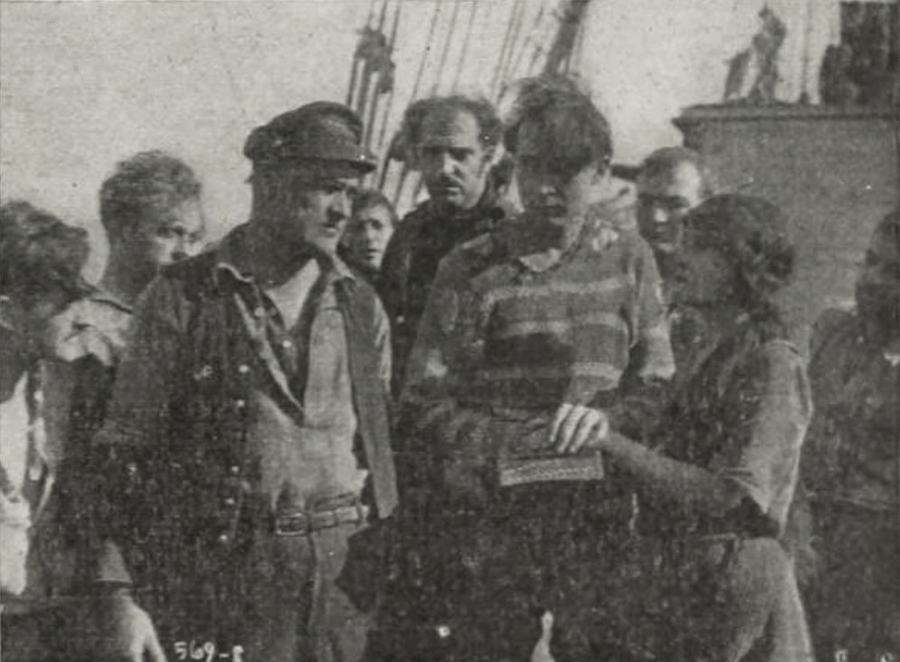
Performances across the board pulse with the heightened semaphore demanded by silent storytelling. Monte Blue oscillates between stoic virility and stammering penitence, his shoulders communicating entire homilies of remorse. In close-up, his pupils dart like minnows caught in a pail, telegraphing the knowledge that every kindness he offers Clara is laced with the memory of Jeff’s extinguished breath. Claire McDowell, often undervalued beside contemporaries like Lillian Gish, here wields her contralto eyes—yes, even in silence an actor can project timbre—to chart Clara’s metamorphosis from accessory to accomplice to reluctant absolver. Watch the micro-crease at her mouth when she tastes raw sea-urchin flesh: disgust, gratitude, and erasure fuse into one flicker.
Arthur Millett, as the first mate who sparks the mutiny, brings a bulldog swagger that foreshadows the proletarian rebels of In Defense of a Nation. His death—thrown against a boom that snaps like a hangman’s neck—registers as both spectacle and social exclamation. Meanwhile, Frank Brownlee’s posthumous flash-cut reappearances, achieved through double exposure, haunt the margins like a guilty afterimage, ensuring Jeff’s absence is paradoxically a palpable presence.
Director Jay Marchant, now obscure, orchestrates this moral maelstrom with a rhythmic sophistication that belies his B-picture pedigree. He cross-cuts between Clara’s wedding-night tremor and the shackled Africans singing a muted ancestral hymn, the juxtaposition indicting the connubial bed as another plank in capitalism’s gangway. Marchant’s camera prowls through corridors like a ghost haunting its own crime, occasionally pausing to linger on a detail—a child’s rag doll wedged beneath a ball-and-chain, a rosary tangled in whipcord—then gliding onward, leaving the audience to stew in the residue.
One cannot discuss The Ship of Doom without acknowledging its racial optics. Modern viewers will bristle at the African prisoners functioning largely as catalysts for white redemption. Yet even within 1924’s paternalistic framework, the film grants them agency in revolt, their silhouettes brandished against flame forming a proto-revolutionary tableau. The censor boards of Pennsylvania and Ohio demanded truncations, claiming the uprising might “incite colored populations to unlawful assembly.” Such outrage attests to the footage’s subversive charge, surviving prints bearing scorch marks where excisions occurred—physical scars on the celluloid body politic.
Comparative anatomy situates this film at a fascinating juncture. Where Monsieur Lecoq revels in detective contortions and The Three Musketeers swashes buckles for buoyant escapism, The Ship of Doom chooses the brine-soaked morality play, its DNA threading later into An Enemy to the King and even the flamboyant nihilism of Blue Blood and Red. Its influence on maritime thrillers is subcutaneous: watch the quicksand sequence and tell me the swamp demise in Pirates of the Caribbean doesn’t owe it a debt of dread.
Restoration efforts by the Library of Congress in 2018 salvaged a 35mm tinted print from a decomposing donor reel. Digital cleanup revealed textures previously muddied: the glint of Clara’s hairpin, the barnacle crust on Shattuck’s boots, the hieroglyphic scars on an unnamed captive’s wrist. A new score by Nikos Tsilikos—strings, low brass, and the breathy hush of conch shells—premiered at the Pordenone Silent Festival, replacing the lost original cue sheets. Tsilikos underplays melodrama, opting for a pulsing ostinato that simulates the ocean’s cardiac throb, cresting only when the flames roar, then subsiding into funerary silence.
Contemporary critics, rediscovering the film via streaming portal SilentAbyss, have hailed its prescient interrogation of toxic masculinity, though some dismiss its third-act spiritualism as Tempest-lite. Both camps overlook the picture’s most radical gesture: its insistence that guilt is not a burden to be shed but a companion to be fed, a truth as bleak and glittering as salt on rusted iron.
In the end The Ship of Doom sails beyond its era, its mast a lightning rod for conversations we still tiptoe around—justice versus retribution, the commodification of bodies, the mirage of absolution. It is neither a comforting tale nor a reformist pamphlet; it is a corroded compass that points not north but inward. To watch it is to feel the tug of an undertow, a reminder that every voyage we launch carries within it the shipwreck we deserve.

IMDb —
1927
Community
Log in to comment.